

large breed
Canadian Eskimo Dog
An Arctic working dog rather than a companion, and one of the rarest breeds in the world - the population still numbers in the hundreds. Canadian Eskimo Dogs are enormously powerful, tireless, and built entirely for hauling in the cold. Energy tops the scale, the coat blows twice a year and needs daily work when it does, and they are serious trouble with strange dogs. Heat is a genuine danger, not a discomfort.

Pup Height
23-27.5 in

Pup Weight
66-88 lb
Figures are for males; females are 19.5-23.5 in and 40-66 lb, a much wider gap between the sexes than most breeds show. Any color is allowed. In Inuktitut the Canadian Eskimo Dog is the qimmiq, and the Canadian Kennel Club standard is the one that governs them - the AKC lists them only in its Foundation Stock Service. Source: Canadian Kennel Club breed standard.

Pup Lifespan
10-15 years
Your pup, at a glance
What’s Life With This Pup Really Like?

Loyal rather than affectionate in the way most breeds here are. They bond strongly to their people and express it through working alongside them, not through lying on them.

Acceptable with children they are raised with and not a natural family dog. Canadian Eskimo Dogs are powerful, boisterous and pack-minded, and none of those things pairs easily with small children.

Very low. Strong dominance behavior with other dogs and serious prey drive toward anything smaller - this is a real constraint rather than a caution.

Moderate in frequency and unmistakable in kind - they howl rather than bark, the way a team dog communicates, and it travels a very long way.

At the top of the scale. Bred to haul a loaded sledge all day in the cold, and two hours of hard work is a floor rather than a generous allowance.

Among the heaviest here. A dense Arctic double coat that sheds year-round and comes out in drifts twice a year.

Boisterous and physical rather than playful in a domestic sense. They enjoy work far more than games and play roughly with other dogs.

Very low. A dry, clean-mouthed dog.

Low, and it is independence rather than dullness. A sledge team works with a driver rather than obeying one, and they negotiate rather than comply.

Moderate. They are alert and will announce something, though guarding was never the job and they are not territorial in the way the guarding breeds are.

Substantial. Several brush-outs a week through a dense undercoat, daily during the blow, and no clipping at all.

The lowest on this site. They adapt to cold, distance and hard work, and to warmth, confinement and idleness not at all.
Lifestyle fit
Could This Be Your Best Breed?
A Canadian Eskimo Dog suits cold country with land and secure containment, and an owner who works dogs in harness - two hours or more of hard pulling or running most days, for ten to fifteen years. Costs are ordinary at $1,800 to $2,900 a year; the commitment is not. The people who cannot make this work wanted a pet - a striking one, for a warm suburb with another animal already in it - and this is a harness dog for cold country.

Living Space
Cold country with land, and secure containment. Canadian Eskimo Dogs were bred to haul a sledge across sea ice all day and live outdoors in an Arctic winter, and there is no version of a suburban yard that answers that. Heat is the hard limit rather than space.

Pup Experience
Not a pet dog for most people, and worth saying plainly. They are powerful, independent, driven, and shaped by a pack hierarchy that they expect to negotiate. Owners are generally people who work dogs in harness, and that is who the breed suits.

Daily Pup Time
Two hours or more of hard physical work most days - pulling, running, hauling - plus brushing several times a week and daily during the coat blow. This is one of the highest total commitments here.

Allergies & Coat
The Canadian Eskimo Dog scores 9/10 for shedding and 2/10 for drooling. No dog is truly hypoallergenic. The allergens come from dander and saliva, and a dog that sheds this much will leave plenty of hair behind - especially on your furniture, floors, and clothes.
Quirks & challenges
The Not-So-Easy Stuff

Heat Is Genuinely Dangerous
A dense Arctic double coat on a dog built for sea ice. Warm climates are not a discomfort for them, they are a serious welfare problem.
Not a Pet in the Usual Sense
Bred to work in harness and live outdoors in a team. Without real physical work they are destructive, vocal and miserable.
Serious Trouble With Dogs
Strong pack hierarchy means dominance disputes are real and can be severe. Same-sex pairings and dog parks are poor ideas.
The Coat Blows Twice a Year
One of the heaviest shedders here. For a few weeks each spring and fall it comes out in drifts, and there is no shortcut.
They Howl Rather Than Bark
Team dogs communicate by howling, and it carries a long way. Neighbors notice, and it is not something training removes.
Among the Rarest Breeds
A few hundred exist worldwide. Expect a long wait, almost no local support, and a gene pool worth asking about directly.
The good, the bad & the hairy
Health, Care & Costs
Understanding the health risks and ongoing costs of a Canadian Eskimo Dog helps you plan for a happy, healthy life together.

10-15 years
$70-$110
per groom (bath, blow-out and deshedding on a heavy Arctic coat), every 8-10 weeks - more during the blow ($350-$650/year)
$1,800-$2,900/year
all-in (food, routine vet, grooming, insurance, incidentals)

Health Risks
Conditions this breed is prone to.

Not a disease but the defining practical risk. A dense Arctic double coat and a body built for sub-zero work make them poor at shedding heat, and heatstroke is a genuine danger in an ordinary warm summer. Exercise at dawn and dusk in warm months, provide shade and water constantly, and treat heavy panting at rest as a reason to stop and cool them.
The hip joint develops loosely, so the ball and socket grind instead of gliding. It leads to arthritis and, in severe cases, surgery - which matters especially in a dog whose whole purpose is physical. A very small gene pool makes parental scores a requirement.
The stomach fills with gas and twists, cutting off its own blood supply. Without surgery within hours it is fatal. Deep-chested working dogs are most at risk, and feeding one large meal a day or working straight after eating makes it likelier.
An inherited disease that slowly destroys the retina. Night vision goes first, then daylight vision, usually ending in blindness. There is no treatment, but it is painless and gradual, and eye clearances on both parents are the protection.
The knee ligament tears under the load of a powerful dog working hard over uneven ground. It usually needs surgery, and dogs that do one side often do the other later.
The thyroid stops producing enough hormone, causing weight gain, lethargy and coat changes - harder to spot under a coat this heavy. A daily tablet manages it completely.

Insurance & Health Coverage
A hard, sound working breed with no cluster of inherited disease - Arctic conditions culled anything fragile long before a kennel club got involved.

The costs are occupational rather than genetic. Cruciate surgery runs several thousand dollars per knee and a dog working in harness is a real candidate, often on both sides eventually. Joint surgery sits in the same range, and bloat is the sudden emergency on a deep-chested working dog.

Heatstroke is the one worth naming separately, because it is both the likeliest serious emergency outside the Arctic and entirely preventable. It is also the sort of incident an insurer may query as avoidable. The very small population is the reason to ask a breeder about hip and eye testing directly - there is no meaningful breed-level data to fall back on.
 Get a Pet Insurance Quote
Care needs
The Daily Routine

Grooming
Brush two or three times a week with a rake and a slicker, working right down through the undercoat, and daily during the twice-yearly blow when it comes out in drifts. Never clipped - the double coat insulates against heat as well as cold, which matters more here than in almost any breed. Nails and ears on the usual schedule.

Exercise
Two hours or more of hard physical work most days, and pulling is what they were built for - carting, skijoring, canicross or sledding all suit them far better than walking. In warm weather all of it moves to dawn and dusk.

Food & Weight
Feed to the workload, which varies enormously between a working season and a quiet month. Two measured meals rather than one large one, with hard work kept clear of mealtimes given the bloat risk, and keep them lean - they are efficient on less food than their size suggests.
Similar breeds
If This Isn’t Quite the One
Alaskan Malamute
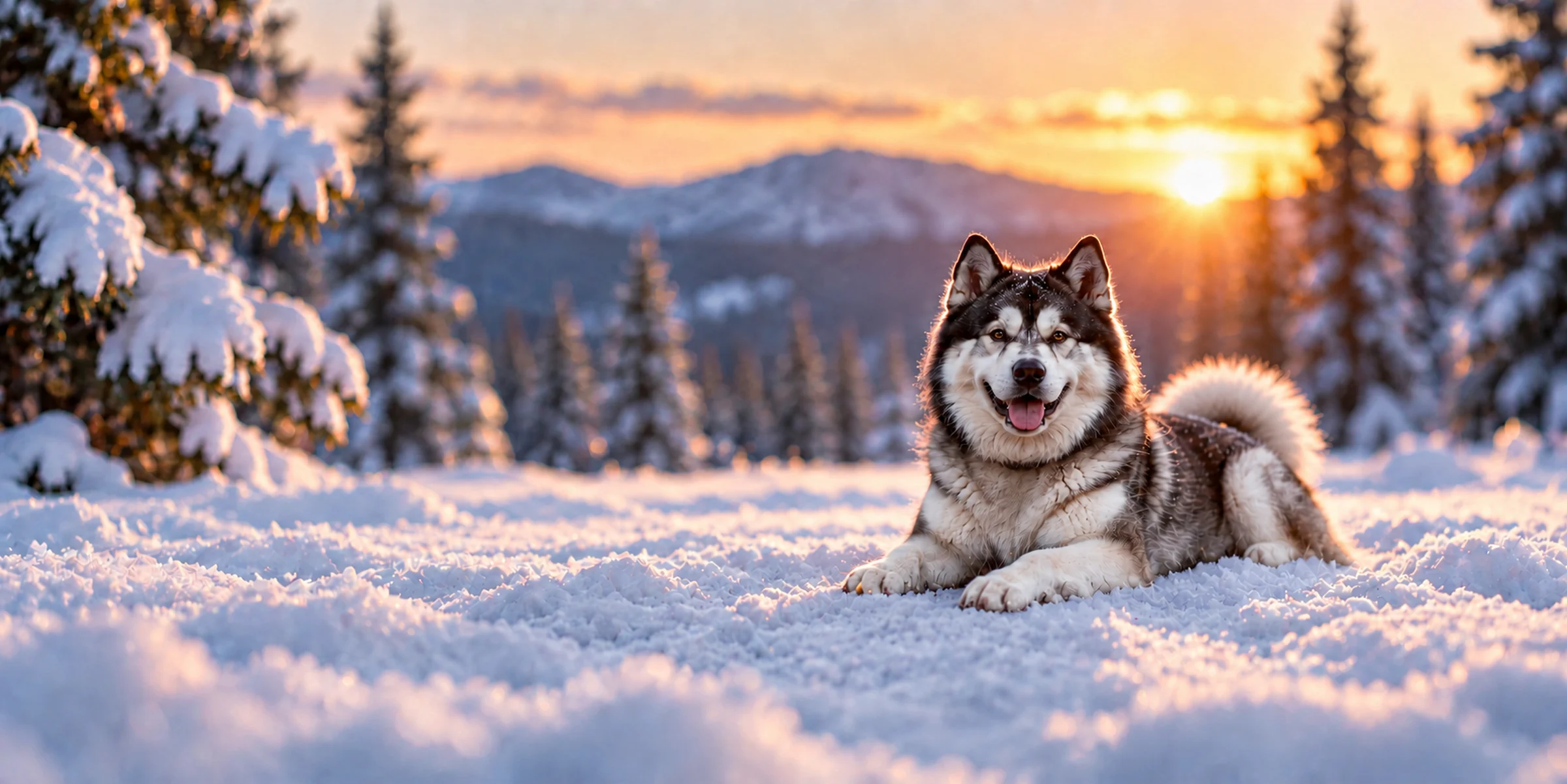
The closest match here by a distance - another heavy Arctic freighting dog with the same coat, the same pulling drive and the same difficulty with other dogs. The Malamute is far easier to find and slightly more biddable; the Canadian Eskimo Dog is the rarer and more purely working of the two.

Akita
A very different job with a similar outlook - powerful, independent, dignified and uninterested in obedience for its own sake, with real trouble around same-sex dogs. The Akita suits an ordinary house far better and needs a fraction of the exercise.