

medium-to-large breed
Carolina Dog
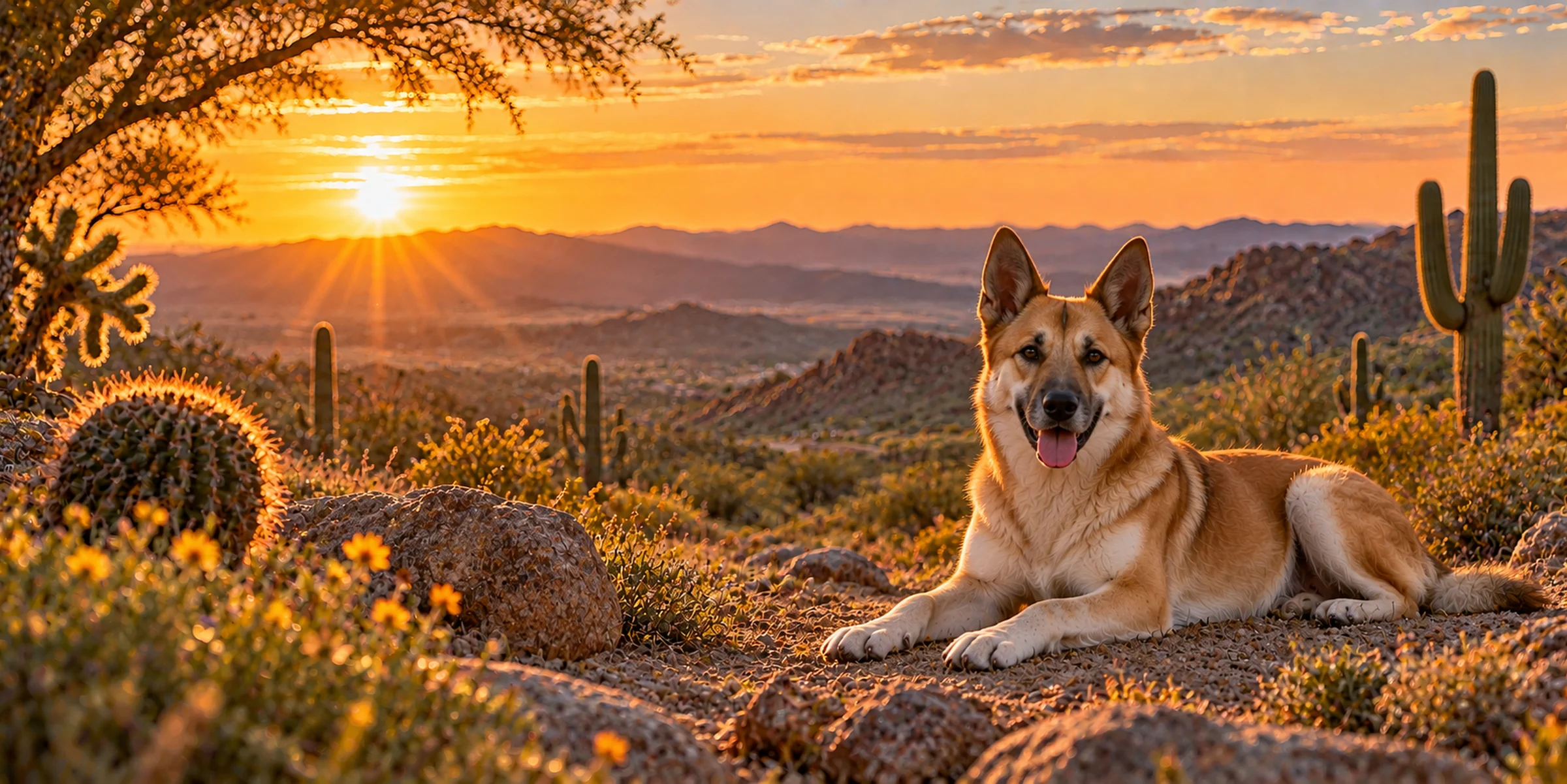
A medium, lightly built dog with a wedge head, upright ears and a fishhook tail - the classic pariah shape that appears independently wherever dogs live semi-wild. Ginger with pale points is the type specimen, though black-and-tan and piebald occur. In the AKC's Foundation Stock Service, so they can compete in companion events but not conformation. Source: AKC Foundation Stock Service breed standard.
A genuine North American landrace rather than a made breed - Carolina Dogs come from free-ranging populations in the Southeast, and it shows in how sound they are. They are quiet, self-sufficient, devoted to their own household and cautious about everyone else, with real prey drive and a talent for getting out of a yard. Living with them feels less like owning a breed and more like being accepted by one.

Pup Height
17.5-19.5 in

Pup Weight
30-55 lb

Pup Lifespan
12-15 years
Your pup, at a glance
What’s Life With This Pup Really Like?

Affectionate with their own people on their own terms. They want to be near you rather than on you, and the bond is deep once it exists.

Good with children they have grown up with and part of the pack in a Carolina Dog's mind. Less patient with visiting children they do not know.

Good with dogs, and Carolina Dogs settle a pack hierarchy quickly and clearly. Cats and small pets are a different question given the prey drive.

Low to moderate. They are quiet dogs who alert when something warrants it, and they use more howls and grumbles than barks.

Moderate to high. They want a real outing every day, though they are calm indoors once they have had one.

Moderate. A short double coat with a noticeable seasonal turn and steady low-level shedding otherwise.

Playful within the pack and self-directed about it. They invent their own games - digging, stalking, patrolling - more readily than they take yours.

Very low. A dry, tidy mouth.

Capable but independent. They learn quickly and comply selectively, so reward-based work and patience do far more than repetition.

Strong. Naturally alert, suspicious of unfamiliar arrivals, and quick to notice a change - though they warn rather than confront.

Very low. Weekly brushing and the occasional bath is the whole routine.

Moderate. They handle heat, terrain and outdoor life easily, and adapt less well to confinement, apartment living and a stream of unfamiliar people.
Lifestyle fit
Could This Be Your Best Breed?
A Carolina Dog suits a house with a fence they cannot dig under or climb, and an owner with some experience and a lot of patience - trust here is earned over months, not days. They are robust and cheap to keep at $1,200 to $2,000 a year, and live twelve to fifteen years. Skip this one if you want a dog who loves you by the end of the first week, if there are small pets in the house, or if there is no yard to fence.

Living Space
A house with a secure fence, and secure is the operative word - they dig, they climb, and they were surviving on their own wits a few generations ago. Apartment life is possible for a well-socialized one but works against their nature.

Pup Experience
Better suited to an owner with some experience. They are not difficult so much as different - reserved with strangers, slow to trust, and independent in a way that rewards patience and frustrates anyone expecting a Golden Retriever.

Daily Pup Time
An hour of activity daily, ideally including something that uses their nose. The coat takes five minutes a week.

Allergies & Coat
The Carolina Dog scores 5/10 for shedding and 2/10 for drooling. No dog is truly hypoallergenic. The allergens come from dander and saliva, and a dog that sheds this much will leave plenty of hair behind - especially on your furniture, floors, and clothes.
Quirks & challenges
The Not-So-Easy Stuff

Reserve Is the Default
Wary of strangers by nature, not by bad experience. Heavy early socialization is what makes it aloofness rather than fear.
They Dig Properly
Denning and snout-pitting are hardwired. Give them a sanctioned place to dig or they choose their own.
Real Prey Drive
They hunted to eat within living memory. Squirrels, cats and anything running are all fair game off-leash.
Escape Artist
They climb, dig under, and test the fence line methodically. Six feet, buried edges, and no gaps.
Independent Thinker
They will do what you ask once they see the sense in it. Repetition without reward gets you very little.
Slow to Trust
Weeks or months to settle into a new home rather than days. Pushing them along makes it take longer.
The good, the bad & the hairy
Health, Care & Costs
Understanding the health risks and ongoing costs of a Carolina Dog helps you plan for a happy, healthy life together.

12-15 years
$40-$60
per groom (bath, nails, ears), every 10-12 weeks or done at home ($0-$250/year)
$1,200-$2,000/year
all-in (food, routine vet, grooming, insurance, incidentals)

Health Risks
Conditions this breed is prone to.

Worth stating plainly, because it is unusual. Natural selection did the work no breeder had to, and the landrace carries very little of the inherited disease that comes with a closed studbook and a narrow gene pool. Most Carolina Dogs are healthy for a long time.
Some individuals carry the MDR1 mutation, which makes common parasite and worming drugs dangerous at normal doses. It is DNA testable and worth doing before any routine treatment - tell your vet the breed.
Present but uncommon compared with most medium breeds. The hip joint develops loosely and wears into arthritis; keeping them lean does most of the prevention.
An overgrowth of mites that normally live harmlessly on the skin, causing patchy hair loss. Usually seen in young dogs with immature immune systems and treatable.
Listed here because it is the most likely thing to go wrong with this breed and it is genuinely preventable. Insufficient socialization turns natural wariness into reactivity, and that is far harder to fix later than to avoid early.
Not breed-specific, but relevant given how much time they want to spend outdoors in exactly the climates where both are worst. Year-round prevention rather than seasonal.

Insurance & Health Coverage
One of the few breeds on this site where the honest answer is that the health risk is low. Natural selection produced a dog with far less inherited disease than most, and the routine costs reflect it.

What you are actually insuring against is accident rather than illness - a dog with strong prey drive and real escape skills is more likely to meet a car or a fence than a genetic condition. Accident cover is the piece that earns its keep here.

One practical note ahead of any policy: get the MDR1 drug-sensitivity test done. A reaction to a standard worming dose is expensive, avoidable, and entirely down to a test that costs very little.
 Get a Pet Insurance Quote
Care needs
The Daily Routine

Grooming
A short double coat that looks after itself. A weekly brush, more during the seasonal shed, and a bath only when they have found something. Nails and ears as usual.

Exercise
An hour daily with variety in it. Long walks, hiking and scent work suit them better than fetch - they are dogs who want to investigate rather than repeat.

Food & Weight
Two measured meals. They are efficient feeders by ancestry and do not need a great deal of food for their size, so watch the weight if they are living an easier life than their ancestors did.
Similar breeds
If This Isn’t Quite the One
Canaan Dog
The closest parallel anywhere - another landrace pariah dog that survived semi-wild and was formalized in the twentieth century. Same reserve with strangers, same independence, same unusually sound health.

Basenji
Another primitive breed with an independent mind, high prey drive and a strong aversion to doing things simply because you asked. The Basenji is smaller and quirkier; the Carolina Dog is steadier and more pack-oriented.