

medium-to-large breed
Catahoula Leopard Dog
A wide range, because they were bred for work rather than uniformity - males run heavier than females. The merle coat that gives them their name comes in every combination, and the eyes are famous: blue, amber, brown, or two different colors, or two colors within one eye. State dog of Louisiana since 1979 and in the AKC's Foundation Stock Service. Source: AKC Foundation Stock Service breed standard.
Louisiana's own breed, and a genuine working dog rather than a rugged-looking companion. Catahoulas are fearless, tireless and sharply intelligent, and in the right home they are magnificent. The dealbreakers are blunt: deafness and eye defects run in the breed and warrant a hearing test before a puppy comes home, and a Catahoula given a suburban hour of walking becomes a large, frustrated dog making their own decisions.

Pup Height
20-26 in

Pup Weight
50-95 lb

Pup Lifespan
10-14 years
Your pup, at a glance
What’s Life With This Pup Really Like?

Genuinely affectionate with their own family and often clownish at home - once the day's work is done. They are not dogs who settle without it.

Good with their own family's children when raised with them and well socialized, but a Catahoula's size, drive and intensity make supervision essential rather than advisable.

The weak point. Same-sex dog aggression is common and prey drive toward cats and small animals is strong. Many do best as the only animal in the house.

Moderate to high. They were bred to bay at held game and they have the voice for it - loud, carrying and used when they think something needs saying.

Among the highest on this site. Two hours of hard work daily is the floor, not a generous allowance.

Low to moderate. A short single coat that sheds lightly year-round and needs no real management.

Intense and physical. They play hard, wrestle, swim, and treat a flirt pole as a serious matter.

Low. Some drool around food, nothing like a mastiff.

Good in capable hands. They are quick and eager to work, and independent enough that they decide whether a cue is worth following.

Very strong. Territorial, alert, vocal and physically imposing - a natural property guardian without any training toward it.

Very low for the coat. The post-work injury check is the routine that actually matters.

Low. They need space, work and an experienced handler, and they do poorly in apartments, in idle households, and in homes with other dogs.
Lifestyle fit
Could This Be Your Best Breed?
A Catahoula needs land or a seriously fenced yard, an owner with an outdoor life, and two hours of hard work and real jobs every day in all weather. Running costs are moderate for the size - $1,600 to $2,700 a year - and the coat asks five minutes a week. Without land, experience and two hours a day that a desk job cannot take back, do not.

Living Space
Land, or at minimum a house with a serious fence and an owner with an outdoor life. Catahoulas were built to work loose stock across Louisiana bottomland and an apartment is close to the worst possible outcome for them.

Pup Experience
Experienced owners only. They are powerful, intensely driven, dominant with other dogs and entirely capable of running a household that does not give them direction. First dogs of this breed go badly often enough that rescues are full of them.

Daily Pup Time
Two hours minimum of hard physical work plus real mental jobs, every day, in all weather. The coat needs five minutes a week - the rest of the commitment is time and attention.

Allergies & Coat
The Catahoula Leopard Dog scores 4/10 for shedding and 3/10 for drooling. No dog is truly hypoallergenic. The allergens come from dander and saliva, and a dog that sheds this much will leave plenty of hair behind - especially on your furniture, floors, and clothes.
Quirks & challenges
The Not-So-Easy Stuff

Exercise Is Not Negotiable
Two hours of real work daily. Under-exercised, they redirect into destruction, escape and noise.
Dog Aggression Is Common
Same-sex conflict especially. They often do better as the only dog, and optimism is not a plan here.
Merle-to-Merle Is Dangerous
Breeding two merles produces deaf, blind or both. Ask the breeder directly about both parents' coats.
They Guard Territory
A natural protector who takes the property seriously. Extensive socialization decides whether that stays proportionate.
Strong and Independent
Ninety pounds of dog bred to work out of sight of a handler. They need a reason to comply, not just a command.
Wrong Home, Bad Ending
Rescues are full of Catahoulas rehomed at eighteen months. Be honest about your acreage and your hours.
The good, the bad & the hairy
Health, Care & Costs
Understanding the health risks and ongoing costs of a Catahoula Leopard Dog helps you plan for a happy, healthy life together.

10-14 years
$45-$70
per groom (bath, nails, ears), every 10-12 weeks or done at home ($0-$300/year)
$1,600-$2,700/year
all-in (food, routine vet, grooming, insurance, incidentals)

Health Risks
Conditions this breed is prone to.

Strongly linked to the merle gene, which reduces pigment in the inner ear as well as the coat. Breeding two merle parents together dramatically raises the risk of dogs born deaf, blind, or both - and it is entirely avoidable, because a responsible breeder never makes that pairing. Ask about both parents' coat color and ask for a BAER hearing test.
The same double-merle inheritance produces microphthalmia - abnormally small eyes - along with colobomas and other structural defects. Blue eyes alone are normal and harmless; the defects come from the merle-to-merle pairing.
The hip joint develops loosely, so the ball and socket wear rather than glide, leading to arthritis and sometimes surgery. Common in large working breeds and screened by scoring the parents.
The stomach fills with gas and twists on itself, cutting off circulation. Fatal within hours without emergency surgery. Split meals and keep hard exercise away from feeding times.
Not inherited, but the most likely reason this breed sees a vet. Torn cruciates, cuts, punctures and foot injuries come with a dog who runs hard through rough country all day.
The thyroid under-produces, causing weight gain, lethargy and coat problems. Diagnosed with a blood test and controlled with an inexpensive daily tablet for life.

Insurance & Health Coverage
The claims on this breed are mostly accidents rather than illnesses. A large dog running hard through rough country tears cruciate ligaments, cuts pads and picks up punctures, and a cruciate repair alone runs into the thousands. Accident cover is the part that pays for itself.

Bloat is the emergency to have a plan for - fast, expensive and fatal if it waits. Hip surgery at this weight sits at the upper end of orthopedic costs.

The deafness and eye defects are worth understanding before you bring one home rather than after: they are congenital, so no policy covers them, and they come from a breeding decision - two merle parents - that a responsible breeder simply does not make. Ask about the parents' colors and ask for a BAER test.
 Get a Pet Insurance Quote
Care needs
The Daily Routine

Grooming
A short single coat that needs almost nothing - a weekly pass with a rubber mitt and a bath when they have been in the swamp. The real routine is checking them over after work for cuts, thorns and foot damage.

Exercise
Two hours minimum of genuine work: running, swimming, hiking, tracking, agility or actual stock work. Walking around the block does not touch them, and neither does a large yard by itself.

Food & Weight
Two measured meals with hard exercise kept clear of them given the bloat risk. A working Catahoula burns a great deal; a suburban one burns far less than their appetite suggests, so feed the dog you have.
Similar breeds
If This Isn’t Quite the One
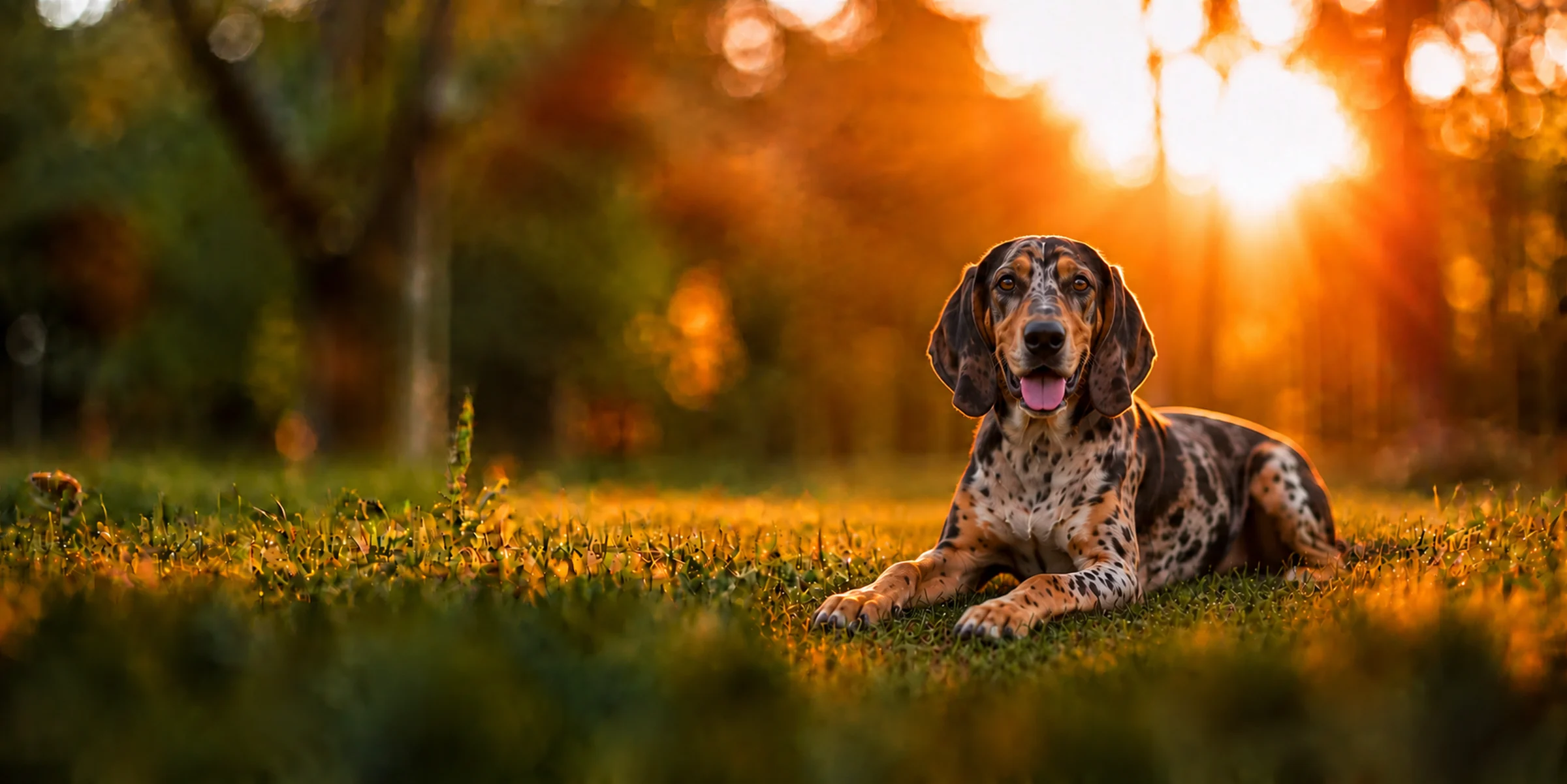
American Leopard Hound
The other American merle-coated hog and tree hound, and the closest working parallel. Similar drive and similar merle health considerations; the Leopard Hound is a touch more houndlike and a touch less territorial.
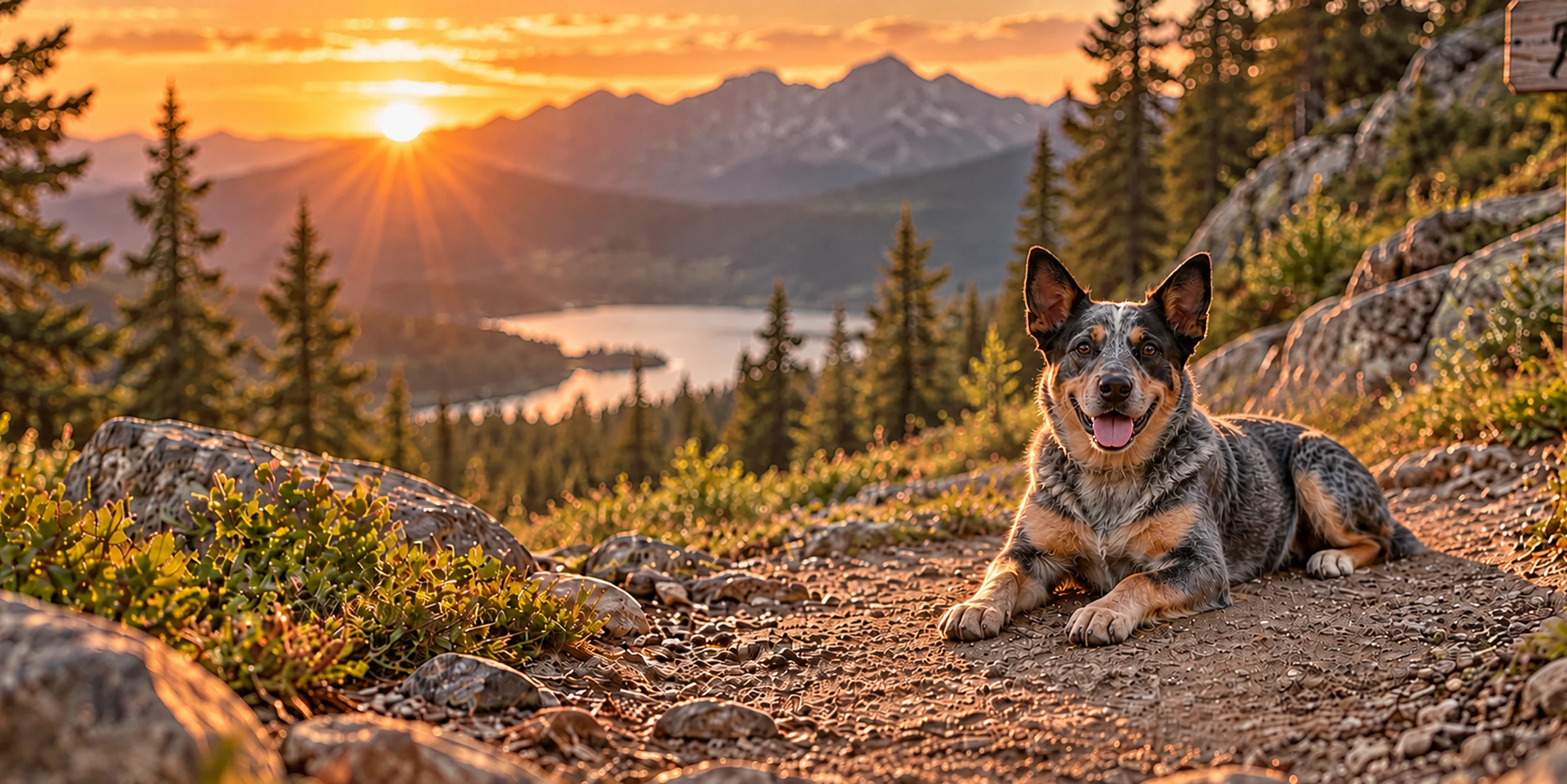
Australian Cattle Dog
The same relentless working drive in a smaller, more portable package. If the temperament appeals but the size and the acreage do not, the Cattle Dog is the more manageable version of the same problem.