

medium-to-large breed
Chinook
America's own sled dog, created in New Hampshire in 1917 and named for the founder's lead dog. Chinooks were built to haul heavy loads at a steady pace, and bred just as hard for a temperament that could work in a team without argument - which is why they are gentle, quiet, notably trainable and superb with children. The catch is rarity and a narrow gene pool, with a breed-specific seizure disorder in it.

Pup Height
22-26 in
Males 24-26 in, females 22-24 in. The color is the giveaway - tawny, from honey through reddish gold, with darker markings on the ears and muzzle and a black-tipped tail. Ears may be dropped, prick or anything in between, all equally correct. The state dog of New Hampshire, and one of the rarest breeds in the AKC with only a few hundred alive. Source: AKC breed standard.

Pup Weight
50-90 lb

Pup Lifespan
12-15 years
Your pup, at a glance
What’s Life With This Pup Really Like?

Affectionate and physically close with their family - they lean, follow from room to room, and settle against people rather than apart from them.

Excellent. Patient, gentle and famously tolerant, and sturdy enough for family life. One of the better large breeds on this site for children.

Very good. Team dogs were bred not to argue, and it shows - Chinooks are reliably sociable with other dogs and generally fine with cats raised alongside them.

Low. A quiet dog who may woo or grumble conversationally rather than bark.

Moderate to high. Ninety minutes of real work satisfies them, and they settle well indoors once it has happened.

Heavy. A dense northern double coat that sheds year-round and blows out completely twice a year.

Enthusiastic without being frantic. They enjoy pulling, hiking and games with their people, and they have a dignified streak underneath it.

Very low.

Excellent, and unusual for a northern breed. Walden selected for it deliberately - they are willing, quick and genuinely want to work with you.

Low. A Chinook may announce a visitor and will then be delighted to meet them. Not a guarding breed in any sense.

Moderate. A weekly brush most of the year and daily work through the twice-yearly shed, with no clipping needed.

Moderate. They handle cold superbly and heat badly, and they adapt to most homes provided the daily work happens.
Lifestyle fit
Could This Be Your Best Breed?
A Chinook fits a house with a yard and an active family with time - an hour to ninety minutes of real activity daily plus something to think about. They are one of the easier working breeds for a first-time owner, cost $1,600 to $2,600 a year, and live twelve to fifteen years. Anyone in a hot climate, out of the house all day, or hoping to bring a puppy home this month should look elsewhere.

Living Space
A house with a yard suits them best. They handle cold easily and heat poorly, and they are quiet enough for an apartment if the exercise genuinely happens - which for most apartment schedules, it does not.

Pup Experience
Good for a first-time owner with time. Chinooks are one of the more biddable working breeds - a sled dog bred deliberately for tractability rather than the independence most northern breeds carry.

Daily Pup Time
An hour to ninety minutes of real activity daily, plus something to think about. The coat wants a weekly brush and a great deal more twice a year.

Allergies & Coat
The Chinook scores 7/10 for shedding and 2/10 for drooling. No dog is truly hypoallergenic. The allergens come from dander and saliva, and a dog that sheds this much will leave plenty of hair behind - especially on your furniture, floors, and clothes.
Quirks & challenges
The Not-So-Easy Stuff

Genuinely Rare
A few hundred dogs in existence. Expect a long waiting list, travel, and a careful breeder who asks questions.
They Need a Job
A freight dog with real drive. Carting, sledding, hiking or backpacking - a walk around the block is not it.
Sensitive to Correction
Soft-natured and easily discouraged. Harsh handling shuts them down rather than sharpening them up.
They Dig
A northern dog's instinct to make a cool hollow. Give them a sanctioned spot or the lawn takes the loss.
Heavy Seasonal Shedding
A dense double coat that comes out in sheets twice a year. Nothing prevents it.
Poor in Heat
Built for New England winters. Summer exercise belongs at dawn and dusk.
The good, the bad & the hairy
Health, Care & Costs
Understanding the health risks and ongoing costs of a Chinook helps you plan for a happy, healthy life together.

12-15 years
$60-$90
per groom (bath, full blow-out, nails, ears), every 8-12 weeks ($250-$500/year)
$1,600-$2,600/year
all-in (food, routine vet, grooming, insurance, incidentals)

Health Risks
Conditions this breed is prone to.

A breed-specific condition, distinct from ordinary epilepsy, in which young dogs have episodes of collapse or paralysis without losing consciousness, often triggered by stress. Many outgrow it and most dogs affected live normally, but it is worth asking any breeder about directly - it is the one condition specific to this breed.
The hip joint develops loosely so the ball grinds in the socket instead of gliding, leading to arthritis and sometimes surgery. Common across large working breeds; ask to see both parents' hip scores.
One or both testicles fail to descend. It is unusually common in this breed, matters because a retained testicle carries a real cancer risk, and is resolved by neutering.
Allergic skin disease causing itching, licking and recurrent infections. Managed with diet, medication and sometimes immunotherapy, and it is a lifelong cost rather than a single treatment.
Cataracts and progressive retinal atrophy both appear in the breed. Annual eye examination catches cataracts early, and responsible breeders screen the parents.
Worth listing on its own. The breed passed through a bottleneck of eleven breedable dogs in 1981, so genetic diversity is unusually narrow and the quality of the breeder's health testing matters more here than in a populous breed.

Insurance & Health Coverage
A comparatively healthy breed with one unusual wrinkle: the gene pool is small enough that inherited conditions are harder to breed away from than in a populous breed, so the breeder's testing record carries more weight here than the policy does.

The ordinary large-breed costs still apply. Hip dysplasia is the expensive one, and joint surgery on a seventy-pound dog runs into the thousands. Allergic skin disease is the steady drip - not dramatic, but medication and diet for the life of the dog.

Chinook seizure disorder usually appears young, which is exactly when most owners have not organized cover yet. Insure before the first episode rather than after, because a neurological note on the record excludes everything downstream of it.
 Get a Pet Insurance Quote
Care needs
The Daily Routine

Grooming
A dense double coat that needs a thorough brush once a week most of the year and daily attention for a few weeks in spring and fall when the undercoat lets go. No trimming, and bathing only occasionally - the coat sheds dirt well on its own.

Exercise
An hour to ninety minutes daily with something purposeful in it. Carting, skijoring, backpacking, hiking and long runs all suit a freight dog; steady work over distance suits them better than sprinting.

Food & Weight
Two measured meals. They are working dogs with a working appetite and a suburban Chinook burns far less than their enthusiasm suggests - feed the dog in front of you rather than the breed average, and keep them lean while the joints are growing.
Similar breeds
If This Isn’t Quite the One
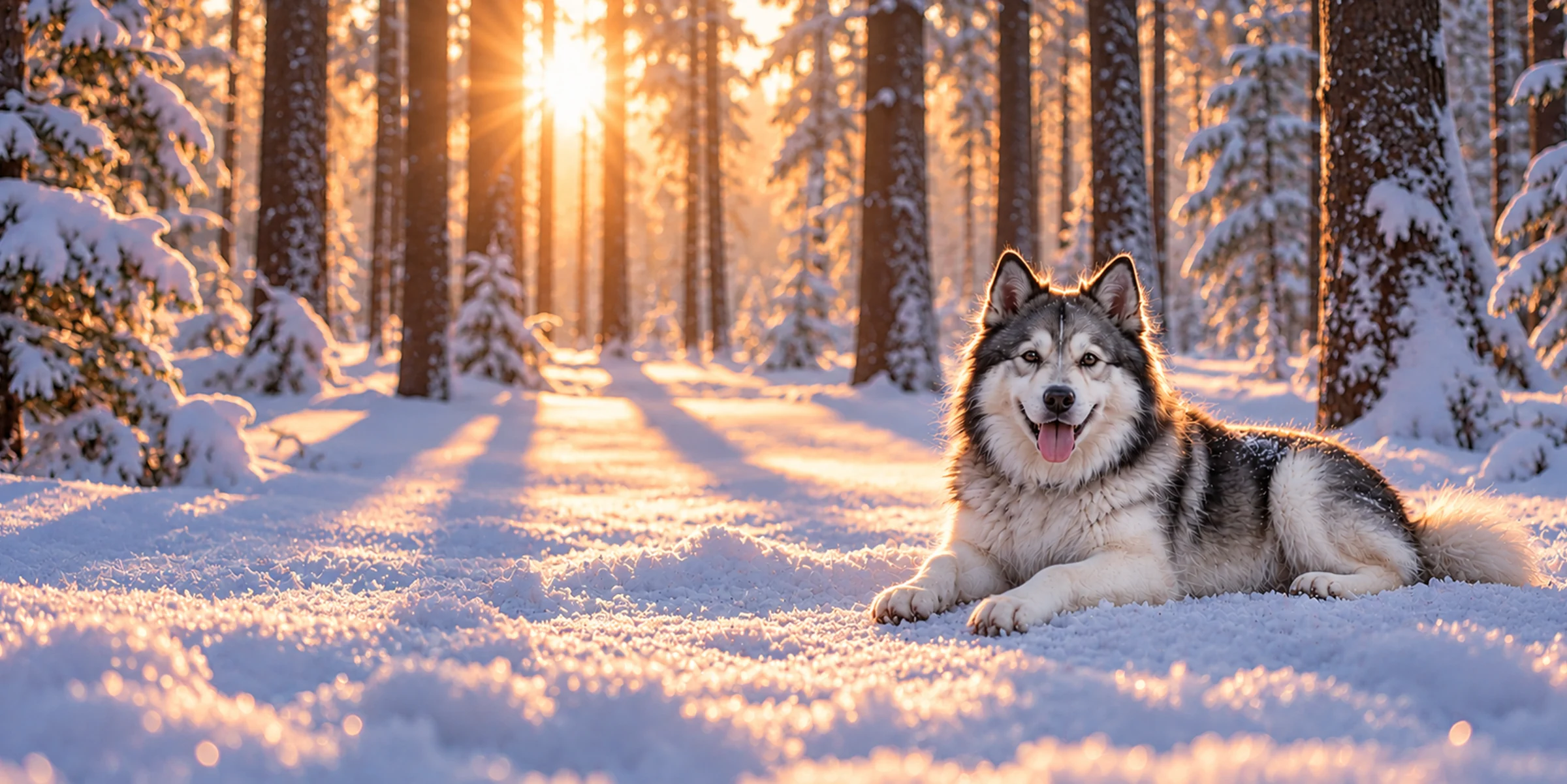
Canadian Eskimo Dog
The other rare North American sled dog, and a sharp contrast in temperament - the Canadian Eskimo Dog is far more independent and primitive. The Chinook gives you the freighting drive with a considerably more biddable mind.
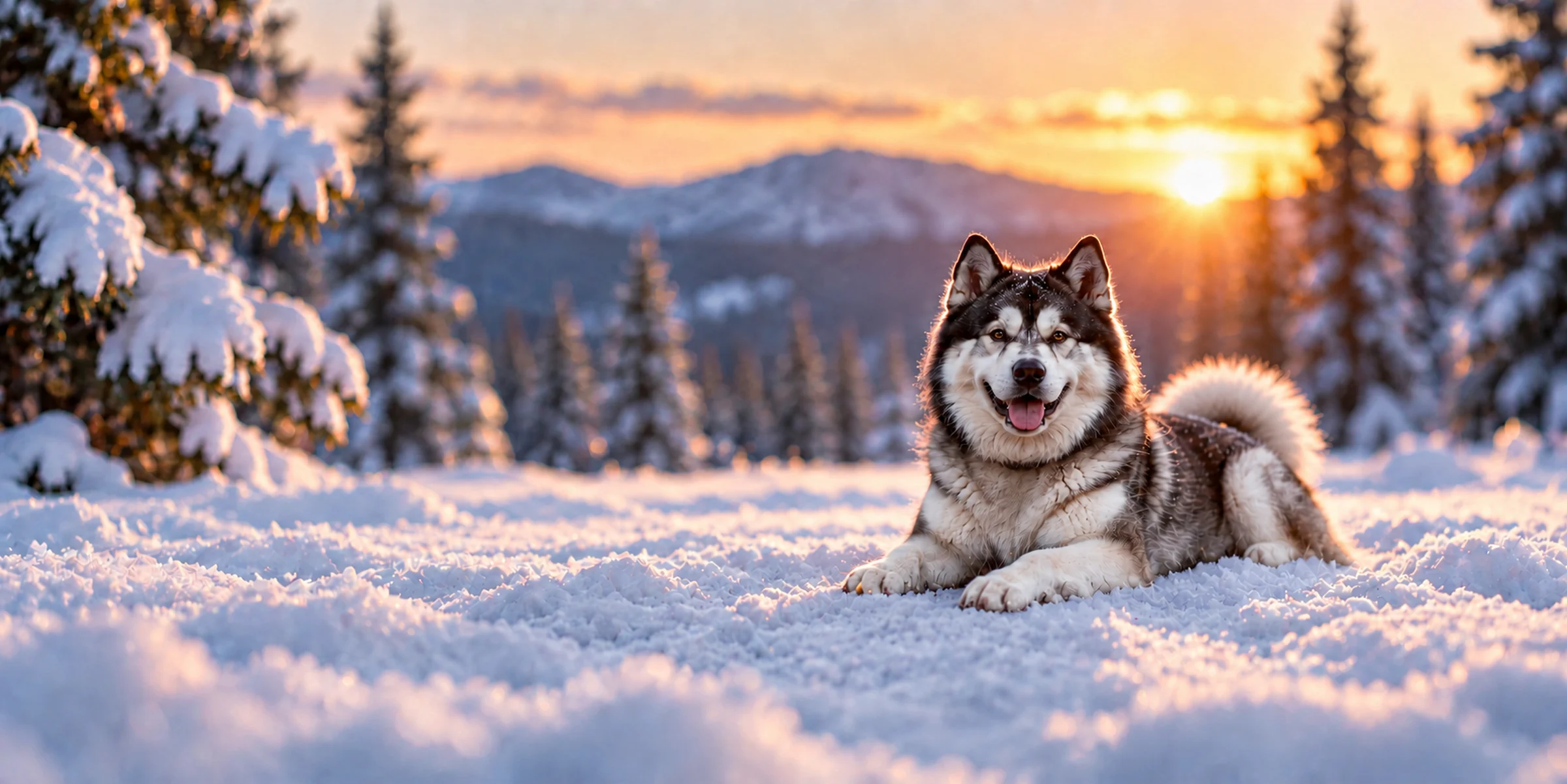
Alaskan Malamute
The closest common breed by job - both are freight haulers rather than racers, built for power over distance. The Malamute is stronger-willed and more dog-aggressive; the Chinook is gentler, softer and easier to train.