

medium-to-large breed
Collie
A Scottish sheepdog turned into a household name by Hollywood, and unusually for a breed that famous, Collies mostly live up to it - gentle, deeply attached to their family, superb with children and among the most trainable dogs there is. Two things to know first: they are genuinely vocal, and they carry the MDR1 mutation, which makes several routine medications dangerous or lethal. A DNA test settles that before it matters.

Pup Height
22-26 in

Pup Weight
50-75 lb
Males 24-26 in and 60-75 lb, females 22-24 in and 50-65 lb. Two coat varieties judged separately - Rough, the long-coated dog most people picture, and Smooth, identical in every other respect with a short dense coat. Four colors: sable and white, tricolor, blue merle and white. The wedge head and almond eye are breed hallmarks. Source: AKC breed standard.

Pup Lifespan
12-14 years
Your pup, at a glance
What’s Life With This Pup Really Like?

High. They are affectionate and physically close with their family, lean on people, and follow from room to room without being needy about it.

Outstanding - one of the very best on this site. Gentle, patient, protective and sturdy, with the caveat that Collies may try to herd running children by circling them.

Very good. Sociable with dogs, generally reliable with cats, and with far less prey drive than most herding breeds.

High. They were bred to work at a distance using their voice and they still use it - trainable down to reasonable, never a quiet breed.

Moderate. An hour of real activity suits them, which makes them one of the easier herding breeds to satisfy.

Heavy. A dense double coat in both varieties that sheds year-round and blows out completely twice a year.

Cheerful and engaged. They enjoy fetch, agility and games with their people, and have none of the obsessive intensity of a working Border Collie.

Very low.

Excellent - among the highest here. Quick, attentive and eager, with a sensitivity that makes gentle methods essential.

Strong as an alarm. Alert, watchful and loud, with little inclination to do anything beyond announce.

High for the Rough, moderate for the Smooth. Twice-weekly deep brushing and daily work through the seasonal blowouts.

Good. They suit most homes and climates and settle well indoors, provided the exercise happens and the barking is tolerated.
Lifestyle fit
Could This Be Your Best Breed?
A Collie suits a house with a yard, though an apartment can work if the walks genuinely happen and the neighbors tolerate barking. They are one of the better large breeds for a first-time owner, ask an hour a day, and cost $1,600 to $2,700 a year across twelve to fourteen. A shared wall is where this falls apart, as is any household that will not get the brush out twice a week.

Living Space
A house with a yard suits them best, though Collies are calm enough indoors for an apartment if the walks genuinely happen. The barking is the thing to think about with close neighbors.

Pup Experience
One of the better large breeds for a first-time owner. They are sensitive, eager and extremely trainable, and they ask for less exercise than most herding dogs.

Daily Pup Time
An hour of walking and play with something to think about in it. Grooming is a couple of thorough sessions a week for a Rough, and much more twice a year.

Allergies & Coat
The Collie scores 8/10 for shedding and 2/10 for drooling. No dog is truly hypoallergenic. The allergens come from dander and saliva, and a dog that sheds this much will leave plenty of hair behind - especially on your furniture, floors, and clothes.
Quirks & challenges
The Not-So-Easy Stuff

MDR1 Drug Sensitivity
Common worming and sedative drugs can be lethal at normal doses. A DNA test settles it - do it before any treatment.
They Are Vocal
Bred to use their voice at a distance and they still do. Trainable to reasonable, never quiet.
Heavy Shedding
A dense double coat that sheds year-round and blows out completely twice a year. Smooths shed just as much.
Collie Eye Anomaly
An inherited malformation present in a large share of the breed. DNA testable in the parents - ask.
Genuinely Sensitive
Harsh handling and household conflict both distress them. They need a calm home and a gentle hand.
Herding the Children
Circling and gathering aimed at running kids. Harmless but worth redirecting into a job early.
The good, the bad & the hairy
Health, Care & Costs
Understanding the health risks and ongoing costs of a Collie helps you plan for a happy, healthy life together.

12-14 years
$70-$110
per groom (bath, full blow-out, feathering, nails, ears), every 8-10 weeks ($350-$650/year)
$1,600-$2,700/year
all-in (food, routine vet, grooming, insurance, incidentals)

Health Risks
Conditions this breed is prone to.

A mutation in the multi-drug resistance gene, carried by a large proportion of Collies, that stops the brain clearing certain drugs - so ordinary doses of some worming, anti-diarrheal, sedative and chemotherapy medications accumulate and cause severe neurological damage or death. It is DNA testable for very little money, and every Collie should be tested before any treatment. Tell every vet the breed.
An inherited malformation of the tissues at the back of the eye, present in a large share of the breed. Most affected dogs see well enough for a normal life, but severe cases cause retinal detachment and blindness. It is DNA testable and detectable in puppies by an eye examination at six to eight weeks.
The retina degenerates gradually until the dog is blind, usually starting with night vision. There is no treatment and there is a DNA test, so tested parents remove the risk.
The hip joint develops loosely and wears into arthritis, sometimes needing surgery. Less common here than in most large breeds but still screened by scoring the parents.
The stomach fills with gas and twists, cutting off its own circulation, and it kills within hours without emergency surgery. Deep-chested breeds are at risk - split meals and keep hard exercise clear of them.
An inherited autoimmune disease affecting skin and muscle, causing lesions on the face, ears and legs in young dogs and sometimes muscle wasting. It appears particularly in Collies and Shetland Sheepdogs and is managed rather than cured.

Insurance & Health Coverage
Start with the thing insurance cannot help you with. MDR1 is a drug reaction, not a disease - if a vet gives a normal dose of the wrong medication to an affected Collie, the damage is done and no policy undoes it. The test costs very little, and it belongs in the first week rather than the first emergency. Put the result on the file at your practice.

On the insurable side Collies are a comparatively healthy large breed. Bloat is the emergency worth having a plan for, and eye disease is the recurring category - though the two big inherited ones, Collie eye anomaly and PRA, are congenital and therefore excluded from every policy. Both are DNA testable in the parents, so ask the breeder rather than the underwriter.

Insure young for the ordinary reasons, and expect fairly reasonable premiums for a dog this size.
 Get a Pet Insurance Quote
Care needs
The Daily Routine

Grooming
The Rough needs a thorough brush right down to the skin twice a week, with particular attention to the mane, the trousers and behind the ears where mats form first, and daily work through the twice-yearly shed. The Smooth needs a weekly going-over and sheds just as heavily. Neither coat should be shaved - it insulates against heat as well as cold. Check ears and eyes weekly.

Exercise
About an hour daily with some thinking in it. They are far less driven than a Border Collie and do well with walks plus training, herding, agility or scent work rather than needing hours of hard running.

Food & Weight
Two measured meals with hard exercise kept clear of them given the bloat risk. They are easy to keep at a sensible weight compared with most breeds, though the coat hides gain - go by feel through the ribs.
Similar breeds
If This Isn’t Quite the One
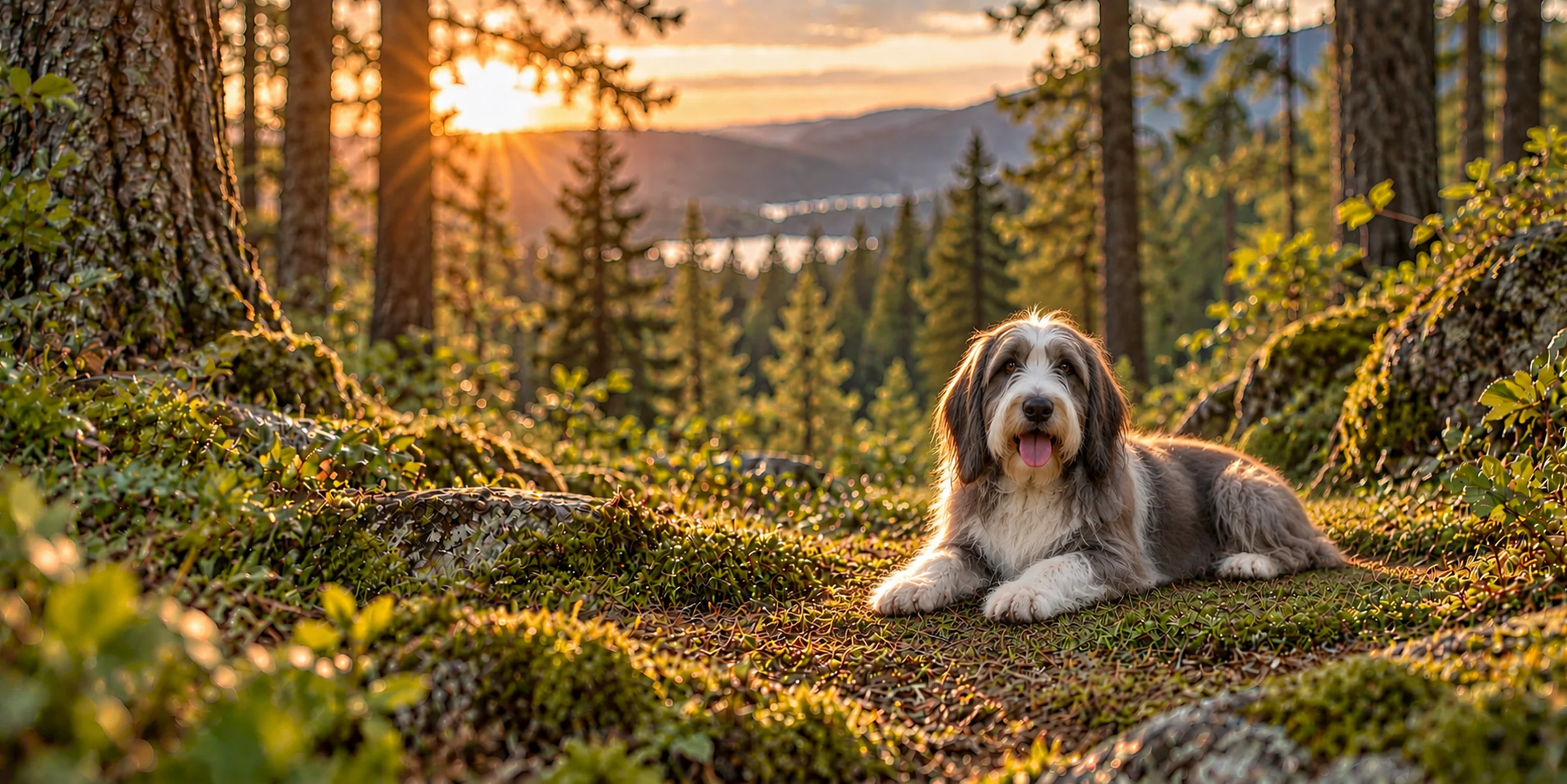
Bearded Collie
Another Scottish herding breed of similar size and gentleness, with a shaggier coat and a more boisterous, comic streak. The Beardie needs more grooming and more exercise; the Collie is the calmer and more biddable of the two.

Border Collie
The working version of the same tradition, and the honest contrast - the Border Collie has several times the drive and needs a job rather than a walk. The Collie gives you the intelligence and trainability in a dog most households can actually satisfy.

Shetland Sheepdog
Often called a miniature Collie and genuinely related, since Rough Collies were crossed into the Sheltie early on, but a separate breed from the Shetland Islands with its own standard. The Sheltie is about a third of the weight, more vocal and more reserved with strangers; the Collie is the calmer, more easygoing family dog.