

small breed
Dandie Dinmont Terrier
Long, low and curved, with an arched loin and a domed head crowned by a distinctive silky topknot - no other terrier looks like them. Two colors only, both named by the standard: pepper, running from dark bluish-black to pale silver, and mustard, from reddish brown to fawn. The Dandie Dinmont is the only breed named after a fictional character - a farmer in Walter Scott's 1815 novel Guy Mannering. One of the most endangered native breeds in Britain. Source: AKC breed standard.
A border terrier in the geographical sense, bred along the Scottish border to go to ground after badger and otter - which is why they are long, low and tougher than the topknot suggests. Dandie Dinmonts are dignified, affectionate and calm indoors for a terrier, with a bark far deeper than a twenty-pound dog has any right to. The long, arched back is the thing to plan around, and disc disease is the likely problem.

Pup Height
8-11 in

Pup Weight
18-24 lb

Pup Lifespan
12-15 years
Your pup, at a glance
What’s Life With This Pup Really Like?

Very high. Dandies are committed lap dogs and burrowers under blankets, and notably more affectionate at home than their dignified expression suggests.

Good with considerate children. Dandie Dinmonts are sturdier than they look and dislike being picked up badly, and their back means rough handling is a genuine risk to them.

Mixed. Reasonable with dogs they know and a real problem for small pets - the earth terrier's prey drive is fully intact.

Moderate, and remarkable in character. The bark is deep and resonant enough that people assume a much larger dog is in the house.

Low to moderate. Forty-five minutes suits them and they settle genuinely well indoors afterward.

Low. The double coat sheds lightly, and stripping or clipping removes most of what would otherwise drop.

Game and good-humored without being frantic. They enjoy digging, scent work and a bit of chasing.

Low.

Moderate. Bright and quick to learn, independent enough to decide whether it is worth doing, and sensitive enough that harshness backfires.

Strong as an alarm. Alert, quick to announce, and equipped with a bark that suggests something far bigger behind the door.

High. Brushing several times a week plus a skilled strip or clip every couple of months, and the skilled part is genuinely hard to source.

High. Apartment or house, city or country - they adapt easily, provided the stairs are managed and the grooming happens.
Lifestyle fit
Could This Be Your Best Breed?
A Dandie Dinmont Terrier suits an apartment or a house and a first-time owner who wants terrier character in a quieter register. Thirty to forty-five minutes of walking does it; grooming is the bigger item, inside a $1,500 to $2,500 annual total. The wait is the part that never shortens - a few hundred registered a year, worldwide - and the stairs and the sofa jumps need managing for the whole of that long back's life.

Living Space
Apartment or house, either suits them. Dandie Dinmonts are small, calm indoors and adaptable - the thing to plan around is stairs and furniture jumps, because the long back does not thank them for either.

Pup Experience
Manageable for a first-time owner who wants terrier character in a quieter register. Dandies are more independent and less biddable than the toy breeds they are often compared with, and considerably calmer than most terriers.

Daily Pup Time
Thirty to forty-five minutes of walking and play. Grooming is the larger item - brushing several times a week plus hand-stripping or clipping every couple of months.

Allergies & Coat
The Dandie Dinmont Terrier scores 3/10 for shedding and 2/10 for drooling. No dog is truly hypoallergenic. The allergens come from dander and saliva, and a coat like this one holds on to them rather than spreading them around your home - which is what a groomer is clearing out every six to eight weeks.
Quirks & challenges
The Not-So-Easy Stuff

The Long Back
A curved, elongated spine on short legs. Stairs, sofa jumps and any extra weight all shorten the odds on a disc problem.
Grooming Is Skilled Work
The coat wants hand-stripping to keep its texture, and few groomers know how. Clipping softens it permanently.
Genuinely Rare
A few hundred registered worldwide each year. Expect a long wait, travel, and a small gene pool.
Terrier Independence
They weigh a request rather than obeying it, and a scent underground beats any recall you have trained.
That Bark
Startlingly deep for the size and used with conviction. Trainable to reasonable, never quiet.
They Dig
An earth-working terrier with the instinct intact. Give them a sanctioned spot or lose the flower beds.
The good, the bad & the hairy
Health, Care & Costs
Understanding the health risks and ongoing costs of a Dandie Dinmont Terrier helps you plan for a happy, healthy life together.

12-15 years
$70-$110
per groom (hand-strip or clip, bath, topknot, ears, nails), every 8-10 weeks ($400-$700/year)
$1,500-$2,500/year
all-in (food, routine vet, grooming, insurance, incidentals)

Health Risks
Conditions this breed is prone to.

The discs between the vertebrae bulge or rupture and press on the spinal cord, causing pain and sometimes sudden hind-leg paralysis. The breed's long, arched back makes it the most likely serious problem they will face. Keeping them lean and limiting repeated jumping and stair work does most of the prevention.
Pressure builds inside the eye, which is painful and destroys vision quickly if untreated. It is an emergency - squinting, redness or a cloudy eye warrants a same-day appointment - and the breed is predisposed.
The thyroid under-produces, causing weight gain, lethargy and coat problems. It matters more than usual here because extra weight loads an already vulnerable spine. Diagnosed by blood test and controlled with a daily tablet.
The adrenal glands overproduce cortisol, causing excessive thirst, a pot-bellied appearance, hair loss and muscle weakness. It appears in the breed at higher rates than average and needs lifelong medication and monitoring.
Seizures with no other underlying cause, usually first appearing between one and five years old. Controlled with daily medication rather than cured, and the drugs and blood monitoring are a lifelong cost.
Worth listing on its own. With only a few hundred puppies registered worldwide each year, genetic diversity is very narrow, which makes the individual breeder's health testing more important here than in a populous breed.

Insurance & Health Coverage
The back is the reason to insure this breed and the reason to do it early. Disc disease in a long-bodied dog is common enough to treat as a real possibility rather than bad luck, spinal surgery runs into several thousand dollars with rehabilitation afterward, and it tends to arrive suddenly in a dog who was fine that morning. Once a back episode is on the record, insurers exclude the spine - which removes exactly the cover you wanted.

Glaucoma is the other emergency, fast and expensive and sight-threatening.

Cushing's disease and epilepsy are both lifelong management rather than one-off bills, so check how a policy handles chronic conditions across renewal years rather than just the first claim. Grooming sits outside all of it - a skilled strip every couple of months for a decade is several thousand dollars no policy touches.
 Get a Pet Insurance Quote
Care needs
The Daily Routine

Grooming
A double coat of crisp topcoat over soft undercoat that needs brushing two or three times a week, with the topknot, ear fringes and leg furnishings kept tidy. The coat is traditionally hand-stripped every couple of months to keep its harsh texture; clipping is easier and permanently softens it, so decide which you want before you start. Groomers who can strip this breed are not common - find one before the puppy arrives.

Exercise
Thirty to forty-five minutes daily of level walking and play, with scent games and earthdog work to occupy the terrier brain. Keep it off repeated stairs and high jumps given the spine.

Food & Weight
Two measured meals. A Dandie is a compact, food-keen dog with a long back, so extra weight lands precisely where it does the most damage - the ribs should be easy to feel under the coat.
Similar breeds
If This Isn’t Quite the One
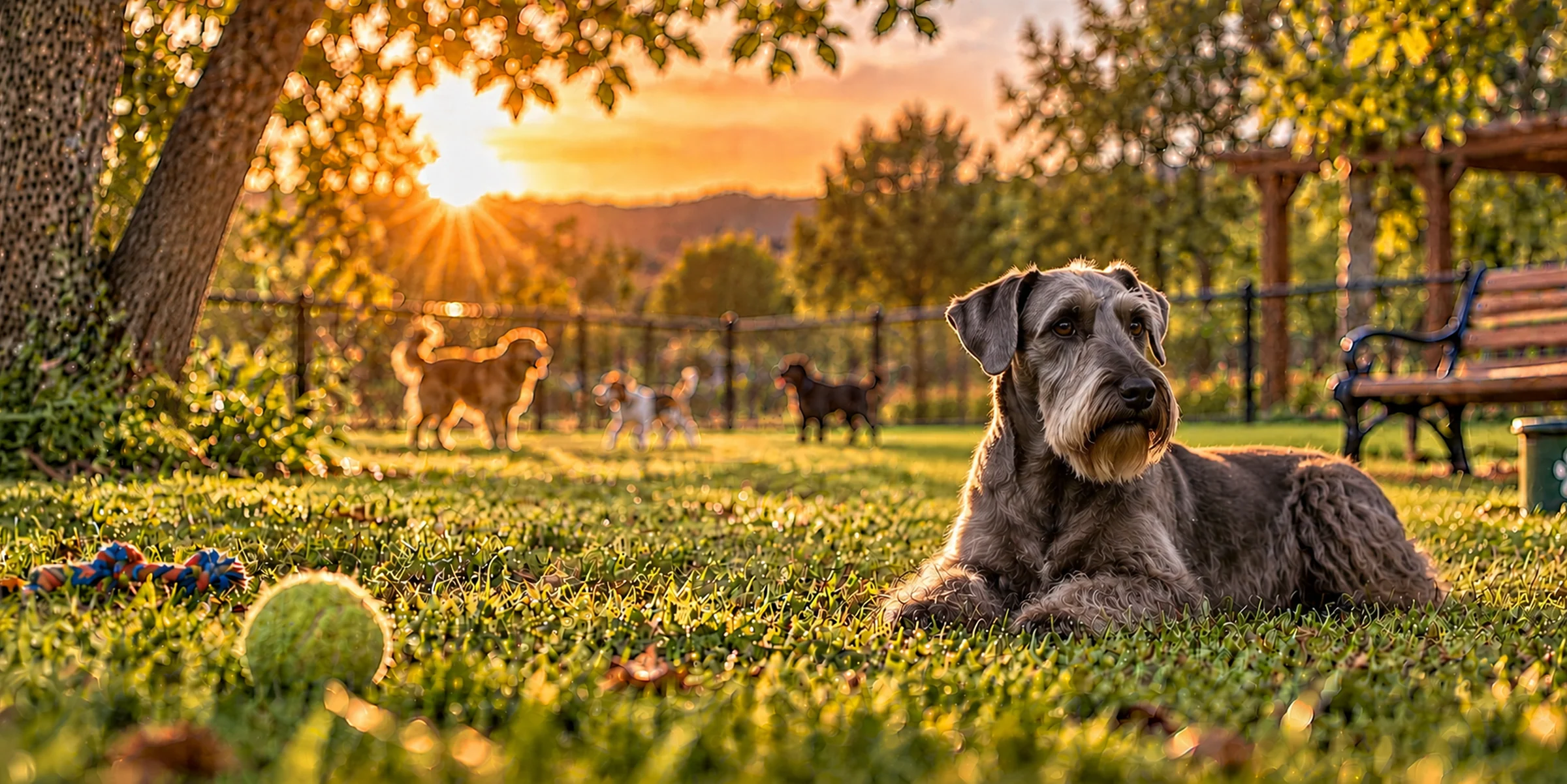
Cesky Terrier
The closest match - another long, low, clipped-or-stripped terrier with an unusually calm temperament for the group and a similarly small gene pool. The Cesky is more sociable with other dogs; the Dandie is more independent and rarer still.
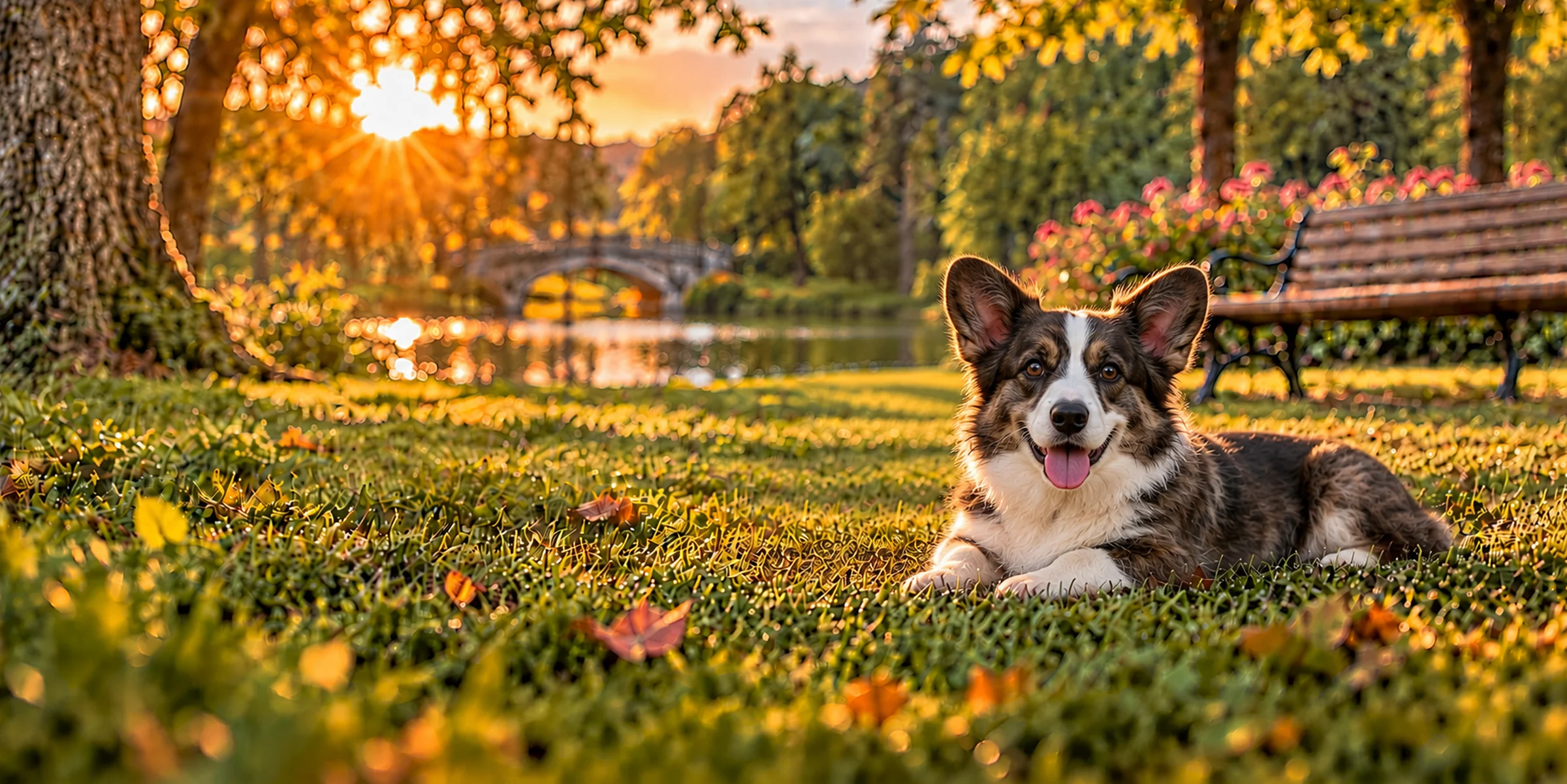
Cardigan Welsh Corgi
A similar long-backed, short-legged build with the same disc-disease considerations and the same need for ramps rather than stairs. The Cardigan is a herder and far more trainable; the Dandie is quieter and needs a fraction of the exercise.

Skye Terrier
The other long-backed Scottish terrier, and the rarer of the two. Skyes are roughly twice the weight with a far heavier coat, and carry the same disc-and-stairs caution in a dog who picks one person.