

medium breed
Skye Terrier
Forty pounds of terrier on five-inch legs, bred on the Isle of Skye to follow fox and otter into rock dens and later taken up as a Victorian drawing-room favorite. Skye Terriers are dignified, funny at home and fiercely loyal to one chosen person. The costs are a long back on short legs that rules out stairs and sofa jumps, a five-inch coat that mats within a week, and a reserve toward strangers that never wears off.

Pup Height
9.5-10 in
Males 10 in at the shoulder and about 41.5 in from nose to tail tip, females 9.5 in and about 40 in - a dog twice as long as tall. Black, blue, dark or light gray, silver platinum, fawn or cream, one overall color with black ears, muzzle and tail tip; shading of the same color is allowed but not patches. A double coat: a short, close, soft, woolly undercoat under a hard, straight, flat outer coat about 5.5 in long, with shorter, softer hair veiling the forehead and eyes. Ears may be prick or drop, and the standard treats both as correct. Recognized by the AKC in the Terrier Group since 1887. Source: AKC breed standard.

Pup Weight
35-45 lb

Pup Lifespan
12-14 years
Your pup, at a glance
What’s Life With This Pup Really Like?

High, but concentrated. The Skye Terrier's chosen person gets a devoted lap dog; everyone else gets company at a polite distance.

Better with older, considerate children. Skye Terriers do not tolerate grabbing or rough handling, and a long back is easily hurt by a child who lifts the dog wrong.

Limited. A working earth dog with real prey drive toward cats and small pets, and often short-tempered with unfamiliar dogs of the same sex.

Moderate to high. Skye Terriers announce the door, the delivery and the neighbor's cat, with a bark much bigger than the dog.

Moderate. Two steady walks and a bit of sniffing satisfy an adult, and the rest of the day is spent lying near their person.

Moderate. The long coat sheds less than it looks like it should, but what comes out gets caught in the rest of the coat and turns into mats if it is not combed out.

Playful in short bursts and fond of a tug or a squeaky toy, with the good sense to stop. Keep the games low to the ground rather than leaping.

Very low. The beard drips after a drink; that is the extent of it.

Fair. Bright and quick to learn, but proud and easily offended - rewards and short sessions get cooperation, pressure gets a dog who shuts the conversation down.

Very high. Alert, suspicious of strangers by design, and quick to sound off - though at 40 pounds the Skye Terrier is a warning system rather than a deterrent.

High. Comb to the skin two or three times a week, daily attention to the beard and furnishings, and a professional groom every six to eight weeks unless it is all done at home.

Moderate. Quiet and small enough for an apartment, but the stairs, the coat and the reserve with strangers all put conditions on where they can live comfortably.
Lifestyle fit
Could This Be Your Best Breed?
A Skye Terrier is at home in a quiet household with ramps to the furniture, an owner who enjoys combing a coat, and no expectation of a dog who belongs to everybody. Grooming pushes the yearly figure to $1,700 to $3,000, and the breed is rare enough that a year on a waiting list is normal. Anyone who wants a dog that greets the room should look at a different breed.

Living Space
An apartment works, with two conditions: stairs have to be manageable or avoidable, and the furniture needs ramps. Skye Terriers are quiet and undemanding indoors and do not need land - what they need is a home that takes the long back seriously.

Pup Experience
Better for a second-time owner, or a patient first-timer who wants this breed specifically. Skye Terriers are clever and perfectly trainable, but they are proud, opinionated and easily offended by heavy-handed correction, and the reserve with strangers needs steady socialization from the week they come home.

Daily Pup Time
Half an hour to an hour of walking, split into two outings, plus a thorough comb-through of the coat two or three times a week and a quick daily pass over the beard and leg furnishings.

Allergies & Coat
The Skye Terrier scores 4/10 for shedding and 1/10 for drooling. No dog is truly hypoallergenic. The allergens come from dander and saliva, and a dog that sheds this much will leave plenty of hair behind - especially on your furniture, floors, and clothes.
Quirks & challenges
The Not-So-Easy Stuff

A Long Back
Twice as long as tall, on short legs. Jumping off sofas and repeating stairs all day is how those spines get hurt.
The Coat Is the Commitment
A long hard coat over a woolly undercoat mats behind the ears, in the armpits and under the belly. Skipping a week shows.
One Person, Mostly
Skye Terriers pick a favorite and channel most of their affection there. The rest of the household gets a polite roommate.
Reserved With Strangers
Aloofness with visitors is written into the standard. Socialization softens the edges but does not produce a friendly dog.
Long Waiting Lists
A Vulnerable Native Breed with very few litters a year. A year on a list and a long drive are both normal.
Terrier Prey Drive
A working earth dog who will go after cats, rabbits and squirrels, and who rarely backs down from another dog.
The good, the bad & the hairy
Health, Care & Costs
Understanding the health risks and ongoing costs of a Skye Terrier helps you plan for a happy, healthy life together.

12-14 years
$75-$120
per groom (bath, blow-dry, full comb-out, feet, ears, nails), every 6-8 weeks or done at home ($0-$900/year)
$1,700-$3,000/year
all-in (food, routine vet, grooming, insurance, incidentals)

Health Risks
Conditions this breed is prone to.

The short legs come from a form of dwarfism that also changes the spinal discs, and a long back over those legs adds leverage. A disc can rupture suddenly, causing pain, wobbling or paralysis, and surgery runs into the thousands. Ramps instead of jumps, a harness rather than a neck collar, and a lean weight are the practical prevention.
Well enough known in the breed to carry its name. One of the forearm growth plates closes early in a puppy of three to ten months, the two bones stop growing together, and the leg bows and hurts. Over-exercising a young Skye is the main avoidable trigger - no forced running, jumping or stairs before the growth plates close.
Breed club surveys put cancer among the leading causes of death. Hemangiosarcoma is a blood-vessel tumor that often goes unnoticed until it bleeds; mammary tumors are far less likely in females spayed early, which is worth discussing with a vet. Neither can be screened for in advance.
Chronic hepatitis linked to copper building up in the liver is documented in the breed and can be silent for years before appetite, weight and energy fall away. There is no validated DNA test for the Skye Terrier form, so routine bloodwork at annual checkups is the realistic way to catch it while diet and medication still help.
An underactive thyroid causes weight gain, coat loss and flatness, and a daily tablet manages it well. Breeding stock should have a thyroid panel; other autoimmune conditions appear in the breed at lower rates.
Not a disease, but the thing behind several of them. With so few litters registered each year, breeders are working with limited unrelated stock, which shows up as smaller litters, patchy fertility and inherited problems that are harder to breed away from. Ask what health testing was done and how closely related the parents are.

Insurance & Health Coverage
Insure early, and read the spinal wording before anything else. Intervertebral disc disease is the claim this breed is most likely to make, decompression surgery and aftercare run into the thousands, and once a vet has written down a single episode of back pain or a stiff gait, that whole region of the body becomes a pre-existing exclusion for life.

Some policies also carve out conditions considered inherent to a breed's conformation, which on a long-backed, short-legged dog can mean the discs. Ask the insurer directly and in writing whether disc disease is covered for a Skye Terrier, rather than assuming a general accident-and-illness policy includes it.

Cancer in middle age and chronic liver disease are the other two expensive possibilities, and both favor a policy with a high annual limit and no per-condition cap. Given how rare and how hard to replace these dogs are, the premium is usually the smaller number in the conversation.
 Get a Pet Insurance Quote
Care needs
The Daily Routine

Grooming
A hard, flat outer coat around five inches long over a soft woolly undercoat, and a beard and leg furnishings that collect everything. Mist lightly and comb right down to the skin two or three times a week - brushing the surface alone leaves mats forming underneath, and the usual trouble spots are behind the ears, in the armpits, under the belly and around the rear. Clean the beard after meals, check the ears weekly, and keep the hair between the pads trimmed for grip on hard floors. The coat is not stripped or clipped in the show ring, but plenty of pet Skye Terriers are kept in a shorter trim, which is a fair trade if the combing is not happening.

Exercise
Half an hour to an hour a day is plenty for an adult - two steady walks and some nose work in the yard suit them better than distance. Puppies need far less: no stairs, no jumping down from furniture, and no forced running until the growth plates close at around ten to twelve months, because over-exercising a growing Skye is how the classic front-leg lameness starts.

Food & Weight
Two measured meals a day, and keep them lean - every extra pound is carried by a spine with a long span and no help from the legs. A 40-pound dog with short legs hides weight gain well, so go by ribs and waist rather than by how the dog looks in the coat, and weigh at every vet visit.
Similar breeds
If This Isn’t Quite the One
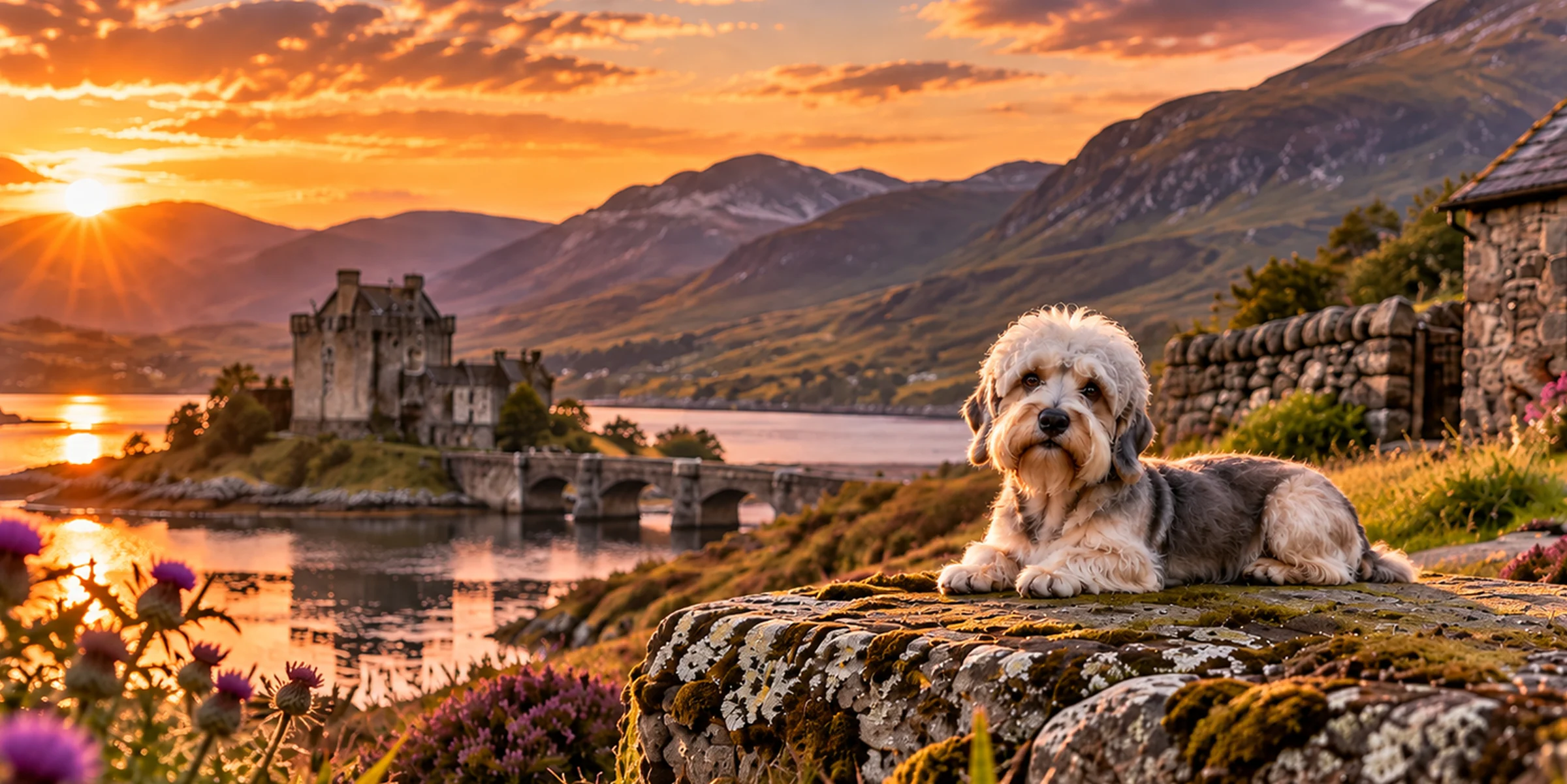
Dandie Dinmont Terrier
The other long-and-low border-country terrier, and just as endangered. The Dandie is half the weight with a silky topknot and a softer, more even temper with strangers; the Skye is bigger, longer-coated and considerably more aloof.
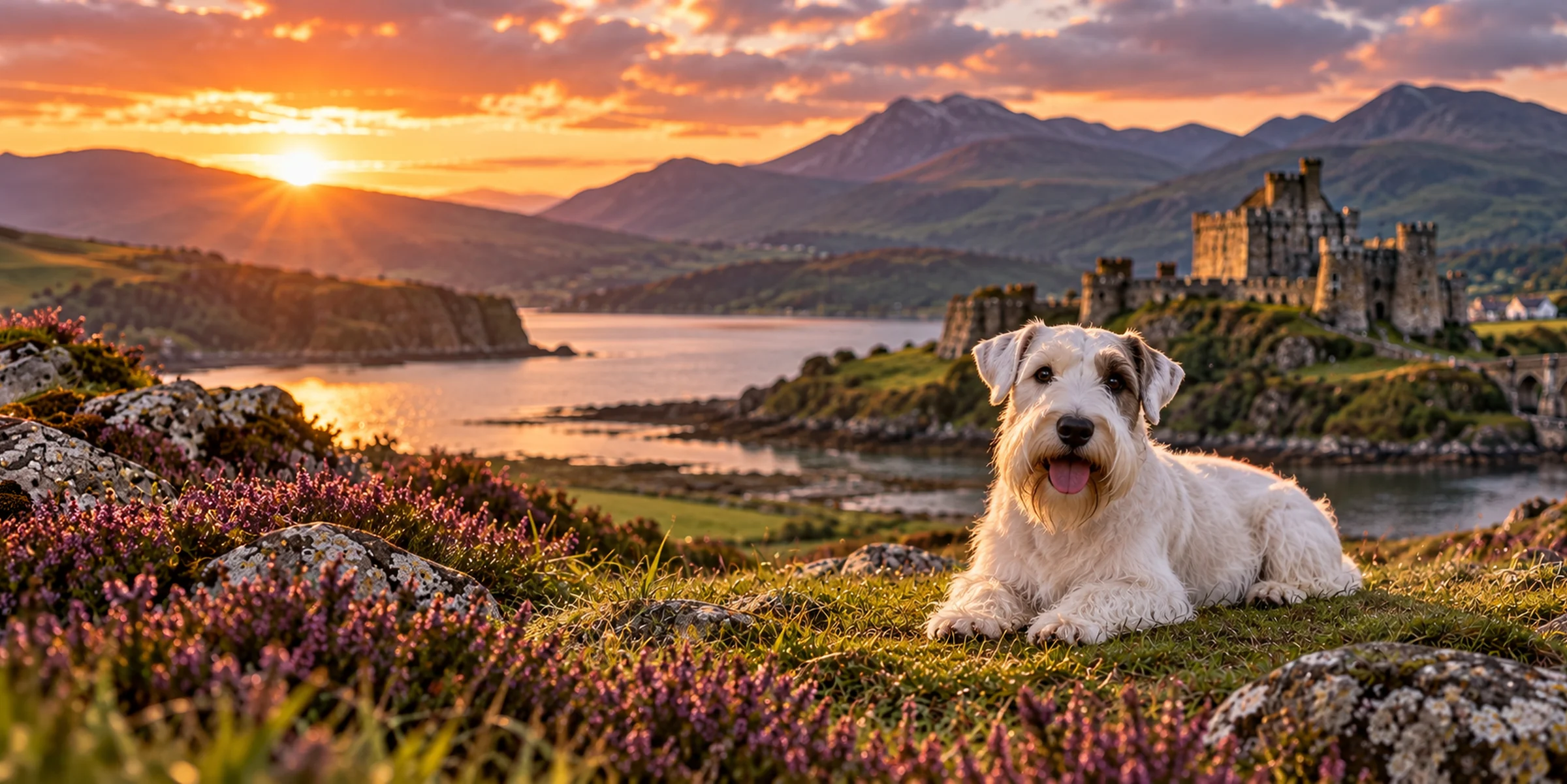
Sealyham Terrier
Another low-slung, heavily coated Vulnerable Native Breed with the same long waiting lists. The Sealyham is smaller, white and a genuine clown who likes visitors; the Skye is reserved and bonds to one person.
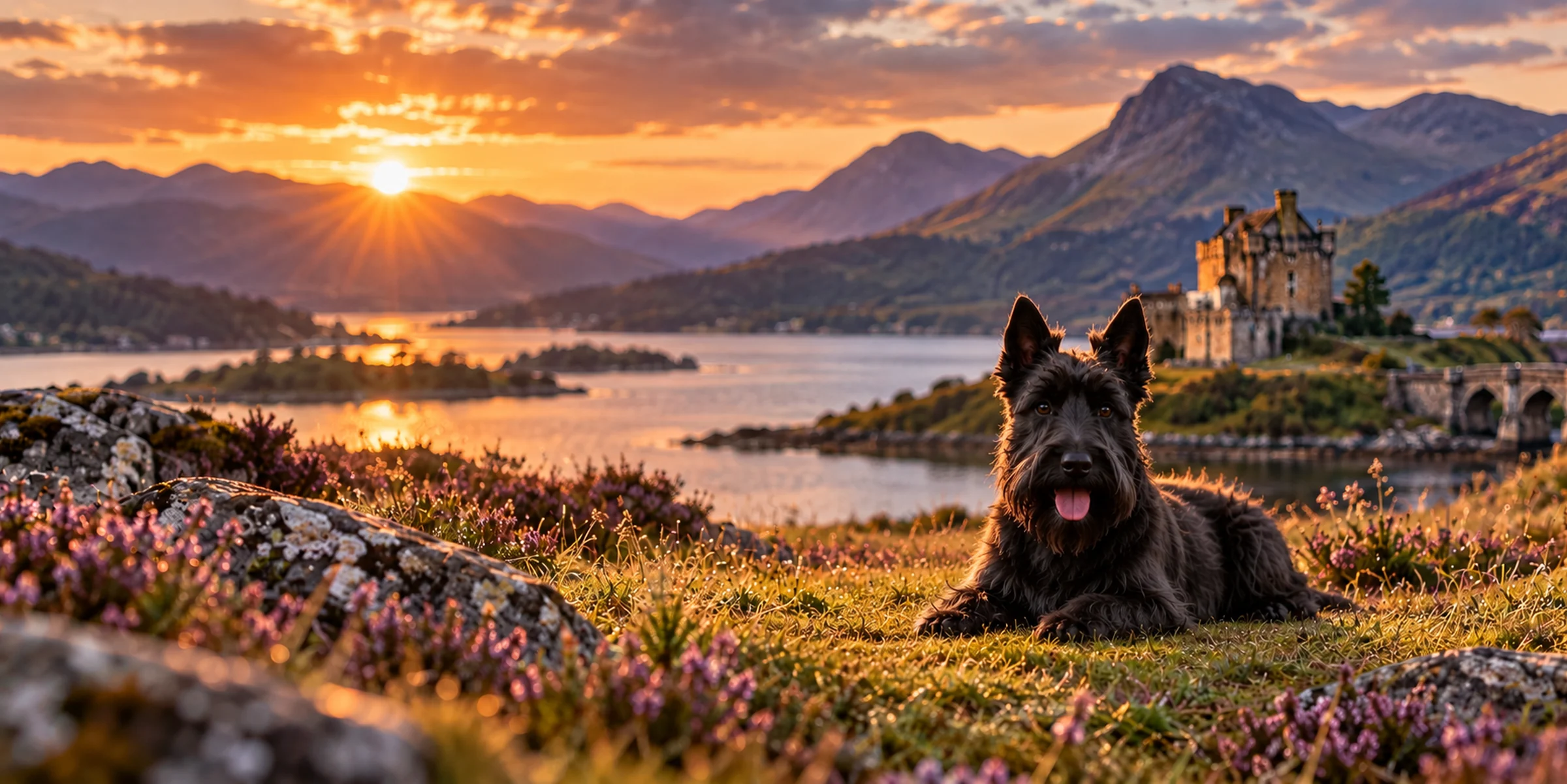
Scottish Terrier
Shares the dignity, the independence and the polite distance from strangers, and is far easier to find. The Scottie has a shorter back and a jacket that can be clipped down, so the health and grooming load is lighter.