

large-to-giant breed
Dogue de Bordeaux
The French mastiff most people know from Turner and Hooch: a huge, calm, wrinkled dog who leans on their family and asks for surprisingly little exercise. Dogues are courageous without being aggressive and extraordinarily patient in a house. They are also one of the shortest-lived breeds there is, drool more than anything else on this site, and struggle badly in heat. Choosing one means accepting all three.

Pup Height
23-27 in

Pup Weight
99-110 lb
Males 23.5-27 in and at least 110 lb, females 23-26 in and at least 99 lb. The head is the breed's signature - proportionally the largest of any dog, broad, deeply wrinkled, with a short muzzle and an undershot jaw. Shades of fawn only, from light to deep red, with a black or red mask or none at all. Short, soft, fine coat. Source: AKC breed standard.

Pup Lifespan
5-8 years
Your pup, at a glance
What’s Life With This Pup Really Like?

Very high, and physically overwhelming about it. They lean their entire weight against you and will attempt to be a lap dog at a hundred and ten pounds.

Good with their own family's children - patient, tolerant and famously gentle. The size is the caveat: they knock toddlers over without noticing.

Mixed. Same-sex aggression appears, and while they are often fine with animals raised alongside them, a Dogue de Bordeaux's size makes any disagreement serious.

Low. A quiet dog who rarely speaks, which means it is worth investigating when they do.

Low - among the lowest here. Forty-five minutes suits them and they sleep most of the rest of the day.

Moderate. A short fine coat that sheds steadily year-round without much management needed.

Minimal. Puppies play; adults are dignified, slow-moving and largely uninterested in games.

The maximum on this site. Loose flews and a giant head mean constant drool, and a head shake redistributes it across the room.

Moderate. Intelligent and deliberate, and stubborn enough that they comply when convinced rather than when told.

Very strong. Territorial, physically imposing and serious, without the noise most guarding breeds bring.

Moderate. The coat takes minutes; the facial folds and the drool are the routine that never stops.

Low. They suit quiet households and small spaces well, and cope badly with heat, humidity, stairs and any jurisdiction or insurer that will not have them.
Lifestyle fit
Could This Be Your Best Breed?
Dogues de Bordeaux suit a house with air conditioning, an owner who is home, and a family who genuinely wants a giant dog underfoot rather than an athletic one. Expect $2,400 to $4,000 a year and a life of five to eight years - the grief arrives early and that is the honest cost. If $2,400 to $4,000 a year is not in the budget, stop here - and stop here too for a hot climate, or for a house where the drool would be a daily grievance.

Living Space
A house with a yard and, ideally, air conditioning. Their exercise needs are genuinely low, but a short-muzzled giant in a hot apartment is a welfare problem rather than an inconvenience.

Pup Experience
Experienced owners. The Dogue de Bordeaux is calm and affectionate and is also a stubborn, territorial hundred-and-ten-pound dog with a head like a boulder, and there is no physical way to make them do anything they have decided against.

Daily Pup Time
Thirty to forty-five minutes of steady walking in cool parts of the day. The real commitment is the drool, the wrinkle cleaning and, honestly, the short life you are signing up for.

Allergies & Coat
The Dogue de Bordeaux scores 5/10 for shedding and 10/10 for drooling. No dog is truly hypoallergenic. The allergens come from dander and saliva, and a dog that sheds and drools this much will leave plenty of both behind - especially on your furniture, floors, and clothes.
Quirks & challenges
The Not-So-Easy Stuff

A Short Life
Five to eight years is typical, among the shortest of any breed. Go in knowing it.
Heroic Drool
The heaviest on this site. Cloths in every room, and it ends up on ceilings after a head shake.
They Overheat Fast
A short muzzle on a giant frame. Summer walks at dawn and dusk only, and never a hot car or a hot room.
Wrinkles Need Cleaning
Deep facial folds trap moisture and food. Wipe and dry them every few days or infection follows.
Stubborn and Territorial
They decide. Early socialization shapes the guarding instinct into judgment rather than suspicion.
Insurance and Housing
Frequently excluded by home insurers and refused by landlords. Sort both out in writing first.
The good, the bad & the hairy
Health, Care & Costs
Understanding the health risks and ongoing costs of a Dogue de Bordeaux helps you plan for a happy, healthy life together.

Life expectancy 5-8 years - the figure published by the AKC, and the one this record follows
American Kennel Club, Dogue de Bordeaux breed page. A breed-club supplied figure rather than a study (2026)
Median survival 11.1 years (95% CI 10.6-11.7, n=3,427, 1,204 deaths) for the Dogue de Bordeaux, against an all-breed median of 12.5 years and a purebred median of 12.7 (584,734 UK dogs, 155 breeds). Recorded as contrary evidence. The site publishes the AKC figure above; this is what the largest survival study of UK dogs found, and it is kept here so the disagreement is on the record rather than rediscovered in a later audit.
The 5-8 year figure traces to a median age at death of 5.5 years (IQR 3.3-6.1, n=21) among UK dogs that died 2009-2011. Age at death measured over decedents is not the same statistic as life expectancy
5-8 years
$70-$110
per groom (bath, fold cleaning, nails, ears), every 8-10 weeks ($400-$700/year)
$2,400-$4,000/year
all-in (food, routine vet, grooming, insurance, incidentals)

Health Risks
Conditions this breed is prone to.

Listed first because it is the defining fact of the breed. Studies put the average around five to eight years, among the shortest of any dog. It is not one condition but the accumulation of a giant frame, a heavy head, cardiac and orthopedic problems and cancer arriving early. Anyone choosing this breed should understand they are likely to have a Dogue de Bordeaux for half as long as a Labrador.
The heart muscle weakens and stretches so it pumps poorly, or the aortic valve narrows so the heart works against resistance. Both appear in the breed, both lead to heart failure, and both are found by cardiac screening rather than by waiting for symptoms. Ask any breeder for cardiac clearances on the parents.
The joints develop loosely or unevenly and wear into arthritis, sometimes needing surgery - which at over a hundred pounds sits at the very top of orthopedic costs. Rates in this breed are high even by giant-breed standards.
The shortened muzzle leaves soft tissue crowding the airway, so breathing takes more effort and cooling by panting works poorly. It is why they overheat so easily, and severe cases are improved surgically.
The stomach fills with gas and twists, cutting off its own circulation, and it kills within hours without emergency surgery. Deep-chested giants are the highest-risk group there is - split meals, keep exercise clear of them, and discuss a preventive gastropexy.
Bacteria and yeast thrive in the warm damp creases of the face, producing infection, odor and sore skin. Prevented by routine cleaning and drying, treated with medicated washes when it takes hold.

Insurance & Health Coverage
Insure early and expect to pay for it. Underwriters know the lifespan figures and the claim rates, and premiums on this breed run well above what a hundred-pound dog would otherwise cost.

Every bill is priced by body mass. Joint surgery at a hundred and ten pounds is at the top of the orthopedic range, bloat surgery is several thousand dollars at whatever hour it arrives, and even routine anesthesia costs more. Cardiac disease is the other expensive category and it tends to appear young in this breed.

The liability conversation matters too - home insurers exclude the breed regularly and landlords follow suit, so get a position in writing before a puppy exists.
One honest note: with an average life of five to eight years, the window in which a policy pays out is short, and much of what you are buying is protection against a single large bill arriving early.
 Get a Pet Insurance Quote
Care needs
The Daily Routine

Grooming
The coat is easy - a weekly pass with a rubber mitt. The work is the face: wipe and thoroughly dry the folds around the muzzle and eyes every few days, because damp left in a crease is exactly how infection starts. Keep nails short on a dog this heavy, check ears weekly, and keep drool cloths everywhere.

Exercise
Thirty to forty-five minutes of steady walking daily, timed around the temperature. They are low-energy dogs and long or fast work is bad for both the airway and the joints - never exercise them in the heat of the day.

Food & Weight
Two or three measured meals rather than one large one, with activity kept well clear of feeding given the bloat risk. Grow puppies slowly on giant-breed food, and keep adults lean - every extra pound lands on joints and a heart already working hard.
Similar breeds
If This Isn’t Quite the One
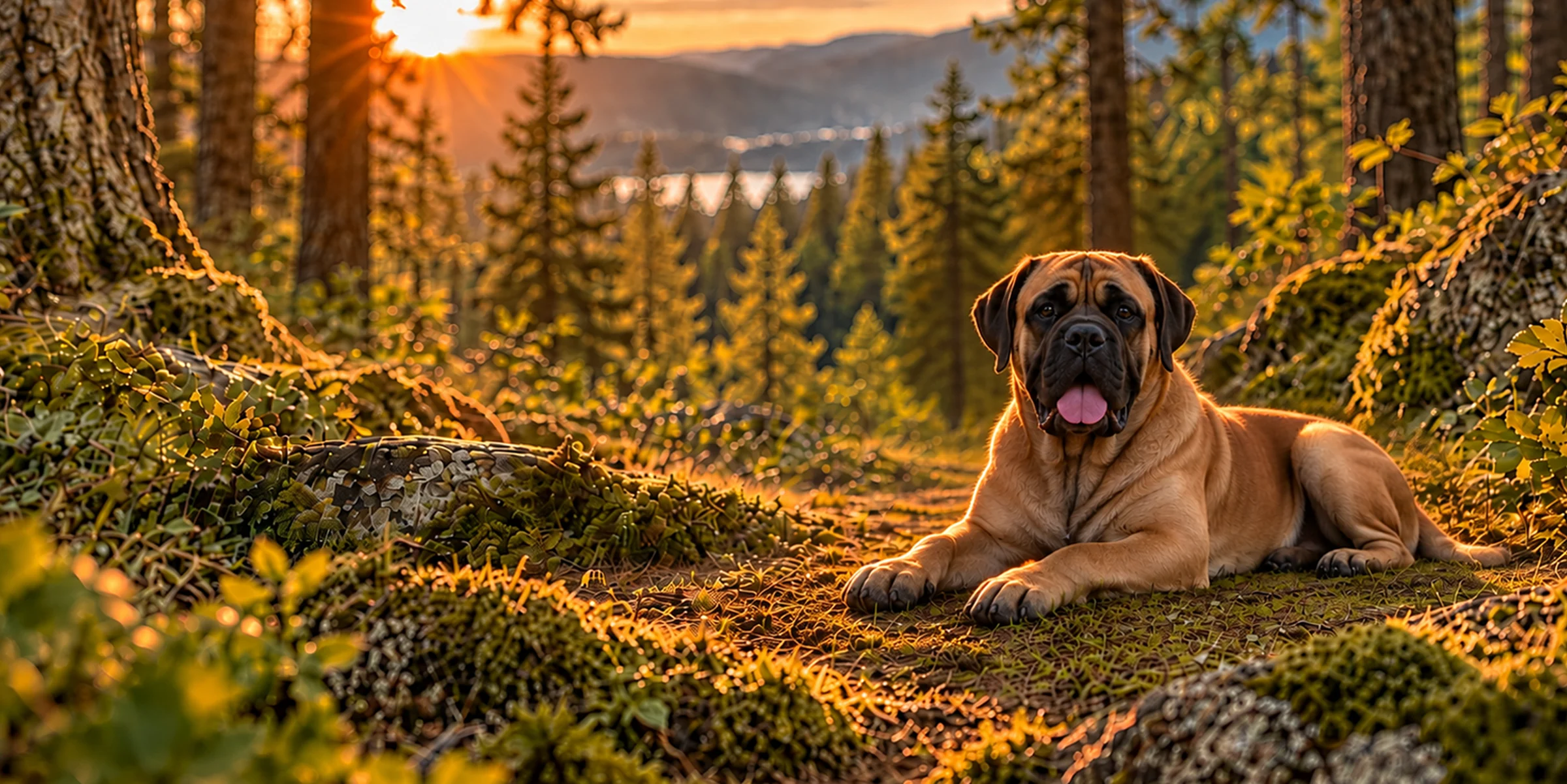
Bullmastiff
The closest match in temperament - a calm, territorial guardian with low exercise needs and a gentle streak at home. The Bullmastiff lives noticeably longer and drools considerably less.

Boerboel
Another giant farm guardian of similar weight and seriousness, facing the same insurance and housing restrictions. The Boerboel is more athletic and longer-lived; the Dogue is calmer and far more of a couch dog.