

medium-to-large breed
Drentsche Patrijshond
A versatile Dutch gundog that behaves more like a family dog than a field dog - soft-natured, endlessly affectionate, and inclined to stay in sight. Drents are excellent with children, easy with other dogs, and healthy enough that the vet bills stay modest. The catch is scarcity outside the Netherlands and a real need for work; a Drent with nothing to do does not settle.

Pup Height
21.5-25 in
Males 23-25 in, females 21.5-23.5 in. Always white with brown or orange markings - patched, ticked or roan through the white, usually with a colored head and a white blaze. Medium-length coat with feathering on the ears, chest, legs and tail. Named for Drenthe, the Dutch province where farm families kept them for three centuries. In the AKC's Foundation Stock Service. Source: AKC Foundation Stock Service breed standard.

Pup Weight
48-73 lb

Pup Lifespan
12-14 years
Your pup, at a glance
What’s Life With This Pup Really Like?

Very high for a gundog. They are genuinely affectionate, seek physical contact, and settle against their people once the work is done.

Excellent. Minding the farm children was part of the original job, and Drents are patient, gentle and sturdy with them.

Very good. Sociable with dogs and generally reliable with cats raised alongside a Drent, with a moderate prey drive aimed mostly at birds.

Low to moderate. They announce arrivals as a farm watchdog should and are not persistently noisy dogs.

Moderate to high. Ninety minutes with real scent work suits them, and they settle genuinely well indoors afterward.

Moderate. A medium coat that sheds steadily with heavier seasonal turns.

Cheerful and willing. They retrieve, swim and work a scent game happily, without the intensity of a hard-driving field dog.

Very low.

Excellent. Eager, attentive and quick - among the easier gundogs to teach, provided the handling stays gentle.

Moderate. Alert and quick to announce a visitor, with no real guarding instinct behind the warning.

Moderate. Twice-weekly brushing plus the post-outing seed and ear check that is the routine that actually matters.

Moderate. They handle most climates and homes well, and do badly with long days alone or a household that cannot supply the daily work.
Lifestyle fit
Could This Be Your Best Breed?
A Drentsche Patrijshond suits an active household with a yard and an owner who will put an hour or more of scent work into most days. They are cheap for a large dog at $1,300 to $2,200 a year and live twelve to fourteen years. Skip this one if the days are sedentary, the house is empty from nine to five, or the puppy is needed soon - outside the Netherlands the wait is real.

Living Space
A house with a yard suits them best, and a rural or semi-rural life suits them better still. They are calm enough indoors for an apartment if the exercise genuinely happens, though they were never meant to live without ground to range over.

Pup Experience
Good for a first-time owner who is active. They are sensitive, biddable and forgiving - the common mistake is underestimating how much work a versatile gundog actually needs rather than anything about their temperament.

Daily Pup Time
An hour to ninety minutes of activity daily with scent work in it. Grooming is a thorough brush twice a week plus ear checks.

Allergies & Coat
The Drentsche Patrijshond scores 5/10 for shedding and 2/10 for drooling. No dog is truly hypoallergenic. The allergens come from dander and saliva, and a dog that sheds this much will leave plenty of hair behind - especially on your furniture, floors, and clothes.
Quirks & challenges
The Not-So-Easy Stuff

Genuinely Sensitive
Harsh correction shuts them down rather than sharpening them. Reward-based work only, and a calm household.
They Need a Job
A versatile gundog with real drive. Walks alone do not touch them; scent work and training do.
Velcro Tendencies
Bred to work close and live indoors. Long days alone produce genuine distress.
Ears Need Checking
Feathered drop ears on a dog working wet cover. Weekly cleaning and drying prevents chronic infection.
Rare Outside the Netherlands
Few American breeders. Expect a waiting list, travel, and possibly an import.
Slow to Mature
Two to three years of adolescence, and pushing them along makes it take longer rather than less.
The good, the bad & the hairy
Health, Care & Costs
Understanding the health risks and ongoing costs of a Drentsche Patrijshond helps you plan for a happy, healthy life together.

12-14 years
$50-$80
per groom (bath, feathering tidy, ears, nails), every 8-12 weeks or done at home ($0-$400/year)
$1,300-$2,200/year
all-in (food, routine vet, grooming, insurance, incidentals)

Health Risks
Conditions this breed is prone to.

Worth stating first. Three centuries of selection on working farms, and a Dutch breed club that has run health screening since the 1940s, left this breed with a genuinely short inherited-disease list and a long working life.
The hip joint develops loosely so the ball wears in the socket instead of gliding, leading to arthritis and sometimes surgery. It is the main orthopedic concern in the breed and both parents should have scored hips.
The retina degenerates gradually until the dog is blind, usually starting with night vision. There is no treatment and a DNA test exists, so tested parents remove the risk entirely.
An inherited red blood cell disorder found specifically in this breed, in which misshapen cells are destroyed early, causing anemia and sometimes neurological signs. It is rare, it is why the Dutch club screens, and it is worth asking a breeder about directly.
Feathered drop ears trap warmth and moisture against the canal, and a dog working wet cover makes it worse. Weekly checking and drying is the whole prevention; ignored, it becomes chronic and expensive.
Not inherited, but a likely reason they see a vet. A dog running rough ground and heavy cover picks up cuts, grass seeds in the feathering and the occasional torn ligament.

Insurance & Health Coverage
A healthy breed with a well-run screening program behind it, so the illness side is comparatively light and the premiums reflect it.

What you are insuring is mostly accident. A sporting dog working cover collects cuts, grass seeds and the occasional torn cruciate, and a cruciate repair runs into the thousands. If you intend to hunt them, check whether the policy excludes injuries sustained while working - several do, and that exclusion removes exactly the cover this dog needs.

Ear infections are the steady drip underneath: never a large claim, never finished. Progressive retinal atrophy and hereditary stomatocytosis are both congenital and uncovered by any policy, and both are things a breeder can rule out before you bring one home - ask for the paperwork rather than relying on cover.
 Get a Pet Insurance Quote
Care needs
The Daily Routine

Grooming
A medium-length coat with real feathering that needs a thorough brush twice a week, paying attention to behind the ears, the trousers and the tail where mats form first. After any outing in cover, check the feathering and between the toes for grass seeds and burrs, and clean and dry the ears. No clipping needed.

Exercise
An hour to ninety minutes daily with scent work in it - tracking, field work and retrieving suit them far better than distance walking alone. The mental half does more to settle them than the physical.

Food & Weight
Two measured meals scaled to the work. They are efficient feeders and a suburban Drent burns considerably less than a working one, so go by feel through the ribs rather than by the bag.
Similar breeds
If This Isn’t Quite the One
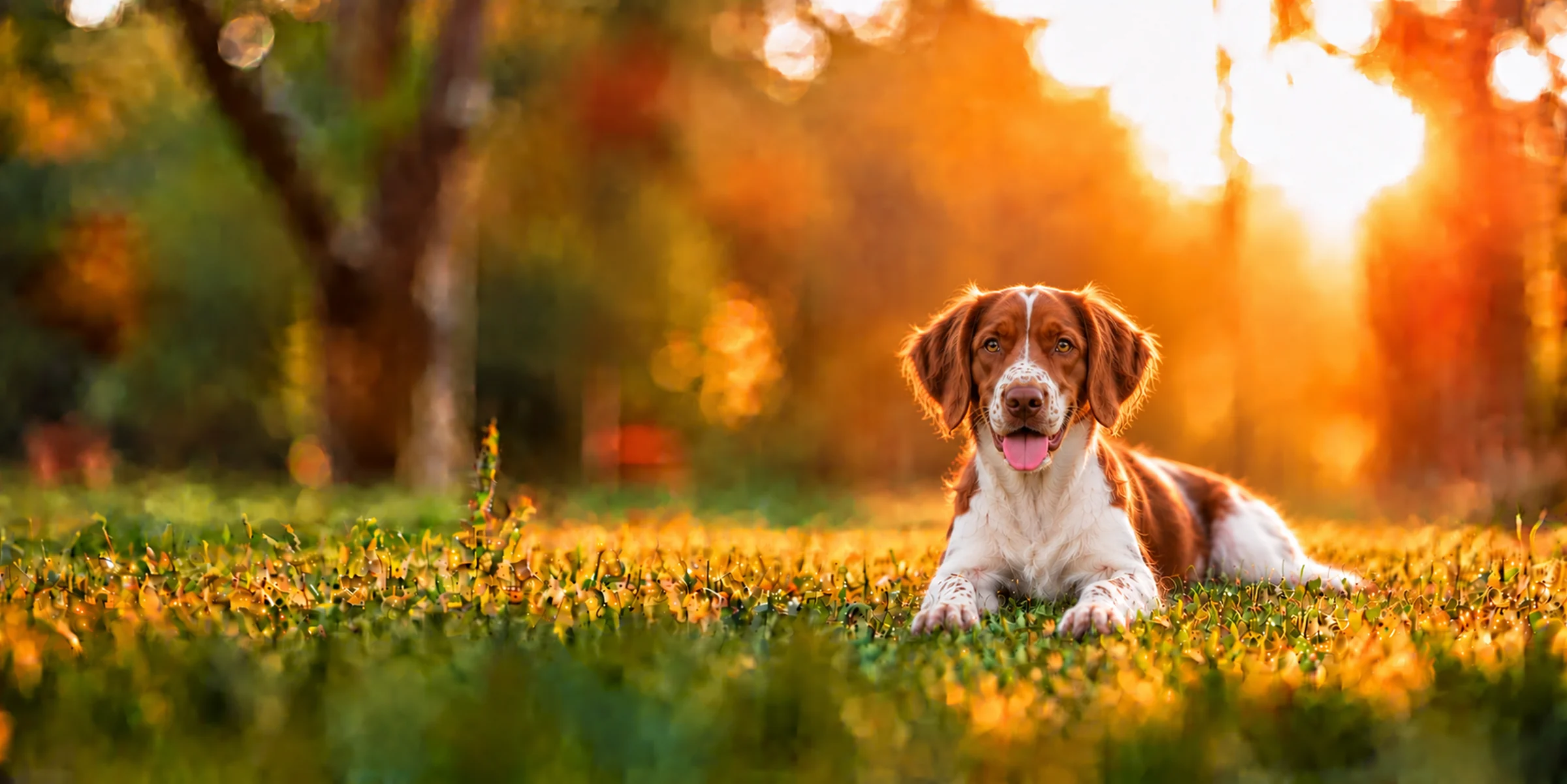
Brittany
The closest match - a compact versatile gundog that points and retrieves, works close, and is soft enough to need gentle handling. The Brittany is more energetic and easier to find; the Drent is calmer indoors and rather more of a family dog.
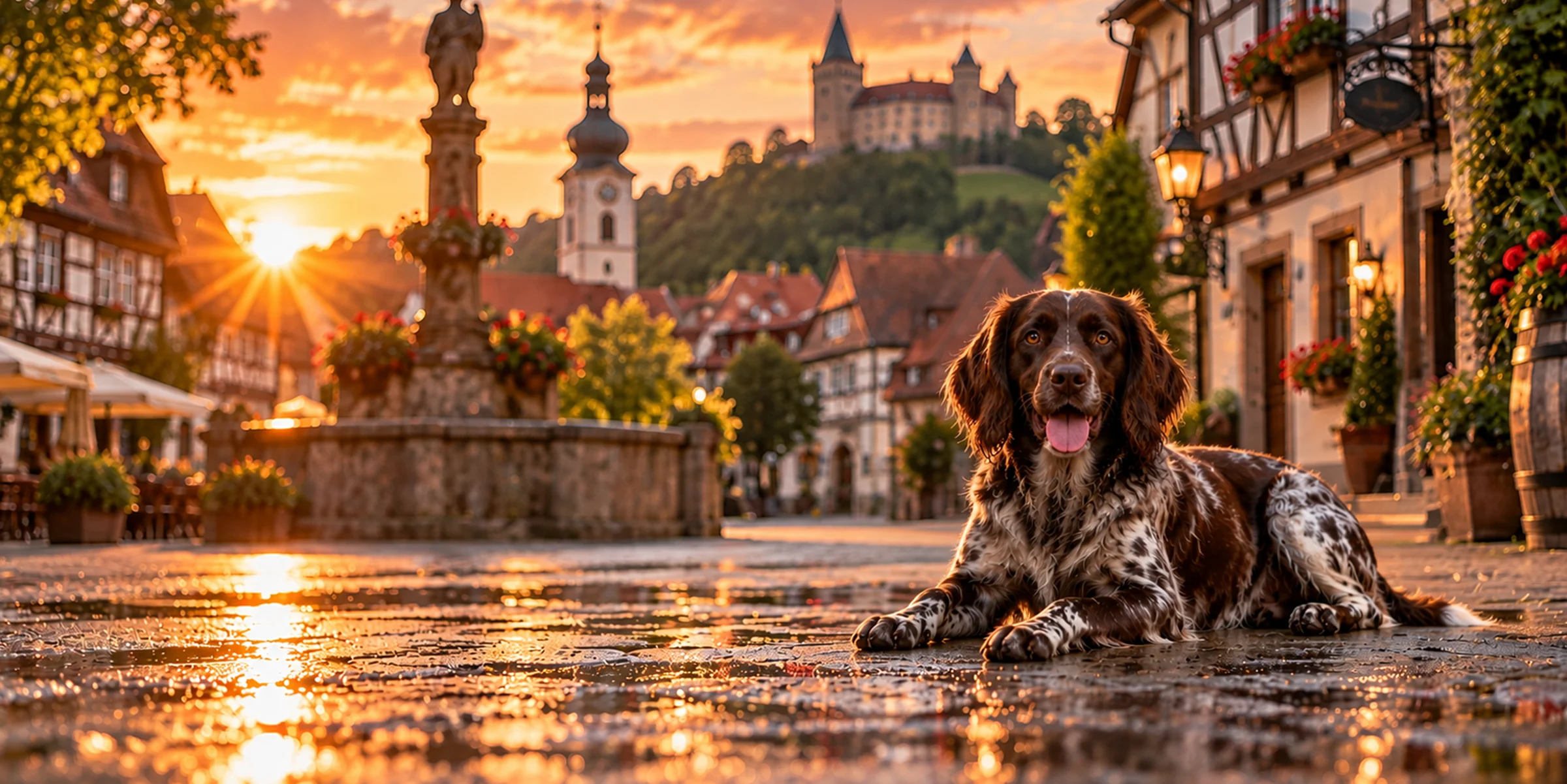
Deutscher Wachtelhund
Another continental farm gundog bred to do several jobs at once. The Wachtelhund is tougher, harder-driving and effectively restricted to hunting homes; the Drent is far more suited to living as a family companion.
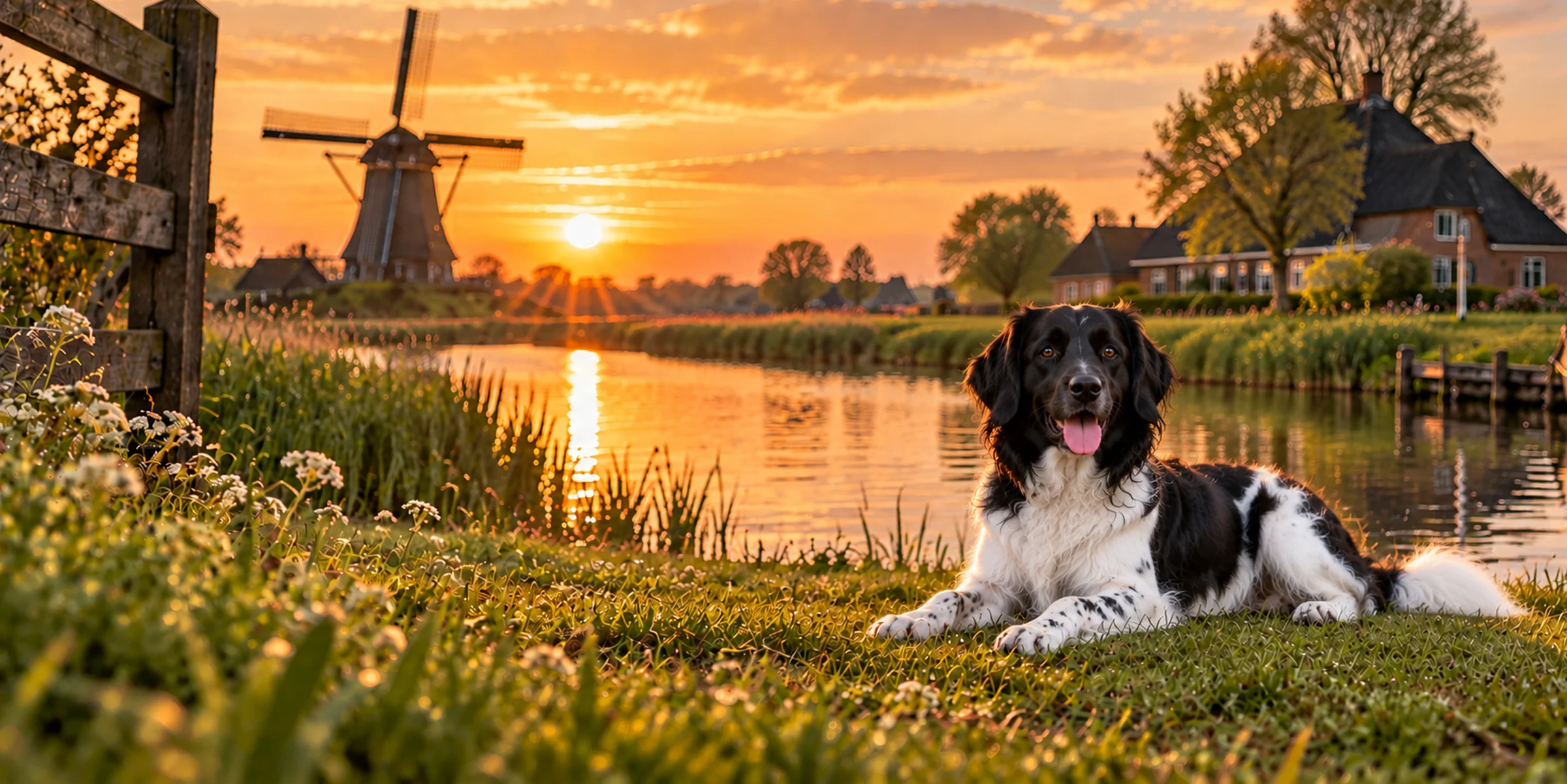
Stabyhoun
The other rare Dutch farm dog, from Friesland rather than Drenthe. Stabyhouns are a little heavier and softer still, bred to point, retrieve and kill moles on the same smallholding, and are scarcer again - a few thousand dogs worldwide under a managed breeding program.