

medium-to-large breed
Stabyhoun
The farm dog of Friesland, kept for three centuries by families who could afford one dog and needed that dog to point, retrieve, kill rats, watch the yard and be safe with the children indoors. Stabyhouns came out of it soft-natured, patient and unusually settled in the house for a gundog. The friction is sensitivity - a raised voice sets them back for weeks - and a need for company that makes long working days genuinely unfair.

Pup Height
19-21 in

Pup Weight
40-60 lb
19-21 in and 40-60 lb, with unmistakable sexual dimorphism called for, so males sit toward the top of the range and females toward the bottom. Black and white most often, brown and white less common, and an orange and white that is nearly gone; roan and ticking through the white are allowed, and tan markings or tricolor are disqualifying. A medium-length straight coat with a weather-resistant undercoat and bushy hair on the chest, collar, trousers and tail - curls are not permitted. In the AKC's Foundation Stock Service. Source: AKC Foundation Stock Service breed standard.

Pup Lifespan
13-15 years
Your pup, at a glance
What’s Life With This Pup Really Like?

Very high. Stabyhouns want to be in the room with their people and will settle against a leg for the evening.

Excellent. Patient, gentle and sturdy enough for family life, which is what three centuries as a farmhouse dog selected for.

Very good with other dogs. Cats are usually fine when raised together, though a breed that earned a living on moles and rats has real prey drive outdoors.

Moderate. Stabyhouns announce arrivals like the farm watchdogs they were, then quiet down once told.

High but manageable. An hour to ninety minutes of real activity, then a dog who genuinely switches off indoors.

Moderate to heavy. The coat needs little work but drops hair year-round, with heavier turns in spring and fall.

Playful and water-loving. Retrieving games and swimming suit them, and the play stays soft rather than rough.

Very low.

Excellent. Willing, attentive and quick, provided the methods are gentle - pressure gets less from a Stabyhoun, not more.

Good. Alert and quick to sound off about visitors, with no guarding or aggression behind the noise.

Low to moderate. A brush once or twice a week, weekly ears, and the post-outing check for grass seeds in the feathering.

Moderate. Adaptable in temperament and quiet in the house, but the exercise is non-negotiable and the wait for a puppy limits who can have one.
Lifestyle fit
Could This Be Your Best Breed?
A Stabyhoun fits an active family with a fenced yard and someone home most of the day, and rewards a handler who never raises a voice. Costs are ordinary at $1,300 to $2,300 a year, and the breed is long-lived at thirteen to fifteen. The wait alone rules out anyone in a hurry, since a puppy means a year on a list, and an empty house from eight until six rules out the rest.

Living Space
A house with a fenced yard, and rural or semi-rural ground within reach. Stabyhouns are calm indoors and can manage an apartment if the exercise genuinely happens every day, though a breed built to range a Frisian smallholding is happier with land.

Pup Experience
Fine for an active first-time owner who reads dogs well. Stabyhouns are willing and easy to teach, and the pitfall is handling rather than difficulty - a raised voice or a hard correction sets a sensitive dog back further than most people expect.

Daily Pup Time
An hour to ninety minutes daily with scent work or retrieving in it. Grooming is a brush once or twice a week plus weekly ear checks.

Allergies & Coat
The Stabyhoun scores 6/10 for shedding and 2/10 for drooling. No dog is truly hypoallergenic. The allergens come from dander and saliva, and a dog that sheds this much will leave plenty of hair behind - especially on your furniture, floors, and clothes.
Quirks & challenges
The Not-So-Easy Stuff

Very Hard to Find
Only a few thousand exist worldwide. Expect a wait of a year or more, an application process, and quite possibly an import.
Softer Than Most Gundogs
Stabyhouns shut down under pressure rather than toughening up. Reward-based work and a calm handler get far more out of them.
Needs a Job, Not Just Walks
A versatile hunting brief behind a family dog. Scent work, retrieving and training do what a long walk alone does not.
Announces Everything
Farm watchdog instincts are still there. Stabyhouns bark at arrivals and need teaching when to stop.
Sheds All Year
The coat asks little in grooming but drops hair steadily, with heavier turns in spring and fall.
Close-Bonded
Bred to live indoors with the family. Long days alone produce real distress rather than mild boredom.
The good, the bad & the hairy
Health, Care & Costs
Understanding the health risks and ongoing costs of a Stabyhoun helps you plan for a happy, healthy life together.

13-15 years
$50-$80
per groom (bath, feathering tidy, ears, nails), every 8-12 weeks or easily done at home ($0-$400/year)
$1,300-$2,300/year
all-in (food, routine vet, grooming, insurance, incidentals)

Health Risks
Conditions this breed is prone to.

Worth saying plainly rather than padding the list. The Dutch breed association approves every mating, requires screening and limits how many litters a stud produces, and the result is a breed with a genuinely short inherited-disease list and a long average life.
The real health issue behind the others. The breed came through the 1940s on a handful of dogs, and every Stabyhoun alive descends from that bottleneck - which is exactly why the association manages inbreeding coefficients and approves pairings rather than leaving breeders to it.
The hip joint develops loosely so the ball wears in the socket instead of gliding, ending in arthritis and sometimes surgery. Rates are low because screening is required before breeding, and both parents should still have scored hips.
Seizures usually starting between one and three years old, uncommon but present in the breed and not screenable by any test. Most affected dogs are managed well on daily medication. Ask a breeder directly what has appeared in the line.
A fetal blood vessel near the heart that should close at birth and does not, straining the heart. A vet hears the murmur at the puppy check, and early surgical correction is usually curative.
Feathered drop ears trap warmth and moisture against the canal, and a dog who works wet cover makes that worse. Weekly checking, cleaning and drying is the whole prevention; ignored, the problem turns chronic.

Insurance & Health Coverage
A healthy, long-lived breed with a managed breeding program behind it, so the illness side is light and premiums should sit at the reasonable end for a medium sporting dog.

What you are insuring is mostly accident. A gundog working cover collects cuts, grass seeds in the feathering and the occasional torn cruciate, and a cruciate repair runs into the thousands. If you intend to hunt them, check whether the policy excludes injuries sustained while working - several do, and that exclusion removes exactly the cover this dog needs.

The congenital conditions are the gap no policy fills. Patent ductus arteriosus is present at birth, epilepsy that starts early gets read as pre-existing the moment a seizure is recorded, and neither is coverable after the fact. Start a policy the week the puppy comes home, and treat the association's screening paperwork as the other half of the protection.
 Get a Pet Insurance Quote
Care needs
The Daily Routine

Grooming
An easy coat by gundog standards - a thorough brush once or twice a week keeps it right, with more attention behind the ears, in the trousers and along the tail where mats start. No clipping or trimming is wanted. Dirt brushes straight out once dry, so baths are rarely needed. What matters more is the routine after an outing: grass seeds out of the feathering and between the toes, and ears cleaned and dried.

Exercise
An hour to ninety minutes daily, with the scent half doing most of the settling - tracking, field work, retrieving on land and in water. Stabyhouns swim readily and enjoy it. Distance walking alone leaves a versatile gundog underemployed.

Food & Weight
Two measured meals scaled to the work. Stabyhouns are efficient feeders and a house dog burns considerably less than a hunting one, so go by the feel of the ribs rather than the scoop on the bag. Keep a young dog lean while the joints are still forming.
Similar breeds
If This Isn’t Quite the One
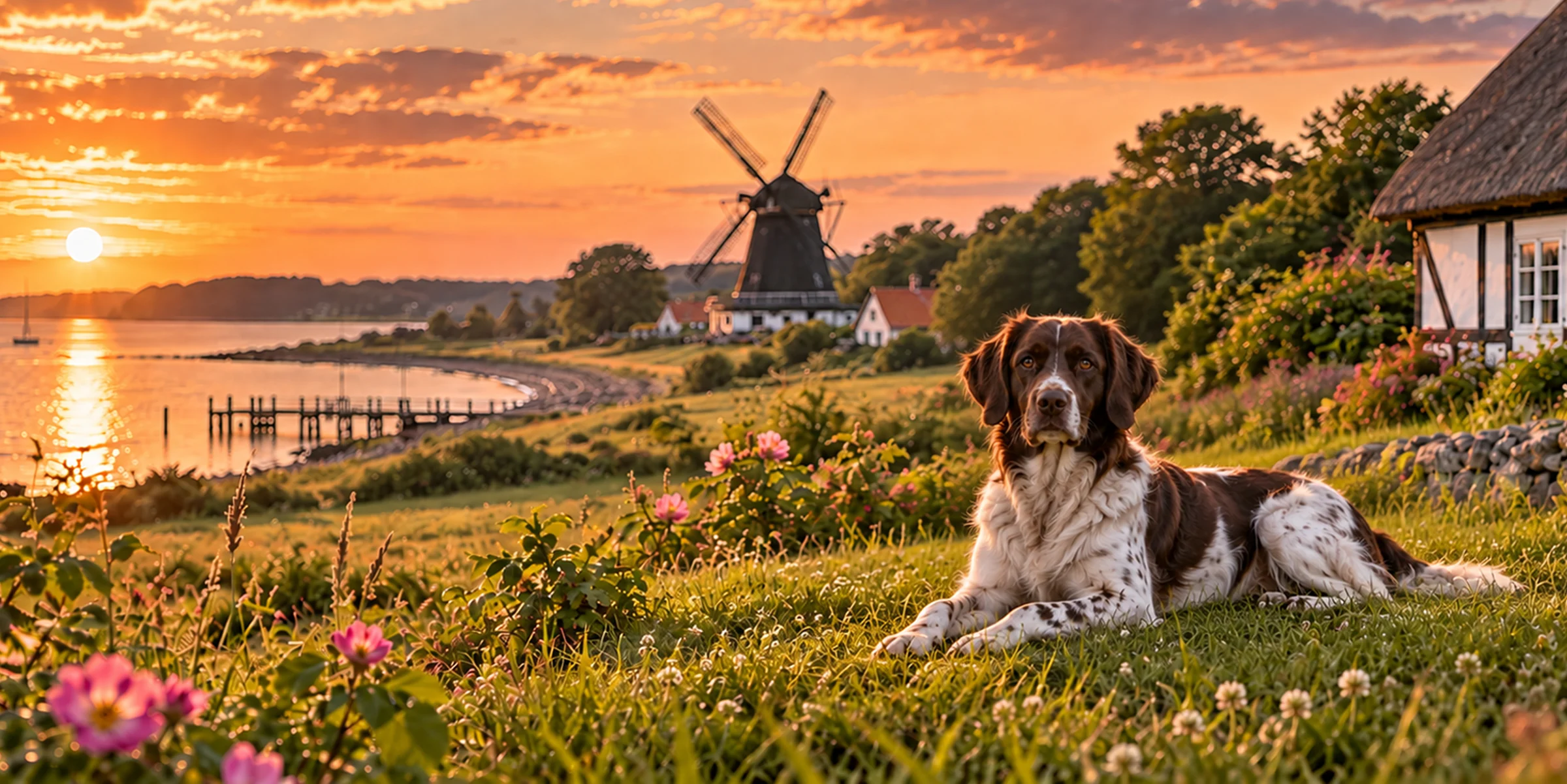
Drentsche Patrijshond
The closest comparison there is - another Dutch all-round farm gundog, soft-natured, family-focused and rare. The Drent is bigger, a little more driven in the field, and somewhat easier to find; the Stabyhoun is smaller, calmer in the house and harder to get hold of.
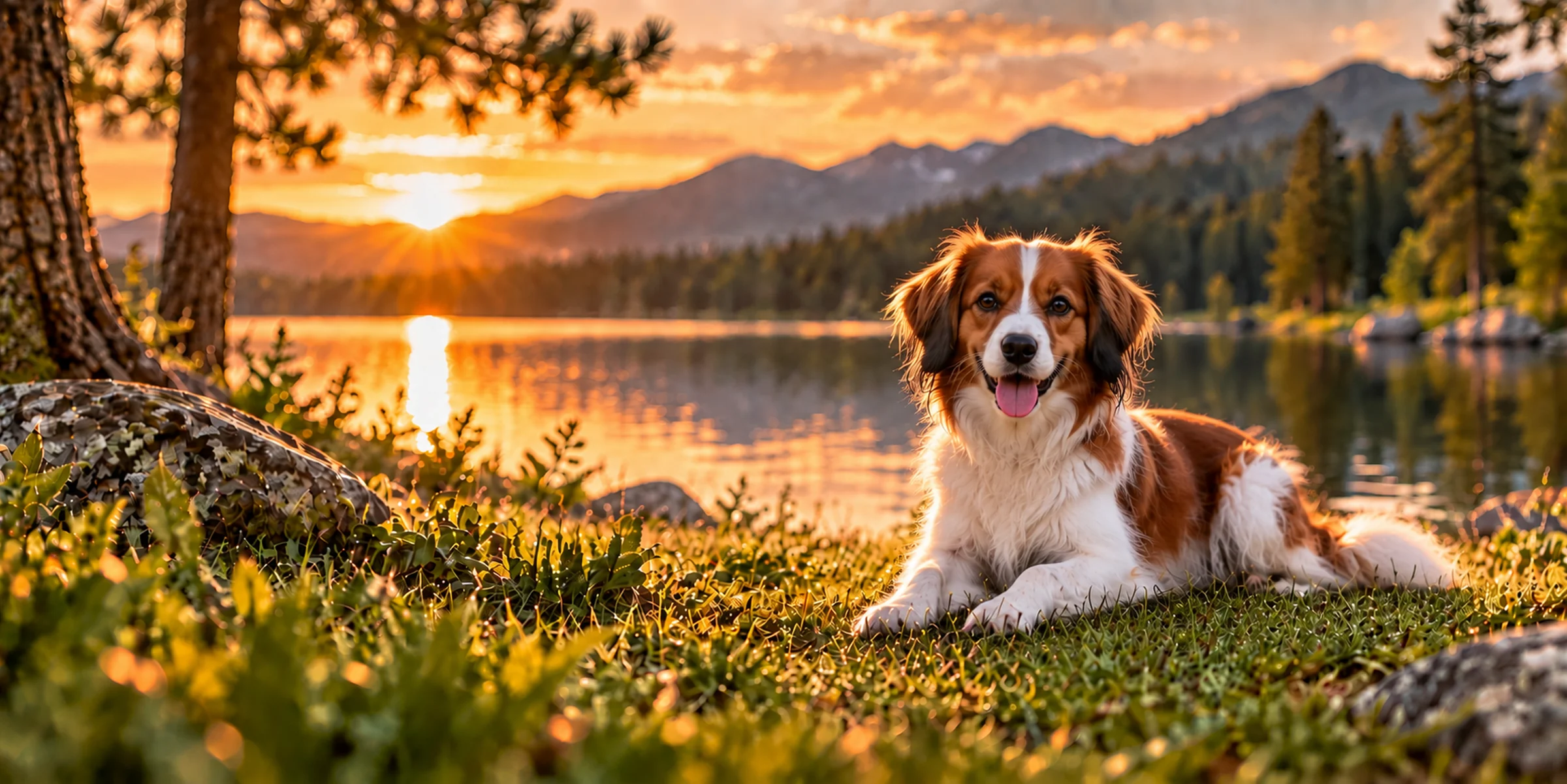
Nederlandse Kooikerhondje
A Dutch rarity with the same sensitivity and the same wait for a puppy. The Kooiker is a small duck-decoy dog, more reactive and more of a companion; the Stabyhoun is a larger, steadier working dog with a broader job list.
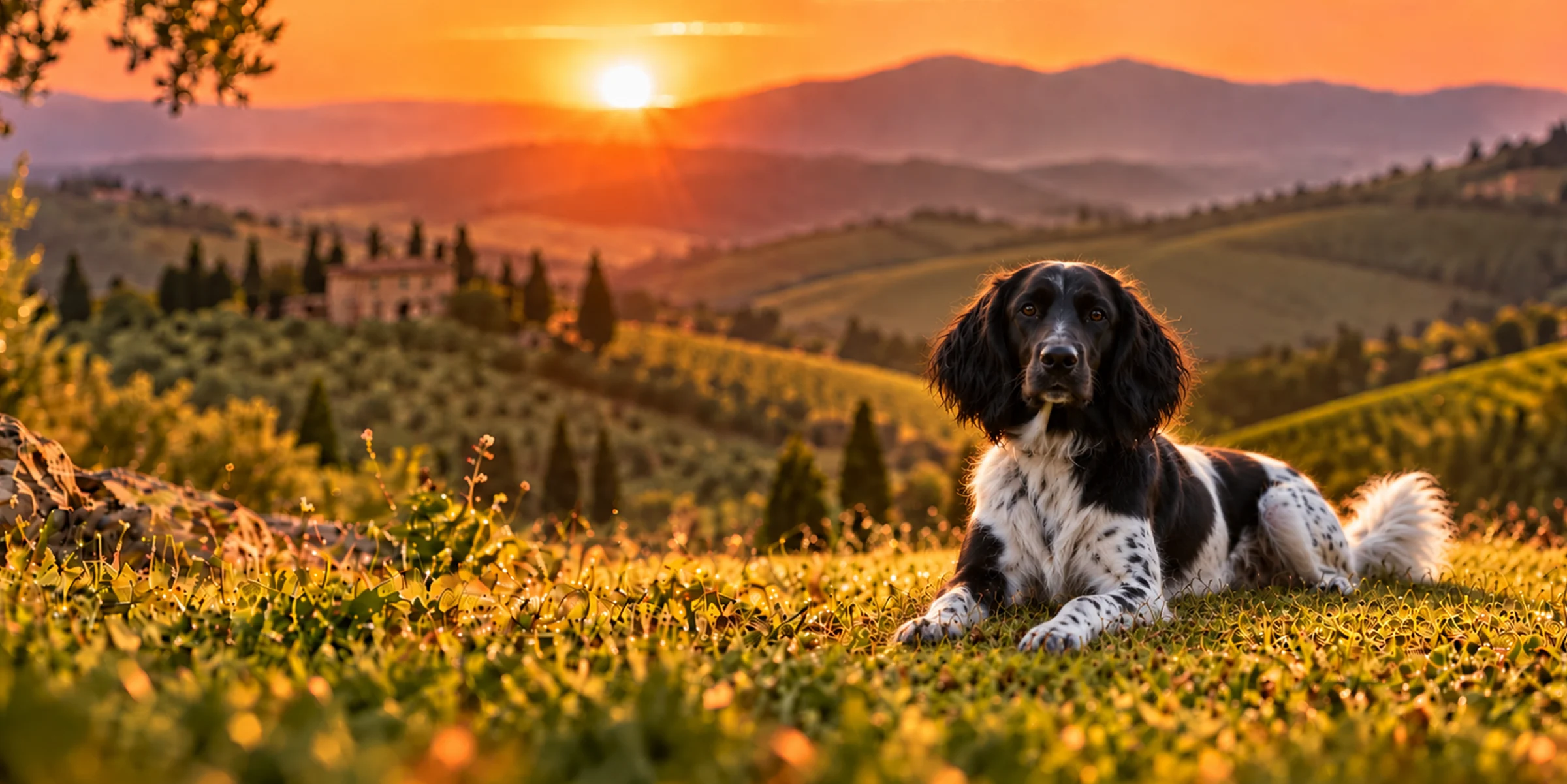
Large Munsterlander
A continental versatile gundog with a similar brief and a similar look at a distance. The Munsterlander is bigger, far harder-driving and realistically only for hunting homes; the Stabyhoun does the same jobs at a gentler pitch and lives happily as a family dog.
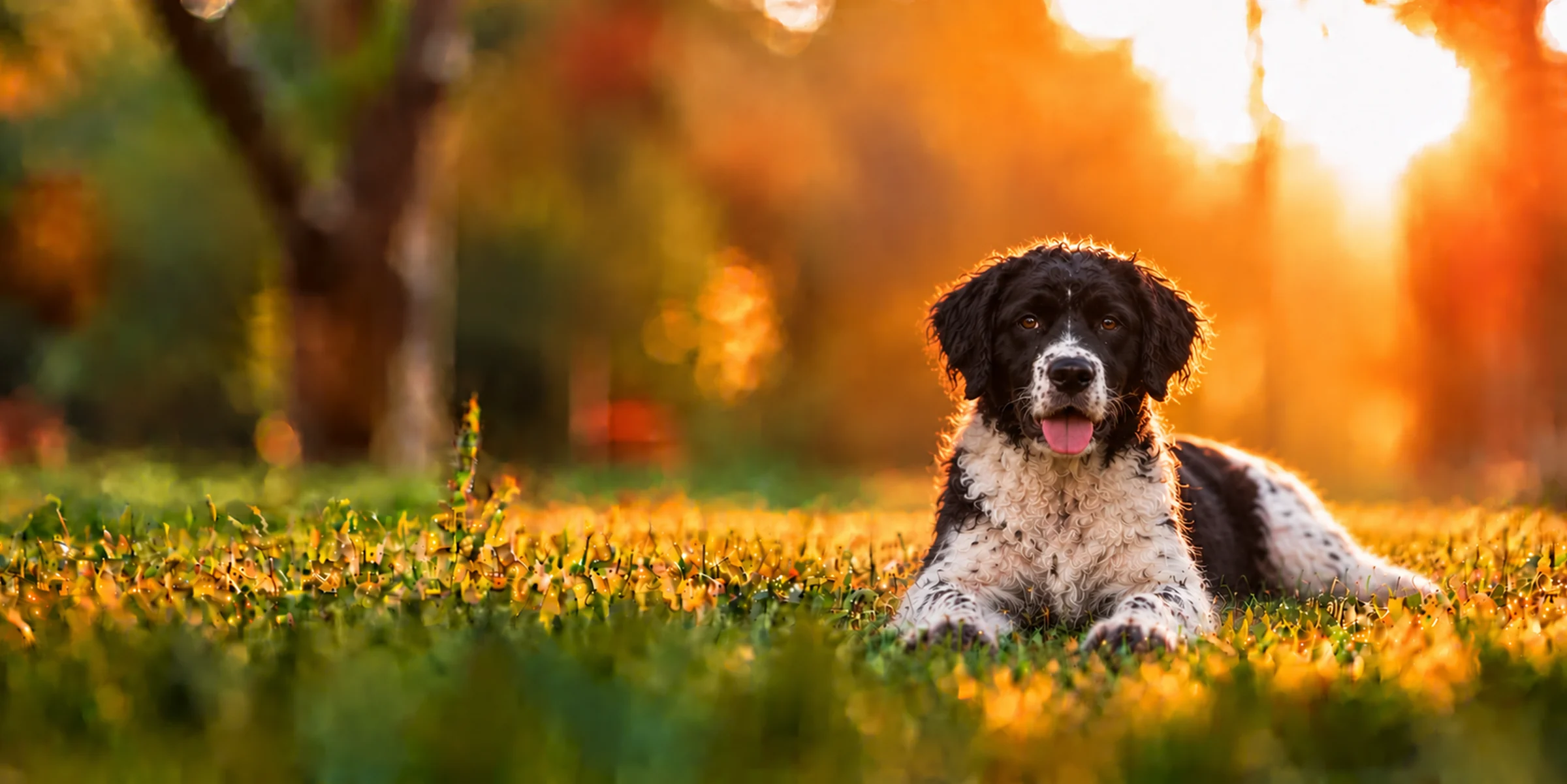
Wetterhoun
The other Frisian breed, and a much harder dog. Wetterhouns were bred to hunt otter and polecat and kept as farm guards - stubborn, reserved and watchful where a Stabyhoun is soft and biddable, with a curly oily coat that is never brushed.