

medium breed
Drever
A short-legged Swedish tracking hound with a full-size hound's engine - thirty-five pounds on a frame barely a foot tall. Drevers are cheerful, sturdy, affectionate and unusually good with children, and they are also one of the loudest breeds you can bring home and close to impossible to recall once a scent arrives. The long back and short legs bring a real risk of disc disease. Neither the voice nor the nose can be trained away.

Pup Height
11.5-15 in

Pup Weight
33-40 lb
Long-bodied and short-legged, but far more substantial than the proportions suggest - Drevers carry around thirty-five pounds on a frame barely over a foot tall. Any color is accepted provided there is white on the neck, chest, feet or tail tip, so a hunter can see them in cover. Developed in Sweden from the German Westphalian Dachsbracke and named by public competition in 1947. In the AKC's Foundation Stock Service. Source: AKC Foundation Stock Service breed standard.

Pup Lifespan
12-15 years
Your pup, at a glance
What’s Life With This Pup Really Like?

High. Drevers are affectionate, companionable dogs who settle happily against their people once the day's work is done.

Excellent. Sturdy, patient and good-natured, with none of the sharpness some small breeds bring - one of the better family hounds here.

Good with dogs, having been bred to work in company. Cats and small pets depend on early socialization, since the prey drive is genuine.

Very high - among the loudest on this site. They were bred to bay continuously on a trail so the hunter could follow them, and the voice carries.

Moderate to high. Ninety minutes with real nose work suits them, and they settle well indoors afterward.

Moderate. A short dense coat that sheds steadily year-round with heavier seasonal turns.

Cheerful and game. They enjoy scent games and chasing, and play with an even temper rather than intensity.

Low.

Moderate. Bright and willing indoors, and effectively unavailable once their nose has found something worth following.

Moderate. They will certainly announce an arrival - loudly - and have no inclination to do anything beyond that.

Very low. A weekly brush plus weekly ear checks, and nothing else.

Low to moderate. They handle cold and rough country superbly, and adapt badly to apartments, close neighbors and any home without secure fencing.
Lifestyle fit
Could This Be Your Best Breed?
Drevers suit a fenced yard, tolerant neighbors and an owner who enjoys a hound on a long line rather than one working off leash. At $1,200 to $2,000 a year they are among the cheapest mid-sized dogs to run, and twelve to fifteen years is normal. Watch the weight, because a heavy Drever is a back injury waiting to happen. An apartment, a shared wall or a quiet street asks the one thing a Drever cannot give, which is quiet.

Living Space
A house with a securely fenced yard and tolerant neighbors. Drevers are scent hounds who give tongue on a trail, and that voice carries a very long way - it is the single biggest constraint on where they can live.

Pup Experience
Manageable for a first-time owner who understands scent hounds. Drevers are friendly and easy-natured, and their nose overrides their obedience completely, which frustrates anyone expecting a biddable dog.

Daily Pup Time
An hour to ninety minutes daily with real scent work in it. The coat takes five minutes a week.

Allergies & Coat
The Drever scores 5/10 for shedding and 2/10 for drooling. No dog is truly hypoallergenic. The allergens come from dander and saliva, and a dog that sheds this much will leave plenty of hair behind - especially on your furniture, floors, and clothes.
Quirks & challenges
The Not-So-Easy Stuff

They Are Very Loud
Baying is the job, not a fault. Among the noisiest breeds here, and it carries for a long way.
Recall Is Unreliable
A hound on a trail stops hearing you. Fenced ground and a long line, not confidence in training.
The Nose Runs the Dog
They will follow a scent for hours and travel miles doing it. Escape-proof fencing matters.
Long Back, Short Legs
Thirty-five pounds on a low frame. Stairs, sofa jumps and extra weight all load the spine.
Food-Driven and Prone to Weight
A hound's appetite with a body that punishes excess. Measure everything.
Rare Outside Scandinavia
Very few American breeders. Expect a waiting list, travel, or an import.
The good, the bad & the hairy
Health, Care & Costs
Understanding the health risks and ongoing costs of a Drever helps you plan for a happy, healthy life together.

12-15 years
$40-$60
per groom (bath, nails, ears), every 10-12 weeks or done at home ($0-$240/year)
$1,200-$2,000/year
all-in (food, routine vet, grooming, insurance, incidentals)

Health Risks
Conditions this breed is prone to.

Worth stating first. The breed was shaped by hunters selecting for function rather than by the show ring, remains numerous in Sweden with a broad gene pool, and carries a genuinely short list of inherited problems.
The discs between the vertebrae bulge or rupture and press on the spinal cord, causing pain and sometimes sudden hind-leg paralysis. A long back carrying a solid thirty-five pounds on short legs is built for it - keeping them lean and limiting repeated jumping and stair work does most of the prevention.
Listed as a health condition rather than a habit. They have a hound's appetite and a build that punishes extra weight, and it feeds directly into the back and joint problems.
Drop ears trap warmth and moisture against the canal, and a dog working wet cover makes it worse. Weekly checking and drying is the whole prevention.
The kneecap slips out of its groove, producing a skipping gait and sometimes needing surgery. Seen in short-legged breeds and checked at routine vet visits.
Not inherited, but a likely reason they see a vet. A hound running rough cover collects cuts, torn pads, grass seeds and the occasional strain.

Insurance & Health Coverage
A healthy, inexpensive breed, so the case for cover is the ordinary one plus one specific risk.

The back is that risk. Disc disease in a long-bodied dog is common enough to treat as a real possibility rather than bad luck, spinal surgery runs into several thousand dollars with rehabilitation afterward, and it arrives suddenly in a dog who was fine that morning. Insure before any back episode is on the record, because once it is there insurers exclude the spine - which removes exactly the cover you wanted.

The other likely claims are accidents: a hound who travels miles on a scent meets roads, fences and other animals, so accident cover earns its keep. Ear infections are the steady drip underneath and never amount to a large claim.
 Get a Pet Insurance Quote
Care needs
The Daily Routine

Grooming
A short, dense, weather-resistant coat that needs a weekly pass with a rubber mitt and more during the seasonal shed. Ears want checking and drying weekly, and after any outing in cover check the feet and undercarriage for grass seeds and cuts. Nails need regular trimming.

Exercise
An hour to ninety minutes daily, and the scent half matters more than the distance. Tracking, trailing and nose games suit them far better than a walk on pavement, and they have the stamina to keep going long after you would rather stop.

Food & Weight
Two measured meals and honest treat accounting, with the bin secured. Drevers are hounds - persuasive, food-focused and entirely willing to help themselves - and every extra pound lands on a spine already working hard.
Similar breeds
If This Isn’t Quite the One
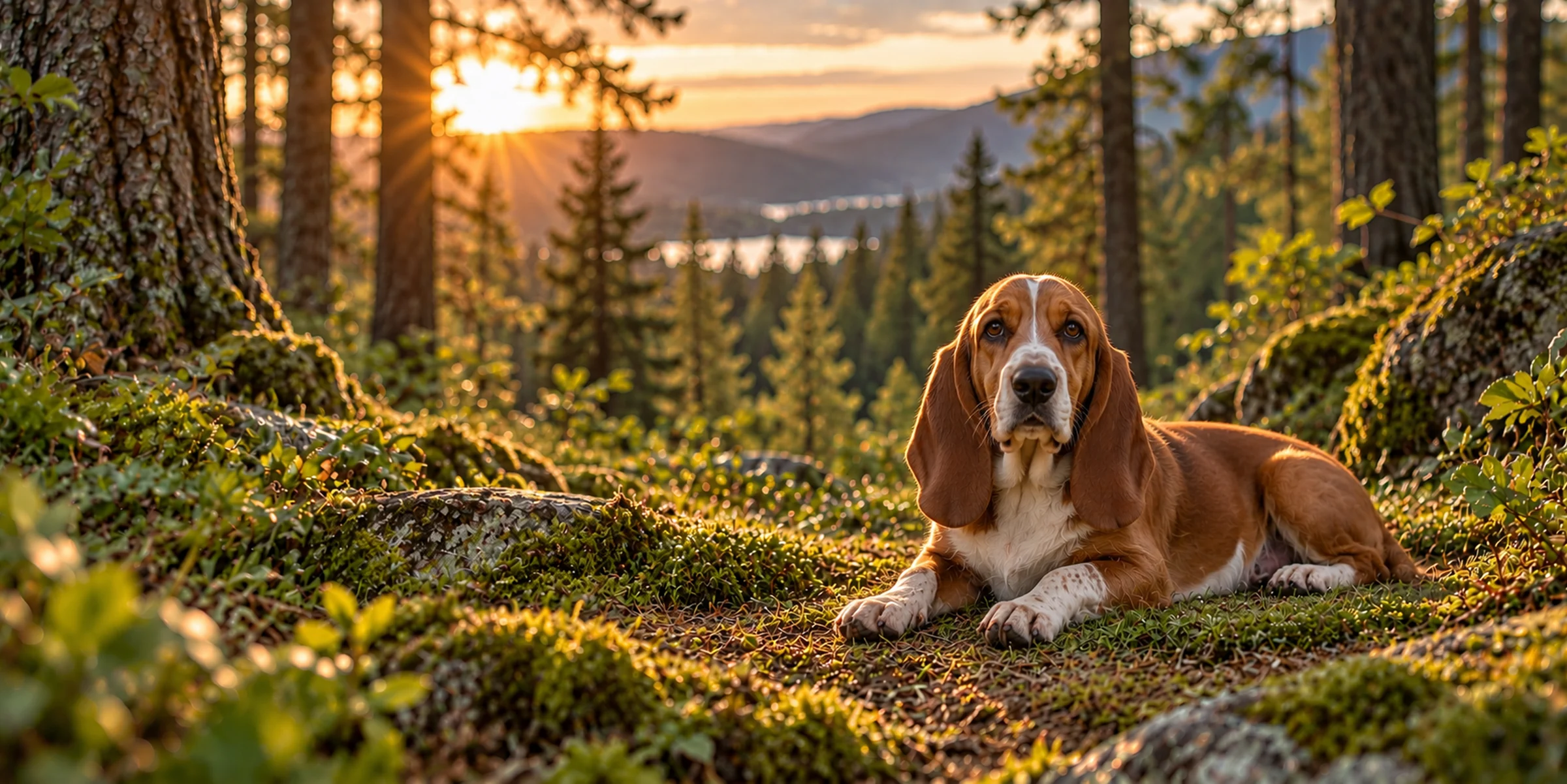
Basset Hound
The closest match on build and working style - long, low, vocal and nose-driven, with the same back and ear considerations. The Basset is slower and heavier; the Drever is more athletic and needs considerably more exercise.

Beagle
A similar-sized pack hound with the same cheerful temperament, the same unreliable recall and the same carrying voice. The Beagle is easier to find and shorter-backed; the Drever is calmer indoors and rather more substantial.