

medium-to-large breed
Entlebucher Mountain Dog
The smallest of Switzerland's four mountain dogs and by a distance the busiest - a low, heavily muscled cattle driver with a voice built to move stock. Entlebuchers are intensely loyal, endlessly playful, quick to learn and a great deal of dog for forty-odd pounds. They are also loud, bossy, slow to mature, and rare outside Switzerland. This is not the placid Swiss farm dog the name suggests.

Pup Height
16-21 in
The smallest and quickest of the four Swiss sennenhunds - longer than tall, heavily muscled and built low for driving cattle. Always tricolor: black with symmetrical tan and white markings, a white blaze, chest and feet. Many are born with a natural bobtail. Named for the Entlebuch valley in Lucerne. Source: AKC breed standard.

Pup Weight
40-65 lb

Pup Lifespan
11-15 years
Your pup, at a glance
What’s Life With This Pup Really Like?

High. They are affectionate and physically close with their own family, often fixing on one person, and they settle well indoors once the work is done.

Good with their own family's children when properly exercised, with the herding caveat - the heel-nipping lands on running children and wants redirecting early.

Reasonable with dogs raised alongside them, and Entlebuchers can be bossy with unfamiliar ones. Cats depend on early socialization.

High. They drove cattle by voice and still use it liberally - trainable to manageable, never a quiet breed.

Very high. Two hours with mental work daily, and they are far more demanding than their size suggests.

Moderate. A short dense double coat that sheds year-round with substantial seasonal blowouts.

Among the most playful here. They play hard, invent games, and keep a boisterous streak for years.

Low.

Excellent. Quick, willing and food-motivated, with enough confidence that consistency matters more than technique.

Strong. Alert, territorial about the property and loud enough that nothing arrives unannounced.

Very low. A weekly brush and seasonal de-shedding is the whole routine.

Low to moderate. They handle cold and rough ground well and adapt badly to apartments, close neighbors and idle households.
Lifestyle fit
Could This Be Your Best Breed?
An Entlebucher Mountain Dog needs a fenced yard, space from neighbors and an owner with some working-dog experience who will supply ninety minutes to two hours of real work daily. They are inexpensive at $1,300 to $2,200 a year and can live to fifteen. Think again if the walls are shared, if the yard is a balcony, or if what you pictured was a family dog who switches off in the evening.

Living Space
A house with a securely fenced yard and, ideally, land. Entlebuchers are driving cattle dogs with the voice to match, and close neighbors are the practical constraint as much as the space is.

Pup Experience
Better for an owner with some working-dog experience. Entlebuchers are highly trainable and enormously demanding, and the failure mode is a bored, bossy, extremely vocal dog who has decided to run the household.

Daily Pup Time
Ninety minutes to two hours of hard activity daily with real mental work in it. The coat takes five minutes a week.

Allergies & Coat
The Entlebucher Mountain Dog scores 6/10 for shedding and 3/10 for drooling. No dog is truly hypoallergenic. The allergens come from dander and saliva, and a dog that sheds this much will leave plenty of hair behind - especially on your furniture, floors, and clothes.
Quirks & challenges
The Not-So-Easy Stuff

They Are Loud
Barking is how they moved cattle. Trainable down to manageable, never quiet, and it carries.
Heel-Nipping
Aimed at running children, joggers and bicycles. Redirect it early rather than laughing at it.
Serious Exercise Needs
Two hours with mental work. Under-exercised they become bossy, destructive and impossible to settle.
Strong-Willed
Confident enough to test an inconsistent owner and clever enough to notice which rules are real.
Slow to Mature
Two to three years of boisterous adolescence in a solid, muscular frame.
Genuinely Rare
Few American breeders. Expect a waiting list, travel, and careful screening by the breeder.
The good, the bad & the hairy
Health, Care & Costs
Understanding the health risks and ongoing costs of a Entlebucher Mountain Dog helps you plan for a happy, healthy life together.

11-15 years
$45-$70
per groom (bath, de-shed, nails, ears), every 10-12 weeks or done at home ($0-$280/year)
$1,300-$2,200/year
all-in (food, routine vet, grooming, insurance, incidentals)

Health Risks
Conditions this breed is prone to.

The joints develop loosely or unevenly and wear into arthritis, sometimes needing surgery. Present at moderate rates, and the breed's long-backed, heavily muscled build puts real load through them - ask for both parents' scores.
The retina degenerates gradually until the dog is blind, usually starting with night vision. There is no treatment and a DNA test exists, so tested parents remove the risk entirely.
A breed-specific condition in which the ureters are positioned abnormally, so young dogs leak urine and suffer repeated infections. It usually shows up in puppyhood, is corrected surgically, and is worth asking any breeder about directly.
The discs between the vertebrae bulge or rupture and press on the spinal cord, causing pain and sometimes hind-leg weakness. A longer-than-tall build on short legs carries more spinal load than a square dog - keeping them lean does most of the prevention.
The lens clouds and vision declines, sometimes early in life. Annual eye examination catches it, and surgery is available where it is significant.
Worth listing on its own. The breed nearly vanished after the First World War and was rebuilt from a very small number of dogs, so diversity is narrow and the individual breeder's testing matters more than breed-level statistics.

Insurance & Health Coverage
A reasonably healthy breed with cheap upkeep, so the premiums should be sensible and the case for cover is mostly the ordinary one.

Insure early for two specific reasons. Entlebucher urinary syndrome tends to appear in puppyhood and needs surgery, which is exactly the point at which most owners have not organized a policy yet. And joint disease is the other expensive category - once a limp is noted on a record, insurers exclude hips and elbows permanently.

Progressive retinal atrophy is congenital and no policy covers it, but it is DNA testable in the parents, so the breeder's paperwork settles that one before you bring one home rather than the insurer.
 Get a Pet Insurance Quote
Care needs
The Daily Routine

Grooming
A short, dense, hard double coat that needs a weekly pass with a rubber mitt and more during the twice-yearly shed, which is heavier than the short coat suggests. Ears want checking weekly and nails need regular trimming on a dog this active.

Exercise
Ninety minutes to two hours daily with real thinking in it. Herding, agility, carting, obedience and hiking all suit them, and the mental half does far more to settle them than extra distance.

Food & Weight
Two measured meals. They are compact, muscular dogs who gain weight quietly when under-exercised, and extra weight lands on a long back and heavily loaded joints.
Similar breeds
If This Isn’t Quite the One
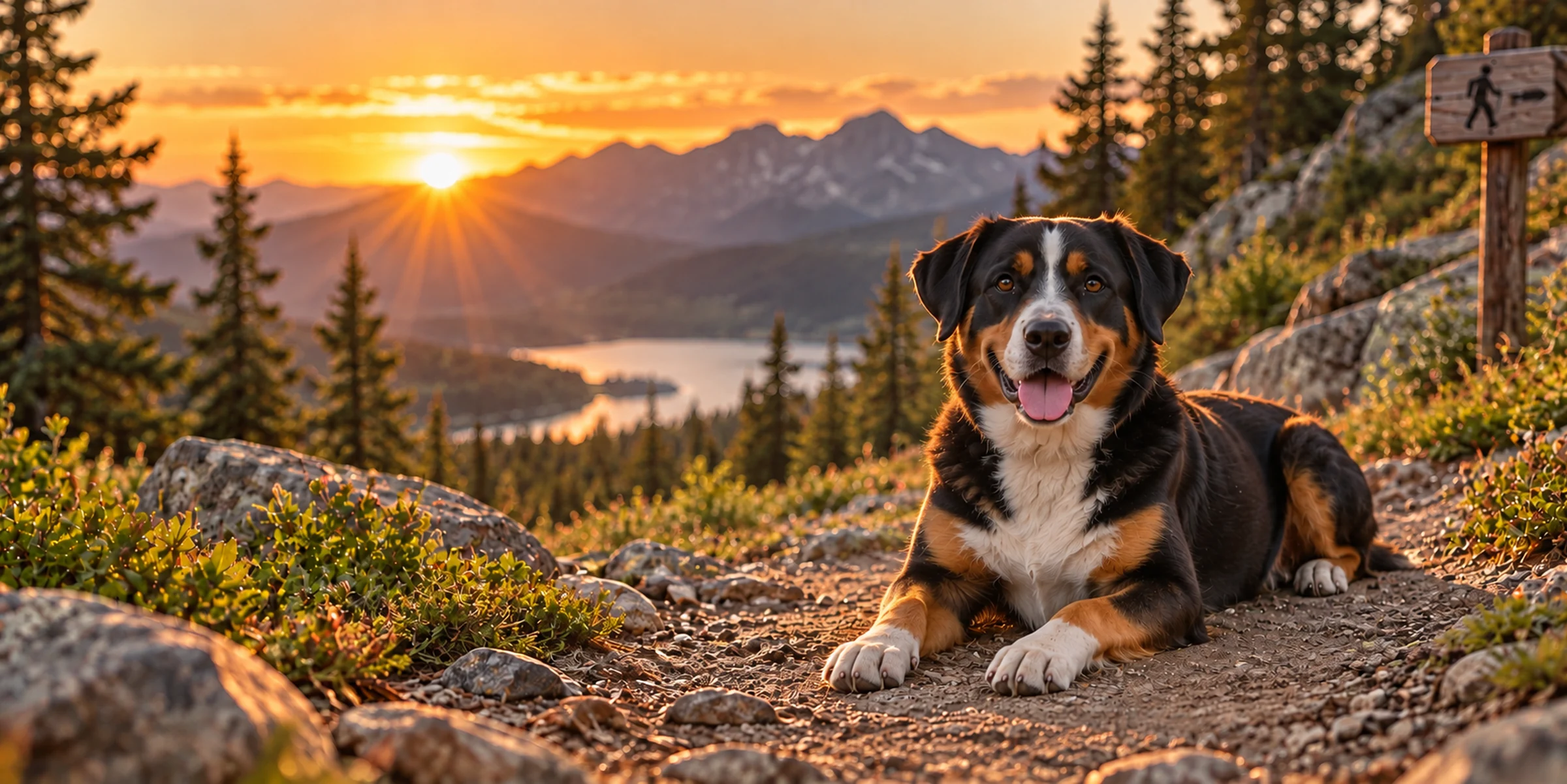
Appenzeller Sennenhund
The closest relative - the next size up among the Swiss mountain dogs, with the same driving style, the same voice and the same demands. The Appenzeller is a touch larger and equally busy; the Entlebucher is the smallest and quickest of the four.
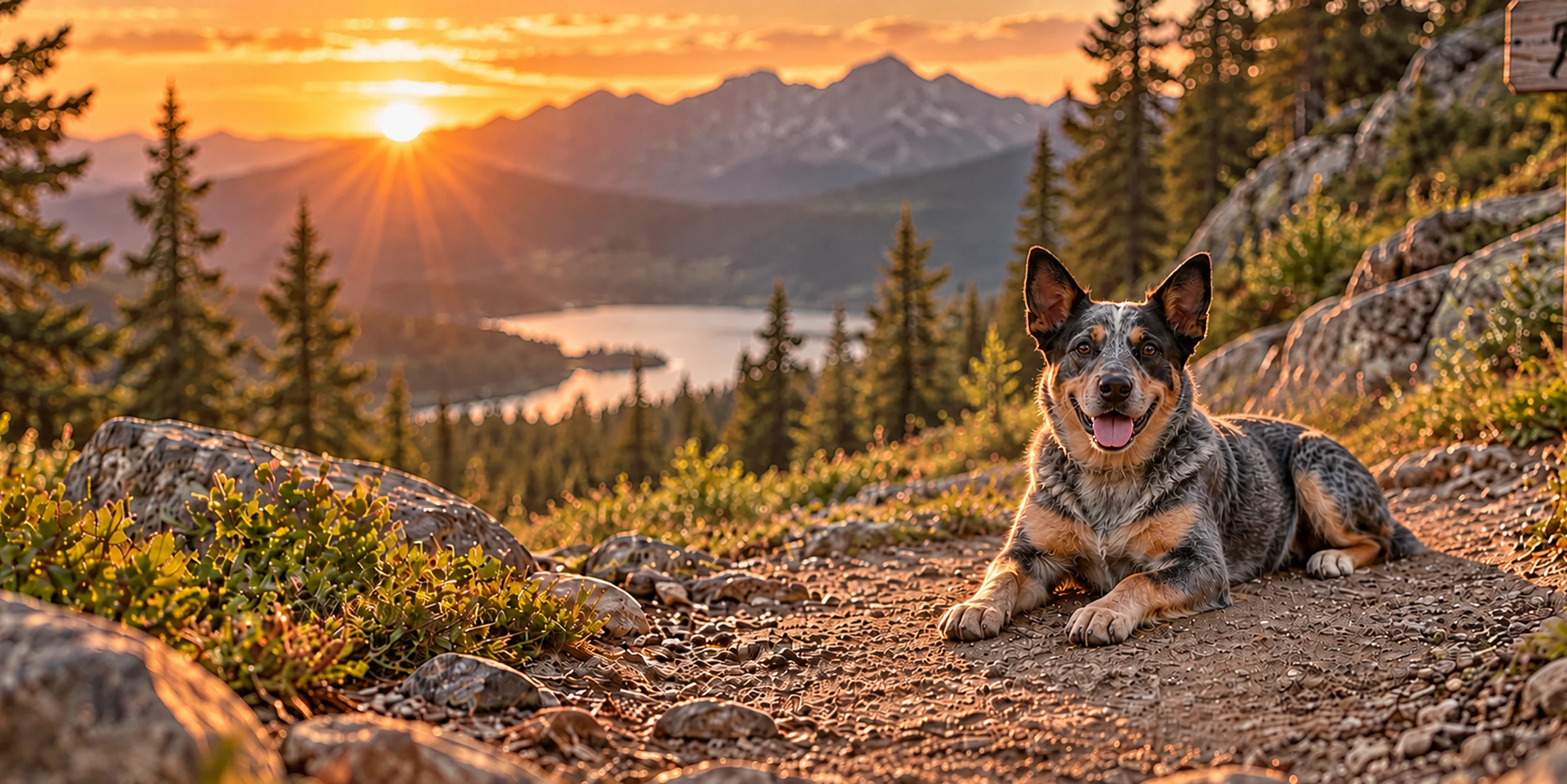
Australian Cattle Dog
The same job from the other side of the world - a low, tough heeler with relentless drive and a strong will. The Cattle Dog is more independent; the Entlebucher is more handler-focused and considerably more vocal.