

large-to-giant breed
Estrela Mountain Dog
Portugal's mountain flock guardian, a hundred-plus pounds of calm, devoted, self-directed dog who was bred to see off wolves and still treats the property line as their business. Estrelas are steady with their own household, protective of the children they live with, and openly reserved with everyone else. The coat sheds heavily twice a year, the heat is hard on them, and the deep carrying bark is the practical limit on where they can live.

Pup Height
24.5-29 in

Pup Weight
77-132 lb
Males 26-29 in and 88-132 lb, females 24.5-27 in and 77-110 lb. Two coat types, long and short, both with a thick undercoat. Fawn, wolf gray and brindle are the accepted colors, usually with a dark mask. One of the oldest breeds on the Iberian peninsula, named for the Serra da Estrela range where shepherds have kept them for centuries. In the AKC's Foundation Stock Service. Source: AKC Foundation Stock Service breed standard.

Pup Lifespan
10-14 years
Your pup, at a glance
What’s Life With This Pup Really Like?

High with their own family in an undemonstrative way - they settle near you, lean, and have no interest in anyone outside the household.

Good with their own family's children and protective of them, which is the complication. An Estrela's size and guardian instinct make supervision essential, especially with visiting children.

Excellent with livestock they were raised alongside and mixed with other dogs, where same-sex tension appears. The size makes any incident consequential.

High, deep and carrying, concentrated at night. It is the flock guardian doing their job and the most common reason neighbors object.

Low to moderate. An hour suits them and they conserve themselves deliberately the rest of the time.

Very heavy. A thick mountain undercoat that sheds year-round and comes out in sheets twice a year.

Limited. Puppies play; adults are serious, unhurried dogs who would rather hold a vantage point.

Moderate. Some drool around food and water, well short of a mastiff.

Low to moderate. Intelligent and independent by breeding - they cooperate with a handler they respect rather than obeying one.

The maximum. Territorial, watchful, loud and physically capable of acting on their own assessment.

High. Two or three brushings a week, daily in season, on a very large coat that costs real money to have done professionally.

Low. They need land, cool conditions, a boundary and an experienced owner, and they do badly without all four.
Lifestyle fit
Could This Be Your Best Breed?
An Estrela Mountain Dog belongs on land with a substantial fence, with an owner who has kept a guardian breed before and understands that you work with that independence rather than against it. Running one costs $2,200 to $3,600 a year, and ten to fourteen years is the range. A warm suburb with the neighbors in earshot fails this breed on three counts at once, and a guardian is not the dog anyone should be learning on.

Living Space
Land with a substantial fence. Estrelas are livestock guardians who decide where their territory ends, and they announce everything crossing it at volume - neighbors within earshot are a real constraint.

Pup Experience
Experienced owners, ideally with guardian breeds specifically. Estrelas are affectionate with their family and independent by design, and a hundred-pound dog making their own decisions about visitors needs someone who understands that temperament rather than fights it.

Daily Pup Time
Forty-five minutes to an hour of steady walking - they conserve energy like any flock guardian. The coat is the real commitment, particularly during the heavy seasonal sheds.

Allergies & Coat
The Estrela Mountain Dog scores 8/10 for shedding and 5/10 for drooling. No dog is truly hypoallergenic. The allergens come from dander and saliva, and a dog that sheds this much will leave plenty of hair behind - especially on your furniture, floors, and clothes.
Quirks & challenges
The Not-So-Easy Stuff

They Guard by Default
Territorial judgment is the breed, not a fault. Relentless early socialization decides how it presents.
Very Vocal
A deep carrying bark used liberally, especially at night. Often the reason these dogs get rehomed.
Independent to a Fault
They weigh requests rather than obeying them. Obedience is negotiated and never guaranteed under pressure.
The Coat Is Real Work
A thick double coat on a giant frame that blows out twice a year in earnest.
Slow to Mature
Two to three years before the adult guardian temperament settles, in a body that was full-size long before.
Rare and Hard to Place
Few breeders outside Portugal, and a giant guardian rehomes very badly if the household misjudges them.
The good, the bad & the hairy
Health, Care & Costs
Understanding the health risks and ongoing costs of a Estrela Mountain Dog helps you plan for a happy, healthy life together.

10-14 years
$85-$130
per groom (bath, full blow-out, nails, ears), every 8-10 weeks ($450-$800/year)
$2,200-$3,600/year
all-in (food, routine vet, grooming, insurance, incidentals)

Health Risks
Conditions this breed is prone to.

The joints develop loosely or unevenly and wear into arthritis, sometimes needing surgery - which on a dog over a hundred pounds sits at the top of the orthopedic cost range. Rates are significant in the breed and both parents should have scored hips and elbows.
The heart muscle weakens and stretches so it pumps poorly, leading to heart failure. It appears in the breed at higher rates than in most, is diagnosed by ultrasound, and is managed with medication rather than cured. Ask about cardiac screening in the parents.
The stomach fills with gas and twists, cutting off its own circulation, and it kills within hours without emergency surgery. Deep-chested giants are the highest-risk group there is - split meals, keep exercise clear of them, and discuss a preventive gastropexy.
The retina degenerates gradually until the dog is blind, usually starting with night vision. There is no treatment and a DNA test exists, so tested parents remove the risk.
A low-energy giant is easy to overfeed, and extra weight on joints already carrying an unusual load does damage that shows up years later as arthritis. Weight control here is orthopedic care.
A thick mountain double coat on a large frame means they handle cold superbly and heat badly. Never shave the coat - it insulates both ways - and keep summer exercise to the cool parts of the day.

Insurance & Health Coverage
Start with liability. Giant guardian breeds are excluded by some home insurers and refused by many landlords, and while the Estrela is rare enough that they may not appear on a list by name, underwriters often categorize by type rather than by breed. Get a written position before there is a puppy, because a hundred-pound guardian rehomes very badly.

On health, everything is priced by body mass. Joint surgery at this weight is at the top of the orthopedic range, bloat surgery is several thousand dollars at whatever hour it arrives, and routine anesthesia costs more. Cardiac disease is the other expensive category and it appears earlier in this breed than in most.

Insure young - a joint or heart note on the record becomes a permanent exclusion for exactly the things most likely to need paying for.
 Get a Pet Insurance Quote
Care needs
The Daily Routine

Grooming
A thick weatherproof double coat that needs a thorough brush two or three times a week, and daily attention for a few weeks in spring and fall when the undercoat comes out in handfuls. The long-coated variety needs more. Professional grooming on a dog this size is a real expense, and the coat should never be shaved - it insulates against heat as well as cold.

Exercise
Forty-five minutes to an hour of steady walking, timed around the temperature. They are not athletes and do not want to be; long runs are neither wanted nor good for growing giant joints.

Food & Weight
Two or three measured meals rather than one large one, with activity kept well clear of feeding given the bloat risk. Grow puppies slowly on giant-breed food - pushing weight onto developing joints causes damage that lasts a lifetime.
Similar breeds
If This Isn’t Quite the One
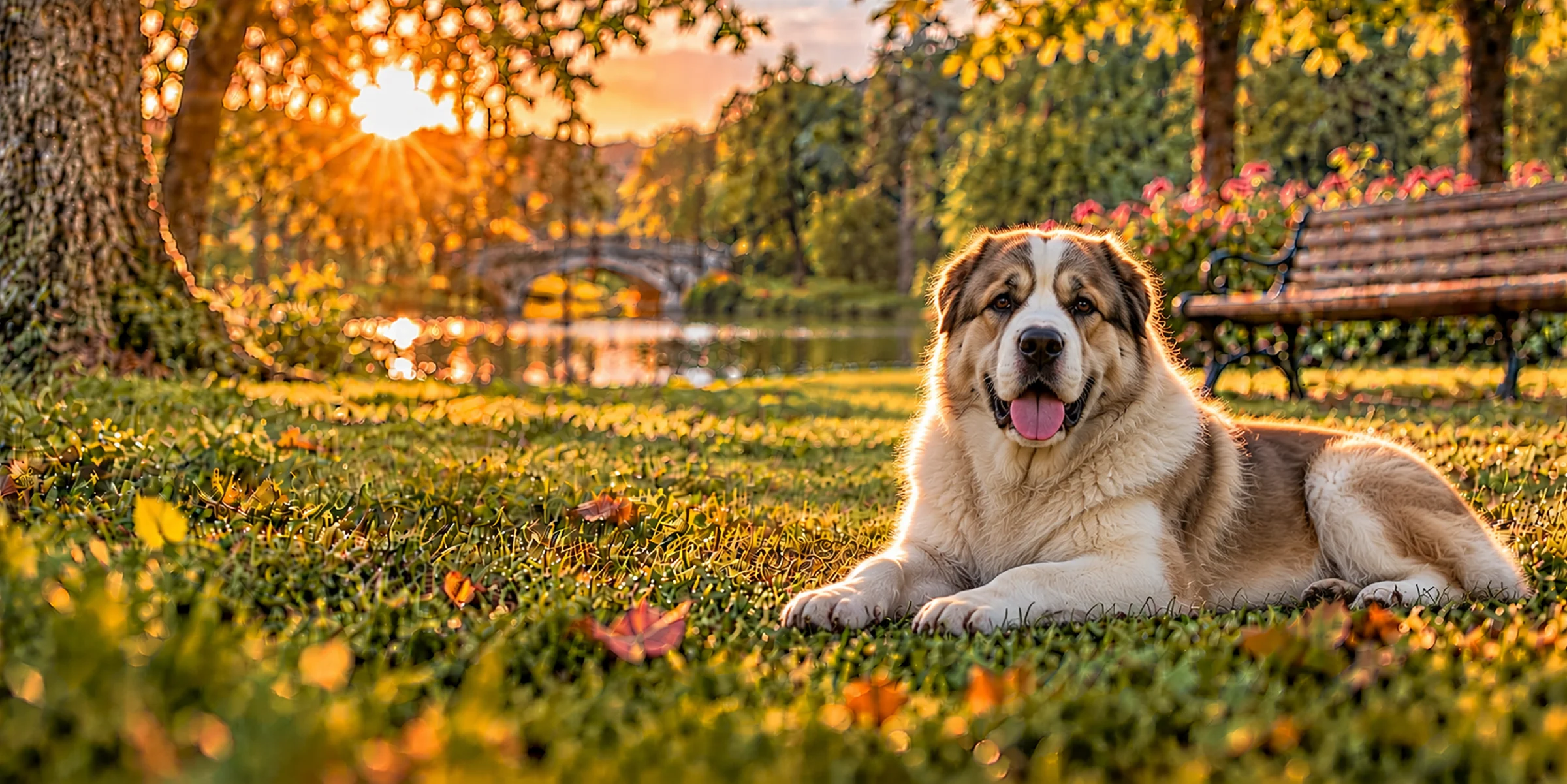
Central Asian Shepherd Dog
The same job in a different mountain range - an ancient flock guardian bred to work alone against predators. The Central Asian is harder-edged and more restricted; the Estrela is somewhat more biddable and more openly affectionate with family.
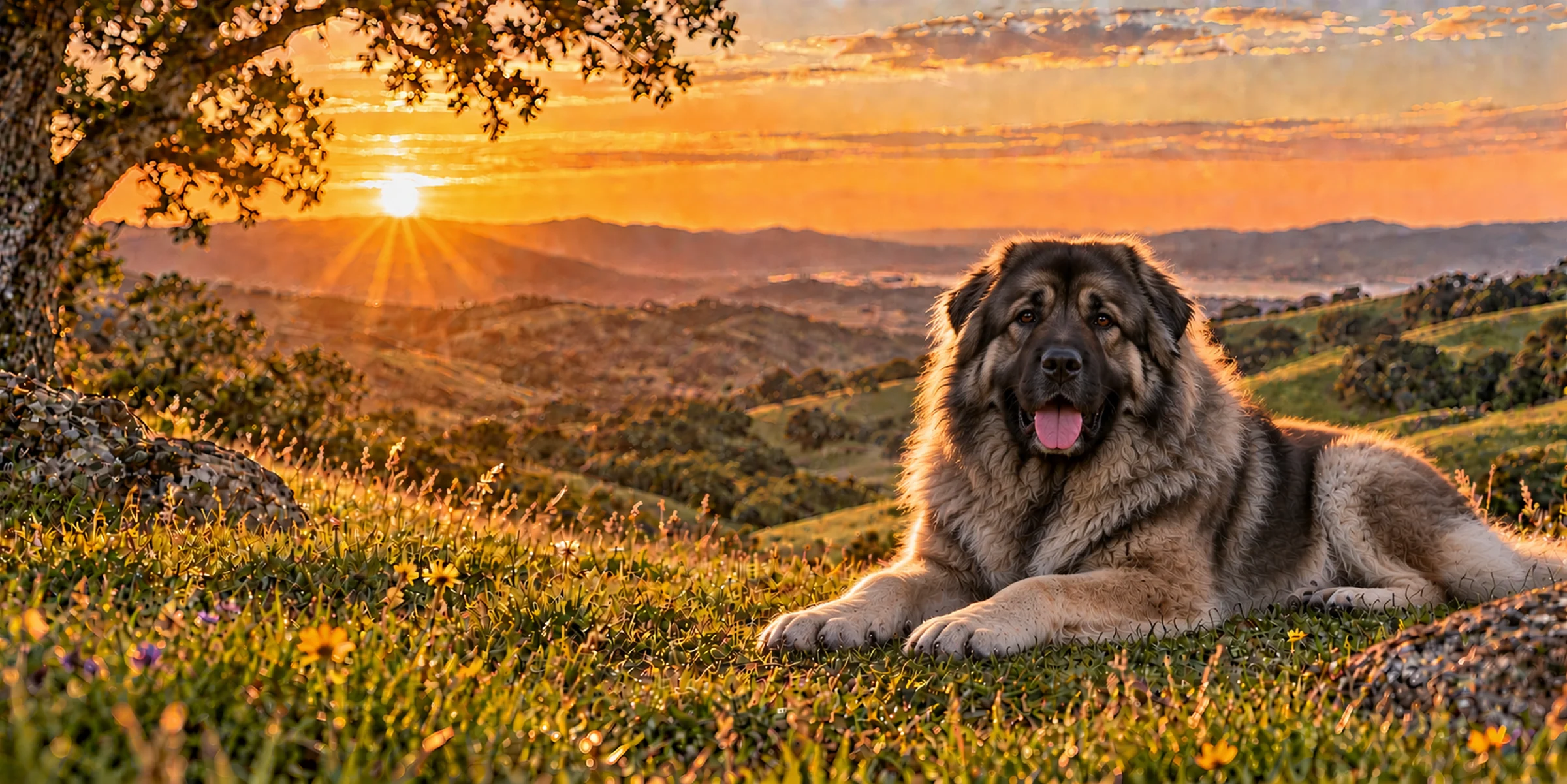
Caucasian Shepherd Dog
Another livestock guardian of comparable size and coat, and a useful contrast. The Caucasian is considerably more reactive and more heavily restricted; the Estrela is the calmer of the two by a clear margin.