

medium breed
Finnish Lapphund
A profusely coated arctic spitz from Lapland, bred to move reindeer by barking and dodging rather than gripping. Finnish Lapphunds are exceptionally good with children, sociable with almost everything, easy to teach and very attached to their people - the standard actually asks for a yielding temperament, which is rare. The coat and the voice are the price of admission. Both are larger than newcomers expect, and neither trains away.

Pup Height
16-21 in
Males 18-21 in, females 16-19 in. A profusely coated northern spitz built for arctic cold - a dense double coat with a thick ruff, prick ears and a tail carried over the back. Any color is permitted provided one is clearly dominant, so black-and-tan, wolf sable, brown and cream all occur. Bred by the Sami of Lapland to herd reindeer. Source: AKC breed standard.

Pup Weight
33-53 lb

Pup Lifespan
12-15 years
Your pup, at a glance
What’s Life With This Pup Really Like?

Very high. They are affectionate and physically close with the whole family and want to be in whatever room the people are.

Excellent. Gentle, patient and famously tolerant, with the usual herding caveat about circling running children.

Very good. Sociable with dogs and generally reliable with cats, with a modest prey drive.

High. They herded reindeer by voice and still use it liberally - trainable down to manageable, never quiet.

Moderate. An hour with mental work suits them, which makes them one of the easier herding breeds to satisfy.

Very heavy - among the worst here. A dense arctic undercoat that sheds year-round and blows out completely twice a year.

Cheerful and playful well into adulthood, with a light, bouncy quality rather than intensity.

Very low.

Excellent. Quick, willing and food-motivated, and sensitive enough that gentle handling is essential.

Moderate. Alert and very quick to announce an arrival, with no guarding instinct behind the noise.

High. Twice-weekly deep brushing, daily during the blowouts, plus professional de-shedding on a very dense coat.

Moderate. They handle cold superbly and heat badly, and the barking makes close neighbors a real constraint.
Lifestyle fit
Could This Be Your Best Breed?
A Finnish Lapphund suits a house with a yard in a cool climate, with neighbors who are not close and an owner willing to brush twice a week and daily during the blowouts. They cost $1,400 to $2,400 a year, are generally healthy, and live twelve to fifteen years. Anyone in a hot region, behind a shared wall, or hoping for a coat that stays put has the wrong breed.

Living Space
A house with a yard works well, and a cool climate works better. They are vocal enough that close neighbors are a genuine consideration, and a thick arctic coat makes hot summers hard on a Lapphund.

Pup Experience
Good for a first-time owner who can handle the coat and the noise. They are friendly, biddable and forgiving - the two things that catch people out are the shedding and the barking, both of which are substantial.

Daily Pup Time
An hour of activity daily with something to think about. Grooming is a proper brush twice a week and daily during the twice-yearly blowouts, which are genuinely dramatic.

Allergies & Coat
The Finnish Lapphund scores 9/10 for shedding and 2/10 for drooling. No dog is truly hypoallergenic. The allergens come from dander and saliva, and a dog that sheds this much will leave plenty of hair behind - especially on your furniture, floors, and clothes.
Quirks & challenges
The Not-So-Easy Stuff

They Bark
Herding reindeer was done by voice. Trainable to manageable with a quiet cue, never a quiet breed.
Enormous Shedding
A dense arctic double coat that blows out twice a year in sheets. Nothing prevents it.
Poor in Heat
Built for Lapland winters. Summer exercise at dawn and dusk, and the coat is never shaved.
Herding Instinct on Children
Circling and gathering aimed at running kids. Harmless but worth redirecting into a task early.
Sensitive Nature
The standard calls for a submissive temperament. Harsh handling shuts them down rather than correcting them.
Rare Outside Scandinavia
Few American breeders. Expect a waiting list and possibly travel or an import.
The good, the bad & the hairy
Health, Care & Costs
Understanding the health risks and ongoing costs of a Finnish Lapphund helps you plan for a happy, healthy life together.

12-15 years
$70-$110
per groom (bath, full blow-out, de-shed, nails, ears), every 8-10 weeks ($400-$700/year)
$1,400-$2,400/year
all-in (food, routine vet, grooming, insurance, incidentals)

Health Risks
Conditions this breed is prone to.

Worth stating first. The breed was shaped by function in a harsh climate rather than by the show ring, Finnish clubs have screened systematically for decades, and the inherited-disease list is short with a long average life.
The retina degenerates gradually until the dog is blind, usually starting with night vision. A specific form, prcd-PRA, occurs in the breed, and there is a DNA test - tested parents remove the risk entirely.
The joints develop loosely or unevenly and wear into arthritis, sometimes needing surgery. Rates are low by herding-breed standards because of the Finnish screening requirements, and both parents should still have scored hips.
The lens clouds and vision declines, sometimes in young dogs. Annual eye examination catches it, and surgery is available where it is significant.
A rare inherited metabolic disease specific to the breed, in which nerve cells cannot break down a fatty substance and young dogs develop progressive neurological decline. It is fatal, it is DNA testable, and a breeder who tests both parents removes it entirely.
A practical rather than a pathological problem, and a real one. A dense arctic double coat means they overheat easily, and the coat must never be shaved because it insulates against heat as well as cold.

Insurance & Health Coverage
An easy breed to insure - a short inherited-disease list, decades of Finnish club screening behind it, no restricted-breed question, and a long life expectancy.

So the case for cover is the ordinary one, and the advice is the ordinary one: insure young, before any joint or eye note lands on a record and becomes a permanent exclusion.

The two serious inherited conditions - prcd-PRA and GM2 gangliosidosis - are both congenital, so no policy pays for either, and both are DNA testable in the parents. On those two the breeder's paperwork is the protection, not the insurer. Grooming is the recurring uninsurable cost, and on a coat this dense it is a real annual line item.
 Get a Pet Insurance Quote
Care needs
The Daily Routine

Grooming
A dense double coat that needs a thorough brush right down to the skin twice a week, and daily attention for several weeks in spring and fall when the undercoat comes out completely. Concentrate on the ruff, behind the ears and the trousers. No trimming, and never shave the coat - it regulates temperature in both directions.

Exercise
About an hour daily with mental work in it. Herding, agility, obedience and hiking all suit them, and they are content with considerably less than most herding breeds demand.

Food & Weight
Two measured meals. Lapphunds are efficient feeders built for a hard climate, and the coat hides weight gain completely - go by feel through the ribs rather than by eye.
Similar breeds
If This Isn’t Quite the One

Eurasier
A comparable family-oriented spitz of similar size with the same thick double coat and shedding. The Eurasier is far quieter and more reserved; the Lapphund is more outgoing, more vocal and more energetic.
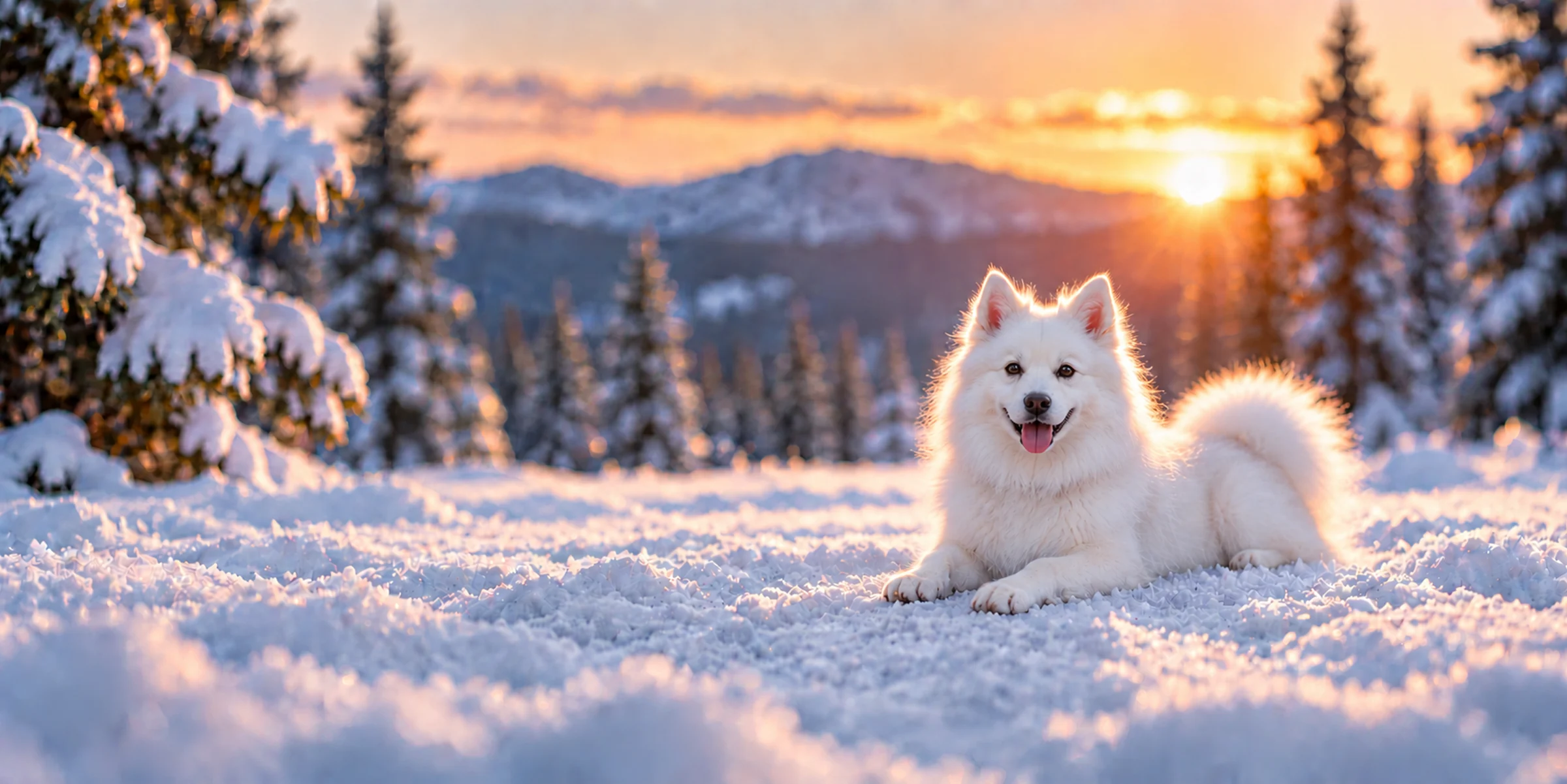
American Eskimo Dog
Another friendly, trainable spitz with a heavy coat and a strong voice. The Eskie is more excitable; the Lapphund is calmer indoors and better suited to cold country.
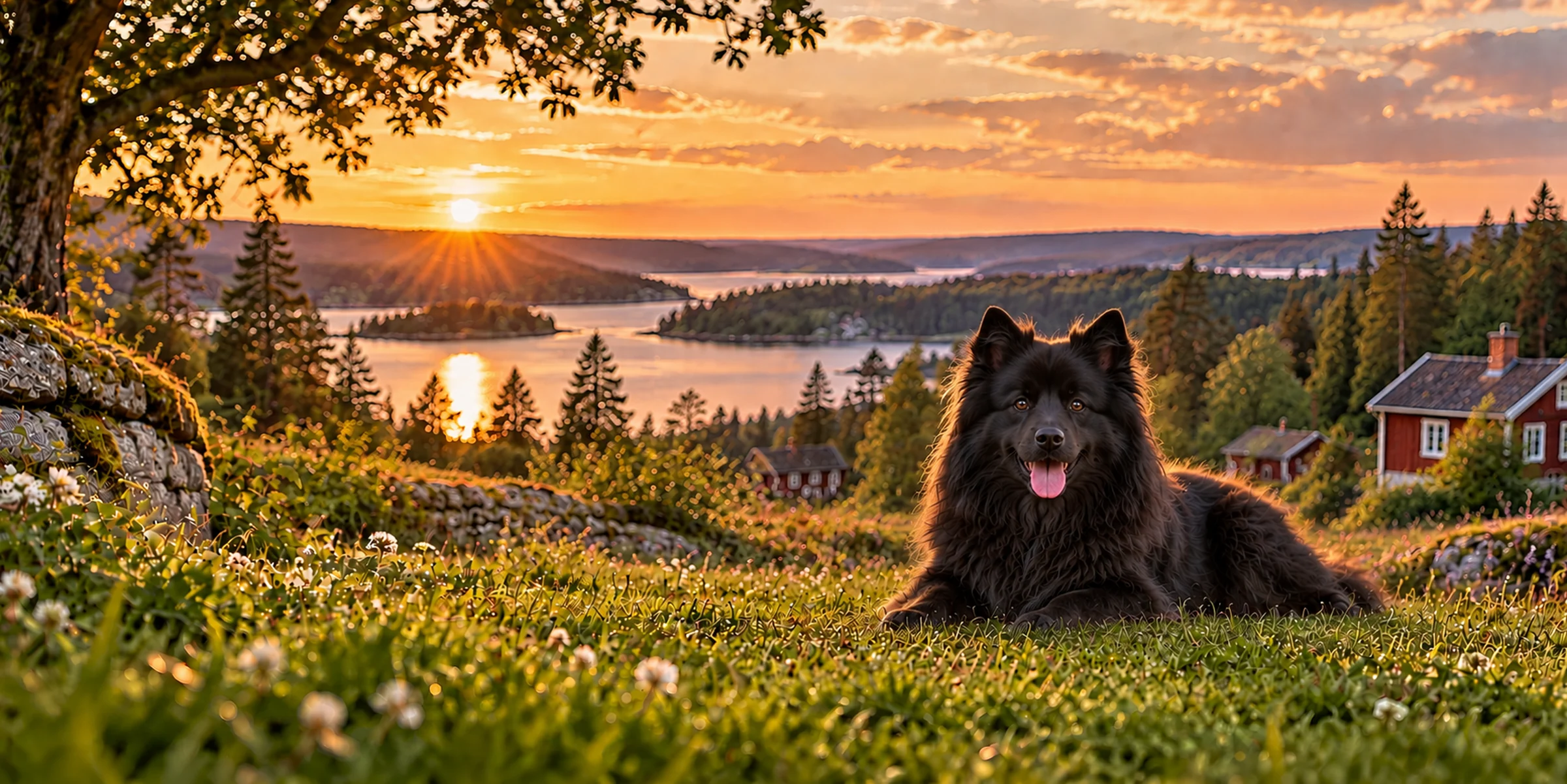
Swedish Lapphund
The Swedish half of the same Sami herding tradition, and the one people mix this breed up with. The color rule is the reliable tell: a Swedish Lapphund is solid black or bear-brown, where the Finnish standard allows any color with one dominant.