

medium breed
Swedish Lapphund
One of Sweden's oldest breeds, a Sami reindeer dog whose type has been in Scandinavia for thousands of years, herding by voice and movement because reindeer use their antlers. Swedish Lapphunds are lively, attentive and affectionate to the point of leaning, with a real off switch indoors once the day has had work in it. The barking came with the job, the arctic coat comes out in sheets twice a year, and the independence surfaces exactly when obedience matters.

Pup Height
16-20 in
Males stand around 19 in and females around 17 in at the ideal heights, with a tolerance of about an inch either way. Solid black or bear-brown, with small white markings allowed on the chest, feet and tip of the tail and no other colors permitted. A profuse, harsh, standing-off outer coat over a dense undercoat, with prick ears and a tail carried curled over the back. In the AKC's Foundation Stock Service. Source: AKC Foundation Stock Service breed standard.

Pup Weight
30-45 lb

Pup Lifespan
12-14 years
Your pup, at a glance
What’s Life With This Pup Really Like?

Very high. Swedish Lapphunds want to be against their people and will lean, follow and settle at a foot rather than across the room.

Excellent. Kind, playful and patient, with the usual herding caveat about circling and gathering running children.

Very good. Sociable with other dogs and generally reliable with cats raised alongside them, with a modest prey drive.

Very high. Reindeer were moved by voice and the habit stayed - training makes the barking manageable rather than rare.

Moderate to high. An hour of real activity with something to think about, then a genuine off switch indoors.

Very heavy. A profuse double coat that sheds year-round and releases the whole undercoat twice a year.

Lively and comic, and still playful well into adulthood. Games with a person beat toys left on the floor.

Very low.

Good. Quick and eager to learn, with an independent streak that answers pressure by digging in.

Strong as an alarm. Alert, watchful and loud about anything new, with no real guarding weight behind the noise.

Moderate to high. Twice-weekly brushing to the skin, daily work through the blowouts, and no trimming at all.

Low to moderate. Superb in cold and poor in heat, and the barking makes close neighbors a real constraint.
Lifestyle fit
Could This Be Your Best Breed?
A Swedish Lapphund fits an active family in cool country, in a house with a fenced yard and neighbors far enough off not to mind the noise. Costs are moderate at $1,300 to $2,200 a year over twelve to fourteen, and the breed is rare enough outside Scandinavia that a wait is normal. Heat is the one thing no training or grooming can work around, so a hot climate rules the breed out first.

Living Space
A house with a securely fenced yard, in country that gets a real winter. Swedish Lapphunds are a manageable size indoors and settle well once the day has had something in it, but the voice carries through walls and a dense arctic coat makes a hot summer genuinely hard on the dog.

Pup Experience
Workable for a committed first-time owner who will train with a light hand and a sense of humor. Swedish Lapphunds are quick and willing, and the catch is the independent streak underneath - plus a coat and a bark that both turn out bigger than the photos suggest.

Daily Pup Time
About an hour of activity daily with something to think about in it. Grooming is a thorough brush twice a week and daily work for several weeks during each seasonal coat blow.

Allergies & Coat
The Swedish Lapphund scores 9/10 for shedding and 2/10 for drooling. No dog is truly hypoallergenic. The allergens come from dander and saliva, and a dog that sheds this much will leave plenty of hair behind - especially on your furniture, floors, and clothes.
Quirks & challenges
The Not-So-Easy Stuff

Bred to Bark
Reindeer were herded by voice, and the habit came into pet homes intact. Training shapes the volume and the timing; nothing removes the instinct.
Coat Comes Out in Sheets
A dense arctic double coat that sheds year-round and lets the whole undercoat go twice a year. Nothing prevents it.
Independent Streak
Biddable one minute and privately certain the next. A Swedish Lapphund who sees no point in a request will offer an opinion instead.
Poor in Heat
Built for Lapland winters. Summer exercise belongs at dawn and dusk, and the coat is never shaved.
Needs to Be Included
Bred to work beside people all day and poor at long hours alone, which usually shows up as noise the neighbors hear about.
Rare Outside Scandinavia
A small population and a handful of American breeders. Expect a waiting list and possibly an import.
The good, the bad & the hairy
Health, Care & Costs
Understanding the health risks and ongoing costs of a Swedish Lapphund helps you plan for a happy, healthy life together.

12-14 years
$60-$100
per groom (bath, full blow-out, de-shed, nails, ears), every 8-12 weeks or done at home ($0-$550/year)
$1,300-$2,200/year
all-in (food, routine vet, grooming, insurance, incidentals)

Health Risks
Conditions this breed is prone to.

Worth stating first. The breed was shaped by hard work in a hard climate rather than by the show ring, Swedish and Finnish clubs have screened systematically for decades, and the inherited-disease list is short.
The hip joint develops loosely so the ball wears in the socket instead of gliding, leading to arthritis and sometimes surgery. Screening is the breed's main health requirement, and both parents should have hip scores from OFA or an equivalent scheme.
The retina degenerates gradually until the dog is blind, usually starting with night vision. The prcd form occurs in the Lapphund breeds and has a DNA test, so two tested parents remove that risk entirely.
A rare inherited enzyme deficiency identified in the breed, in which sugar builds up in muscle and heart tissue and affected puppies weaken and decline in the first year or two. It is fatal, it is DNA testable, and a breeder who tests both parents removes it.
The lens clouds and vision declines, sometimes in young dogs. An annual examination by a veterinary ophthalmologist is the screen, and surgery is available where the cataract is significant.
Practical rather than pathological, and a real limit on where this breed is comfortable. A dense arctic coat means they overheat quickly, and the coat must never be shaved, because it insulates against heat as well as cold.

Insurance & Health Coverage
An easy breed to insure - a short inherited-disease list, decades of Scandinavian club screening behind it, a medium frame that keeps drug and anesthesia costs down, and a long life expectancy.

So the case for cover is the ordinary one, and so is the advice: insure young, before a hip or eye note lands on the record and becomes a permanent exclusion for the life of the policy.

The two serious inherited conditions are the exception no insurer solves. Progressive retinal atrophy and glycogen storage disease are both congenital, so no policy pays out on either, and both are DNA testable in the parents - on those two the breeder's paperwork is the protection. Grooming is the other uninsurable line, and on a coat this dense it is a real annual cost rather than a rounding error.
 Get a Pet Insurance Quote
Care needs
The Daily Routine

Grooming
A profuse double coat that needs a thorough brush right down to the skin twice a week, working through the ruff, behind the ears and the trousers where mats start. For several weeks in spring and fall the undercoat comes out completely and it becomes a daily job with an undercoat rake. The coat sheds dirt well, so baths are occasional, and a high-velocity dryer does more than any amount of brushing on a wet coat. No trimming, and never shave the coat.

Exercise
About an hour daily with mental work in it - herding, agility, obedience, tracking and long hikes all suit them. Swedish Lapphunds have working stamina when the day calls for it and an honest off switch when it does not, which makes them easier to satisfy than most northern herders.

Food & Weight
Two measured meals of a diet suited to an active medium dog, with treats counted against the daily total because training goes better with food involved. The coat hides condition completely, so go by feel through the ribs rather than by eye.
Similar breeds
If This Isn’t Quite the One
Finnish Lapphund
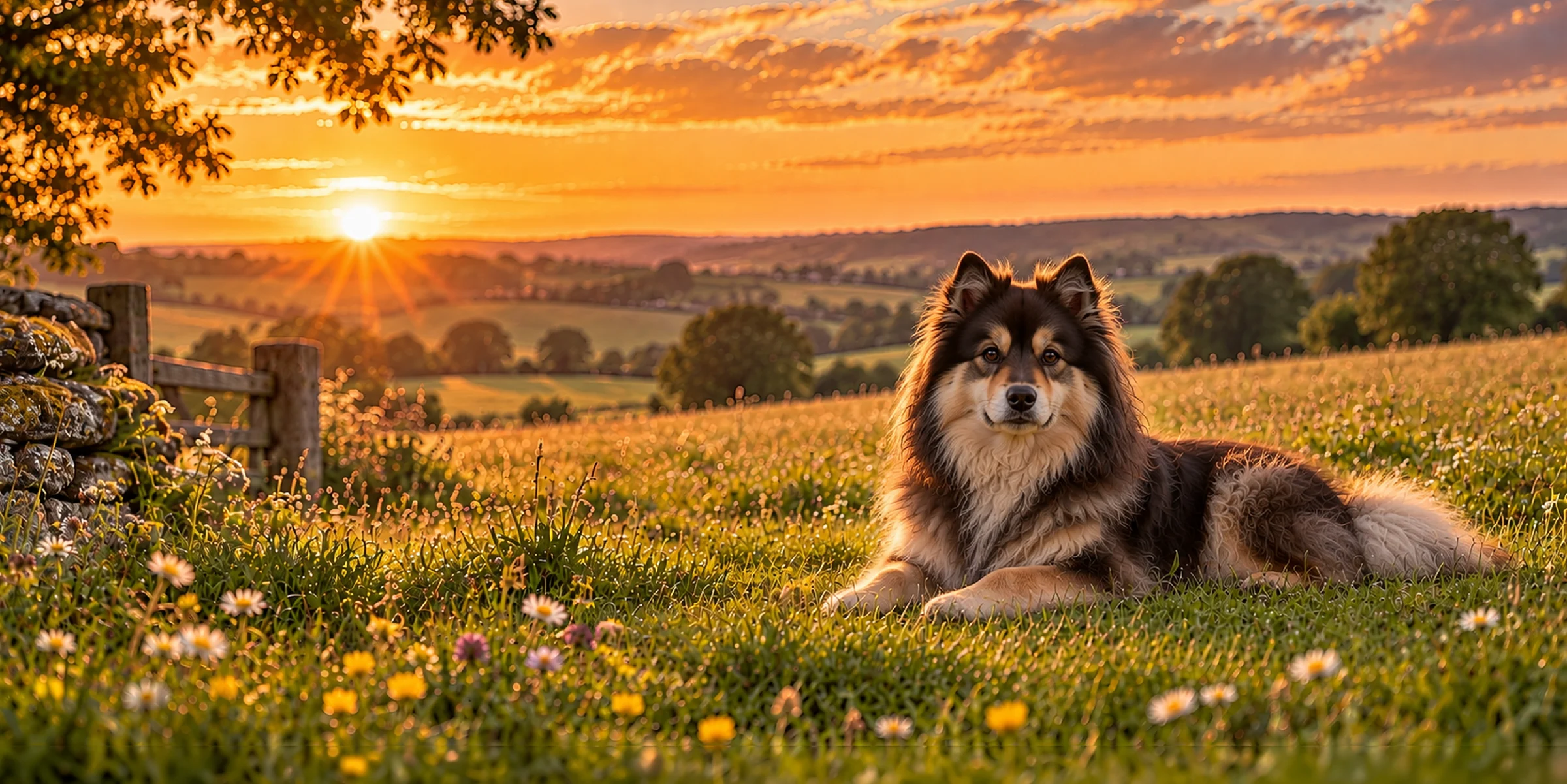
The breed this one gets confused with, and the two genuinely are close - the same Sami reindeer work, much the same size, the same enormous coat. Color is the reliable tell: the Finnish standard allows any color as long as one is clearly dominant, so black-and-tan, wolf sable and cream all appear, while the Swedish Lapphund is solid black or bear-brown with only small white markings. The Finnish Lapphund is also softer by standard, which calls for a submissive temperament, and far easier to find, having reached the AKC Herding Group in 2011.
Lapponian Herder
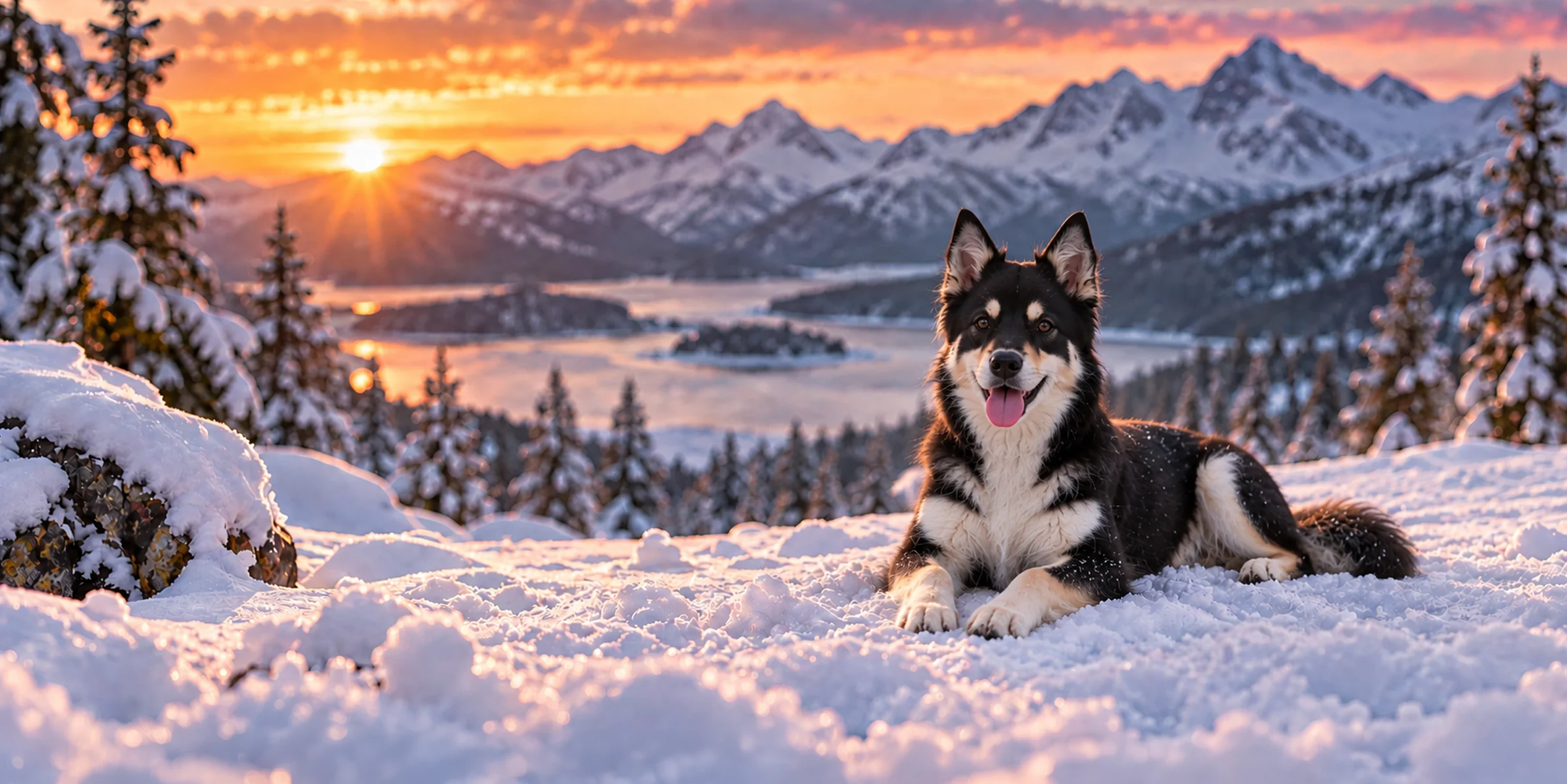
The third Sami reindeer dog and the working end of the group - lean, medium-coated and needing two hours of hard activity a day. The Swedish Lapphund carries far more coat, asks for about half the exercise, and is the more realistic choice for a household that is not doing serious sport or stockwork.
Swedish Vallhund
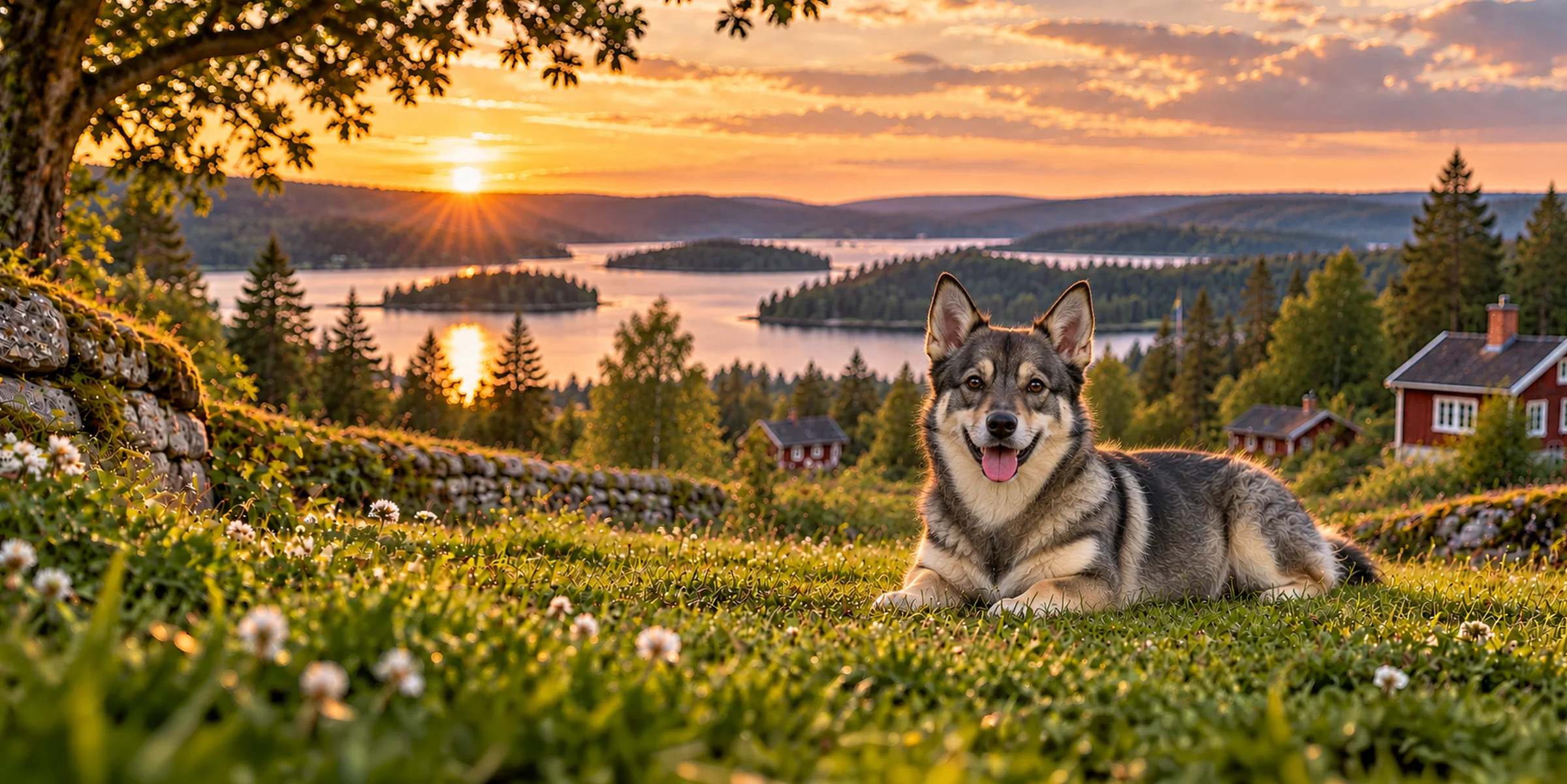
The other Swedish national breed, and a completely different build - long, low, cattle-bred, with a fraction of the coat work. Both are loud and both are busy; the Vallhund is pushier, quicker to argue and easier to groom, while the Swedish Lapphund is gentler and settles more readily indoors.