

small-to-medium breed
Finnish Spitz
Finland's national dog and bark-pointer, bred to tree a grouse and then bark below until the hunter walks in, sometimes for an hour. Champion dogs in Finland manage over 160 barks a minute, and that is what you are getting. The Finnish Spitz is bright, foxy, lively and affectionate at home, independent to the point of cheerful disobedience outdoors, and quite often rehomed by people who hoped the noise was a phase.

Pup Height
15.5-20 in
Males 17.5-20 in, females 15.5-18 in. A square, foxlike spitz - prick ears, a plumed tail curled over the back, and a dense double coat in shades of golden red from pale honey to deep auburn. Puppies are often born dark and lighten as they mature. The national dog of Finland, where the breed's barking ability is still tested competitively. Source: AKC breed standard.

Pup Weight
20-33 lb

Pup Lifespan
13-15 years
Your pup, at a glance
What’s Life With This Pup Really Like?

High with their own family and on their own terms. They are affectionate at home and have no interest in strangers.

Very good with children a Finnish Spitz lives with - playful, sturdy and patient. Less tolerant of rough handling from visiting children.

Reasonable with dogs, poor with small animals. The hunting drive is entirely intact and does not switch off for the household cat.

Top of the scale, alongside the coonhounds. Barking is the breed's working function rather than a fault, and it is tested competitively in Finland.

High. Ninety minutes with variety suits them, and they are calmer indoors than outdoors.

Very heavy. A dense northern double coat that sheds year-round and blows out completely twice a year.

Lively and inventive well into adulthood, with a strong chase instinct and limited interest in fetch.

Very low.

Low to moderate. Bright and thoroughly independent - they cooperate when it suits them and never become reliable under distraction.

Strong as an alarm. Alert, suspicious of arrivals and as loud about it as anything here, with nothing behind it at thirty pounds.

Moderate. A weekly brush most of the year and daily work through the seasonal blowouts, with no trimming needed.

Low. They handle cold superbly, heat badly, and the noise rules out apartments, terraces and most suburban streets.
Lifestyle fit
Could This Be Your Best Breed?
A Finnish Spitz needs a detached house with a fenced yard and real distance from neighbors, and an owner who actively wants a vocal, self-directed dog rather than one who plans to train the barking down. They are cheap to keep at $1,200 to $2,100 a year and often live to fifteen. Without a detached house, a cool climate and some experience behind you, do not - in an apartment or a row house the barking becomes everybody's problem.

Living Space
A house with a securely fenced yard and neighbors who are some distance away. The barking is not a quirk to be trained out - it is the breed's entire working function, and it is the single biggest constraint on where they can live.

Pup Experience
Not a first dog, and specifically not for anyone in an apartment or a terrace. Finkies are independent, primitive in temperament and extraordinarily vocal, and owners need to want that rather than hope to manage it.

Daily Pup Time
An hour to ninety minutes daily with real variety. The coat needs a weekly brush and daily work during the twice-yearly blowouts.

Allergies & Coat
The Finnish Spitz scores 8/10 for shedding and 2/10 for drooling. No dog is truly hypoallergenic. The allergens come from dander and saliva, and a dog that sheds this much will leave plenty of hair behind - especially on your furniture, floors, and clothes.
Quirks & challenges
The Not-So-Easy Stuff

The Barking Is the Breed
Champions manage 160 barks a minute. Reducible with work, never removable, and it carries a long way.
Independent Thinker
They weigh every request. Repetition without reward gets almost nothing from a primitive breed.
Unreliable Recall
Bred to range ahead out of sight. Secure fencing and a long line rather than confidence.
Real Prey Drive
A hunting dog with a strong nose. Cats, small pets and anything that bolts are all at risk.
Heavy Seasonal Shedding
A dense northern double coat that comes out in sheets twice a year.
Poor in Heat
Built for Finnish winters. Summer exercise at dawn and dusk, and never shave the coat.
The good, the bad & the hairy
Health, Care & Costs
Understanding the health risks and ongoing costs of a Finnish Spitz helps you plan for a happy, healthy life together.

13-15 years
$55-$85
per groom (bath, full blow-out, de-shed, nails, ears), every 10-12 weeks ($250-$450/year)
$1,200-$2,100/year
all-in (food, routine vet, grooming, insurance, incidentals)

Health Risks
Conditions this breed is prone to.

Worth stating first. The breed was rebuilt in the late nineteenth century from working stock and has been selected for function ever since, with Finnish club screening behind it - the inherited-disease list is short and the working life is long.
The kneecap slips out of its groove, producing a skipping gait and sometimes needing surgery. It is the most common orthopedic issue in the breed and is screened by examining the parents.
The hip joint develops loosely and wears into arthritis. Rates are low compared with most breeds of this size, and screening the parents is still worth asking about.
Seizures with no other underlying cause, usually first appearing between one and five years old. Controlled with daily medication rather than cured, and the drugs and blood monitoring are a lifelong cost.
An immune-mediated condition in which blood vessels and pigment grow across the cornea, gradually clouding vision. It is more common at altitude and in strong sunlight, and it is managed with lifelong eye medication rather than cured.
A practical rather than a pathological problem. A dense northern double coat means they overheat easily, and the coat must never be shaved because it insulates against heat as well as cold.

Insurance & Health Coverage
A healthy, inexpensive breed with a long life, so premiums should be reasonable and the case for cover is the ordinary one.

Insure young for the usual reason - a skipping gait or a seizure noted on a record becomes a permanent exclusion, and both patellar luxation and epilepsy tend to appear in young adults.

The two chronic conditions worth understanding are epilepsy and pannus, because both are managed for life rather than cured. Check how a policy handles ongoing conditions across renewal years rather than just the first claim - a breed that lives to fifteen with a daily medication is exactly where annual-limit resets and per-condition caps start to matter.
 Get a Pet Insurance Quote
Care needs
The Daily Routine

Grooming
A dense double coat that needs a thorough brush weekly most of the year and daily attention for several weeks in spring and fall when the undercoat lets go completely. The coat is largely self-cleaning and needs no trimming, and it should never be shaved - it regulates temperature in both directions.

Exercise
An hour to ninety minutes daily with variety. They enjoy hiking, scent work and long walks, and a securely fenced space to move in - they are independent rangers rather than fetch dogs.

Food & Weight
Two measured meals. They are lean, efficient dogs built for a hard climate and need less than their energy suggests; the coat hides weight gain, so go by feel through the ribs.
Similar breeds
If This Isn’t Quite the One
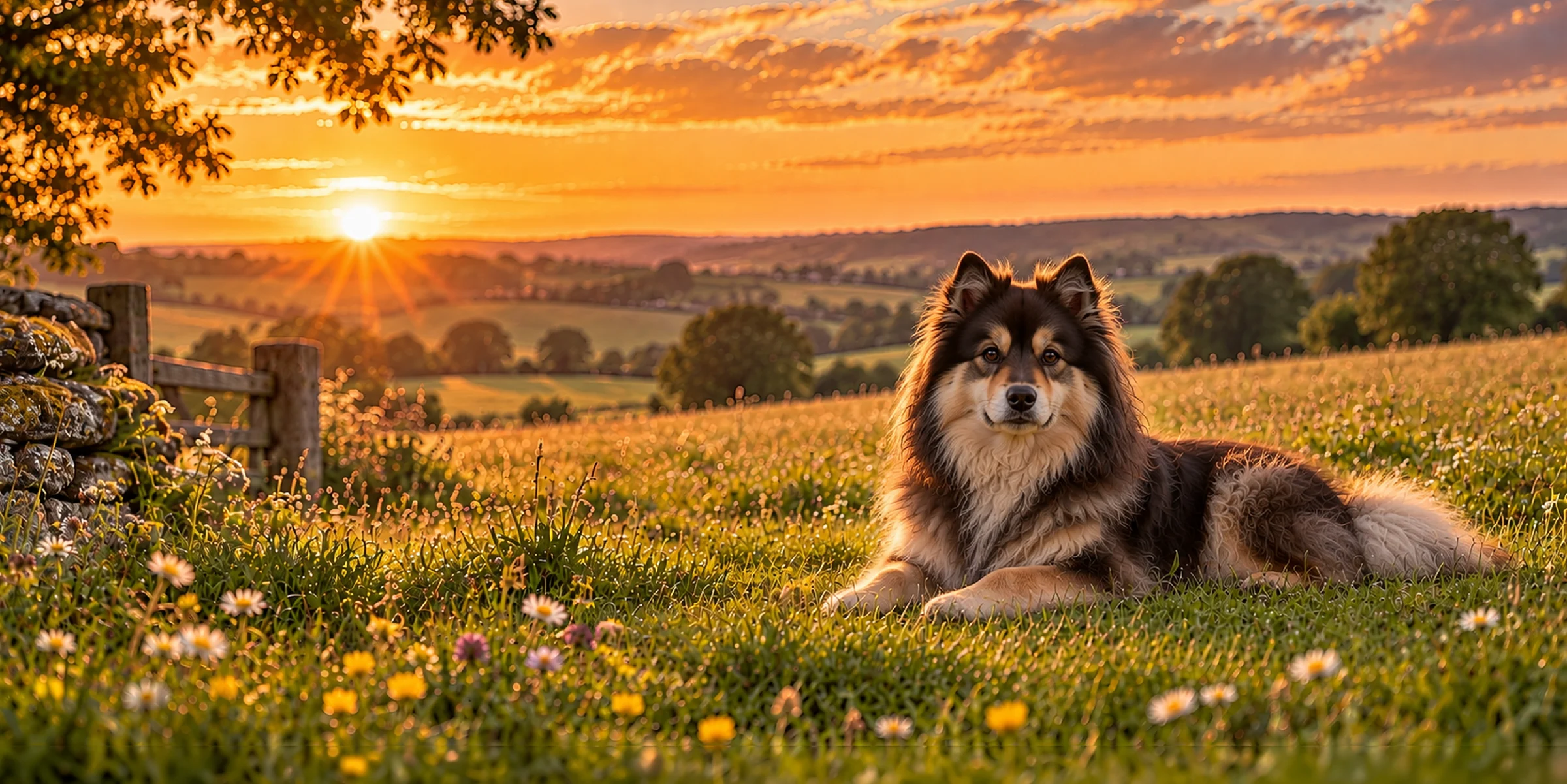
Finnish Lapphund
The other Finnish spitz on this site and a useful contrast - both are vocal northern breeds with heavy coats. The Lapphund is a herder, markedly more biddable and easier to live with; the Finnish Spitz is more independent and considerably louder.
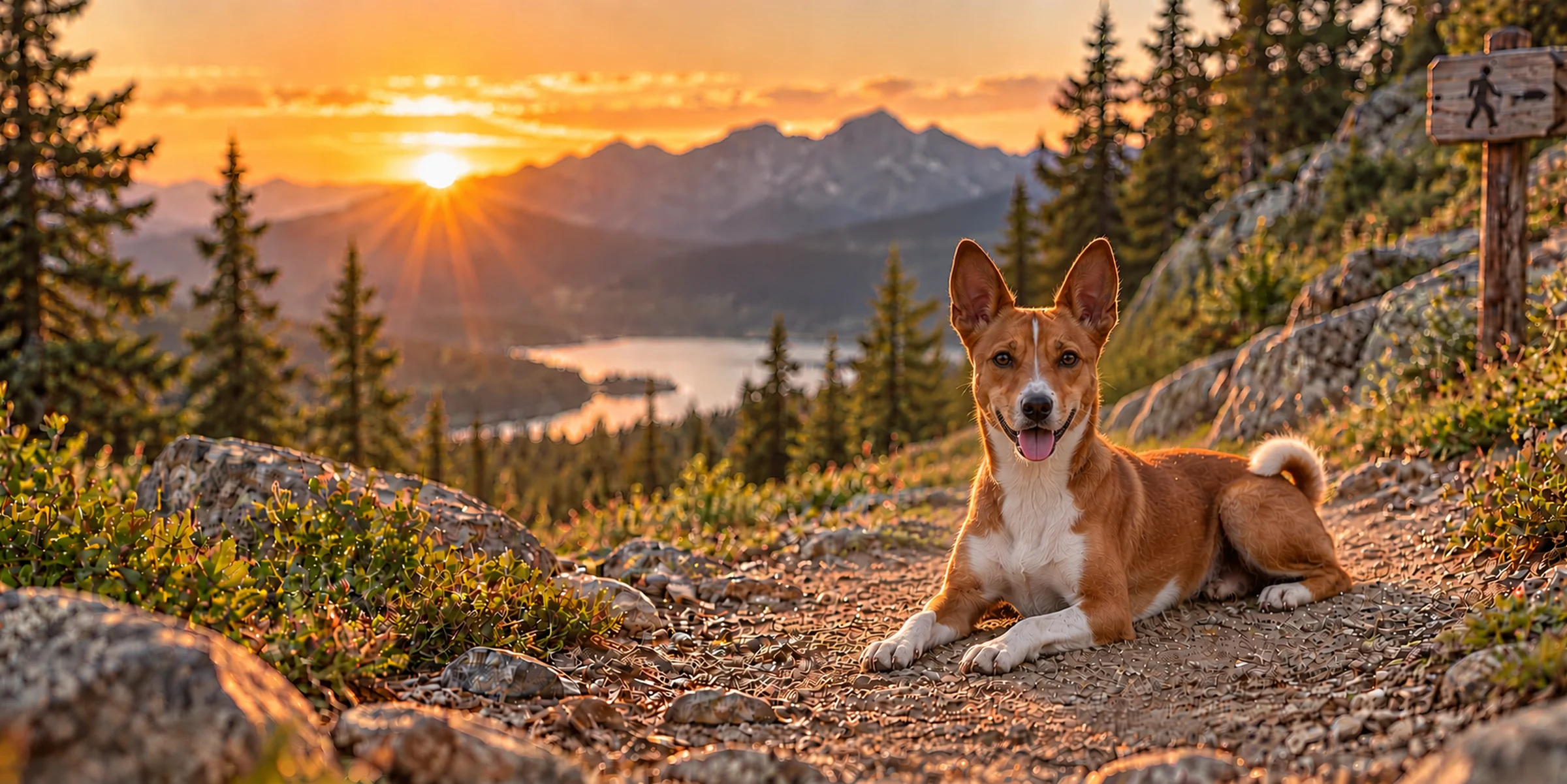
Basenji
Another primitive hunting breed with an independent mind, real prey drive and an unreliable recall. The Basenji is famously quiet where the Finkie is famously not, which is the whole difference.