

large breed
Flat-Coated Retriever
The Peter Pan of the gundogs - a retriever who arrives cheerful and stays that way years past the age most dogs settle. Flatcoats are affectionate, sociable with everything that moves, superb with children and among the most consistently good-natured breeds there is. The hard part is not the temperament. It is cancer, which is the highest rate of any breed on this site and pulls the average life down to eight to ten years.

Pup Height
22-24.5 in
Males 23-24.5 in, females 22-23.5 in. Leggier and more racily built than a Labrador, with a long clean head the standard describes as one piece and moderately long feathering on the legs, chest and tail. Solid black or solid liver only - yellow and cream are disqualifications. Unusually for a popular gundog, show and field lines never split, so the breed is still one type. Source: AKC breed standard.

Pup Weight
60-70 lb

Pup Lifespan
8-10 years
Your pup, at a glance
What’s Life With This Pup Really Like?

Very high. They are demonstrative, lean on people, and will attempt to be a lap dog at sixty-five pounds well into adulthood.

Excellent. Cheerful, gentle and patient - the only caution is that a bouncy adolescent Flatcoat knocks small children over without meaning to.

Excellent. Sociable with dogs and generally fine with cats, with no territorial streak and a soft mouth.

Moderate. They announce arrivals cheerfully and are not persistently noisy dogs.

Very high. Two hours with real work daily, and it does not taper off until late in life.

Moderate. The feathering sheds steadily and shows on furniture; regular brushing keeps it manageable.

The maximum on this site. They play with total commitment, retrieve endlessly, and stay puppyish for years.

Low.

Excellent. Quick, willing and food-motivated, with a softness that makes gentle methods essential and a long adolescence that tests consistency.

Very low. They greet everyone as a friend and have no guarding instinct whatsoever.

Low to moderate. Twice-weekly brushing, minimal trimming, and weekly ear care after swimming.

Moderate. They suit active households with ground and adapt badly to apartments and to anyone expecting a calm dog before three.
Lifestyle fit
Could This Be Your Best Breed?
A Flat-Coated Retriever suits an active family with a fenced yard and an owner who has budgeted ninety minutes to two hours a day of retrieving and scent work for years, not months. Costs run $1,600 to $2,700 a year, and insuring early matters more here than in almost any breed. A long life is the one thing no Flatcoat can promise, and an apartment or a quiet household strips out the part that makes the short one worth having.

Living Space
A house with a securely fenced yard and room to run. The Flatcoat is a full working gundog who stays puppyish for years, and an apartment with two short walks produces a frustrated, destructive dog.

Pup Experience
Good for an active first-time owner with realistic expectations. Flatcoats are easy to train and impossible to bore into calmness - the mistake people make is choosing the temperament and not budgeting for the exercise or the long adolescence.

Daily Pup Time
Ninety minutes to two hours daily with retrieving and scent work in it. Grooming is a thorough brush twice a week plus weekly ear care.

Allergies & Coat
The Flat-Coated Retriever scores 6/10 for shedding and 3/10 for drooling. No dog is truly hypoallergenic. The allergens come from dander and saliva, and a dog that sheds this much will leave plenty of hair behind - especially on your furniture, floors, and clothes.
Quirks & challenges
The Not-So-Easy Stuff

The Cancer Rate
The highest of any breed here - around half die of it, often in middle age. Know this before you bring one home.
Perpetual Adolescence
Bouncy and silly until three or four. Sixty-five pounds of enthusiasm needs training that outlasts it.
Serious Exercise Needs
Two hours with retrieving and scent work. Under-exercised they are destructive and impossible to settle.
No Guarding Instinct at All
They will greet a burglar warmly. Get one for company, never for security.
Mouthy by Design
A retriever wants to carry things. Give them a job with their mouth or they choose your possessions.
The Ears Need Weekly Work
Feathered drop ears on a dog who swims. Neglect turns infection chronic.
The good, the bad & the hairy
Health, Care & Costs
Understanding the health risks and ongoing costs of a Flat-Coated Retriever helps you plan for a happy, healthy life together.

Life expectancy 8-10 years - the figure published by the AKC, and the one this record follows
Median survival 11.7 years (95% CI 11.5-11.9, n=2,148) for the Flat-Coated Retriever, against Labrador 13.1, Golden 13.2 and Curly-Coated 12.2 in the same table. Recorded as contrary evidence. The site publishes the AKC figure above; this is what the largest survival study of UK dogs found, and it is kept here so the disagreement is on the record rather than rediscovered in a later audit.
8-10 years
$55-$85
per groom (bath, feathering trim, ears, feet, nails), every 8-12 weeks ($250-$500/year)
$1,600-$2,700/year
all-in (food, routine vet, grooming, insurance, incidentals)

Health Risks
Conditions this breed is prone to.

The defining health fact of the breed and the reason their average life is shorter than other retrievers. Histiocytic sarcoma and soft-tissue sarcoma appear at rates far above any other breed, often striking between five and eight years old. Roughly half of all Flatcoats die of cancer. There is no screening test and no way to breed it out with current knowledge - what helps is knowing the signs, checking them over for lumps when you brush, and acting on any swelling or lameness that does not resolve.
The joints develop loosely or unevenly and wear into arthritis, sometimes needing surgery. Present at moderate rates and screened by scoring both parents.
PRA degenerates the retina to blindness and is DNA testable in the parents. Glaucoma - painful pressure inside the eye that destroys vision quickly - also appears in the breed and is an emergency when it happens.
The kneecap slips out of its groove, causing a skipping gait and sometimes needing surgery. Less common than in small breeds but present here.
Feathered drop ears trap warmth and moisture against the canal, and a dog who swims makes it worse. Weekly checking, cleaning and drying is the whole prevention.
The stomach fills with gas and twists, cutting off its own circulation, and it kills within hours without emergency surgery. Deep-chested and at real risk - split meals and keep hard exercise clear of them.

Insurance & Health Coverage
This is the breed on this site where insurance matters most, and the reason is cancer. Around half of Flatcoats die of it, frequently between five and eight, and oncology is expensive - diagnostics, surgery, chemotherapy and scans run into five figures without difficulty. A policy taken out while the Flatcoat is a healthy puppy covers that. One taken out at four, after a lump has been noted, will not.

So: insure young, insure for a high annual limit rather than the cheapest premium, and read the per-condition and lifetime cap wording carefully - cancer treatment is exactly where low caps stop paying partway through.

Bloat is the other emergency to plan for, and hip dysplasia the main orthopedic risk. Progressive retinal atrophy is congenital and uncovered, but DNA testable in the parents.
 Get a Pet Insurance Quote
Care needs
The Daily Routine

Grooming
A flat, dense, moderately long coat with feathering on the ears, chest, legs and tail that needs a thorough brush twice a week - mats form fastest behind the ears and in the trousers. Very little trimming is wanted; the standard prefers a natural outline. Ears need checking, cleaning and drying weekly, particularly after swimming, and running your hands over the Flatcoat at every brush is worth doing deliberately given the cancer risk.

Exercise
Ninety minutes to two hours daily with retrieving, swimming and scent work in it. They have genuine working stamina and the mental half matters as much as the physical.

Food & Weight
Two measured meals with hard exercise kept clear of them given the bloat risk. The Flatcoat is food-motivated and gains weight quietly once past adolescence, so go by feel through the ribs.
Similar breeds
If This Isn’t Quite the One
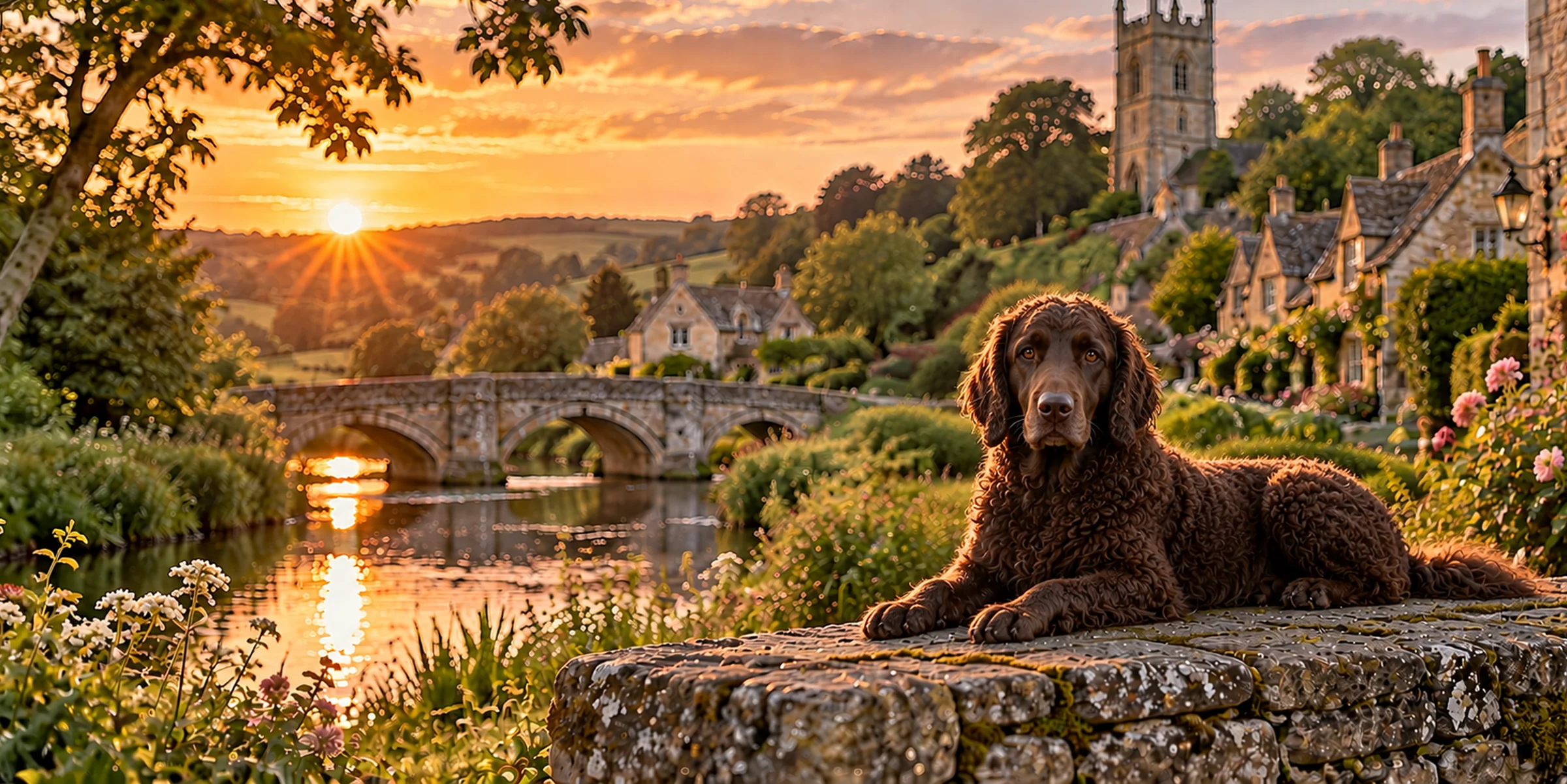
Curly-Coated Retriever
The other uncommon British retriever, and a useful contrast. The Curly is more independent and reserved with strangers; the Flatcoat is far more demonstrative and sociable, and carries a considerably higher cancer risk.

English Springer Spaniel
A smaller working gundog with a comparably cheerful, soft temperament and similar exercise needs. The Springer flushes rather than retrieves and needs more coat care; the Flatcoat is bigger and stays puppyish for longer.