

medium-to-large breed
German Wirehaired Pointer
The German versatile gundog built for rough country - the wire coat, beard and eyebrows exist to get through thorn and cold water that would stop a shorthaired dog. Drahthaars are powerful, driven, notably protective for a gundog, and deeply attached to their own family. They are less sociable and more serious than the Shorthair, sharper with unfamiliar dogs, and the coat needs hand-stripping a couple of times a year.

Pup Height
22-26 in
Males 24-26 in, females at least 22 in. The coat is the point - a harsh, flat-lying, weather-resistant wire outer coat with a dense undercoat, plus bushy eyebrows and a beard that protect the face in thorn cover. Liver and white in ticked, roan or patched patterns, usually with a solid liver head. The AKC breed and the German Deutsch Drahthaar are maintained under separate registries with different testing requirements. Source: AKC breed standard.

Pup Weight
50-70 lb

Pup Lifespan
12-14 years
Your pup, at a glance
What’s Life With This Pup Really Like?

High with their own family - affectionate, physically close and inclined to lean, while remaining indifferent to everyone else.

Very good with their own family's children. A Drahthaar's size, strength and reserve with visiting children mean supervision matters more than with a Shorthair.

Mixed. Sharper with unfamiliar dogs than most gundogs, and the prey drive toward cats and small animals is genuine.

Moderate. They alert seriously and are not persistently noisy dogs around the house.

Very high. Two hours of hard work daily with scent work, every day.

Low to moderate. The wire coat sheds lightly, and stripping removes most of what would otherwise drop.

Enthusiastic and physical, especially in water. They play the way they work and do not tire early.

Low, though a wet beard redistributes water across the floor.

Very good. Quick and capable, with enough independence that consistency matters more than technique.

Strong for a gundog, and unusual in the group. They are territorial, watchful and reserved with arrivals.

Moderate. A weekly brush, stripping a couple of times a year, and daily beard care.

Low. They need land, work and an experienced handler, and adapt badly to apartments and idle households.
Lifestyle fit
Could This Be Your Best Breed?
A German Wirehaired Pointer suits a hunter or an experienced working-dog owner with a securely fenced yard and two hours a day of real work. Costs run $1,500 to $2,600 a year and twelve to fourteen years is the span, with bloat the risk worth planning for. Without a fenced yard, two hours of real work a day and experience behind you, do not - and not into a household with dogs a Drahthaar did not grow up with.

Living Space
A house with a securely fenced yard and real ground to work. Drahthaars are versatile gundogs with serious stamina, and an apartment with two short walks makes them restless and destructive.

Pup Experience
Better for experienced or hunting owners. GWPs are more territorial, more aloof with strangers and more strong-willed than the Shorthair, and they need an owner who wants a working partner rather than an easy companion.

Daily Pup Time
Two hours minimum of hard work daily with scent work in it. Grooming is a weekly brush plus hand-stripping a couple of times a year and beard maintenance.

Allergies & Coat
The German Wirehaired Pointer scores 4/10 for shedding and 3/10 for drooling. No dog is truly hypoallergenic. The allergens come from dander and saliva, and a dog that sheds this much will leave plenty of hair behind - especially on your furniture, floors, and clothes.
Quirks & challenges
The Not-So-Easy Stuff

Two Hours of Real Work
A hard-driving versatile gundog. Under-exercised they become destructive and difficult.
Protective for a Gundog
A genuine territorial streak. Heavy early socialization decides whether that reads as judgment or suspicion.
The Coat Needs Stripping
Hand-stripping a couple of times a year keeps the wire texture. Clipping softens it permanently.
Beard Maintenance
It collects water, food and burrs and drips across the floor. Wipe it daily.
Sharp With Other Dogs
Less sociable than the Shorthair, and same-sex tension is common. Introductions need managing.
Strong-Willed
Independent enough to test an inconsistent handler despite being genuinely trainable.
The good, the bad & the hairy
Health, Care & Costs
Understanding the health risks and ongoing costs of a German Wirehaired Pointer helps you plan for a happy, healthy life together.

12-14 years
$60-$95
per groom (hand-strip or tidy, bath, beard, ears, nails), every 10-12 weeks ($250-$500/year)
$1,500-$2,600/year
all-in (food, routine vet, grooming, insurance, incidentals)

Health Risks
Conditions this breed is prone to.

The joints develop loosely or unevenly and wear into arthritis, sometimes needing surgery. Present at moderate rates and screened by scoring both parents - ask for the numbers.
The stomach fills with gas and twists, cutting off its own circulation, and it kills within hours without emergency surgery. Deep-chested and genuinely at risk - split meals, keep hard exercise well clear of them, and discuss a preventive gastropexy.
An inherited clotting disorder causing excessive bleeding after injury or surgery. It is DNA testable, so both parents' status can be known, and it is worth telling your vet before any procedure.
A genetic condition where the hind legs weaken and give way after intense exercise, with recovery after rest. It matters a great deal in a breed asked to work this hard, and there is a DNA test.
The harsh coat and the beard both trap moisture and debris, and drop ears on a dog working water make infection frequent. Weekly ear care and a daily beard wipe do most of the prevention.
The most likely reason they see a vet. Thorn cover and rough ground produce cuts, punctures, eye injuries and torn ligaments - the wire coat helps, but it does not make them invulnerable.

Insurance & Health Coverage
Accident cover is the piece that earns its keep. A dog driving through thorn cover and cold water collects punctures, lacerations, eye injuries and torn ligaments, and those are the claims that arrive. If you intend to hunt them, check whether the policy excludes injuries sustained while working - several do, and that exclusion removes exactly the cover this dog needs.

Bloat is the emergency to plan for rather than insure against alone, and hip dysplasia is the main orthopedic risk.

Von Willebrand disease and exercise-induced collapse are both congenital, so no policy covers either - but both are DNA testable in the parents, which makes the breeder's paperwork worth more than the insurance on those two specifically.
 Get a Pet Insurance Quote
Care needs
The Daily Routine

Grooming
A harsh wire coat that needs a weekly brush and hand-stripping a couple of times a year to keep its texture - clipping is easier and permanently softens it, which costs the coat its weatherproofing. The daily job is the beard: wipe it after meals and water, and check it for burrs after any outing. Ears want checking and drying weekly, particularly after swimming.

Exercise
Two hours minimum daily with scent work in it. Field work, tracking, water retrieving, hiking and canicross all suit them; distance walking alone does not satisfy a dog bred to solve problems in cover.

Food & Weight
Two measured meals scaled to the work, with hard exercise kept clear of them given the bloat risk. A working Drahthaar burns enormously and an idle one far less.
Similar breeds
If This Isn’t Quite the One
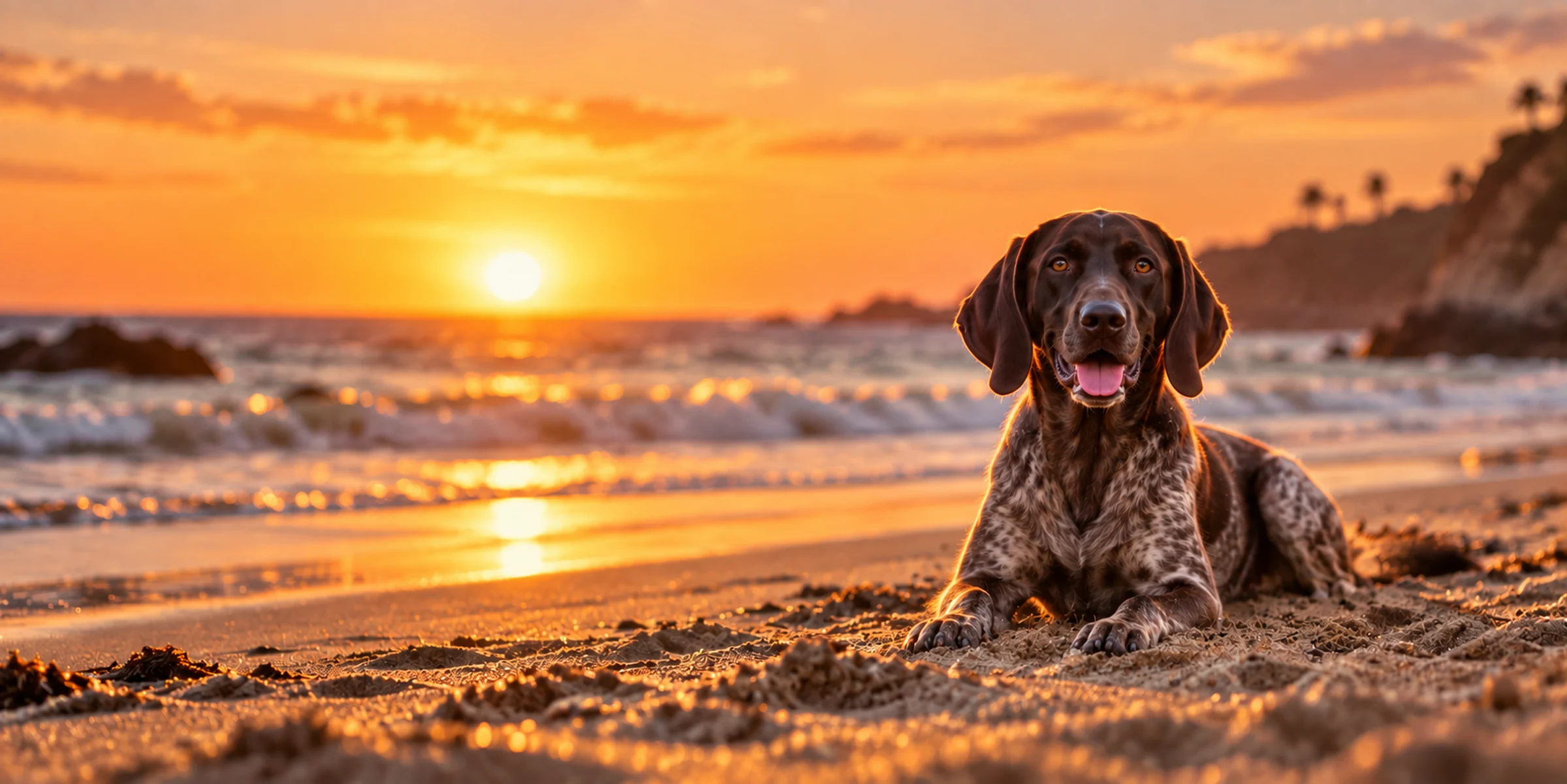
German Shorthaired Pointer
The direct comparison, and the choice most people are actually making. The Shorthair is more sociable, more outgoing with strangers and slightly faster; the Wirehair is tougher in cover, more protective and more independent.

Deutscher Wachtelhund
Another German versatile gundog built for heavy cover and blood-tracking. The Wachtelhund flushes rather than points and is even more restricted to hunting homes; the Wirehair is somewhat easier to live with.

Slovakian Wirehaired Pointer
A post-war Slovak versatile gundog built partly from this breed, and always gray roan. Slovakian Wirehaired Pointers are steadier and softer than a GWP, and rare enough outside Slovakia that most come in as imports.
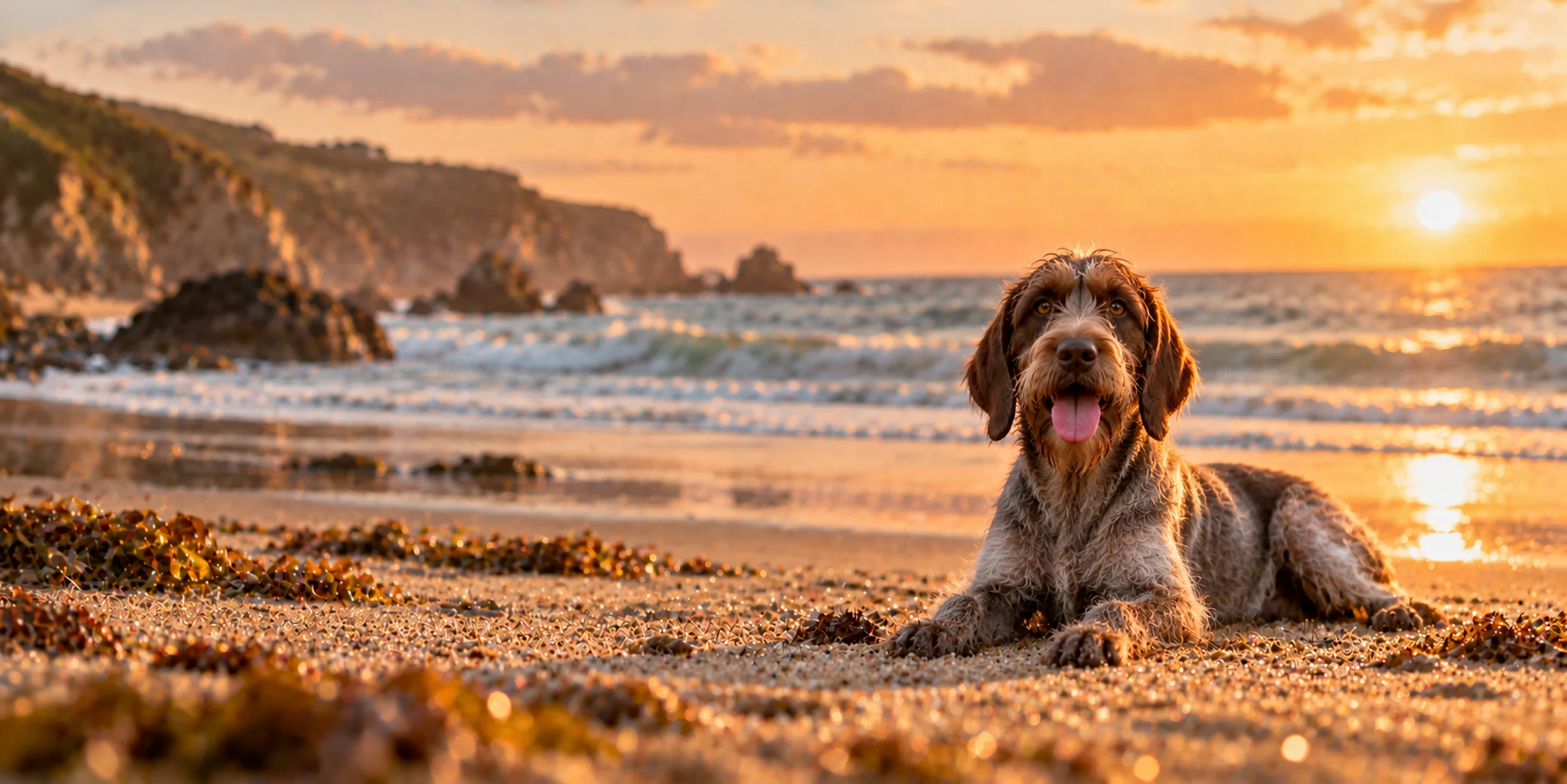
Wirehaired Pointing Griffon
The close-working version of the same brief, deliberately slower and inside gun range for a hunter on foot. Griffons are softer and more people-focused, and have been AKC-recognized since 1887 rather than being a recent import.