

medium-to-large breed
Slovakian Wirehaired Pointer
A post-war Slovak gundog built from Cesky Fousek, Weimaraner and German Wirehaired Pointer stock to point, retrieve from water and track wounded game. The gray roan wire coat is theirs alone. Slovakian Wirehaired Pointers are steady, handler-focused and genuinely easy company once the day has had work in it - which is the catch. Two hours of scent and retrieving work is the daily price, and an unworked one paces, chews and finds a hobby nobody asked for.

Pup Height
22.5-26.5 in

Pup Weight
50-65 lb
Males 24.5-26.5 in, females 22.5-26 in at the withers, both 50-65 lb. Always gray - a gray roan coat from dark charcoal to pale silver, sometimes with lighter or brown markings on the head and legs and a little white on the chest or toes. The coat is harsh and wiry, roughly 1.5 in long over a fine undercoat, with a beard and shaggy eyebrows. In the AKC's Foundation Stock Service. Source: AKC Foundation Stock Service breed standard.

Pup Lifespan
12-15 years
Your pup, at a glance
What’s Life With This Pup Really Like?

High. Affectionate and close-bonded, and happy to pile onto the sofa once the day's work has happened.

Very good. Patient and sturdy with children in the family, though a driven gundog at full speed will flatten a toddler by accident.

Good with dogs, having been bred to work alongside them. Cats and small pets depend on early socialization, and the prey drive is genuine.

Low. Slovakian Wirehaired Pointers announce a visitor and go quiet again, and give tongue on a track rather than in the yard.

Very high. Two hours of real work a day, with the thinking half counting as much as the mileage.

Low to moderate. The wire coat sheds lightly, and stripping out the dead hair a few times a year keeps most of it off the furniture.

Keen and tireless, especially retrieving and in water. Slovakian Wirehaired Pointers play the way they hunt.

Very low. A wet beard after a drink is the whole of it.

Excellent. Bright, willing and handler-focused, but quick to switch off in long repetitive sessions and soft under harsh handling.

Moderate. The breed announces arrivals and looks the part, with no real guarding instinct behind the bark.

Moderate. Weekly brushing, a beard that needs a comb, hand-stripping two or three times a year, and ears dried after every swim.

Low. The exercise load, the hunting drive and the dislike of long days alone rule out most apartment and full-time-office households.
Lifestyle fit
Could This Be Your Best Breed?
A Slovakian Wirehaired Pointer suits someone who hunts, or who will take up tracking or water work, on rural ground with a fenced yard. The dog is cheap to keep at $1,400 to $2,400 a year and lives twelve to fifteen of them, and the harsh coat wants hand-stripping two or three times a year rather than clipping. Nobody should take one on without a plan for two hours of work every single day.

Living Space
A house with a securely fenced yard, and country to work in nearby. Slovakian Wirehaired Pointers are quiet enough indoors once the day's work is done, but a dog bred to quarter fields and swim cold water does not get what they need from a block of sidewalks.

Pup Experience
Best with an owner who hunts, or who will commit to field work, tracking or water retrieving as a hobby. The breed is biddable and cooperative, so the training itself is not the hard part - supplying the job is.

Daily Pup Time
Around two hours of real exercise daily with scent work or retrieving in it. Grooming is a weekly brush plus hand-stripping a few times a year, and ears checked and dried after every swim.

Allergies & Coat
The Slovakian Wirehaired Pointer scores 4/10 for shedding and 2/10 for drooling. No dog is truly hypoallergenic. The allergens come from dander and saliva, and a dog that sheds this much will leave plenty of hair behind - especially on your furniture, floors, and clothes.
Quirks & challenges
The Not-So-Easy Stuff

A Hunting Dog First
Still bred and tested for live work on land and in water. Without scent work and retrieving, Slovakian Wirehaired Pointers do not settle.
Two Hours, Every Day
Hard exercise with a thinking half to it. A walk around the block does nothing for a dog built to quarter a field for hours.
Expect to Import One
Rare outside Slovakia and the Czech Republic. Waiting lists are long, and clubs often place puppies with hunting homes first.
Scent Overrides Recall
A dog on a fresh track is only half listening. Long lines and genuinely secure ground until recall is proven, and honestly even after.
The Coat Needs Stripping
The harsh jacket is hand-stripped a few times a year. Clipping it soft ruins the texture that keeps water and thorn off the skin.
Poor Alone for Long Hours
Closely bonded and prone to separation anxiety when left all day. The breed suits a household with somebody around.
The good, the bad & the hairy
Health, Care & Costs
Understanding the health risks and ongoing costs of a Slovakian Wirehaired Pointer helps you plan for a happy, healthy life together.

12-15 years
$60-$90
per session (bath, hand-strip, beard, ears, nails), two or three times a year or done at home ($0-$350/year)
$1,400-$2,400/year
all-in (food, routine vet, grooming, insurance, incidentals)

Health Risks
Conditions this breed is prone to.

Worth saying first. Slovak and Czech clubs have kept the breed under hunting tests and health screening since the 1950s, and the numbers have never been high enough for careless breeding - the inherited-disease list is short. The flip side is a narrow gene pool and thin published health data.
The joints develop loosely and wear into arthritis, sometimes needing surgery that runs into the thousands. The AKC names both as the conditions responsible breeders screen for, so ask to see scored hips and elbows on both parents.
The retina degenerates over years, starting with night vision and often ending in blindness. DNA tests cover the common forms in pointing breeds, and an annual eye examination by a veterinary ophthalmologist catches what the tests do not.
Clouding of the lens that can appear in young adults as well as old dogs, and surgery restores sight in many cases. Yearly eye checks on breeding stock are the reason this stays uncommon.
Drop ears on a dog who works cold water trap warmth and moisture against the canal. Checking, cleaning and drying after every swim is the whole prevention; left alone the problem turns chronic and expensive.
Not inherited, and the most likely reason for a vet visit. A gundog driving through rough cover collects torn pads, punctures, grass seeds in the beard and feet, and the occasional torn cruciate - a repair runs into the thousands.

Insurance & Health Coverage
Insure early, and read the small print on working dogs. Several policies exclude injuries sustained while hunting or in field trials, and that single clause removes exactly the cover this breed needs most.

Accident cover is the part that earns its keep. A dog working heavy cover and cold water collects lacerations, punctures, grass seeds that need removing under sedation, and torn ligaments, and those claims arrive far more often than illness claims do in a breed with a short inherited-disease list.

Bloat is the emergency to plan for either way - surgery within hours, several thousand dollars, and no time to arrange funding. Eye disease is the slow one: a policy taken out before the first ophthalmologist note keeps the door open, while one taken out afterward will exclude the eyes for life.
 Get a Pet Insurance Quote
Care needs
The Daily Routine

Grooming
A harsh wire jacket with a fine undercoat, a beard and eyebrows. Brush thoroughly once or twice a week with a slicker and a comb through the beard and leg furnishings, and hand-strip the dead coat two or three times a year - clipping softens the texture and costs the coat the weather resistance the breed is built around. The routine that matters more is the post-outing check: seeds out of the beard, feet and ears, ears cleaned and dried after water, and a look over for cuts.

Exercise
Two hours a day minimum, and the scent half is not optional. Field work, tracking, water retrieving, long hikes and running alongside a bike all suit the breed; distance on a leash alone does not touch a dog bred to solve scent problems for hours. Run them loose only on securely fenced ground, because the hunting instinct beats the recall on a fresh track.

Food & Weight
Two measured meals scaled to the work - a hunting week and a quiet week are different diets, so feed the dog in front of you rather than the scoop on the bag. Slovakian Wirehaired Pointers are food-motivated and will happily carry weight they should not, and hard exercise belongs well clear of meals given the bloat risk.
Similar breeds
If This Isn’t Quite the One

German Wirehaired Pointer
One of the breeds behind the Slovakian, and the closest thing to a common alternative - same wire coat, same versatile brief, and far easier to find. The Drahthaar tends to be more protective, more territorial and harder-headed; the Slovakian is softer and more biddable.

Pudelpointer
Another rare wirehaired versatile gundog in the Foundation Stock Service, placed by clubs into hunting homes. The Pudelpointer comes in brown rather than gray and is a little easier to source in North America; the workload and the coat care are much the same.
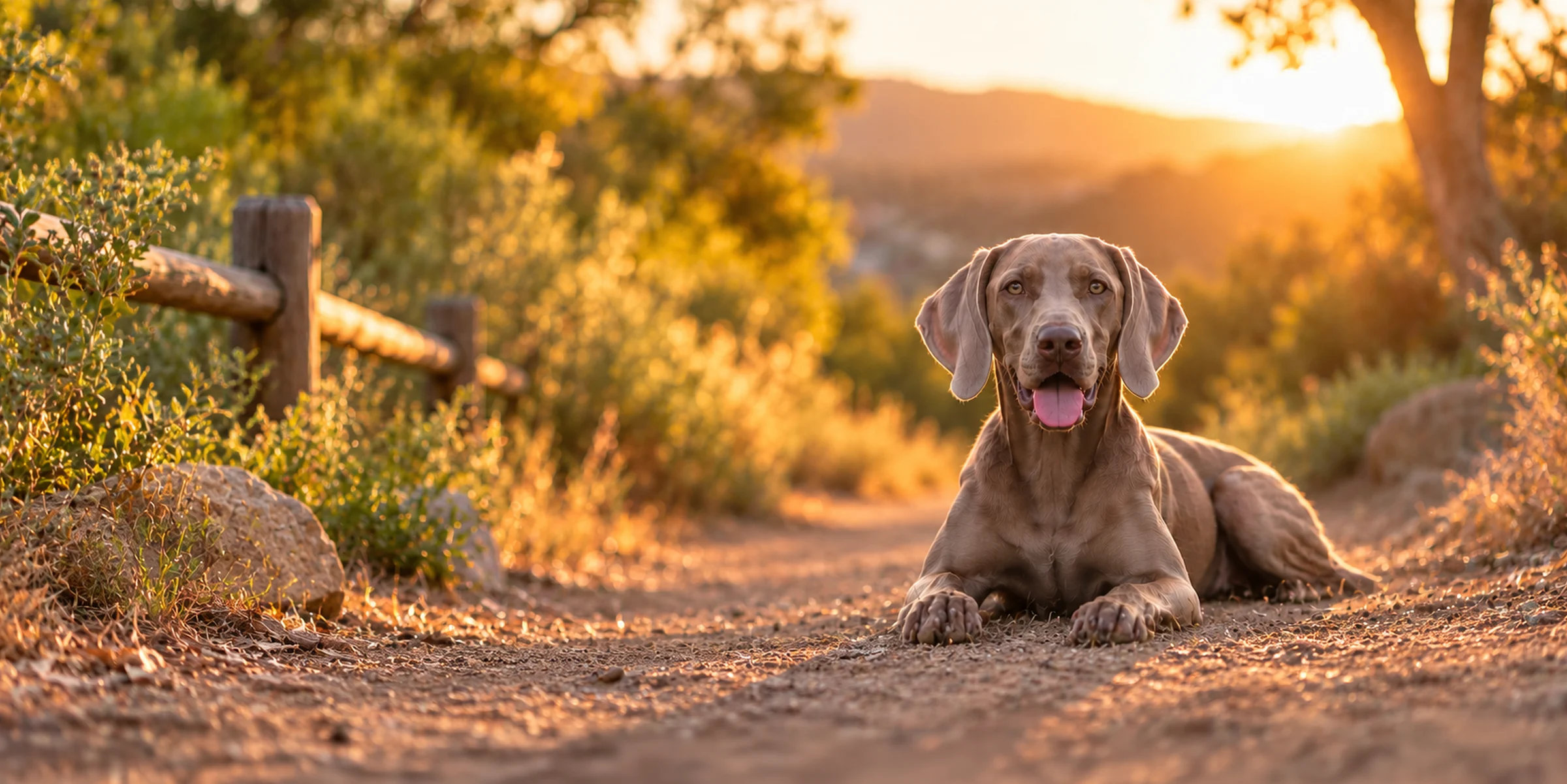
Weimaraner
A gray ancestor of the Slovakian and the source of that coloring, but a very different dog to live with. Weimaraners are more intense, more prone to separation anxiety and far more common; the Slovakian is steadier, rarer and carries a wire coat that needs stripping.