

medium-to-large breed
Wirehaired Pointing Griffon
The versatile gundog for the hunter who walks. Eduard Korthals set out in the 1870s to build one dog that could find, point and retrieve everything a hunter on foot asked for, and what separates a Griffon from the other wire-coated breeds is range - they hunt at a trot, inside gun distance. At home they are warm and clownish. The costs are a stripped coat, a dripping beard and two hours a day.

Pup Height
20-24 in
Males 22-24 in and females 20-22 in at the withers, and any deviation from those limits is a disqualification. The ideal color is steel gray with brown markings; chestnut brown, brown and white roan, and white and orange also appear. The coat is hard, straight and wiry over a fine downy undercoat, never curly or woolly, with shaggy eyebrows, a mustache and a beard. Recognized by the AKC in 1887 and placed in the Sporting Group. Source: AKC breed standard.

Pup Weight
35-70 lb

Pup Lifespan
12-15 years
Your pup, at a glance
What’s Life With This Pup Really Like?

Very high. Griffons lean, follow and settle against a leg, and they would rather be in a crowded kitchen than anywhere quieter.

Excellent. Patient, sturdy and playful, and the usual caution is about muddy enthusiasm knocking a toddler over rather than anything in the temperament.

Good. Bred to work alongside other dogs and generally sociable with them; cats and poultry need early socialization and a realistic view of the prey drive.

Low to moderate. Griffons announce the door and then let it go, though a bored one alone all day finds plenty to say.

High. Ninety minutes to two hours daily, and the nose needs employing as much as the legs do.

Low to moderate. The harsh jacket sheds lightly through the year; the downy undercoat comes away in handfuls at stripping time.

Enthusiastic and comic, with retrieving and water at the top of the list. Griffons stay goofy well into middle age.

Low, with an asterisk. There is no real drool here - what wets the floor is a beard that leaves the water bowl fully loaded.

Excellent. Biddable, attentive and happier working with a handler than ahead of one, which makes them among the easier versatile gundogs to teach.

Moderate. A Griffon barks at an arrival and then greets the visitor; there is very little guarding instinct behind the noise.

Moderate. A weekly comb and two or three hand-strips a year, plus a beard and a pair of ears that need attention far more often than that.

Low to moderate. Griffons fit a range of homes provided the work happens, but heat, long days alone and an empty schedule all go badly.
Lifestyle fit
Could This Be Your Best Breed?
A Wirehaired Pointing Griffon suits a house with a fenced yard and country within driving distance, and an owner - even a first-time one - who can commit ninety minutes to two hours daily for twelve to fifteen years, at $1,500 to $2,500 a year. The mismatch to watch for is the empty weekday house: a Griffon shut out of the family digs, barks and chews.

Living Space
A house with a securely fenced yard and open country within driving distance. Griffons work close and do not need the acreage a big-running pointer does, which makes them one of the more housebound-friendly versatile gundogs - but the daily work still has to happen somewhere, and a small home with no outlet turns a willing dog into a restless one.

Pup Experience
Workable for a committed first-time owner, which is unusual in this group. Wirehaired Pointing Griffons are biddable, soft and genuinely want to cooperate, so the obedience is not the hard part; finding two hours a day for a dozen years is.

Daily Pup Time
Ninety minutes to two hours of exercise daily with scent work or retrieving in it, plus a weekly comb through the coat, a beard that needs wiping most days, and an ear check after every outing in water.

Allergies & Coat
The Wirehaired Pointing Griffon scores 4/10 for shedding and 4/10 for drooling. No dog is truly hypoallergenic. The allergens come from dander and saliva, and a dog that sheds this much will leave plenty of hair behind - especially on your furniture, floors, and clothes.
Quirks & challenges
The Not-So-Easy Stuff

Not a Wide-Ranging Pointer
Griffons hunt at a trot inside gun distance. Anyone wanting a dog to sweep a field at speed will find them deliberate - it is the breed's whole design.
Stripping, Never Clipping
The harsh outer coat has to be hand-stripped two or three times a year. Clipping turns the jacket soft and woolly and takes the weatherproofing with it.
The Beard Drips
A Griffon comes out of the water bowl wearing a good deal of it, then walks the length of the kitchen. Keep a towel nearby.
Needs a Job, Every Day
Two hours of real work with scent in it, not a lap around the block. An unemployed Griffon invents an occupation and it is rarely a good one.
Wants to Be Underfoot
Bred to work in partnership and attached to the point of shadowing. Long days home alone go badly for this breed.
Ears After Every Swim
Drop ears, hair in the canal and a dog who works water. Clean and dry them after outings or a one-off infection becomes a chronic one.
The good, the bad & the hairy
Health, Care & Costs
Understanding the health risks and ongoing costs of a Wirehaired Pointing Griffon helps you plan for a happy, healthy life together.

12-15 years
$60-$95
per session (hand-strip, bath, beard, ears, nails), two or three times a year with tidying between, or done at home ($0-$400/year)
$1,500-$2,500/year
all-in (food, routine vet, grooming, insurance, incidentals)

Health Risks
Conditions this breed is prone to.

The hip develops loosely so the joint wears instead of gliding, ending in arthritis and sometimes surgery that runs into the thousands. It is the breed's main orthopedic watch - both parents should have OFA or PennHIP results, and puppies need controlled growth and lean weight.
The other genuinely common problem. Drop ears, hair in the canal and regular swimming trap warmth and moisture, and the prevention is entirely routine: check, clean and dry the ears after every outing in water. Left alone, one infection becomes a lifelong cycle.
An underactive thyroid showing up as weight gain, low energy and coat changes, usually in middle age. A blood test confirms it and a daily tablet manages it well; the OFA thyroid panel is the screening test breeders use.
Entropion and ectropion - eyelids rolling in or sagging out - turn up in the breed, along with cataracts and, less often, progressive retinal atrophy. An annual CAER eye examination is the practical check, and breeding stock should have current results.
Cartilage and joint surfaces that fail to develop cleanly, showing as front-leg lameness in a growing dog. Overfeeding a puppy and letting them pound hard ground before the growth plates close both make it more likely.
The stomach fills with gas and twists, cutting off its own circulation, and it kills within hours without emergency surgery. A deep-chested sporting breed carries real risk - split meals and keep hard work clear of feeding.

Insurance & Health Coverage
Insure early, because the two conditions most likely to cost money here are also the two most likely to be noticed young. A limp or a grumbling ear noted at any vet visit before cover starts becomes a pre-existing exclusion, and hips and ears are precisely what this breed brings to the vet.

Hips are the big-ticket claim. A femoral head excision or a total hip replacement runs into the thousands, and a policy with a low per-condition cap will not stretch to a second joint. Ear infections are the opposite shape of problem: never expensive on the day, endlessly repeated, and quietly excluded once an insurer decides the ear is a chronic condition rather than a series of incidents.

If the dog will hunt, read the exclusions rather than the premium. Several policies refuse injuries sustained while working or hunting, which removes exactly the cover a field Griffon needs - cuts, torn pads, grass seeds and the occasional cruciate.
 Get a Pet Insurance Quote
Care needs
The Daily Routine

Grooming
A weekly comb right down to the skin, paying attention to the armpits, the trousers and behind the ears where mats start, plus a hand-strip two or three times a year to keep the jacket harsh. Never clip a Griffon: the outer coat grows back soft and loses the weatherproofing that is the point of the breed. The beard wants wiping most days, and the after-outing routine is the one that actually matters - seeds out of the coat and feet, ears cleaned and dried, a check for cuts picked up in cover.

Exercise
Ninety minutes to two hours daily, and working close does not mean working less. Field work, water retrieving, tracking and long hikes all suit them; a walk with no scent problem to solve leaves the better half of the dog untouched.

Food & Weight
Two measured meals a day scaled to the work, with hard exercise kept clear of feeding because of the bloat risk. A wiry coat hides condition well, so go by hand rather than eye - ribs easily felt - and cut the ration back on the weeks when the work does not happen, because an underemployed Griffon puts weight on faster than the owner expects.
Similar breeds
If This Isn’t Quite the One
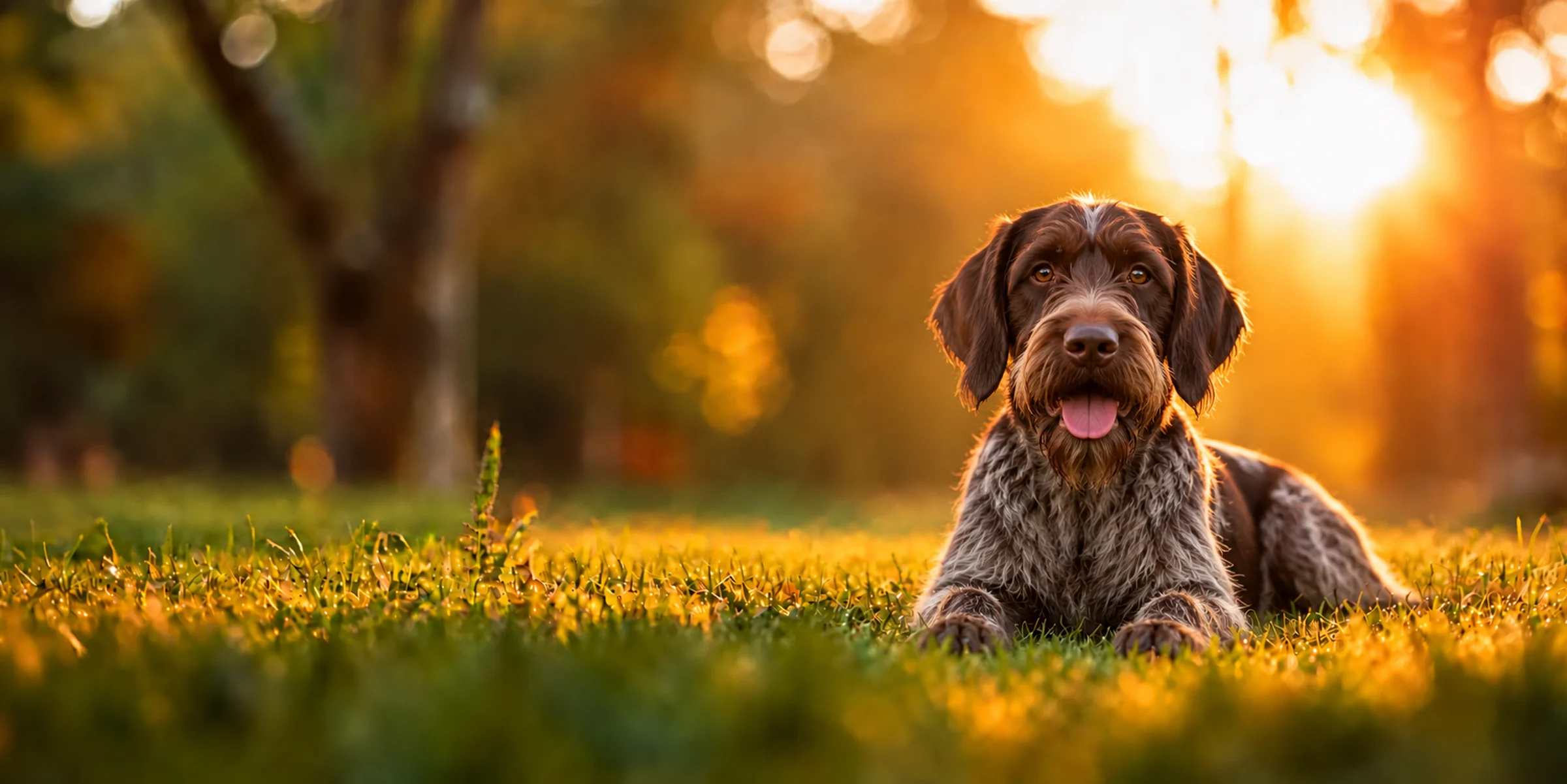
German Wirehaired Pointer
The same wire coat and beard on a bigger, harder dog. The Drahthaar ranges wider, has a territorial streak and can be sharp with strange dogs; Griffons are lighter, closer-working and friendlier with almost everyone.
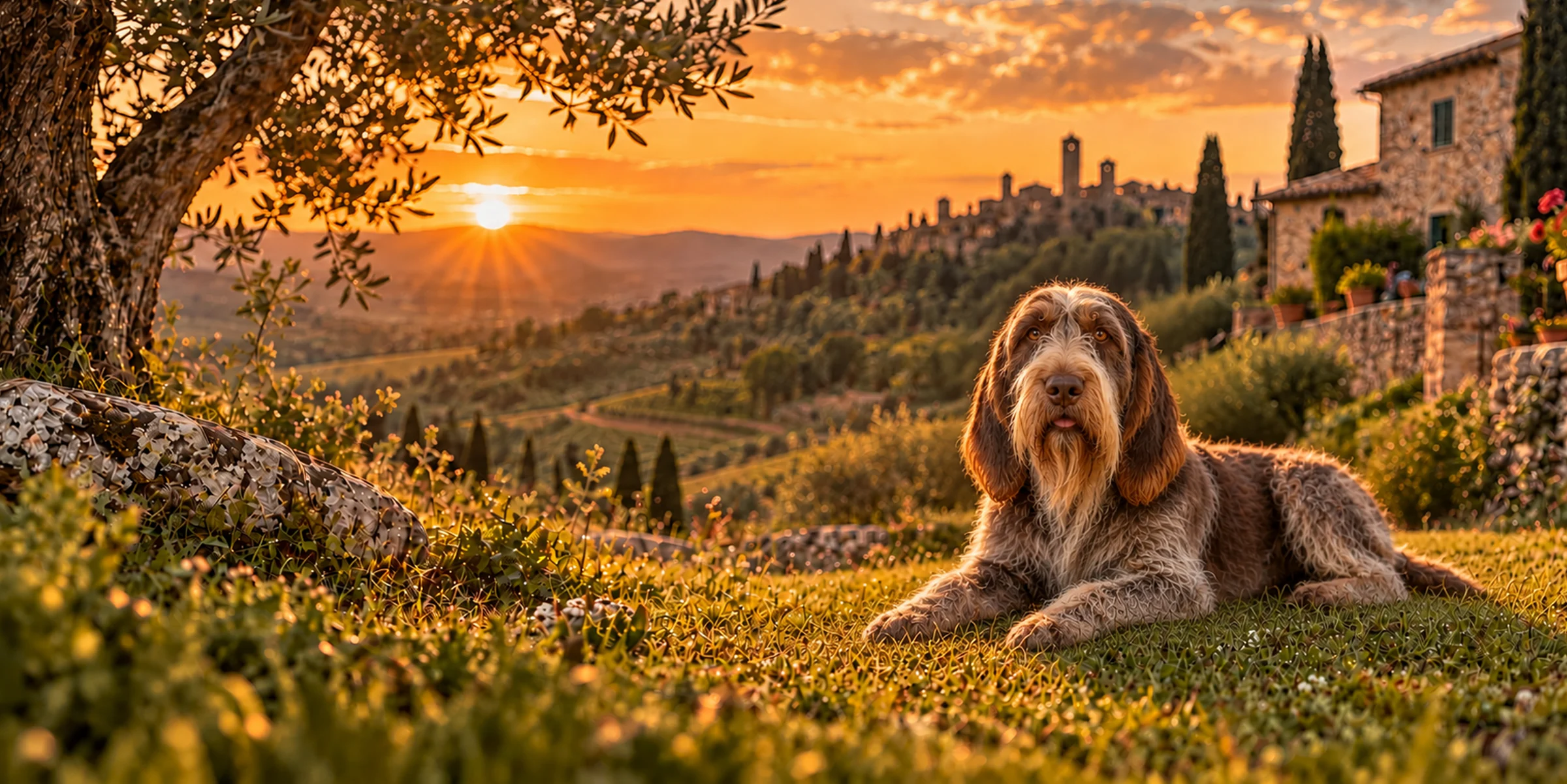
Spinone Italiano
The closest match in style rather than in origin - another bearded, close-working pointer for the walking hunter. The Spinone is a good deal heavier, slower again, and a genuine drooler; Griffons are handier on their feet and dry apart from the beard.
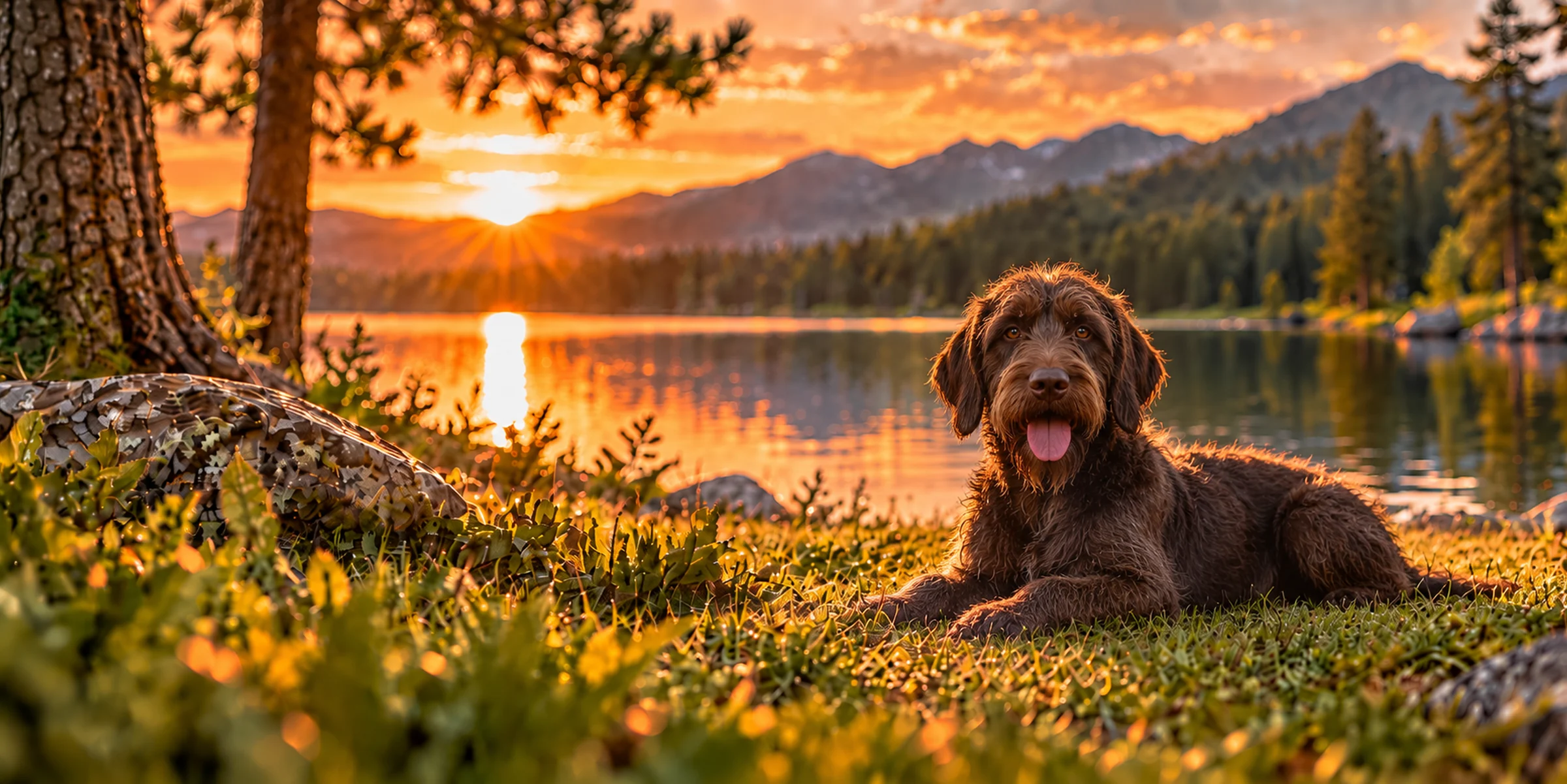
Pudelpointer
A German versatile gundog built on the same one-dog-does-everything brief. Pudelpointers are rare and mostly placed into hunting homes; Griffons have been AKC-recognized since 1887, are far easier to find in North America, and are the softer, more companionable of the two.