

medium-to-large breed
Giant Schnauzer
The largest of the three schnauzers and by a distance the most demanding - not a scaled-up Standard Schnauzer but a separate Bavarian build, made for driving cattle and guarding breweries and later taken up by police and military handlers. Giant Schnauzers are exceptionally intelligent, intensely loyal, territorial and tireless. The harsh coat needs stripping or clipping every couple of months and the beard needs daily attention.

Pup Height
23.5-27.5 in
Males 25.5-27.5 in, females 23.5-25.5 in. Solid black or pepper and salt, with the harsh wire coat, heavy eyebrows and beard the schnauzer family shares. Despite the name Giant Schnauzers are not simply a scaled-up Standard Schnauzer - they were built separately in Bavaria from Standard Schnauzer crossed with larger herding and mastiff-type stock, for driving cattle and guarding breweries. Source: AKC breed standard.

Pup Weight
55-95 lb

Pup Lifespan
10-12 years
Your pup, at a glance
What’s Life With This Pup Really Like?

High with their own family and nobody else. They are affectionate, physically close and often comically attached at home.

Reasonable with their own family's children when raised with them, with real caveats - the size, the drive and the protective instinct all mean supervision is not optional.

Difficult. Same-sex aggression is common, dominance with other dogs is the norm, and the prey drive toward small animals is real.

Moderate. They alert deliberately rather than constantly, and the bark is deep enough to carry.

Very high. Two hours of hard work plus mental work daily, and they do not taper off until late.

Low. The wire coat sheds minimally, which is why it needs stripping or clipping instead.

Enthusiastic and physical. They play hard, learn games instantly, and stay boisterous for years.

Low, though a wet beard drips across the floor.

Outstanding - among the highest here. Fast, capable and precisely why inconsistency is so costly in this breed.

The maximum. Territorial, imposing, trained for protection work worldwide, and entirely prepared to act.

High. Twice-weekly brushing, stripping or clipping every couple of months, and daily beard care.

Very low. They need land, work, an experienced handler and a jurisdiction and insurer that will have them.
Lifestyle fit
Could This Be Your Best Breed?
A Giant Schnauzer belongs with an experienced owner who has a serious fence, ground to work on, and two hours a day plus real mental work to give - in working hands they are superb. Budget $2,200 to $3,600 a year and expect ten to twelve years. Anyone who simply wanted a big schnauzer should read the Standard Schnauzer page instead - and a first dog, an apartment, or a same-sex dog already in the house rules a Giant out before that even comes up.

Living Space
A house with a serious fence and ground to work. The Giant Schnauzer is a powerful protection breed with enormous drive, and there is no version of this dog that suits an apartment or a quiet household.

Pup Experience
Experienced owners only. Giant Schnauzers are brilliant, dominant, territorial and physically formidable, and they will run a household that does not give them clear direction - the combination of intelligence and self-assurance is what makes them difficult rather than any aggression.

Daily Pup Time
Two hours minimum of hard work daily plus real mental work, every day. Grooming is a thorough brush twice a week plus stripping or clipping every couple of months and daily beard care.

Allergies & Coat
The Giant Schnauzer scores 3/10 for shedding and 3/10 for drooling. No dog is truly hypoallergenic. The allergens come from dander and saliva, and a coat like this one holds on to them rather than spreading them around your home - which is what a groomer is clearing out every six to eight weeks.
Quirks & challenges
The Not-So-Easy Stuff

Dominant and Territorial
They take property seriously and test handlers. Consistency from day one, not correction at eighteen months.
Two Hours Plus Mind Work
Physical exercise alone does not touch them. Without a job they invent one, and it will be expensive.
Same-Sex Aggression
Common and consequential at this size. Often best as the only dog.
Serious Grooming Commitment
Stripping or clipping every couple of months, brushing twice a week, beard wiped daily.
Slow to Mature
Two to three years of boisterous adolescence in a ninety-pound protection breed.
Insurance and Housing
Often excluded by home insurers and refused by landlords. Confirm both in writing first.
The good, the bad & the hairy
Health, Care & Costs
Understanding the health risks and ongoing costs of a Giant Schnauzer helps you plan for a happy, healthy life together.

10-12 years
$85-$140
per groom (strip or clip, bath, beard, ears, nails), every 8-10 weeks ($550-$950/year)
$2,200-$3,600/year
all-in (food, routine vet, grooming, insurance, incidentals)

Health Risks
Conditions this breed is prone to.

The joints develop loosely or unevenly and wear into arthritis, sometimes needing surgery - which at ninety pounds sits at the upper end of orthopedic costs. Both parents should have scored hips and elbows.
The stomach fills with gas and twists, cutting off its own circulation, and it kills within hours without emergency surgery. Deep-chested and genuinely at risk - split meals, keep hard exercise well clear of them, and discuss a preventive gastropexy.
Toe cancer - squamous cell carcinoma of the nail bed - appears in black Giant Schnauzers at rates well above average, and other cancers are common too. A persistently sore, swollen or bleeding toe warrants prompt investigation rather than watchful waiting.
The thyroid under-produces, causing weight gain, lethargy and coat and skin problems. Common in the breed, diagnosed by blood test, and controlled with an inexpensive daily tablet for life.
The breed carries higher rates than most of immune-mediated disease, including thyroid and blood disorders. These are managed with medication over the dog's life rather than cured.
Progressive retinal atrophy and cataracts both appear. PRA is DNA testable in the parents; annual eye examination catches cataracts early.

Insurance & Health Coverage
Two conversations. The first is liability: home insurers exclude protection breeds of this size regularly and landlords follow their insurer, so get a written position before there is a puppy - a ninety-pound guarding breed rehomes badly.

On health, insure young. Joint surgery at this weight is at the top of the orthopedic range, bloat is a several-thousand-dollar emergency at whatever hour it arrives, and cancer is common enough - particularly nail-bed carcinoma in black dogs - that a high annual limit is worth more than a cheap premium.

Grooming is the recurring uninsurable cost, and on this coat it runs several hundred dollars a year for a decade.
 Get a Pet Insurance Quote
Care needs
The Daily Routine

Grooming
A harsh wire coat over a dense undercoat that needs a thorough brush twice a week to prevent matting in the furnishings, plus hand-stripping or clipping every eight to ten weeks. Stripping keeps the correct harsh texture; clipping is easier and softens it permanently. The daily job is the beard - wipe it after every meal and drink. Ears and nails as usual, and check the toes and nail beds regularly given the cancer risk.

Exercise
Two hours minimum daily with real mental work. Protection sport, obedience, tracking, agility, carting and long runs all suit them; a large yard on its own does essentially nothing.

Food & Weight
Two or three measured meals rather than one, with hard exercise kept clear of them given the bloat risk. Grow puppies slowly on large-breed food and keep adults lean to spare the joints.
Similar breeds
If This Isn’t Quite the One
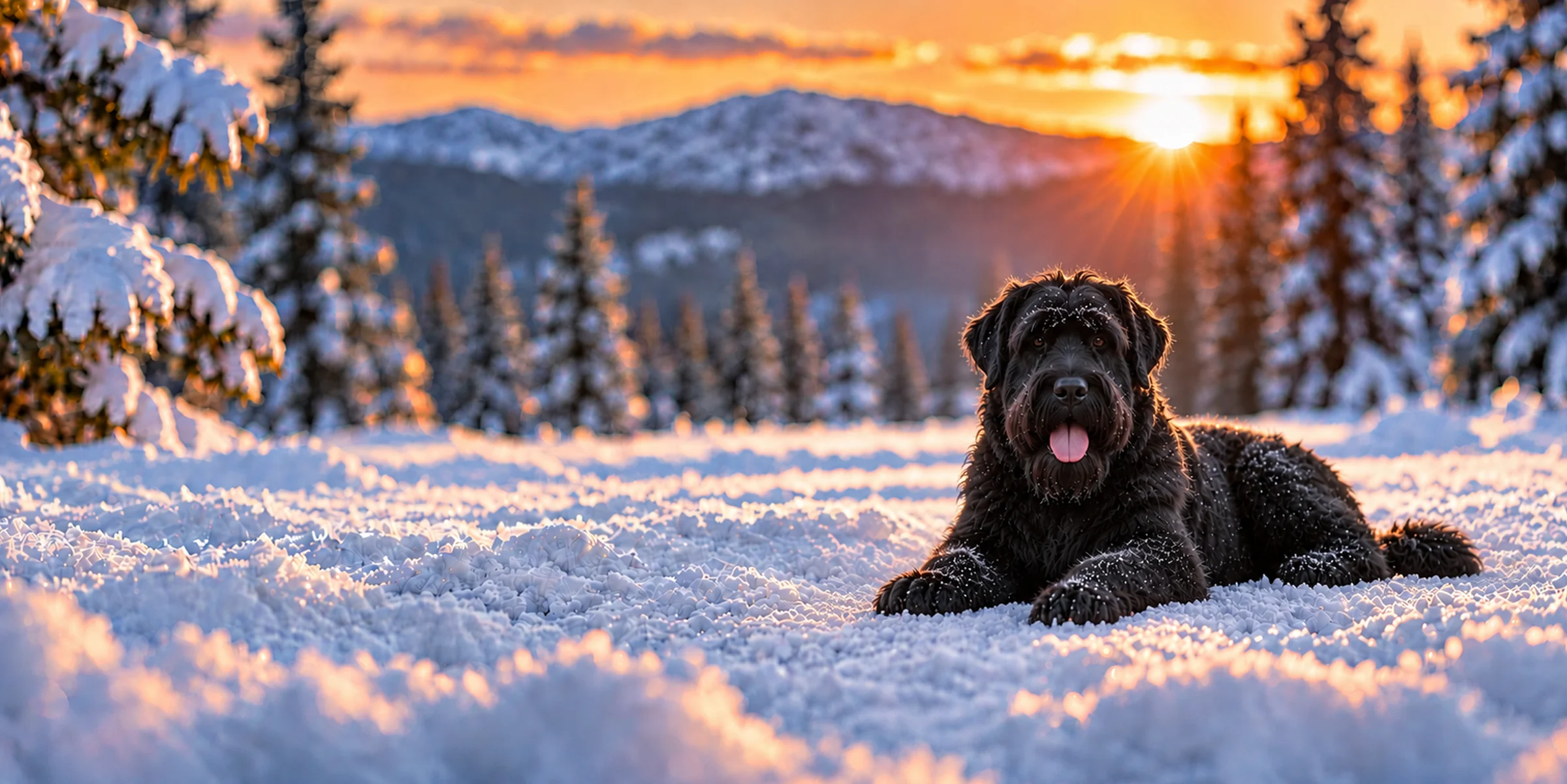
Black Russian Terrier
The closest match - another large, wire-coated, purpose-built protection breed with the same grooming commitment and the same need for experienced handling. The Black Russian is heavier and more independent; the Giant is faster and more driven.
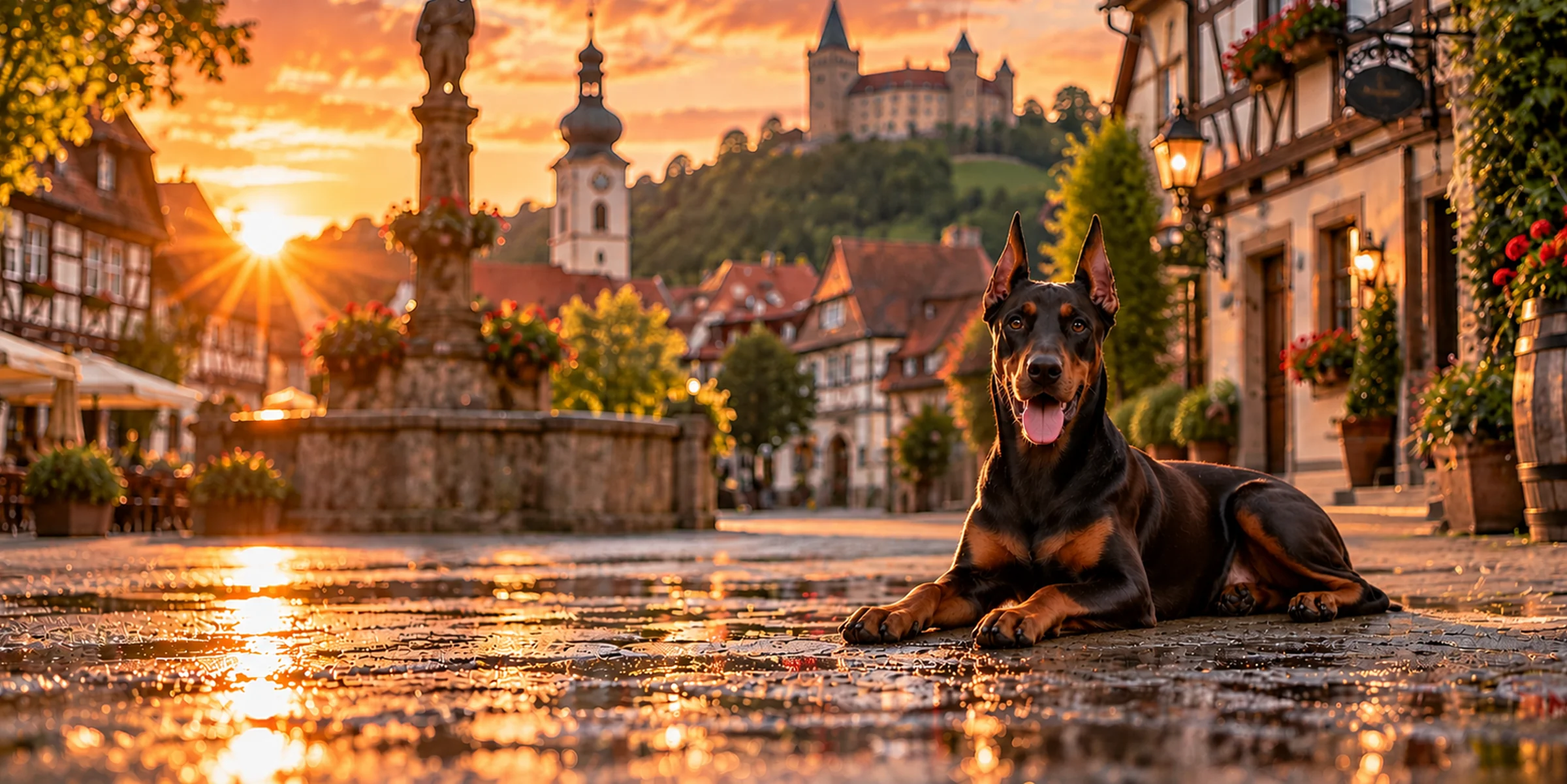
Doberman Pinscher
A comparable protection breed of similar trainability and seriousness. The Doberman is sleeker, needs almost no grooming and is more handler-focused; the Giant is more dominant and carries far more coat.
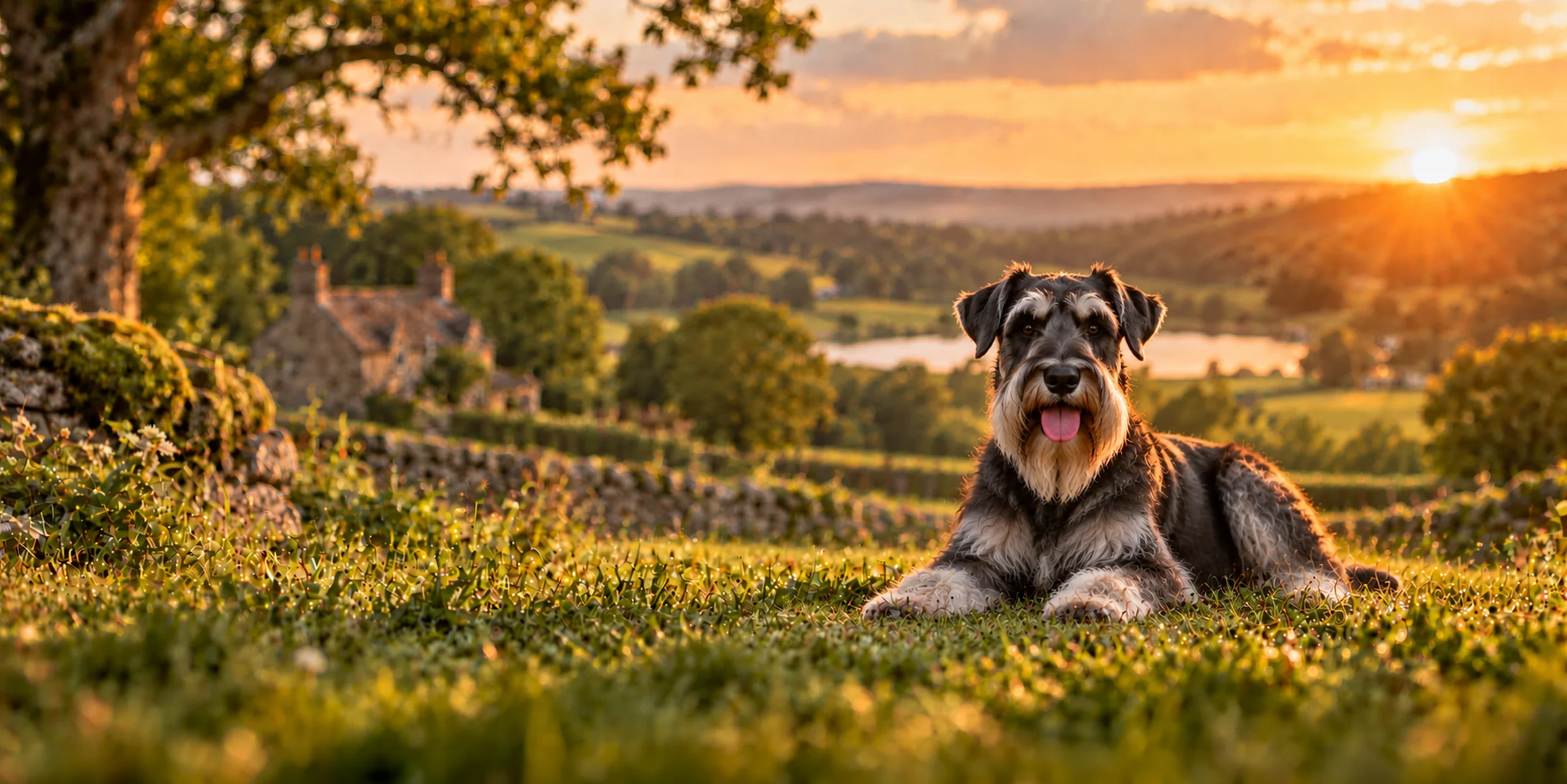
Standard Schnauzer
The breed the Giant was built up from, at roughly half the weight. Standard Schnauzers ask for the same stripping and the same mental work in a dog one person can physically manage.