

medium-to-large cross
Goldador
Not a breed but a cross, and unusually a cross with a working record behind it rather than a look: guide dog and service dog programs have paired Labradors with Golden Retrievers for decades, for the drive of the one and the softness of the other. Because both parents are large biddable retrievers bred for the same job, the result is unusually predictable - reliably 55 to 80 pounds, friendly and quick to learn. They also shed hard.

Pup Height
21.5-24.5 in

Pup Weight
55-80 lb
No kennel club recognizes the Goldador, so there is no breed standard and no official figures. The spread is narrow all the same: both parents stand 21.5 to 24.5 in and weigh 55 to 80 lb, so first-generation Goldadors land in the same band, with females at the lower end. The coat is a dense double coat, short to medium, in gold through yellow to deep red-gold, and black when a black Labrador is the sire or dam. The parents' actual weights remain the only real guide.

Pup Lifespan
10-13 years
Your pup, at a glance
What’s Life With This Pup Really Like?

Very high, and physical with it. A Goldador leans their whole weight against you and counts that as affection.

Excellent, from two parent breeds chosen for tolerance. The caveat is physics: a bouncy adolescent can flatten a toddler without meaning anything by it.

Easy with other dogs and usually with cats. Neither parent brings guarding or territorial instinct to the mix.

Low. Goldadors announce the door and then want to be introduced. Most of the noise you get is excitement or boredom.

High. Sixty to ninety minutes of real work, not a stroll - both parents were bred to retrieve all day in cold water and neither half dilutes the other.

Heavy and year-round, with two big seasonal blowouts. Both parents shed hard, so this cross has no low-shedding version - if that is what you are after, look at the doodles instead.

Endlessly game. Retrieving, water and tug all land, and a Goldador will generally outlast whoever is throwing.

Moderate, mostly around food and water bowls. Not a drooling breed, but not a dry one either.

Very high, and unusually well evidenced for a cross - guide dog programs pick this combination because it trains reliably. Training here runs on food, so put the appetite to work deliberately.

Close to nil. Both parents greet strangers warmly and the cross does the same. Nobody should get one for security.

Low and cheap: a weekly brush, daily in the molt, ears checked weekly. No clipping, no groomer, no shaving the double coat.

Adaptable when properly exercised and poor at long days alone. Scored large on the assumption of a first-generation cross of two standard-sized parents, which is what nearly all Goldadors are - a 55 to 80 lb dog, not a size lottery.
Lifestyle fit
Could This Be Your Best Breed?
A Goldador suits an active household with an hour a day for proper exercise, a tolerance for hair on everything, and $1,800 to $3,000 a year to spend. Children are a good fit, other dogs usually are too, and a first-time owner will not be out of their depth. Anyone who came to a designer cross expecting a low-shedding, low-effort dog is on the wrong page - that mismatch is what fills rescue kennels.

Living Space
A yard helps, an apartment works if two real walks happen every day. What no amount of space fixes is the hair: this is a heavy-shedding double coat in any size of home.

Pup Experience
Genuinely first-timer friendly, which is not the same as low effort. The training is easy and the exercise is not optional, and an adolescent Goldador is strong enough to pull an adult off their feet.

Daily Pup Time
Sixty to ninety minutes of real exercise, plus a few minutes of brushing most days and a great deal more twice a year. Swimming suits them and spares the joints.

Allergies & Coat
The Goldador scores 8/10 for shedding and 5/10 for drooling. No dog is truly hypoallergenic. The allergens come from dander and saliva, and a dog that sheds this much will leave plenty of hair behind - especially on your furniture, floors, and clothes.
Quirks & challenges
The Not-So-Easy Stuff

Always Hungry
Retriever appetite from both sides, and many Labradors carry a gene variant that blunts feeling full.
Freight Train Adolescence
Strength arrives months before manners. Leash work belongs in the first six months, not the second year.
Counter Surfer
Real height plus real food drive means nothing left on the counter stays there.
Too Much Hello
Everyone is a friend and they would like to say so at face height.
Slow To Grow Up
The goofy stage runs well past the first birthday. Both parent breeds mature late and the cross does too.
Bored Is Destructive
Fall short on exercise and a Goldador picks a project. It is usually your furniture.
The good, the bad & the hairy
Health, Care & Costs
Understanding the health risks and ongoing costs of a Goldador helps you plan for a happy, healthy life together.

10-13 years
no breed-specific study exists; both parent breeds have a median near 13
$0-$60
most owners never use a professional groomer ($0-$250/year)
$1,800-$3,000/year
all-in (food, routine vet, insurance, incidentals)

Health Risks
Conditions this breed is prone to.

Carried by both parent breeds, which is exactly the case where crossing helps least - a shared risk is not diluted by mixing. Both joints develop loosely, so they grind rather than glide, ending in arthritis and sometimes replacement surgery. Ask to see OFA or PennHIP hip and elbow scores for both parents; nothing else a breeder can show you matters more.
The risk is not symmetrical. Golden Retrievers have one of the highest lifetime cancer rates of any breed - study estimates commonly put it around 60 percent, most often hemangiosarcoma or lymphoma - while cancer accounts for a materially smaller share of Labrador deaths. A Goldador inherits half a genome from each, so the cross reduces nothing to zero and the Golden parent is where this risk comes from. Take new lumps, sudden lethargy or unexplained weight loss seriously rather than waiting.
Present in both parent breeds. An inherited disease that slowly destroys the retina - night vision goes first, then daylight vision, usually ending in blindness. There is no treatment, it is painless, and most dogs cope well in a home they already know. A DNA test exists and both parents should have one.
An inherited condition where five to fifteen minutes of intense exercise causes the hind legs to give way. Dogs recover within about half an hour and are normal in between. A DNA test exists, so the Labrador parent's status is knowable before a puppy is born, and affected dogs live well on managed exercise.
Not a disease in itself but the multiplier on joints, spine, heart and lifespan. A deletion in the POMC gene, common in Labradors and more common still in assistance-dog lines, genuinely blunts the feeling of being full - a DNA test exists for it. A dog with that variant is hungrier than the dog next to them and portion discipline falls entirely to you.
The stomach fills with gas and twists, cutting off its own blood supply. Without surgery within hours it is fatal. Deep-chested dogs are most at risk, and feeding one large meal a day or exercising straight after eating makes it likelier.
Two Golden Retriever conditions the cross can carry through. Subvalvular aortic stenosis is a narrowing below the aortic valve that makes the heart work harder - mild cases live normally, severe ones risk sudden collapse, and it is often caught as a murmur at a puppy check. Ichthyosis is an inherited scaling skin disorder, cosmetic in most dogs, and it has a DNA test.

Insurance & Health Coverage
Two risks stack here, and they behave differently.

The orthopedic one is shared by both parents, so crossing does little to dilute it: hip dysplasia surgery commonly runs $4,000-$7,000 per hip, and cruciate repair $3,500-$6,000 per knee. A Goldador carrying retriever appetite into middle age carries that risk further.

The cancer one comes from the Golden side and is the expensive unknown - chemotherapy protocols routinely run $6,000-$12,000. Neither risk announces itself early, which is the argument for insuring a young dog rather than a diagnosed one.
 Get a Pet Insurance Quote
Care needs
The Daily Routine

Grooming
Weekly brushing most of the year, daily when the coat blows in spring and fall. No professional grooming needed, no clipping, and no shaving the double coat. Ears want checking weekly, especially after swimming.

Exercise
60-90 minutes daily including real cardiovascular work - two brisk walks do not cover it. Swimming and retrieving suit both sides of the family and load the joints less than pavement. Keep high-impact work down while growth plates are open.

Food & Weight
There is no standard behind this cross, so ignore the chart on the bag and feed the dog in front of you: ribs easy to find, a waist visible from above. Both parents are retrievers and the appetite is doubled down on, not averaged out. Measure every meal and count treats into the daily total.
Similar breeds
If This Isn’t Quite the One

Labrador Retriever
Half the cross, and the half with the written standard, the health data and a 13.1-year median lifespan behind it. Slightly more boisterous through adolescence than the average Goldador.

Golden Retriever
The other half, softer in handling and heavier in coat work. Also where the cancer risk in a Goldador comes from, and the page that spells out what that means.
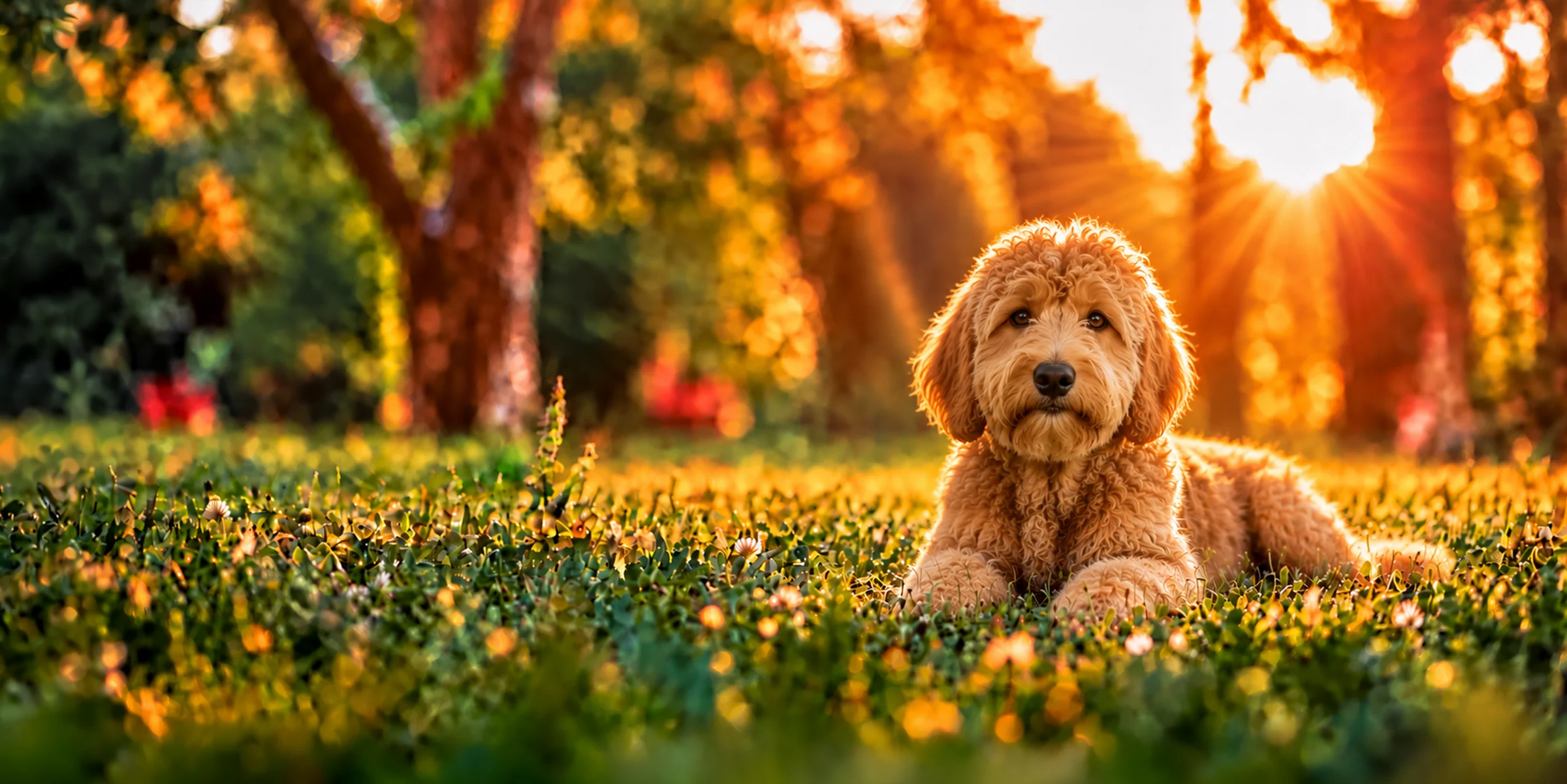
Goldendoodle
Same Golden temperament aimed at a low-shedding coat instead of a working job. You trade the hair for a four-figure grooming bill and a coat that varies litter to litter.
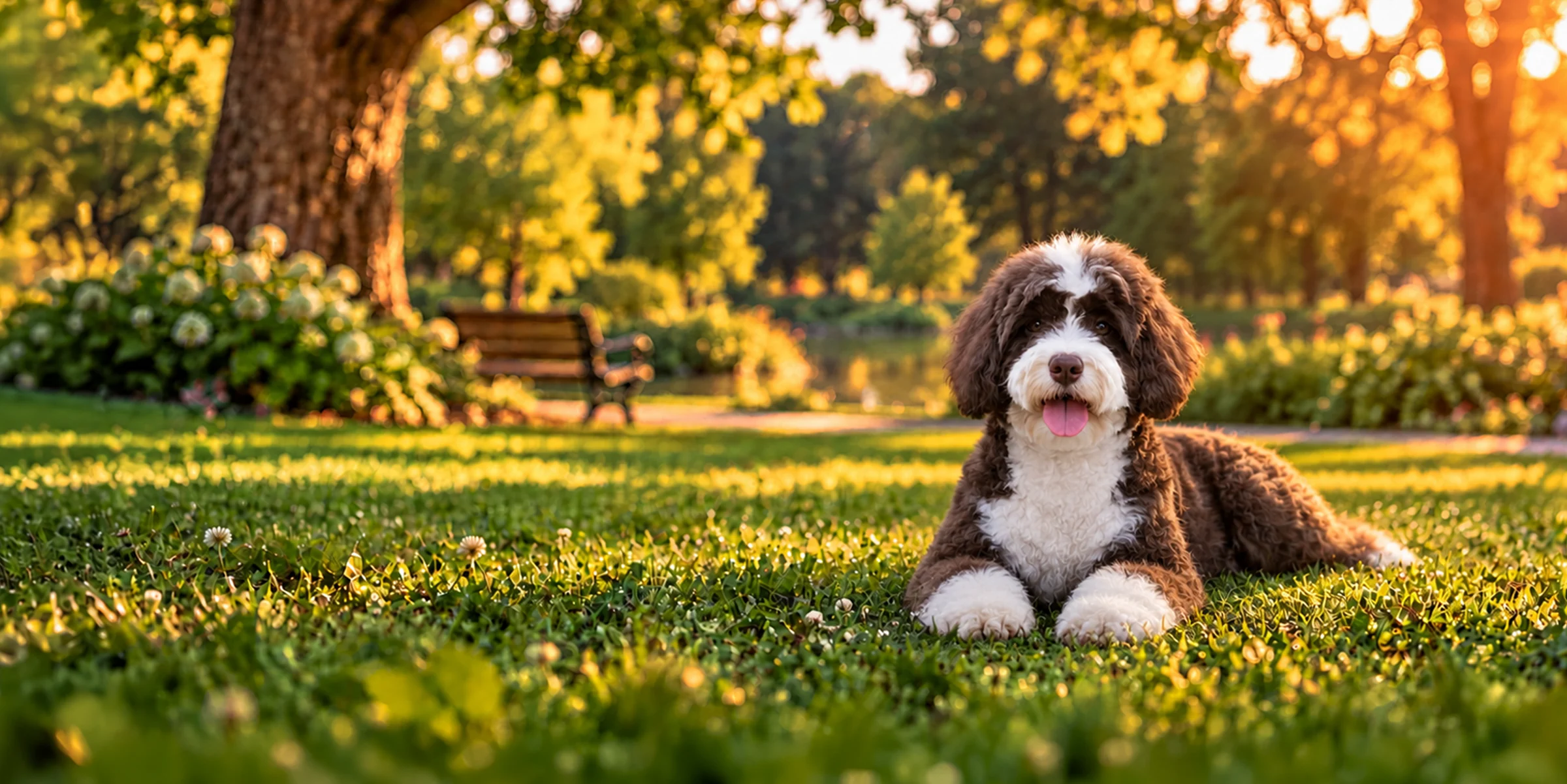
Labradoodle
The other retriever-and-Poodle cross. More coat lottery and more grooming than a Goldador, and none of the guide dog track record.