

small-to-large cross
Goldendoodle
Not a breed but a cross - Golden Retriever to Poodle, with no kennel club standard behind it and no reliable average size, so what arrives depends entirely on the two parents. Temperament usually lands sunny and quick to learn. Coat, adult weight and health testing do not: littermates vary, the low-shedding coat is the usual draw and it is never guaranteed, and there is no standard to appeal to when a puppy turns out different.

Pup Height
13-26 in

Pup Weight
15-90 lb
No kennel club recognizes the Goldendoodle, so there is no breed standard and no reliable average. Size depends on the generation and which Poodle was used - miniature, medium and standard crosses run roughly 15-30, 30-45 and 45-90 lb. At the shoulder, miniatures stand about 13-17 in, mediums 17-20 in and standards 20-26 in. The parents' actual weights are the only useful guide.

Pup Lifespan
12 years
Your pup, at a glance
What’s Life With This Pup Really Like?

Very high - this is largely what they're bred for. Affectionate, people-focused and rarely far away.

Generally excellent, with the usual caveat that an excitable large puppy and a small child need supervising together.

Sociable and unbothered. Little guarding instinct in either parent breed.

Low to moderate. Vocal when bored or left alone, quiet otherwise - the noise is a symptom, not a trait.

Moderate to high, 45 to 75 minutes. Less driven than a Labradoodle but still a sporting cross, not a lapdog.

Low, which is usually the reason people choose one. You're trading shedding for a standing grooming bill, not avoiding work.

Playful and soft with it. Happy with fetch, water and puzzle games.

Low. The Poodle side keeps the mouth tidy.

Quick and willing, from two of the most trainable breeds going. The main risk is under-teaching a very clever dog.

Minimal. Friendly first, second and third.

The real commitment. Daily brushing to the skin, professional groom every six to eight weeks, ears checked weekly.

Flexible on space, inflexible on company. Separation anxiety is the most reported problem in the breed.
Lifestyle fit
Could This Be Your Best Breed?
A Goldendoodle suits a family that wants a Golden's nature with less hair and has costed the coat honestly - $2,200 to $3,600 a year all in, grooming alone $520 to $1,100. Ask what both parents weighed and what they were screened for - that is the only evidence there is. That figure is the part people underestimate, and it comes with no guarantee about the coat - so a tight budget, a house empty all day, or a firm need for a hypoallergenic dog each point somewhere else.

Living Space
Flexible on space, inflexible on company. Standards do better with a yard, minis are genuinely apartment-friendly - but none of them do well left alone all day.

Pup Experience
Very first-timer friendly. The thing people underestimate isn't the training, it's the grooming: this coat is a standing appointment for the life of the dog.

Daily Pup Time
Forty-five to seventy-five minutes, plus daily brushing. The coat is the real commitment here - miss a week and you're paying to have it shaved off.

Allergies & Coat
The Goldendoodle scores 3/10 for shedding and 3/10 for drooling. No dog is truly hypoallergenic. The allergens come from dander and saliva, and a coat like this one holds on to them rather than spreading them around your home - which is what a groomer is clearing out every six to eight weeks.
Quirks & challenges
The Not-So-Easy Stuff

Home Alone Blues
The single most commonly reported issue in the breed. They want company.
Bouncy Greetings
Jumping and pawing at guests, powered by pure enthusiasm.
Selective Recall
Adolescence arrives and suddenly their name is optional.
Grooming Wriggles
If handling isn't taught early, six-weekly grooming becomes a lifelong battle.
Bored Barking
Under-stimulated equals vocal. The noise is a symptom, not the problem.
Coat Roulette
Coat type varies within a single litter. Yours may need more upkeep than the one you met.
The good, the bad & the hairy
Health, Care & Costs
Understanding the health risks and ongoing costs of a Goldendoodle helps you plan for a happy, healthy life together.

12 years
no breed-specific study exists; this is the median for crossbreeds
$80-$130
per professional groom, every 6-8 weeks ($520-$1,100/year)
$2,200-$3,600/year
all-in (food, routine vet, grooming, insurance, incidentals)

Health Risks
Conditions this breed is prone to.

Both joints develop loosely, so they grind rather than glide. The result is arthritis, and in bad cases replacement surgery. Ask to see hip and elbow scores for both parents - they are the single most useful thing a breeder can show you.
An inherited disease that slowly destroys the retina. Night vision goes first, then daylight vision, usually ending in blindness. There is no treatment, but it is painless and gradual, and most dogs cope well in a home they already know. Responsible breeders DNA-test for it.
Hair-filled canals plus drop ears. Drop ears and hairy canals trap warmth and moisture, which is exactly what yeast and bacteria want. Weekly checks and drying the ears after swimming prevent most of it. Left alone it becomes a lifelong cycle that is far harder to break.
Inherited from the Golden Retriever side. This breed carries a materially higher lifetime cancer risk than average, with hemangiosarcoma and lymphoma the most common forms. Early detection changes outcomes, so take new lumps, sudden lethargy or unexplained weight loss seriously rather than waiting.
The stomach fills with gas and twists, cutting off its own blood supply. Without surgery within hours it is fatal. Deep-chested dogs are most at risk, and feeding one large meal a day or exercising straight after eating makes it likelier.
Environmental allergies - pollen, dust mites, grass - showing up as itching, chewed paws and repeat ear infections. It is managed rather than cured, and it is one of the most common reasons a dog ends up on lifelong medication.
An inherited clotting disorder - the dog bleeds for longer than it should from small injuries or surgery. A DNA test exists, and knowing before an operation matters far more than the condition usually does day to day.

Insurance & Health Coverage
Two separate cost pressures stack in this breed.

The predictable one is grooming, which is a genuine four-figure annual line item most first-time doodle owners do not budget for.

The unpredictable one is that Goldendoodles can inherit the Golden Retriever's elevated cancer risk alongside Poodle-line orthopedic and bleeding disorders - and because cross-breed health testing is inconsistent, you often cannot tell which risks you are getting until they present.
 Get a Pet Insurance Quote
Care needs
The Daily Routine

Grooming
Daily brushing to the skin for wool and fleece coats. Professional groom every 6-8 weeks without exception. Ears need checking and cleaning weekly.

Exercise
45-75 minutes daily. Less intense than a Labradoodle but still a sporting-breed cross - a walk around the block is not sufficient.

Food & Weight
There is no breed standard behind this cross, so adult weight ranges widely and the feeding chart on the bag is a poor guide. Portion to the dog in front of you: ribs easy to feel, a waist visible from above. The retriever half brings a retriever's appetite.
Similar breeds
If This Isn’t Quite the One
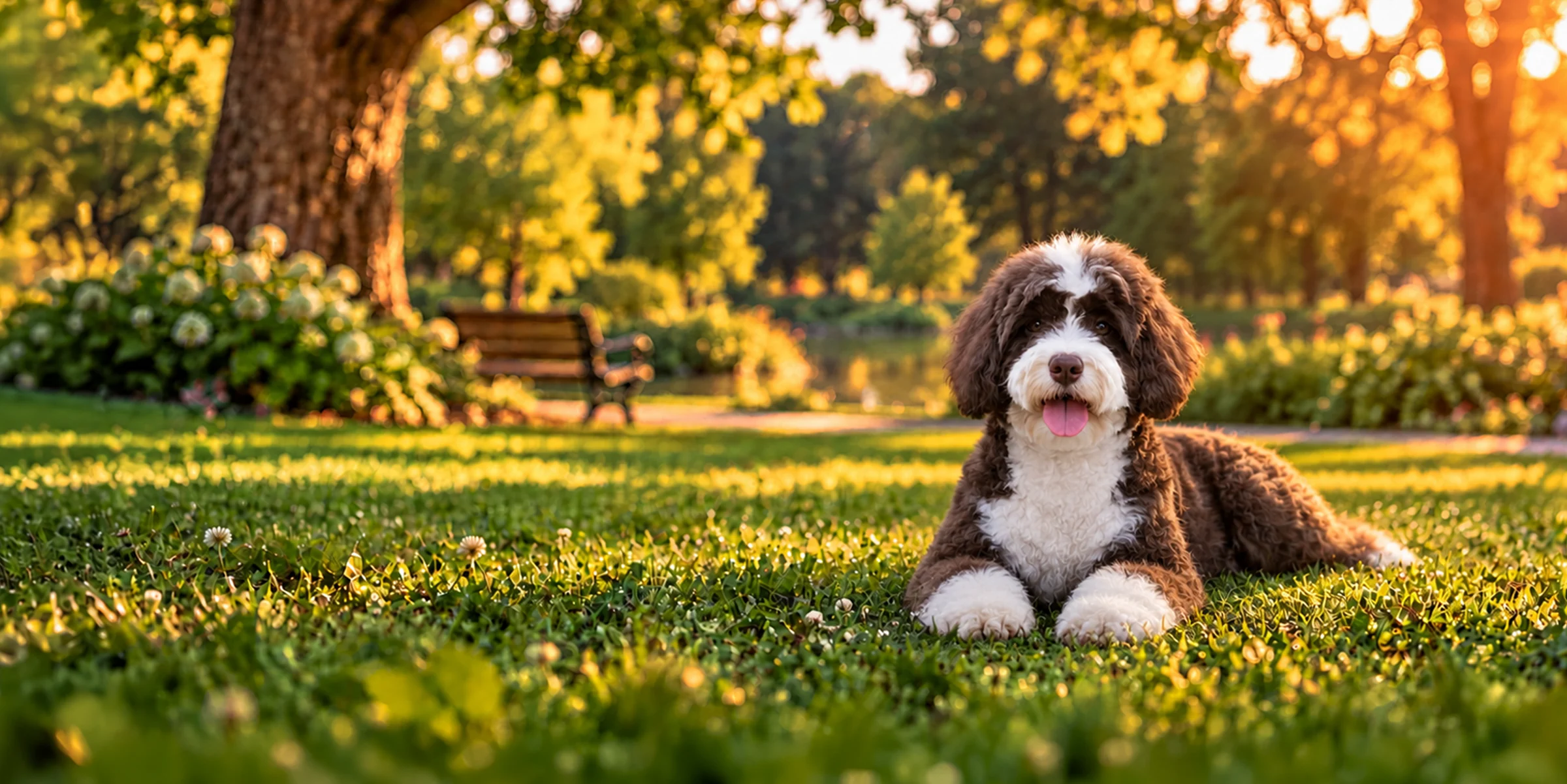
Labradoodle
Near-identical coat and grooming demands, typically a bit more energetic and boisterous if this one seems too mellow.

Standard Poodle
The predictable original - you know exactly what coat and temperament you are getting rather than rolling the cross-breed dice.

Golden Retriever
The temperament you are probably after, at a fraction of the grooming cost - if you can live with the shedding.

Labrador Retriever
Similar family temperament with by far the lowest coat maintenance of this group.
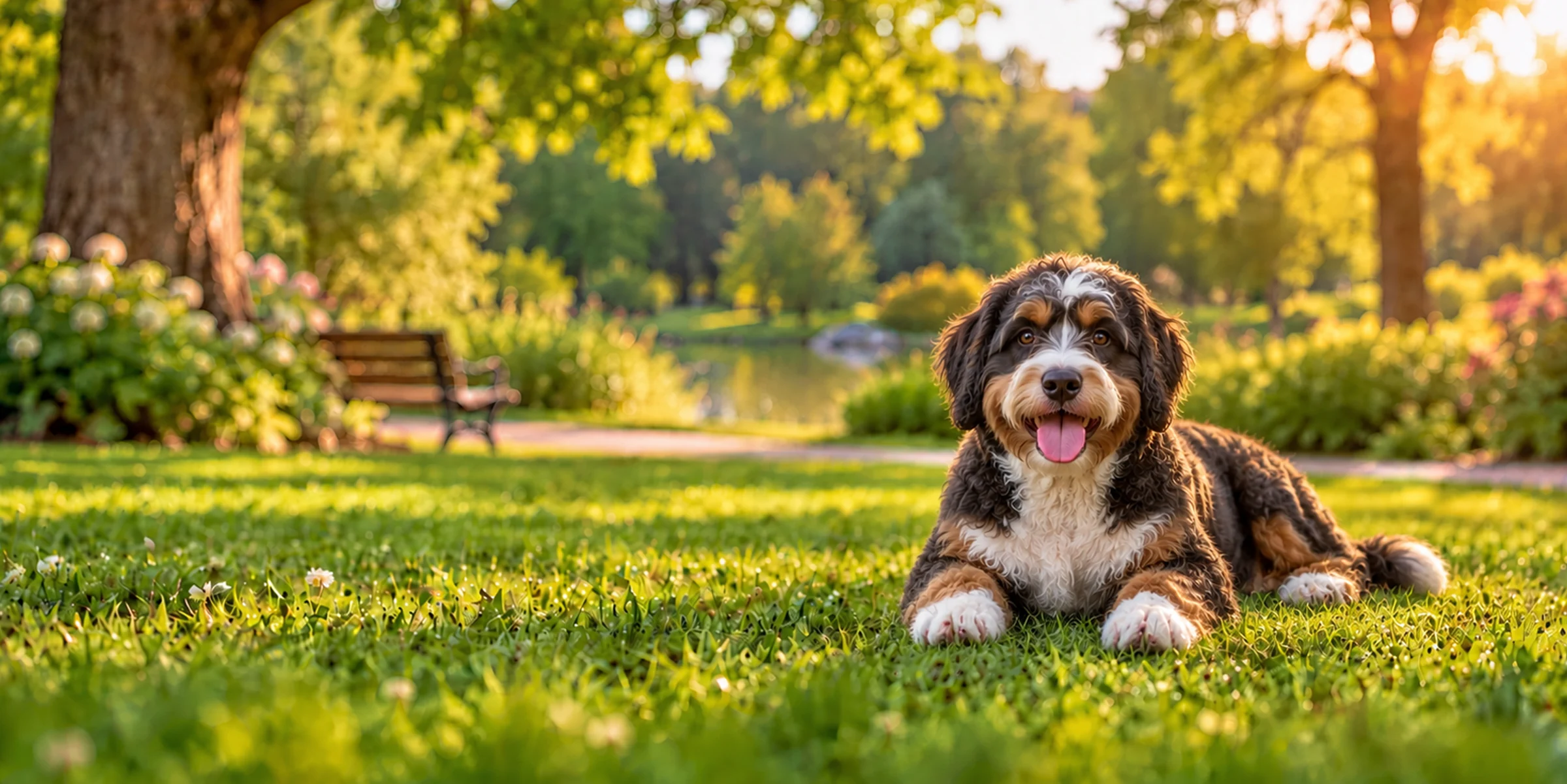
Bernedoodle
A bigger, slower, heavier cross for anyone who wants calm over bounce. The tradeoff is the Bernese lifespan question, which no amount of Poodle in the mix settles.

Cavapoo
The same coat economics in a fraction of the size, and a softer, lower-drive dog. An apartment suits a Cavapoo in a way it does not suit a Goldendoodle.