

large-to-giant breed
Greater Swiss Mountain Dog
A hundred-plus pounds of Swiss farm dog - the short-coated and oldest of the four sennenhunds, and a worker rather than a guardian. Swissies are affectionate, steady, exceptionally good with children and happiest when they have something to do. The hard facts are structural: two separate abdominal emergencies, bloat and a splenic torsion that appears in this breed far more than any other, and a life of eight to eleven years.

Pup Height
23.5-28.5 in

Pup Weight
85-140 lb
Males 25.5-28.5 in and 115-140 lb, females 23.5-27 in and 85-110 lb. The largest and oldest of the four Swiss sennenhunds, and the only one with a short coat - the Bernese is the long-coated equivalent. Always tricolor: a black base with symmetrical rust and white markings, a white blaze, muzzle, chest and feet. Nearly extinct by 1900 and rebuilt from a single dog found in 1908. Source: AKC breed standard.

Pup Lifespan
8-11 years
Your pup, at a glance
What’s Life With This Pup Really Like?

Very high. They are affectionate and physically demonstrative, lean their whole weight against people, and will attempt a lap at a hundred and twenty pounds.

Excellent. Steady, gentle and tolerant, with the usual giant-breed caveat that a bouncy adolescent knocks small children over without noticing.

Good. Generally sociable with dogs and fine with animals raised alongside them, with a modest prey drive.

Moderate to high. They were farm watchdogs and announce arrivals with a deep, carrying bark.

Moderate. An hour suits an adult, and they are calm indoors once it has happened.

Heavy, and heavier than the short coat suggests - year-round with substantial seasonal blowouts.

Enthusiastic and heavy-footed. They play hard in bursts and keep a puppyish streak until around three.

Moderate. Some drool around food and water, well short of a mastiff.

Good. Willing, biddable and keen to work, with a sensitivity that makes gentle methods essential.

Strong. Alert, territorial about the farm or the house, and physically imposing without much inclination to escalate.

Low. A weekly brush and seasonal de-shedding, plus nails and calluses on a heavy dog.

Low to moderate. They handle cold superbly and heat badly, and they need floor space and a budget more than they need acreage.
Lifestyle fit
Could This Be Your Best Breed?
A Greater Swiss Mountain Dog suits a house with a fenced yard, an owner who has costed a giant at $2,200 to $3,600 a year, and the patience for a heavy, clumsy adolescent. Insure young, take a high annual limit, and make sure your vet knows splenic torsion happens here. Anyone in a hot climate or an apartment, and anyone hoping for more than a decade together, should look elsewhere.

Living Space
A house with a fenced yard and room for a very large dog to lie down in every doorway. They are calmer than most working breeds indoors and still occupy a great deal of floor.

Pup Experience
Manageable for a first-time owner who has costed a giant breed honestly and can handle a boisterous adolescent. They are biddable and good-natured; the demands are physical scale and a long, clumsy adolescence rather than temperament.

Daily Pup Time
An hour of steady walking daily, carefully limited while they are growing, plus something to think about. The coat takes ten minutes a week and far more during the seasonal sheds.

Allergies & Coat
The Greater Swiss Mountain Dog scores 7/10 for shedding and 5/10 for drooling. No dog is truly hypoallergenic. The allergens come from dander and saliva, and a dog that sheds this much will leave plenty of hair behind - especially on your furniture, floors, and clothes.
Quirks & challenges
The Not-So-Easy Stuff

Splenic Torsion
A breed-specific emergency almost no one knows about. The spleen twists on its own blood supply - learn the signs.
Bloat Risk
Deep-chested and giant. Split meals, no exercise around feeding, and discuss a gastropexy.
Long Clumsy Adolescence
Bouncy and heavy-footed until around three, at well over a hundred pounds.
Grow Them Slowly
Over-feeding and over-exercising a puppy causes joint damage that lasts the whole life.
Heavy Shedding
A short coat that sheds far more than it looks like it should, with big seasonal turns.
Poor in Heat
Built for alpine winters. Summer exercise at dawn and dusk only.
The good, the bad & the hairy
Health, Care & Costs
Understanding the health risks and ongoing costs of a Greater Swiss Mountain Dog helps you plan for a happy, healthy life together.

8-11 years
$65-$100
per groom (bath, de-shed, nails, ears), every 8-12 weeks ($300-$550/year)
$2,200-$3,600/year
all-in (food, routine vet, grooming, insurance, incidentals)

Health Risks
Conditions this breed is prone to.

The spleen rotates on its own blood supply and dies, causing collapse, pale gums and abdominal pain. It is rare in dogs generally and appears in this breed far more than any other, which means many vets will not think of it first. It is a surgical emergency and survival depends on speed - knowing it exists is the single most useful thing an owner of this breed can do.
The stomach fills with gas and twists, cutting off its own circulation, and it kills within hours without emergency surgery. Deep-chested giants are the highest-risk group - split meals, keep exercise clear of them, and discuss a preventive gastropexy, which can often be done alongside a splenic procedure.
The joints develop loosely or unevenly and wear into arthritis, sometimes needing surgery - which at this weight sits at the top of the orthopedic range. Both parents should have scored hips and elbows.
Cartilage in a joint - usually the shoulder - fails to develop properly and a flap separates, causing lameness in young growing dogs. Over-feeding and over-exercising a puppy make it considerably more likely, and it is often corrected surgically.
Seizures with no other underlying cause, usually first appearing between one and five years old. Controlled with daily medication rather than cured, and the drugs and monitoring are a lifelong cost.
Leaking urine, particularly when asleep, appears in the breed at above-average rates and especially in spayed females. It is not a housetraining failure, and it is usually well controlled with medication.

Insurance & Health Coverage
Insure young and buy a high annual limit rather than the cheapest premium. Everything on a giant breed is priced by body mass, and this one has two abdominal emergencies rather than the usual one.

Bloat and splenic torsion are both surgical, both cost several thousand dollars, and both arrive without warning. Worth raising a preventive gastropexy with your vet early - and worth making sure your own out-of-hours clinic knows the breed, because splenic torsion is rare enough elsewhere that it is easy to miss.

Joint disease is the other expensive category, and it tends to show in young dogs here because of the growth rate. With an eight-to-eleven-year life expectancy the useful insurance window is short, so a policy started late misses much of it.
 Get a Pet Insurance Quote
Care needs
The Daily Routine

Grooming
A short dense double coat that needs a weekly pass with a rubber mitt and considerably more during the twice-yearly sheds, which are heavier than the short coat suggests. Nails need regular trimming on a dog this heavy, ears want a weekly check, and elbow calluses are worth watching on hard floors - a genuinely thick bed prevents them.

Exercise
About an hour of steady walking daily as an adult, with far less while they are growing. Carting, draft work and hiking suit them; they have real pulling stamina and no interest in sprinting.

Food & Weight
Two or three measured meals rather than one large one, with activity kept well clear of feeding given the bloat risk. Grow puppies slowly on a giant-breed formula - forcing weight onto developing joints is the most damaging thing an owner of this breed can do.
Similar breeds
If This Isn’t Quite the One
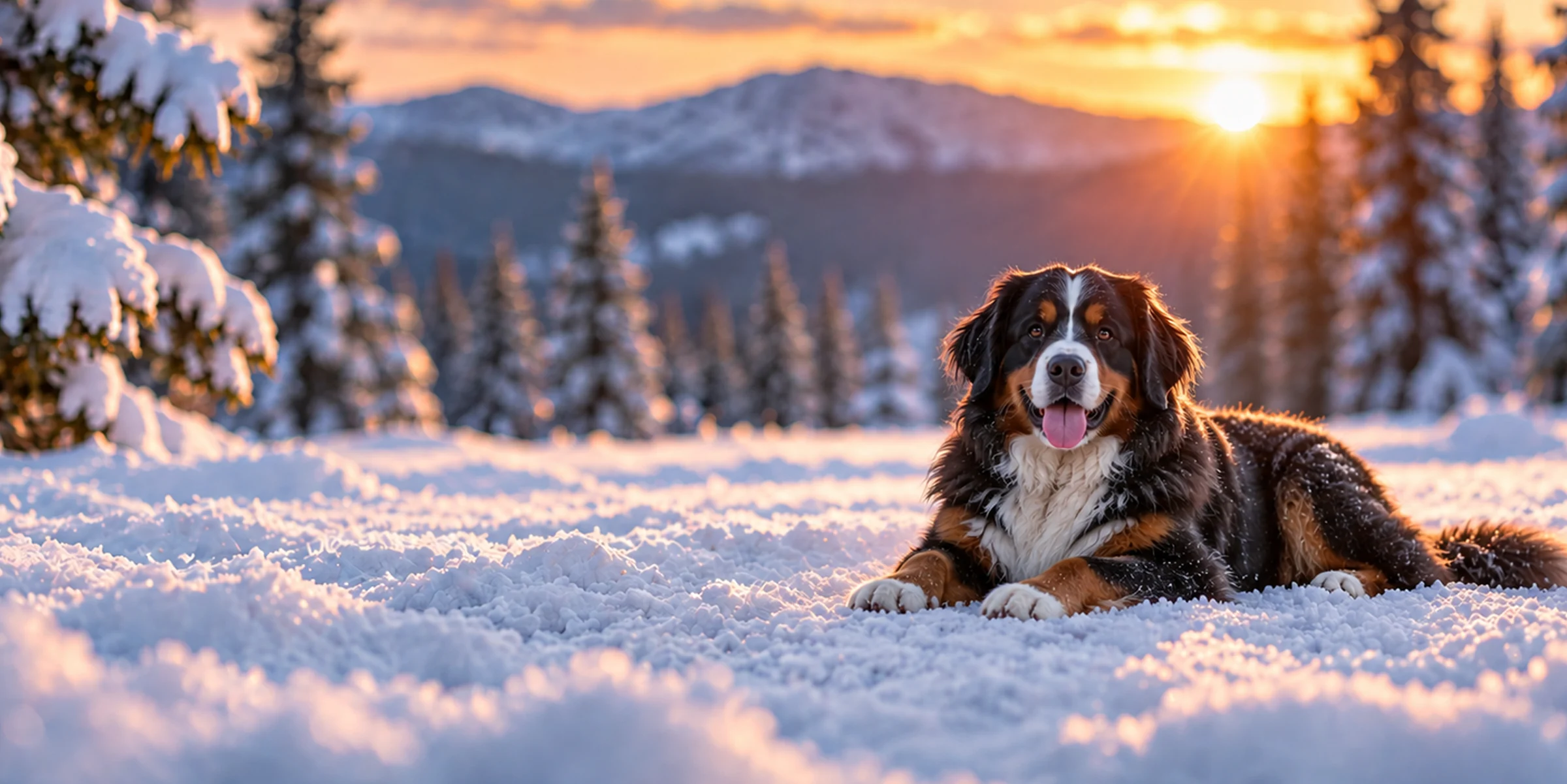
Bernese Mountain Dog
The long-coated equivalent from the same four Swiss breeds - same build, same draft history, same gentle temperament. The Bernese needs far more grooming and has a shorter life; the Swissy is hardier and a touch more energetic.
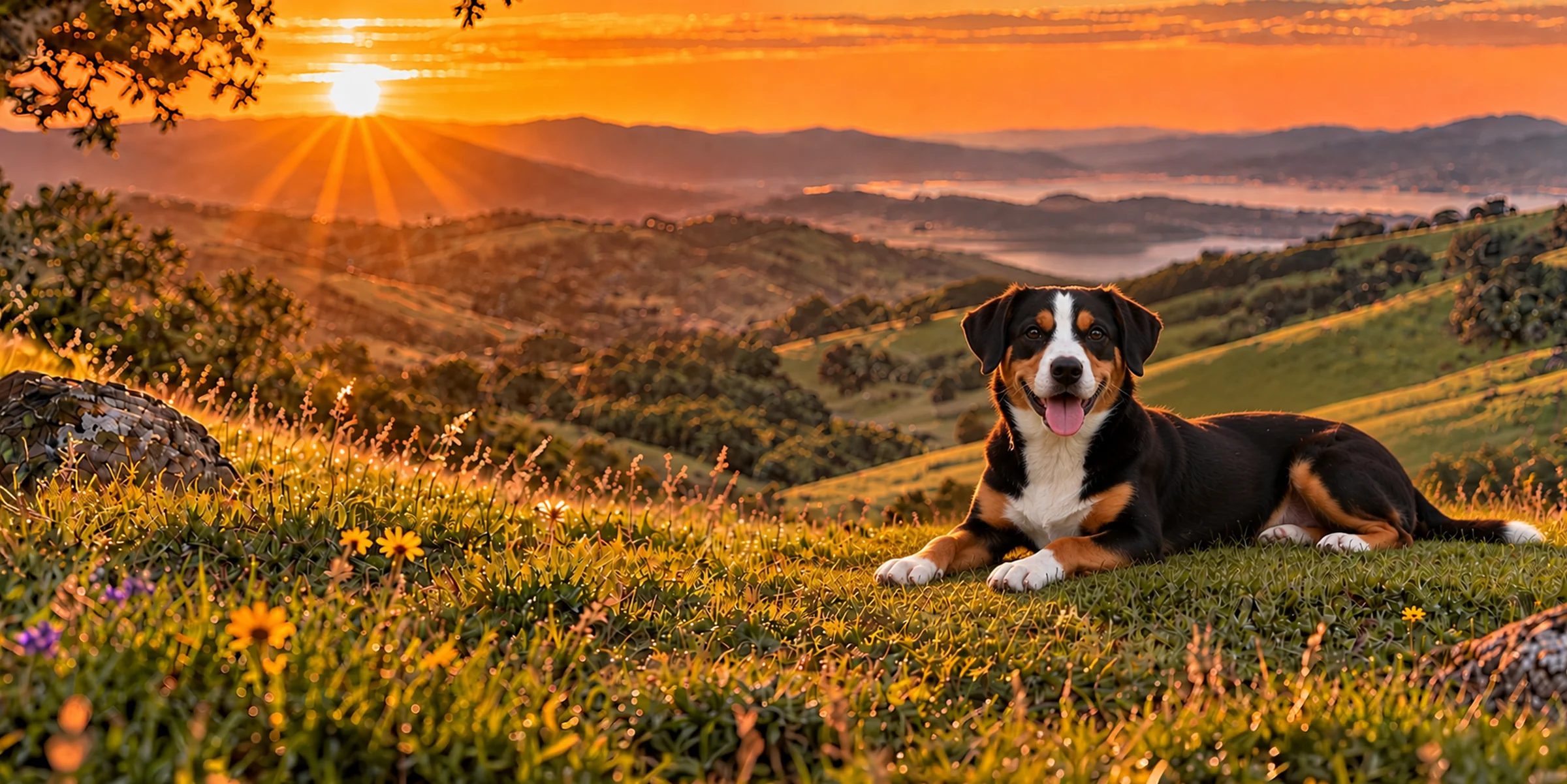
Entlebucher Mountain Dog
The smallest of the four sennenhunds and a useful contrast. The Entlebucher is a quick, vocal cattle driver needing twice the exercise; the Swissy is a draft dog and far calmer.