

small breed
Havanese
Seven to thirteen pounds of companion with a springy walk and a coat that reaches the floor if you let it. Havanese are cheerful, funny, quick to learn and happy anywhere their people are, which makes them one of the easiest small dogs to live with and to train. The two things to plan for are the coat, which mats within days if the brush is skipped, and real distress at being left alone all day.

Pup Height
8.5-11.5 in
Slightly longer than tall, with a distinctive springy gait and a tail carried arched over the back. The coat is double but unusually soft and light - it insulates against Caribbean heat rather than cold - and any color is permitted. Cuba's only native breed, brought by Spanish settlers and nearly lost after the revolution; the modern population descends largely from eleven dogs taken to the United States. Source: AKC breed standard.

Pup Weight
7-13 lb

Pup Lifespan
14-16 years
Your pup, at a glance
What’s Life With This Pup Really Like?

The maximum. They want to be against a person at all times and will follow whoever is moving from room to room to manage it.

Excellent with considerate children - playful, patient and genuinely fond of them. Small enough that toddlers need supervising for a Havanese's sake.

Excellent. Sociable with dogs and cats alike, with no prey drive and no territorial streak at all.

Moderate. They announce the door and can be yappy when excited, and they train down more easily than most small breeds.

Moderate. Lively bursts of play and a walk, then they settle happily wherever you are.

Very low. The coat grows rather than sheds, which is exactly why it needs brushing instead.

A natural clown. They perform, learn tricks quickly and play to an audience well into old age.

Minimal.

Outstanding - among the highest here. Bright, food-motivated and keen to please, with a real appetite for learning tricks.

Moderate as an alarm. They announce arrivals and then try to befriend them.

High. Daily brushing on a full coat, or a shorter clip every six to eight weeks, plus daily eye care.

Very high. Apartment or house, city or country, hot climate or cold - they adapt to nearly anything except being left alone.
Lifestyle fit
Could This Be Your Best Breed?
A Havanese suits an apartment, a household with someone usually home, and anyone who would rather train a dog than argue with one. Expect $1,300 to $2,200 a year, grooming the biggest line at $400 to $750, and fourteen to sixteen years. A house that stands empty from morning to evening is where this falls apart, as is any home that will not keep up a daily brush and a regular clip.

Living Space
Anywhere with people in it. Havanese are small, adaptable and quiet enough for an apartment - the only arrangement that genuinely fails is one where they are alone all day.

Pup Experience
Excellent for a first-time owner. They are one of the easiest breeds here to train and to live with; the coat is the only real commitment, and clipping it short removes most of that.

Daily Pup Time
Thirty to forty-five minutes of walking and play plus some training. Grooming is the larger item - daily brushing on a full coat, or a clip every six to eight weeks.

Allergies & Coat
The Havanese scores 2/10 for shedding and 1/10 for drooling. No dog is truly hypoallergenic. The allergens come from dander and saliva, and a coat like this one holds on to them rather than spreading them around your home - which is what a groomer is clearing out every six to eight weeks.
Quirks & challenges
The Not-So-Easy Stuff

The Coat Mats Fast
Soft and fine, so it tangles rather than sheds. Daily brushing on a full coat, or keep it clipped.
Separation Anxiety
Bred purely for company. Long days alone go badly, and this is the breed's most common problem.
Housetraining Takes Longer
A small bladder and a dislike of wet grass. Routine and patience rather than correction.
They Can Be Yappy
Alert and vocal at the door. Trainable down easily, but worth doing early.
Small Gene Pool
Rebuilt from eleven dogs. The breeder's health testing matters more than breed-level numbers.
Easily Underfoot
Ten pounds and permanently at your feet. Most injuries in this breed are domestic accidents.
The good, the bad & the hairy
Health, Care & Costs
Understanding the health risks and ongoing costs of a Havanese helps you plan for a happy, healthy life together.

14-16 years
$60-$90
per groom (bath, clip or full brush-out, ears, nails), every 6-8 weeks ($400-$750/year)
$1,300-$2,200/year
all-in (food, routine vet, grooming, insurance, incidentals)

Health Risks
Conditions this breed is prone to.

The kneecap slips out of its groove, producing a skipping gait and sometimes needing surgery. It is the most common orthopedic problem in the breed, as in most small dogs, and is screened by examining the parents.
Cataracts and progressive retinal atrophy both appear. PRA degenerates the retina to blindness and is DNA testable in the parents; cataracts are caught by annual eye examination and are often surgically correctable.
An inherited skeletal condition causing abnormally short, sometimes bowed legs and joint problems. It occurs in the breed, is distinct from the normal slightly-longer-than-tall build, and is worth asking a breeder about.
The blood supply to the head of the femur fails, the bone dies and the hip joint collapses. It appears in young small-breed dogs, causes progressive lameness, and is usually treated surgically.
Congenital deafness appears in the breed, particularly in dogs with a lot of white. BAER testing identifies it in puppies, and a responsible breeder will have tested.
A full set of teeth in a small jaw means crowding, tartar and early loss. Daily brushing and regular professional cleanings are a recurring cost across a long life.

Insurance & Health Coverage
A healthy breed with a long life, so the case for cover is the ordinary one - accidents and the occasional surgery across fifteen or sixteen years.

Insure young. Patellar luxation and Legg-Calve-Perthes both appear in young dogs and both usually end in surgery, and the first note of a skipping gait on a record turns knees and hips into permanent exclusions.

Two costs sit outside any policy and both are substantial here. Grooming runs several hundred dollars a year for the life of the dog, and dental work under anesthesia every year or two is excluded as routine by most insurers - read that section rather than assuming. Progressive retinal atrophy is congenital and uncovered either way, but DNA testable in the parents.
 Get a Pet Insurance Quote
Care needs
The Daily Routine

Grooming
A soft, fine double coat that tangles rather than sheds, so it needs daily brushing in sections down to the skin if kept long - the surface looks fine while mats form underneath. Most owners keep it in a shorter puppy clip, which drops the brushing to a few times a week and needs a groom every six to eight weeks. Ears want checking weekly and the eye area wiping daily.

Exercise
Thirty to forty-five minutes daily, split into short walks and indoor play. They are lively rather than athletic and enjoy learning tricks as much as walking.

Food & Weight
Two measured meals. A pound of extra weight is a large fraction of a ten-pound dog and the coat hides it completely, so go by feel through the ribs and count the training treats.
Similar breeds
If This Isn’t Quite the One
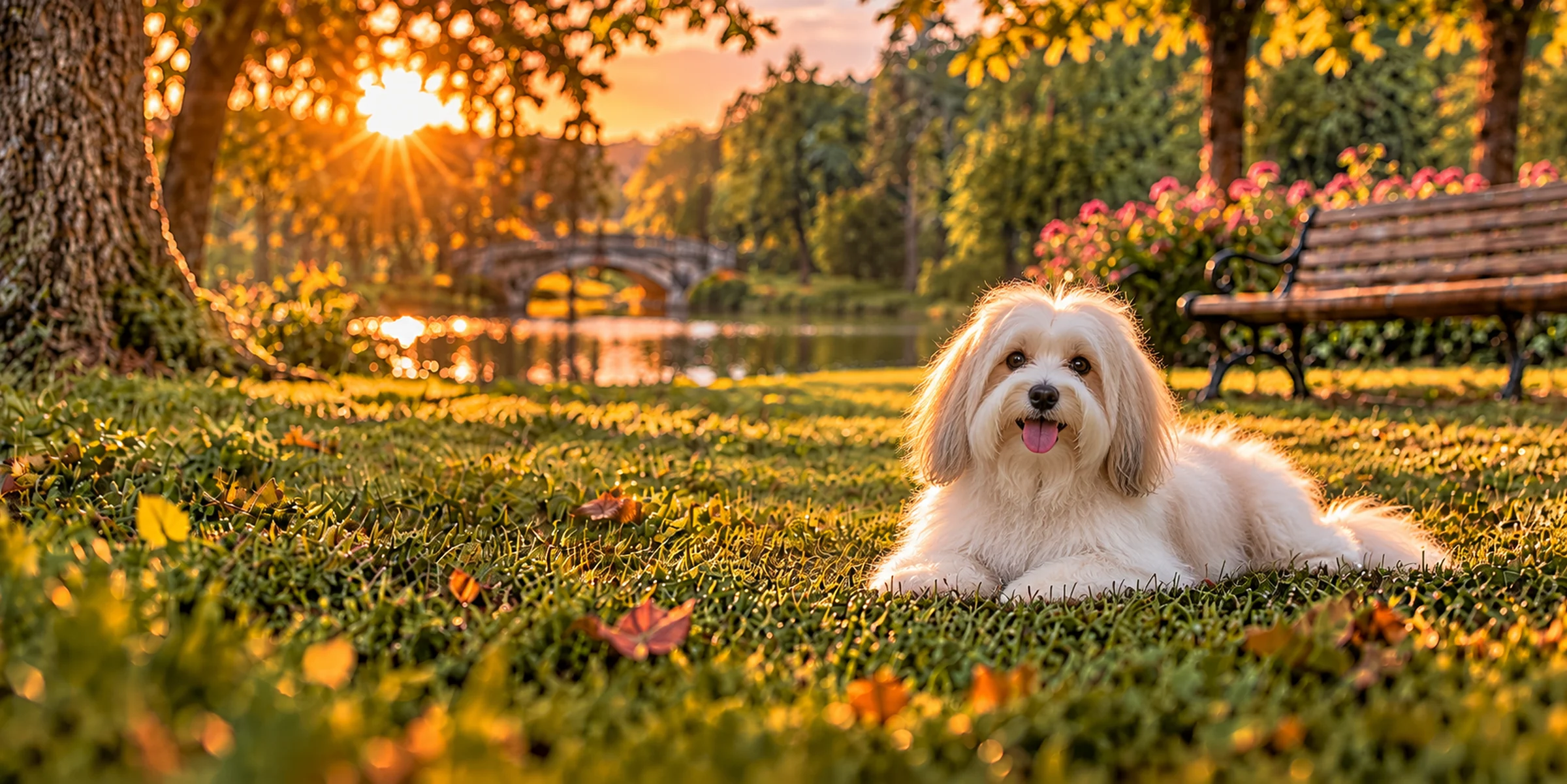
Coton de Tulear
The closest match - another island companion breed of the same bichon family, same size, same cheerful temperament and a comparable coat commitment. The Coton is white and cottony; the Havanese comes in any color and is a touch more trainable.
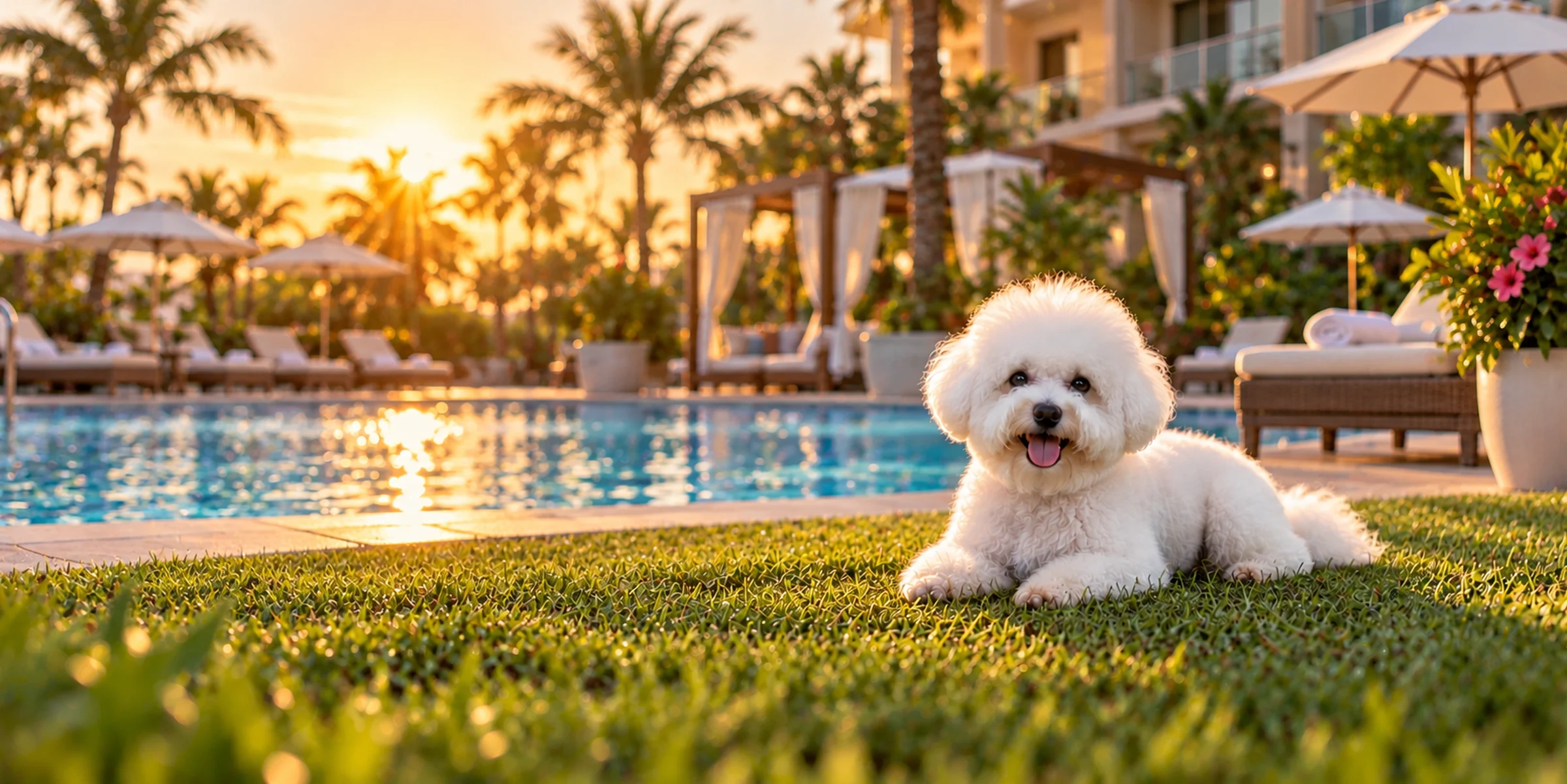
Bichon Frise
The same family and an equally people-focused temperament. The Bichon's curlier coat is usually clipped short and sheds less noticeably; the Havanese is smaller and rather more of a performer.

Havapoo
The Poodle cross, and one that comes out well - the Havanese is solidly built for the size, so there is none of the Maltese's fragility and no inherited heart problem waiting. The coat still mats from both sides.
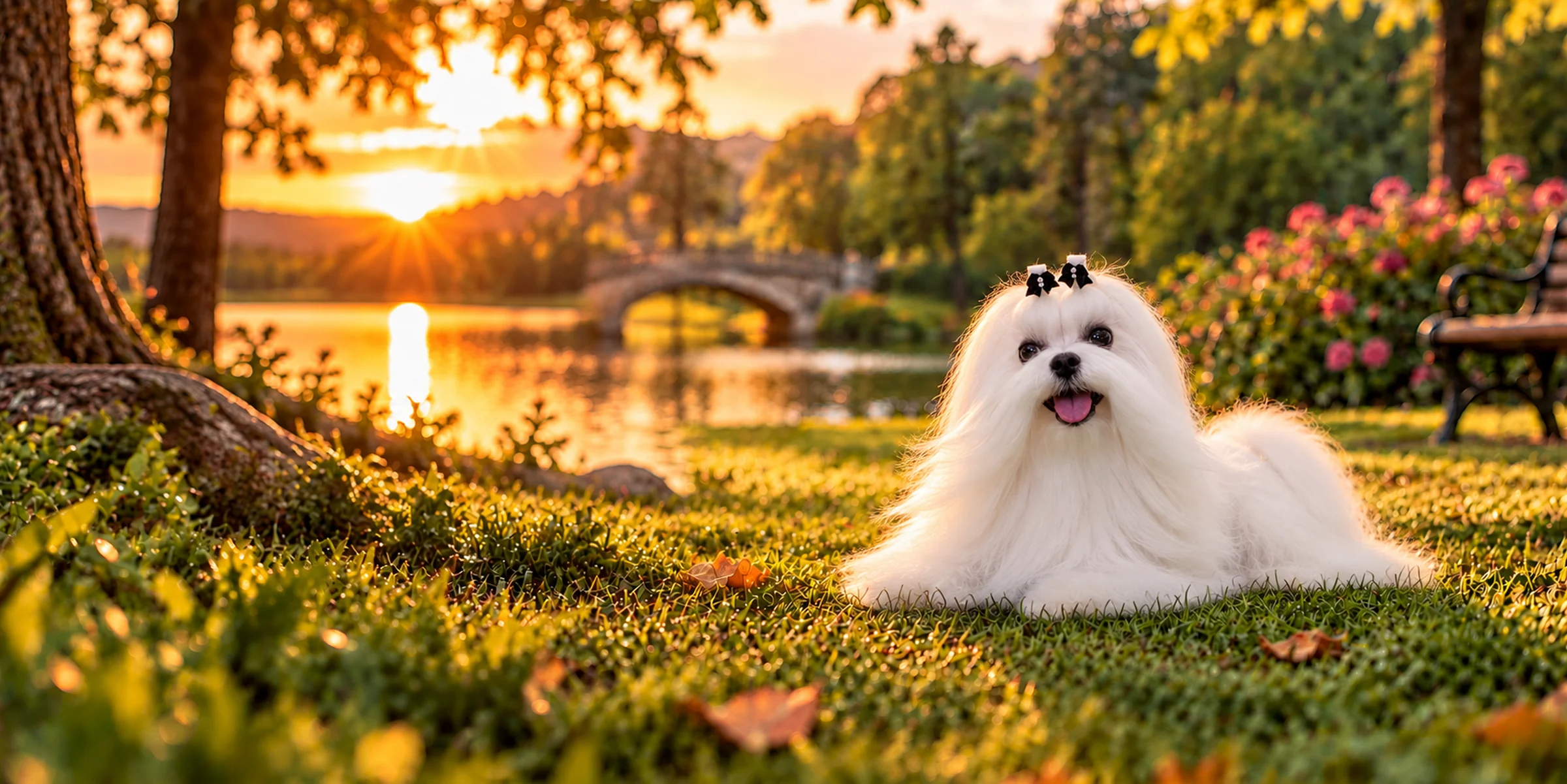
Maltese
The other classic white companion breed, and the sturdier comparison runs the Havanese's way. Both ask for the same daily coat work; the Maltese is the more breakable of the two.