

small breed
Maltese
One of the oldest companion breeds there is - kept around the Mediterranean for over two thousand years and never asked to do a day's work. Four to seven pounds of confident, affectionate dog who wants to be wherever you are. The costs are daily rather than dramatic: a fine single coat that mats behind the ears and under the legs, teeth that need brushing in a very small mouth, and house-training that takes real patience.

Pup Height
7-9 in

Pup Weight
4-7 lb
One size only: under 7 lb, with 4-6 lb preferred; the standard sets no height, and 7-9 in at the shoulder is typical. Pure white, with light tan or lemon on the ears permitted but not preferred. A single coat with no undercoat - long, flat and silky, never curly or woolly - over a black nose, black eye rims and dark eyes. "Teacup" is a marketing label, not a recognized variety. Source: AKC breed standard.

Pup Lifespan
12-15 years
Your pup, at a glance
What’s Life With This Pup Really Like?

Very high. Maltese were bred to be lapdogs and would happily spend the whole day on one.

Fair. Gentle and playful with respectful older children, but too small and fragile for rough handling or toddlers.

Good. Usually friendly with other dogs and cats, though big, boisterous dogs can injure them in play.

Fairly high. Quick to bark at noises and visitors, and it becomes a habit without early training.

Moderate. Lively bursts of play indoors, then long naps.

Low. A single coat with no undercoat, so very little hair ends up on the furniture.

Playful and bright. Maltese enjoy toys, chase games and learning tricks well into old age.

Minimal.

Fairly good. Smart and eager with rewards, with house-training the notable weak spot.

Moderate. An alert early warning system that barks at everything, with no real protection behind the noise.

Very high. Daily brushing, daily face care and a groomer every few weeks for most pet owners.

High. Content in an apartment and easy to travel with, as long as someone is home most of the time.
Lifestyle fit
Could This Be Your Best Breed?
A Maltese suits an apartment, an older adult or anyone home most of the day, and a household where a four-pound dog will not be stepped on or dropped. Running costs are $1,500 to $3,000 a year, $550 to $1,200 of that grooming, across twelve to fifteen years. Toddlers, ten-hour workdays and a reluctance to pick up a comb every morning are each on their own reason enough to choose a different breed.

Living Space
Anywhere, including a small apartment. Maltese get most of their exercise indoors and travel easily, but they need a home where someone is usually around and where a tiny dog will not be stepped on or dropped.

Pup Experience
Fine for first-time owners who are ready for the coat and for house-training that takes patience. The real skill is not babying a four-pound dog into a nervous, noisy one.

Daily Pup Time
Two short walks and some indoor play, plus daily brushing and face cleaning. Most of the time goes into the coat and into company rather than exercise.

Allergies & Coat
The Maltese scores 2/10 for shedding and 1/10 for drooling. No dog is truly hypoallergenic. The allergens come from dander and saliva, and a coat like this one holds on to them rather than spreading them around your home - which is what a groomer is clearing out every six to eight weeks.
Quirks & challenges
The Not-So-Easy Stuff

Grooming Never Stops
A long, silky coat mats quickly without daily brushing. Most pet owners keep a short puppy cut and see a groomer every four to six weeks.
Slow House-Training
A tiny bladder and a dislike of cold, wet grass make accidents common. Many owners use an indoor potty spot as a backup.
Barking
Alert and vocal about every noise in the hallway. Teach a quiet cue early, especially in an apartment.
Separation Distress
Bred purely for company, and many Maltese cry, bark or chew when left alone for long stretches.
Fragile Body
A fall from a sofa or a child's arms can break a leg. Toddlers and a four-pound dog need close supervision.
Tear Staining
Red-brown stains under the eyes show clearly on a white face. Daily wiping keeps them down, and it is cosmetic in most dogs.
The good, the bad & the hairy
Health, Care & Costs
Understanding the health risks and ongoing costs of a Maltese helps you plan for a happy, healthy life together.

12-15 years
$60-$95
per groom (bath, puppy cut, face trim, nails, ears), every 4-6 weeks ($550-$1,200/year), or less with a full coat maintained at home
$1,500-$3,000/year
all-in (food, routine vet, grooming, dental care, insurance, incidentals)

Health Risks
Conditions this breed is prone to.

The kneecap slips out of its groove, causing a skipping gait. Mild cases need nothing more than weight control; severe cases need surgery that can run $1,500-$4,000 per knee. Ask whether both parents have had their knees checked.
A small mouth with crowded teeth builds tartar quickly, and many Maltese lose teeth by middle age without care. Daily brushing and regular professional cleanings under anesthesia are the realistic plan.
Abnormal blood flow bypasses the liver, causing stunted growth, poor appetite or neurological signs after meals in young dogs. A bile acid blood test screens for it, and a true shunt often needs surgery; the milder microvascular form is usually managed with diet.
The cartilage rings of the windpipe weaken and flatten, producing a honking cough that worsens with excitement, heat and pulling on a collar. A harness instead of a neck collar and a lean body weight help a great deal.
An inflammatory condition that causes sudden whole-body tremors, usually in young adult small white dogs. It looks alarming but typically responds well to steroid treatment.
Very small puppies can crash on low blood sugar if they miss meals, so frequent feeding matters early. Distichiasis, progressive retinal atrophy and blocked tear ducts also appear, and a yearly eye check catches them.

Insurance & Health Coverage
Maltese are long-lived, which means many years of premiums and many years in which something can go wrong. Insure early, before a skipping knee or a cough ends up in the records as a pre-existing condition.

Knee surgery and liver shunt treatment are the big-ticket claims to plan for. A liver shunt is often found in the first year, so enroll a puppy as soon as possible and check how the policy treats congenital conditions.

Dental care is the steady cost underneath. Many policies exclude routine cleanings or cover dental disease only with an add-on, and a toy breed with crowded teeth will use it. Read that part of the policy closely.
 Get a Pet Insurance Quote
Care needs
The Daily Routine

Grooming
Daily brushing with a pin or slicker brush and a steel comb, working down to the skin, because the fine single coat mats behind the ears, under the legs and on the belly. A full show coat is a serious daily commitment; most pet Maltese live in a short puppy cut trimmed every four to six weeks. Wipe the eyes and beard daily, keep hair trimmed away from the eyes, check the ears weekly, and brush the teeth as close to daily as possible.

Exercise
Modest. Two short walks and some indoor play cover most Maltese, and they enjoy games of fetch down a hallway as much as a park. Use a harness rather than a collar, keep them out of extreme heat and cold, and lift them rather than let them jump from furniture.

Food & Weight
Small, measured meals of a quality small-breed food, with puppies fed several times a day to avoid low blood sugar. Adults gain weight easily from table scraps and treats, and a single extra pound is a large share of a six-pound dog, so count treats as part of the day's food.
Similar breeds
If This Isn’t Quite the One
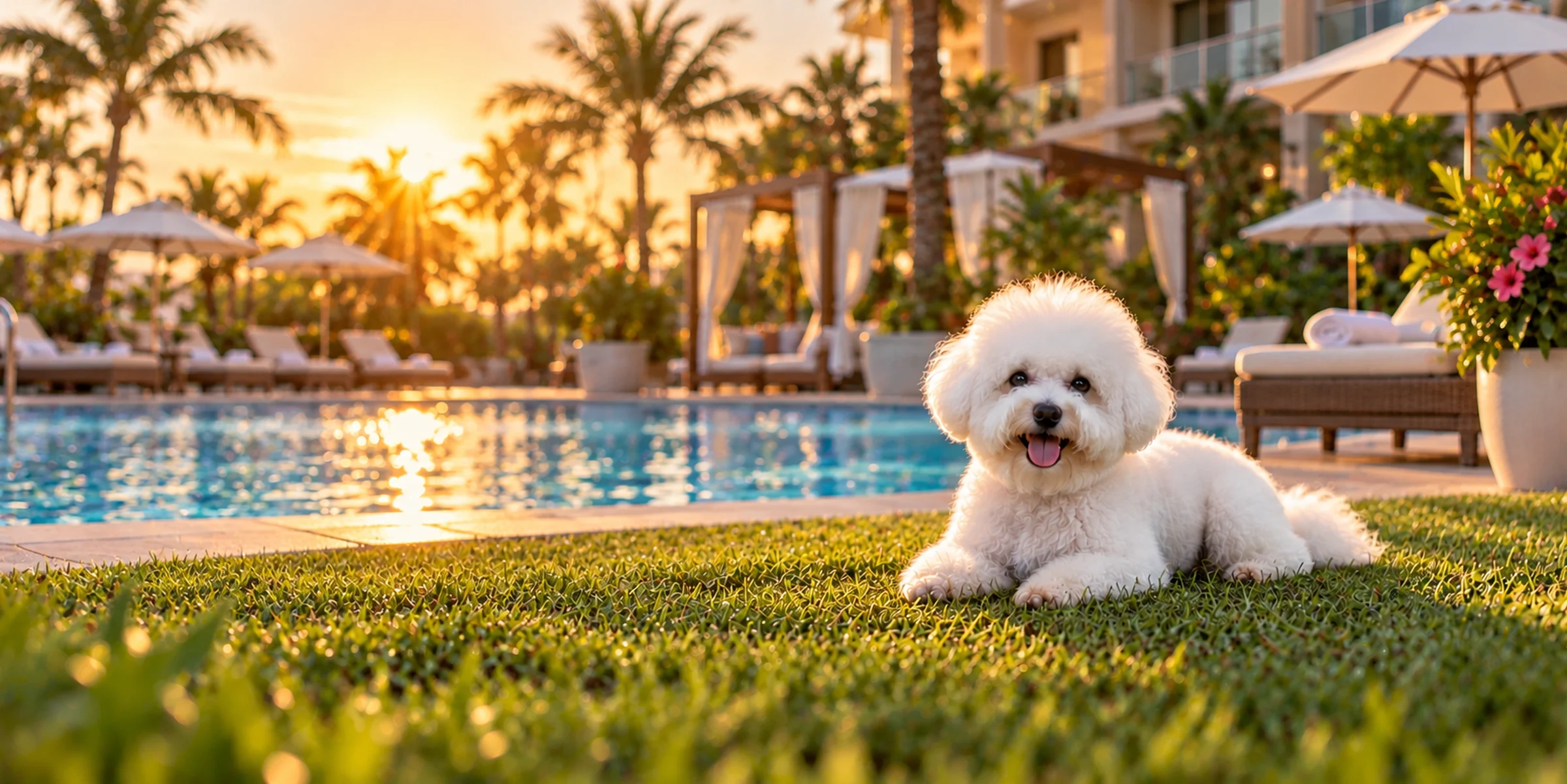
Bichon Frise
A related white companion breed with the same cheerful nature. The Bichon is larger and sturdier, with a curly coat that needs regular clipping; the Maltese is more fragile, with a silky coat that mats easily.

Havanese
Another affectionate toy with a long coat and a strong need for company. The Havanese is sturdier and usually steadier around children; the Maltese is smaller and more delicate.

Bolognese
A close Mediterranean cousin in the same white, low-shedding mold. The Bolognese is calmer and more reserved with strangers, and far harder to find; the Maltese is livelier and more outgoing.

Coton de Tulear
A white, fluffy companion from the same family of breeds. The Coton is larger, bouncier and more robust with children; the Maltese is the better fit for a quiet adult household.

Maltipoo
The Poodle cross, and much the same dog to live with - tiny, devoted, and carrying the same toy-breed dental disease. The coat still mats and still needs professional grooming; low shedding is not low maintenance.

Morkie
The Yorkshire Terrier cross, and a bolder, noisier dog than a Maltese on their own. Both parents are tiny and both carry dental disease, collapsing trachea and liver shunt risk, so the cross concentrates rather than dilutes them.