

small breed
Jack Russell Terrier
A working fox terrier kept deliberately outside the show ring for nearly two centuries, which is why a Jack Russell is still a genuine working dog in a thirteen-pound package. They are astonishingly energetic, extremely clever, fearless past the point of sense and loud with it. Chosen for the size rather than the character, they are one of the most commonly surrendered breeds there is, and the character is the part nobody was ready for.

Pup Height
10-15 in
One dog under three names. The Jack Russell Terrier Club of America keeps the working terrier at 10-15 in and has deliberately stayed outside the AKC. The AKC registers the short-legged type as the Russell Terrier - 10-12 in, built longer than tall, recognized in the Terrier Group in 2012 - and the FCI calls that same short-legged dog the Jack Russell Terrier. The taller, square Parson Russell Terrier, held to 13-14 in, is a separate breed. Predominantly white with black, tan or brown markings, in smooth, broken or rough coats. Source: Jack Russell Terrier Club of America breed standard and AKC Russell Terrier standard.

Pup Weight
13-17 lb

Pup Lifespan
13-16 years
Your pup, at a glance
What’s Life With This Pup Really Like?

High once the day's work is done - they are genuinely affectionate with their family, and an unexercised one is far too busy to settle.

Reasonable with older children who respect them. A Jack Russell has limited patience for rough handling and will snap rather than retreat, and their intensity suits calm households badly.

The weak point. They kill small animals as a matter of instinct and frequently pick fights with dogs several times their size.

High. They alert, demand and comment, and they respond to a trained quiet cue without ever becoming quiet.

The maximum on this site. Two hours daily with mental work, for the whole of a fifteen-year life.

Moderate, and more than the short coat suggests - the stiff white hairs weave into fabric.

The maximum. They play with total commitment, invent games constantly, and do not slow down until very late in life.

Very low.

Very good, and that cuts both ways - they learn what you teach and everything you did not mean to.

Strong as an alarm. Alert, fearless and loud, with nothing behind it at thirteen pounds.

Very low for smooth coats, low for broken and rough with occasional stripping.

Low. Their size suits almost any home and their energy and prey drive rule out most of them.
Lifestyle fit
Could This Be Your Best Breed?
A Jack Russell Terrier suits a house with fencing that goes down as well as up, an owner with two hours a day to spend on them, and no cats, rabbits or small pets in the picture. They cost almost nothing at $1,000 to $1,800 a year and live thirteen to sixteen years, a long run at that intensity. The people who give these up wanted a small, easy first dog and got a working terrier.

Living Space
A house with genuinely secure fencing - they dig under, climb over and squeeze through gaps that look impossible. Their size suggests an apartment and their energy rules one out for most owners.

Pup Experience
Not a beginner's small dog. They are brilliant, relentless and completely fearless, and the mismatch between what people expect from a thirteen-pound terrier and what a Jack Russell actually needs is the single biggest reason they end up in rescue.

Daily Pup Time
Ninety minutes to two hours daily with real mental work, every day, for fifteen years. The coat takes five minutes a week.

Allergies & Coat
The Jack Russell Terrier scores 5/10 for shedding and 2/10 for drooling. No dog is truly hypoallergenic. The allergens come from dander and saliva, and a dog that sheds this much will leave plenty of hair behind - especially on your furniture, floors, and clothes.
Quirks & challenges
The Not-So-Easy Stuff

Relentless Energy
Two hours daily with mental work. Under-exercised they are destructive, noisy and impossible to live with.
They Kill Small Animals
Bred to dispatch vermin underground. Cats, rabbits and rodents are not a training problem.
Escape Artist
They dig under, climb over and fit through gaps. Fencing has to be taken seriously.
Picks Fights Above Their Weight
Completely fearless and often confrontational with larger dogs. Supervision rather than optimism.
They Bark
Alerting and demanding both. Trainable down to manageable, never a quiet dog.
Chosen for the Wrong Reasons
Small and photogenic, and nothing like an easy pet. Rescues are full of them at eighteen months.
The good, the bad & the hairy
Health, Care & Costs
Understanding the health risks and ongoing costs of a Jack Russell Terrier helps you plan for a happy, healthy life together.

13-16 years
$35-$60
per groom (bath, nails, ears; stripping for rough coats), every 10-12 weeks or done at home ($0-$300/year)
$1,000-$1,800/year
all-in (food, routine vet, grooming, insurance, incidentals)

Health Risks
Conditions this breed is prone to.

Worth stating first. Deliberate breeding for work rather than appearance has kept this one of the soundest small breeds, with a long life and a short inherited-disease list.
The lens of the eye slips out of position, which is acutely painful and causes glaucoma and blindness if it is not treated quickly. It is common in working terrier breeds, it is an emergency when it happens, and it is DNA testable - a breeder who tests both parents removes the risk entirely.
The kneecap slips out of its groove, producing a skipping gait and sometimes needing surgery. Common in small breeds and screened by examining the parents.
Inherited neurological diseases causing progressive loss of coordination, appearing from a few months to a couple of years old. Both are DNA testable, and testing both parents removes the risk.
Linked to the predominantly white coat, as in other largely white breeds. BAER testing identifies it definitively in puppies, and a responsible breeder will have tested.
Not inherited, but the likeliest reason they see a vet. A dog with no sense of self-preservation goes down holes, takes on larger dogs and jumps from heights they should not - trauma is the recurring claim.

Insurance & Health Coverage
A healthy, cheap breed to keep, so the case for cover is mostly about accidents rather than illness - and Jack Russells generate more of those than their size suggests, because a fearless terrier takes risks a sensible dog would not.

Primary lens luxation is the medical one to understand. It is an emergency, treatment is expensive, and untreated it costs the eye. It is also congenital, so no policy pays for it - the protection is a DNA test on both parents, and the same applies to the two ataxias and to deafness.

Insure young for the ordinary reason: a patella note on a record becomes a permanent exclusion, and they may well be with you for sixteen years.
 Get a Pet Insurance Quote
Care needs
The Daily Routine

Grooming
Smooth coats need a weekly pass with a rubber mitt and nothing else; broken and rough coats want a brush twice a week and hand-stripping a couple of times a year. All three shed more than the short coat suggests. Nails need regular trimming on a dog this active, and check them over for cuts after any session underground or in cover.

Exercise
Ninety minutes to two hours daily, and the mental half is not optional. Earthdog, agility, flyball, scent games and long walks all suit them; a yard on its own achieves nothing.

Food & Weight
Two measured meals. They are lean, hard-muscled dogs who gain weight quietly when under-exercised, and extra weight on a terrier's joints is worth avoiding.
Similar breeds
If This Isn’t Quite the One

Parson Russell Terrier
The closest relative - the same Rev. John Russell origin and much the same drive, recognized by the AKC as a separate breed. The Parson Russell is longer-legged, square and held to a narrow 13-14 in; the Jack Russell runs shorter in the leg and longer in the body, and the AKC registers the short-legged type as the Russell Terrier.
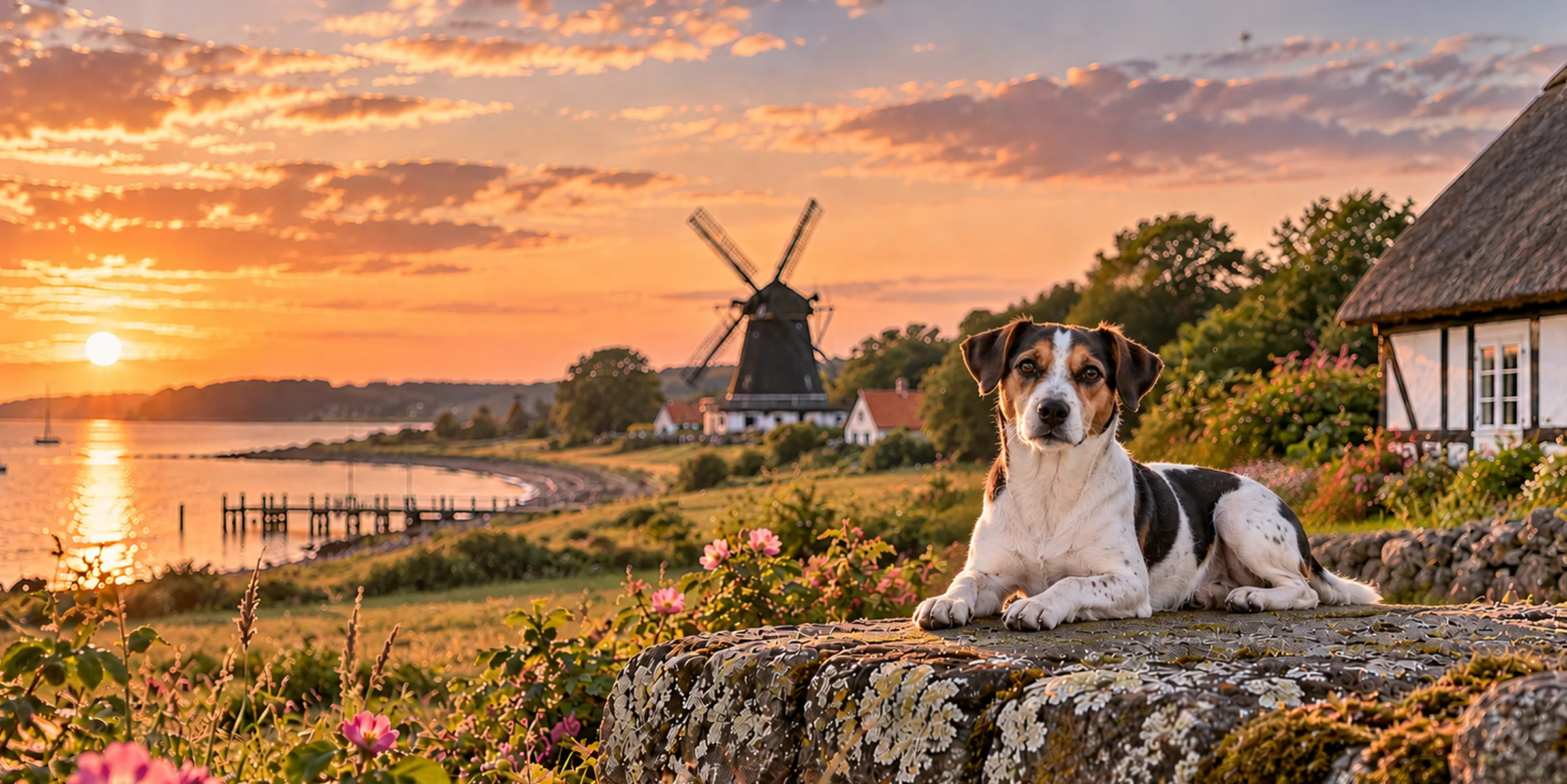
Danish-Swedish Farmdog
A similar-sized white-and-patched farm ratter that is frequently mistaken for this breed. The Farmdog is calmer, more biddable and far more sociable with other dogs; the Jack Russell is harder-driving and more confrontational.

Border Terrier
Another working terrier of comparable size with a much more even temperament. The Border is the one to choose if the terrier character appeals but two hours a day and the dog aggression do not.

Jagdterrier
The German working terrier bred for the same underground job and never softened for the show ring. Jagdterriers are harder again - dog-aggressive, immensely game, and placed by most breeders only with hunters who will performance-test them.