

medium breed
Karelian Bear Dog
Finland's bear dog, and the description is literal: Karelians find moose and bear, hold them in place by barking and dodging, and keep it up until a hunter arrives. Wildlife agencies still use them to push bears back out of towns. In a house they are clean, quiet and steady once the day's work is done, which is the trap - the work is two hours of genuine effort, not a walk around the block.

Pup Height
19-23.5 in
Males 21-23.5 in, females 19-21.5 in. Always black with clearly defined white markings on the head, neck, chest, belly and legs - the black often carries a brownish cast, which is correct rather than a fault. A dense northern double coat, prick ears and a tail curled over the back. In the AKC's Foundation Stock Service. Source: AKC Foundation Stock Service breed standard.

Pup Weight
44-50 lb

Pup Lifespan
11-13 years
Your pup, at a glance
What’s Life With This Pup Really Like?

Moderate. They are loyal and attached to their own person in an undemonstrative way, and they are not dogs who seek out laps.

Mixed. Steady with children in their own household when raised with them, and a Karelian's intensity, prey drive and reserve make them a poor choice for a family looking for a pet.

The weak point on this site. Serious dog aggression, extreme prey drive, and no realistic prospect of living with cats or livestock.

High. Baying at held game is the working function, it carries a long way, and it cannot be trained out.

Very high. Two hours of hard work daily, and physical exercise alone does not substitute for the job.

Heavy. A dense northern double coat that sheds year-round and blows out completely twice a year.

Moderate and serious. They play with their own people and treat most of life as work rather than fun.

Very low.

Low. Bred to operate independently against dangerous animals - they cooperate on their own terms and never become reliable under distraction.

Very strong. Alert, territorial, physically fearless and extremely vocal about anything approaching.

Low. A weekly brush and seasonal de-shedding, with the post-work injury check being the routine that actually matters.

Very low - among the lowest here. They need land, work, secure containment and no other dogs, and nothing substitutes for any of it.
Lifestyle fit
Could This Be Your Best Breed?
A Karelian Bear Dog belongs with a hunter or a working handler, on land with serious fencing and neighbors at a distance, and usually as the only dog in the household. At $1,400 to $2,400 a year they are not expensive to keep; the cost is measured in hours, two a day for eleven to thirteen years. A suburban street is where this one comes apart, and it comes apart loudly.

Living Space
Land, serious fencing and neighbors at a distance. Karelians bay at held game, roam if they can, and are often intolerant of other dogs - none of which suits a suburban street.

Pup Experience
Experienced working-dog owners, and realistically hunters or handlers. Karelians are bold, independent and hardwired to confront large animals, and the dog aggression is a management problem rather than a training one.

Daily Pup Time
Two hours minimum of hard work daily with real mental engagement. Grooming is a weekly brush and daily work during the dramatic twice-yearly blowouts.

Allergies & Coat
The Karelian Bear Dog scores 8/10 for shedding and 2/10 for drooling. No dog is truly hypoallergenic. The allergens come from dander and saliva, and a dog that sheds this much will leave plenty of hair behind - especially on your furniture, floors, and clothes.
Quirks & challenges
The Not-So-Easy Stuff

Serious Dog Aggression
Same-sex conflict is close to expected and they do not back down. Usually best as the only dog.
Bred to Bay
Continuous barking at held game is the job. It carries, and it is not trainable out.
Extreme Prey Drive
They were bred to confront bear and moose. Livestock, cats and small animals are not manageable.
Independent to a Fault
They work out of contact with a handler by design. Recall is effectively unachievable.
They Roam
Given a gap they will cover miles. Containment has to be genuinely secure.
Not a Pet Breed
Finnish breeders place almost exclusively with hunters, and the dog does badly without the work.
The good, the bad & the hairy
Health, Care & Costs
Understanding the health risks and ongoing costs of a Karelian Bear Dog helps you plan for a happy, healthy life together.

11-13 years
$50-$80
per groom (bath, full blow-out, de-shed, nails, ears), every 10-12 weeks or done at home ($0-$350/year)
$1,400-$2,400/year
all-in (food, routine vet, grooming, insurance, incidentals)

Health Risks
Conditions this breed is prone to.

Worth stating first. Finnish breed clubs have kept this a working population with performance and health requirements, and functional selection against a genuinely dangerous job leaves very little room for unsoundness - the inherited-disease list is among the shortest here.
The hip joint develops loosely so the ball wears in the socket instead of gliding, leading to arthritis. Present at low rates because of the club screening, and both parents should still have scored hips.
Progressive retinal atrophy and cataracts both appear at low rates. PRA is DNA testable in the parents; annual eye examination catches cataracts early.
By far the most likely reason they see a vet, and the reason is unusual - a dog whose job is to close with bear and moose takes injuries from the quarry itself, not just from the terrain. Punctures, crush injuries and lacerations are occupational, and they are serious when they happen.
Not inherited, but a real recurring cost. A bold dog with genuine same-sex aggression collects bite wounds, and those are expensive and infection-prone.
A practical rather than a pathological problem. A dense northern double coat means they overheat easily, and the coat must never be shaved because it insulates in both directions.

Insurance & Health Coverage
A sound breed with cheap upkeep, so the illness side is light and premiums should be reasonable.

What you are insuring is trauma, and an unusual amount of it. This is the only breed on this site whose working injuries come from the quarry fighting back - bear and moose do real damage, and a policy that excludes injuries sustained while hunting removes essentially everything you would claim for. Read that clause specifically rather than assuming.

Bite wounds from dog fights are the other recurring category, and a few insurers exclude injuries arising from altercations with other dogs. Worth checking both exclusions in writing before you buy a policy, because between them they could cover most of this breed's realistic claims.
 Get a Pet Insurance Quote
Care needs
The Daily Routine

Grooming
A dense double coat that needs a weekly brush most of the year and daily attention for several weeks in spring and fall when the undercoat lets go completely. The coat is self-cleaning and needs no trimming or shaving. The routine that matters more is the post-work check: punctures, lacerations and thorn damage after any hunting day.

Exercise
Two hours minimum daily of genuine work. Hunting, tracking, long hikes over rough ground and scent work all suit them; a large yard achieves nothing, and an unworked Karelian is a difficult dog.

Food & Weight
Two measured meals scaled to the work. They are lean and efficient by build and burn heavily when working, far less when not - feed the dog in front of you rather than the breed average.
Similar breeds
If This Isn’t Quite the One
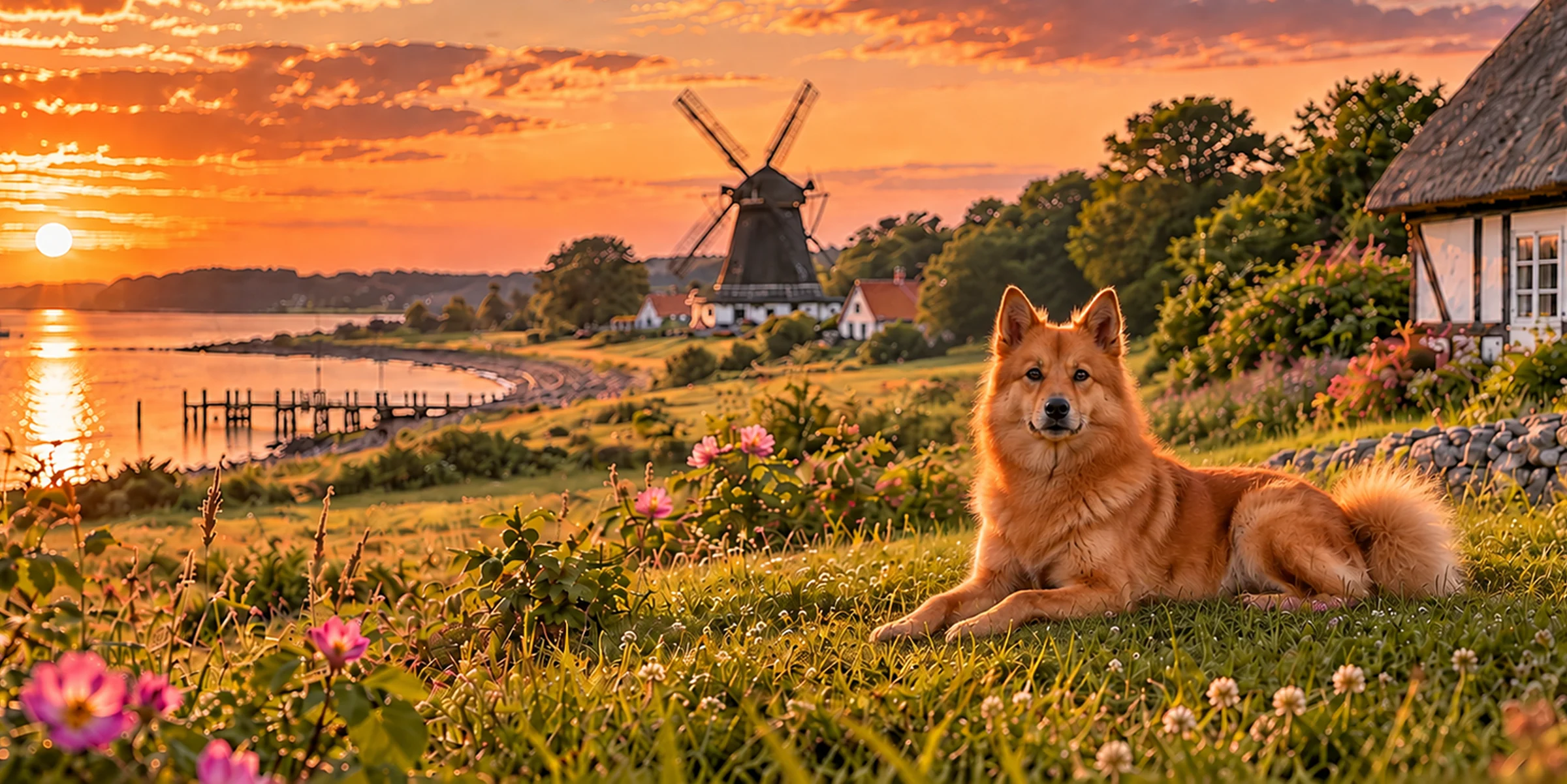
Finnish Spitz
The other Finnish barking hunter, and a far more livable dog. The Finkie bays birds into trees and can live in a house; the Karelian bays bears and generally cannot.
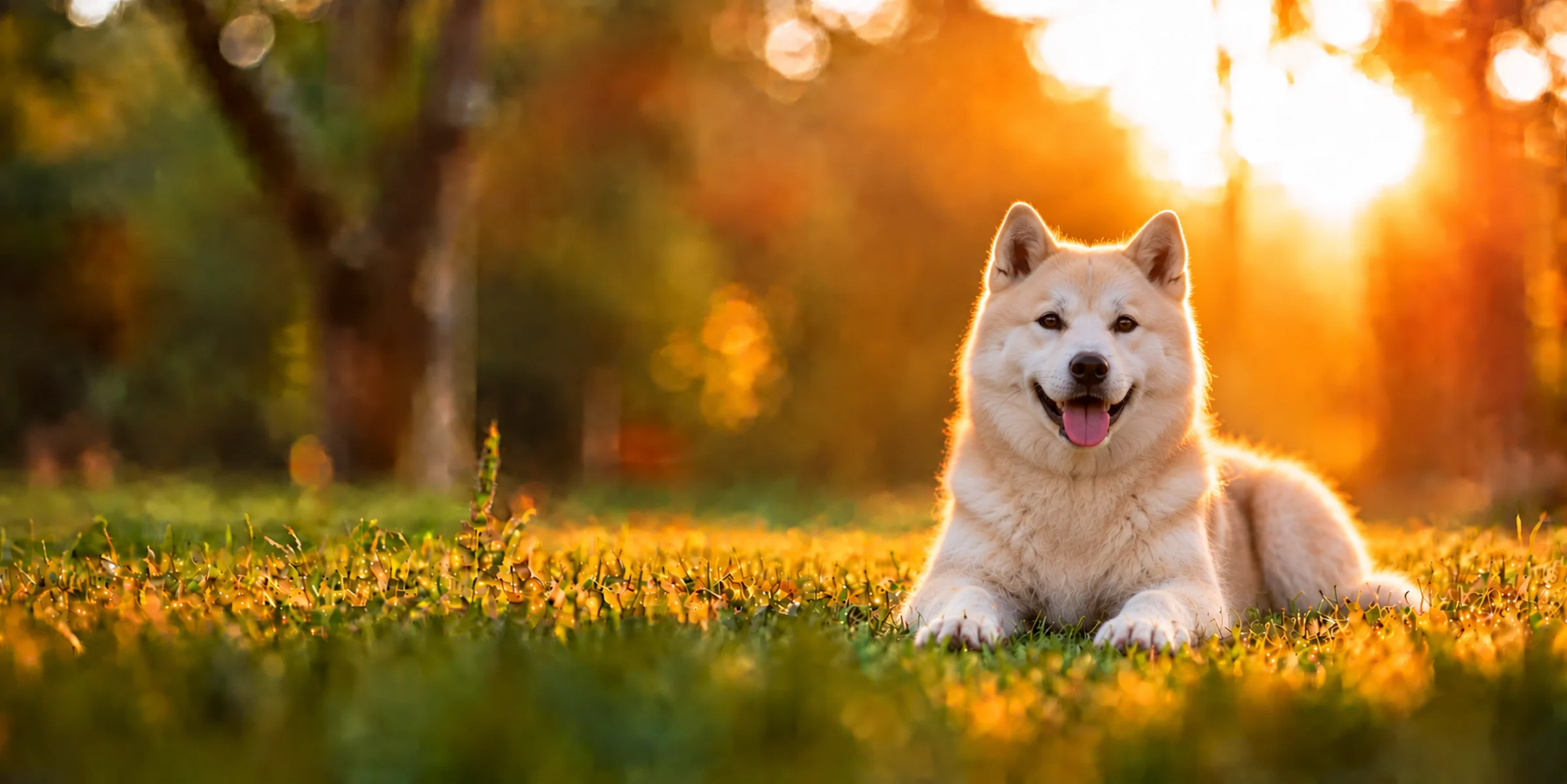
Hokkaido
Another primitive spitz bred to hold large game - same courage, same independence, same prey drive. The Hokkaido is somewhat more tractable and less dog-aggressive; the Karelian is the harder proposition.