

medium breed
Keeshond
The largest of the German spitz family, which is why the Keeshond is the Wolfsspitz in Europe and a separate breed to the AKC. The coat is a mix of gray, black and cream with the guard hairs black-tipped, and the breed's signature is the 'spectacles' - a pale line and shading running from the outer eye corner toward the ear, which the standard treats as essential. Named for Cornelis de Gyselaer, whose dog became the emblem of the Dutch Patriot party. Source: AKC breed standard.
A medium-sized, plush-coated family dog with a deep ruff, a curled tail and the spectacle markings around the eyes, wrapped around an unusually forgiving temperament - good with children, easy with other animals and happy to learn. Two things get underestimated. The coat blows out twice a year in a way that reaches every room, and the voice gets used freely, at volume, for anything moving outside.

Pup Height
17-18 in

Pup Weight
35-45 lb

Pup Lifespan
12-15 years
Your pup, at a glance
What’s Life With This Pup Really Like?

Very high. They are affectionate and physically close with the whole family and want to be in whatever room the people are.

Excellent. Cheerful, patient and sturdy, with no herding instinct to redirect and no sharpness at all.

Very good. Sociable with dogs and generally fine with cats, with a mild prey drive and no territorial streak.

High. They were barge watchdogs and announce everything - reducible with a trained quiet cue, never removable.

Moderate. An hour with mental work suits them, and they settle genuinely well indoors afterward.

Very heavy - among the worst on this site. A dense undercoat that sheds year-round and blows out completely twice a year.

Lively and comic. They play enthusiastically well into adulthood and enjoy learning tricks.

Very low.

Excellent. Bright, willing and food-motivated - one of the easier spitz breeds to teach.

Strong as an alarm. Alert, very quick to announce and hard to sneak past, with no inclination to escalate.

High. Twice-weekly deep brushing, daily during the blowouts, and no clipping.

Good. Apartments and houses suit them equally, provided the coat is managed and the neighbors tolerate the barking.
Lifestyle fit
Could This Be Your Best Breed?
A Keeshond fits an apartment or a house, a family with children and a first-time owner - an hour a day, $1,400 to $2,300 a year, and twelve to fifteen years of a dog who wants to be in whichever room you are. Nobody should bring one home expecting a quiet dog or a tidy floor: the barking is old work still being done, and the undercoat arrives twice a year in drifts.

Living Space
Apartment or house, either works on size and temperament. The barking is the practical constraint - Keeshonden were barge watchdogs and they announce everything, so thin walls matter more than square footage.

Pup Experience
Very good for a first-time owner. They are bright, biddable, sociable and forgiving; the two things that catch people out are the barking and the twice-yearly shed, both of which are substantial.

Daily Pup Time
An hour of walking and play with something to think about. Grooming is a thorough brush twice a week and daily during the blowouts.

Allergies & Coat
The Keeshond scores 9/10 for shedding and 2/10 for drooling. No dog is truly hypoallergenic. The allergens come from dander and saliva, and a dog that sheds this much will leave plenty of hair behind - especially on your furniture, floors, and clothes.
Quirks & challenges
The Not-So-Easy Stuff

They Bark a Lot
Watchdog by breeding and enthusiastic about it. Trainable down to manageable, never quiet.
Enormous Shedding
A dense double coat that blows out twice a year in sheets. Nothing prevents it.
Never Shave the Coat
It insulates against heat as well as cold, and clipped spitz coats often regrow badly.
Poor Alone
Bred to live alongside people in a small space. Long days by themselves go badly.
Hyperparathyroidism
A breed-specific inherited condition with a DNA test. Ask the breeder for both parents' results.
Poor in Heat
A thick northern coat. Summer exercise at dawn and dusk only.
The good, the bad & the hairy
Health, Care & Costs
Understanding the health risks and ongoing costs of a Keeshond helps you plan for a happy, healthy life together.

12-15 years
$70-$110
per groom (bath, full blow-out, de-shed, nails, ears), every 8-10 weeks ($400-$700/year)
$1,400-$2,300/year
all-in (food, routine vet, grooming, insurance, incidentals)

Health Risks
Conditions this breed is prone to.

A breed-specific inherited condition in which a parathyroid gland overproduces, raising blood calcium and causing thirst, weakness, kidney damage and stones - usually in middle-aged dogs. The Keeshond is the breed it is associated with, and there is a DNA test, so a breeder who tests both parents removes the risk entirely. Ask for the certificates rather than a reassurance.
The hip joint develops loosely and wears into arthritis; the kneecap slips out of its groove causing a skipping gait. Both appear at moderate rates and both are screened by examining the parents.
Seizures with no other underlying cause, usually first appearing between one and five years old. Controlled with daily medication rather than cured, and the drugs and monitoring are a lifelong cost.
The thyroid under-produces, causing weight gain, lethargy and coat and skin problems. Common in the breed, diagnosed by blood test, and controlled with an inexpensive daily tablet.
A coat condition seen in plush-coated spitz breeds, in which hair is lost symmetrically from the body while the head and legs stay normal. It is cosmetic rather than painful, has no reliable cure, and is one reason the coat should never be shaved.
The lens clouds and vision declines, sometimes in young dogs. Annual eye examination catches it, and surgery is available where it is significant.

Insurance & Health Coverage
A comparatively healthy breed, so the case for cover is largely the ordinary one plus one breed-specific item.

Primary hyperparathyroidism is that item, and it is worth understanding before you commit rather than after. It is congenital, so no policy pays for it, and it is DNA testable in both parents - which makes the breeder's paperwork the actual protection. Untreated it damages the kidneys, and surgery plus monitoring is not cheap.

Insure young for the ordinary reasons: joint notes and epilepsy diagnoses both become permanent exclusions, and epilepsy in particular is managed for life, so check how a policy handles chronic conditions across renewal years.
Grooming is the recurring uninsurable cost, and on this coat it is a real annual figure.
 Get a Pet Insurance Quote
Care needs
The Daily Routine

Grooming
A dense stand-off double coat that needs a thorough brush right down to the skin twice a week - the surface looks fine while mats form underneath, particularly in the ruff and trousers. Daily attention for several weeks in spring and fall when the undercoat lets go completely. No trimming beyond tidying the feet, and never shave the coat.

Exercise
About an hour daily with mental work in it. Agility, rally and training games suit them as well as walking, and the thinking half does as much to settle them as the physical.

Food & Weight
Two measured meals. Keeshonden are moderate feeders and the coat hides weight gain completely, so go by feel through the ribs rather than by eye.
Similar breeds
If This Isn’t Quite the One
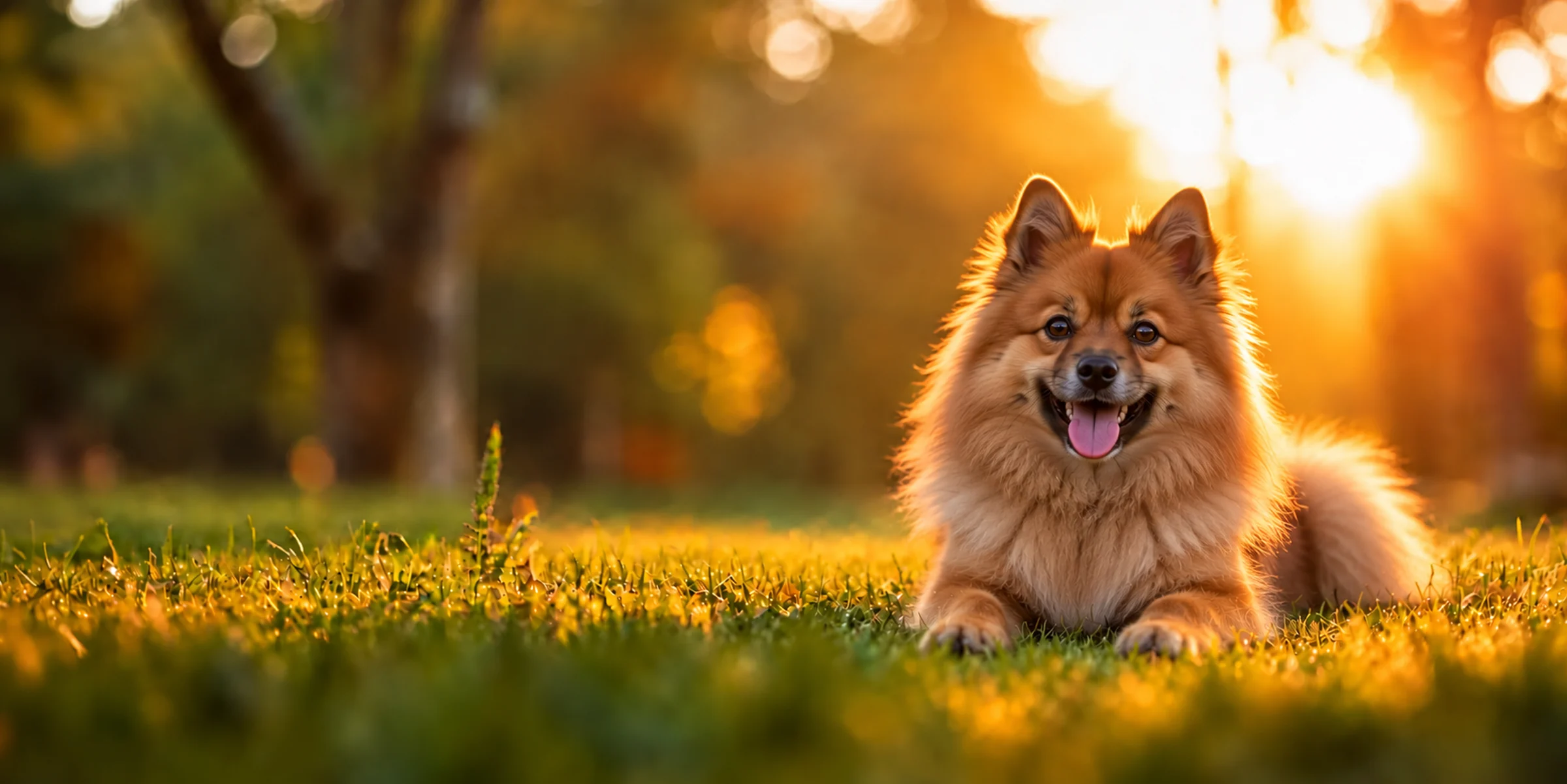
German Spitz
The same breed family - in Europe the Keeshond is simply the largest German Spitz size. The German Spitz is smaller and comes in many colors; the Keeshond is fixed to the wolf-gray pattern with spectacles.
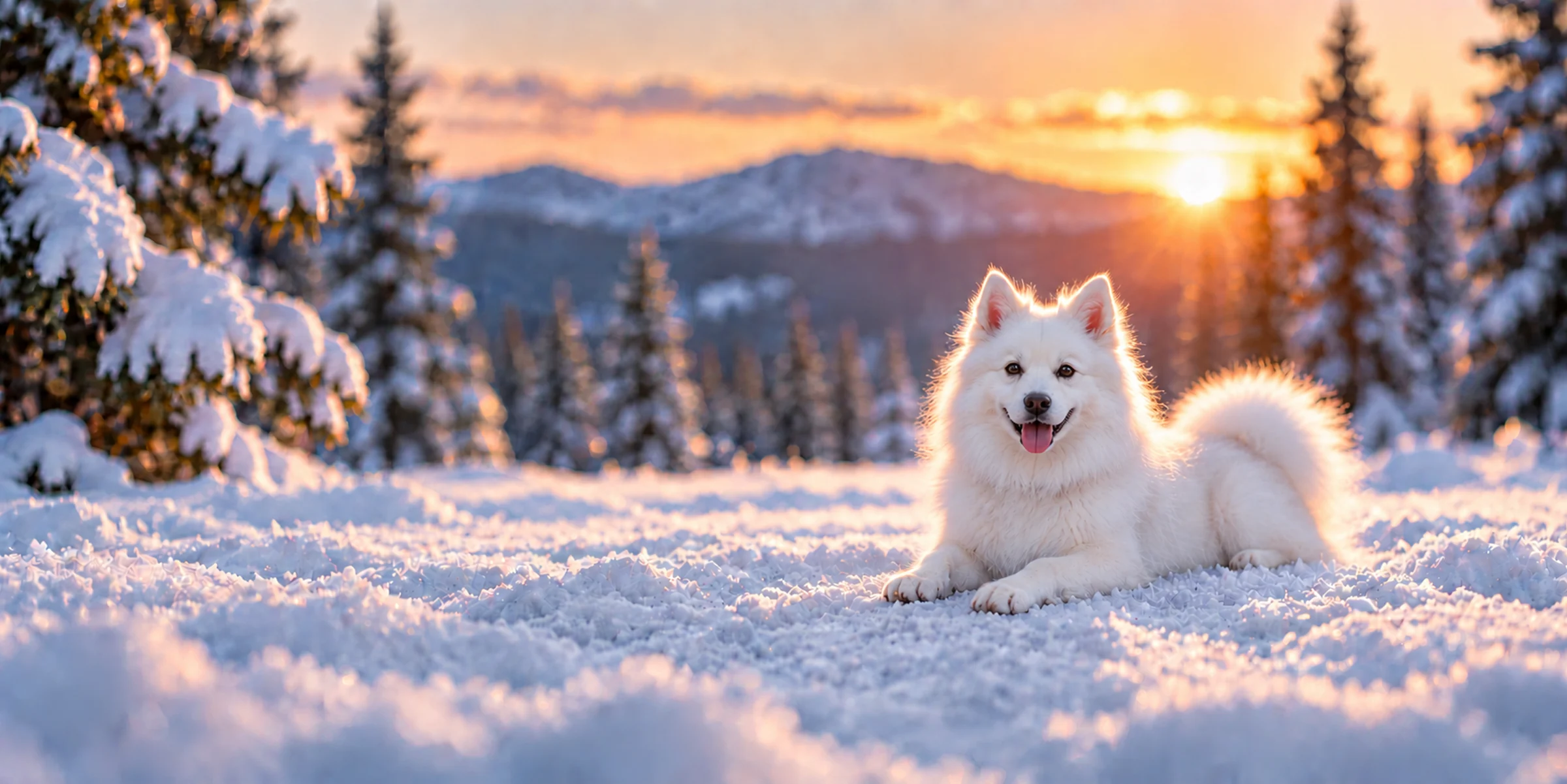
American Eskimo Dog
A comparable friendly spitz of similar size with the same heavy coat and strong voice. The Eskie is white and a touch more excitable; the Keeshond is calmer and more biddable.