

small-to-medium breed
German Spitz
The AKC recognizes the Mittel (medium) size, currently in its Miscellaneous Class. In Europe the German Spitz is one breed in five sizes - Wolfsspitz/Keeshond, Grossspitz, Mittelspitz, Kleinspitz and Zwergspitz/Pomeranian - which is why the Keeshond and the Pomeranian are separate AKC breeds but the same family here. A harsh standoff coat over thick undercoat, in any color. Source: AKC Foundation Stock Service breed standard.
A small, thickly coated European watchdog with a long history and a naming problem: the AKC recognizes the medium size, while the Keeshond and the Pomeranian are the same breed at the two ends of the range. German Spitz are lively, affectionate, remarkably trainable and extremely vocal. They shed heavily twice a year, the coat must never be shaved, and they are long-lived - thirteen to sixteen years is normal.

Pup Height
12-15 in

Pup Weight
21-29 lb

Pup Lifespan
13-16 years
Your pup, at a glance
What’s Life With This Pup Really Like?

High. They are affectionate and attached to their household, happy on a lap, and keen to be in whatever room the people are.

Very good with considerate children - playful and sturdy for their size, though small enough that toddlers need supervising for the Spitz's sake.

Good. Sociable with dogs and generally fine with cats, with a modest prey drive.

Very high. They were bred for centuries to sound the alarm and they are extremely good at it - reducible with training, never removable.

Moderate. An hour with mental work suits them and they settle well indoors afterward.

Heavy. A dense double coat that sheds year-round and blows out completely twice a year.

Lively and inventive. They play enthusiastically, learn tricks quickly and keep a puppyish streak for years.

Minimal.

Good. Bright, quick and food-motivated, and sensitive enough that gentle methods work far better than pressure.

Strong as an alarm. Alert, quick to announce and genuinely hard to sneak past, with nothing behind it at twenty-five pounds.

Moderate to high. Twice-weekly deep brushing, daily during the blowouts, and no clipping.

Good. They suit apartments and houses alike and handle cold well, provided the neighbors can live with the barking.
Lifestyle fit
Could This Be Your Best Breed?
A German Spitz fits an apartment or a house equally well on size, and suits an owner who wants an alert, chatty companion and can live with a dog who announces every arrival. They cost $1,100 to $1,900 a year to keep. Thin walls make every arrival a neighbor's problem, a hot climate is hard on that coat, and the hair comes out twice a year regardless - three reasons to pick a different small dog.

Living Space
Apartment or house both work on size, and the barking is the real constraint. German Spitz are watchdogs by centuries of breeding and they announce everything - thin walls make that everyone's problem.

Pup Experience
Fine for a first-time owner who wants an alert, chatty dog. They are bright and easy to teach; the barking and the coat are what catch people out rather than anything about temperament.

Daily Pup Time
Forty-five minutes to an hour of walking and play with some thinking in it. Grooming is a thorough brush twice a week and daily during the seasonal blowouts.

Allergies & Coat
The German Spitz scores 8/10 for shedding and 1/10 for drooling. No dog is truly hypoallergenic. The allergens come from dander and saliva, and a dog that sheds this much will leave plenty of hair behind - especially on your furniture, floors, and clothes.
Quirks & challenges
The Not-So-Easy Stuff

They Bark a Lot
Centuries of watchdog breeding. Trainable down to manageable with a quiet cue, never a quiet dog.
Heavy Seasonal Shedding
A dense double coat that blows out twice a year in sheets. Nothing prevents it.
Never Shave the Coat
It insulates against heat as well as cold, and clipped spitz coats often regrow badly.
Naming Confusion
Keeshond, Pomeranian and German Spitz are one breed in Europe and three in the AKC. Know which you are getting.
Small-Dog Syndrome
Bright enough to run the house if nobody else does. Hold them to normal rules.
Poor in Heat
A thick northern coat on a small frame. Summer walks at dawn and dusk.
The good, the bad & the hairy
Health, Care & Costs
Understanding the health risks and ongoing costs of a German Spitz helps you plan for a happy, healthy life together.

13-16 years
$55-$85
per groom (bath, full blow-out, de-shed, nails, ears), every 8-10 weeks ($300-$550/year)
$1,100-$1,900/year
all-in (food, routine vet, grooming, insurance, incidentals)

Health Risks
Conditions this breed is prone to.

Worth stating first. The German Spitz has been bred as a functional farm dog rather than a fashionable one, and they carry fewer inherited problems than most small breeds, with a long average life.
The kneecap slips out of its groove, producing a skipping gait and sometimes needing surgery. It is the most common orthopedic issue in the breed, as in most small dogs, and is screened by examining the parents.
The retina degenerates gradually until the dog is blind, usually starting with night vision. There is no treatment and a DNA test exists, so tested parents remove the risk entirely.
Seizures with no other underlying cause, usually first appearing between one and five years old. Controlled with daily medication rather than cured, and the drugs and monitoring are a lifelong cost.
A small jaw means crowding and tartar, and it is the most common ordinary health problem in the breed. Daily brushing and regular professional cleanings keep it manageable over a long life.
A coat condition seen in plush-coated spitz breeds, in which hair is lost symmetrically from the body while the head and legs stay normal. It is cosmetic rather than painful, has no reliable cure, and is one reason the coat should never be shaved.

Insurance & Health Coverage
An easy and inexpensive breed to insure - a short inherited-disease list, low routine costs and a long life.

Insure young for the usual reason: patellar luxation and epilepsy both tend to appear in young adults, and either one on a record becomes a permanent exclusion for everything downstream of it.

Two costs sit outside any policy. Dental work under anesthesia every year or two is excluded as routine by most insurers and is the most predictable veterinary expense this breed will generate - read that section of the wording rather than assuming. And grooming a dense double coat for fifteen years adds up to real money that no policy touches.
 Get a Pet Insurance Quote
Care needs
The Daily Routine

Grooming
A harsh standoff coat over a thick undercoat that needs a thorough brush right down to the skin twice a week, and daily attention for several weeks in spring and fall when the undercoat lets go completely. Work through the ruff and the trousers where mats form first. No trimming beyond tidying the feet, and never shave the coat - it regulates temperature in both directions and often regrows poorly.

Exercise
Forty-five minutes to an hour daily with some thinking in it. Agility, trick training and scent games suit them as well as walking, and the mental half does more to settle them than extra distance.

Food & Weight
Two measured meals. They are small and the coat hides weight gain completely, so go by feel through the ribs and count the training treats.
Similar breeds
If This Isn’t Quite the One

American Eskimo Dog
The closest match - descended from the same German spitz stock, similar size, same coat and the same strong voice. The Eskie is more common in the United States; the German Spitz is the older type and comes in more sizes.
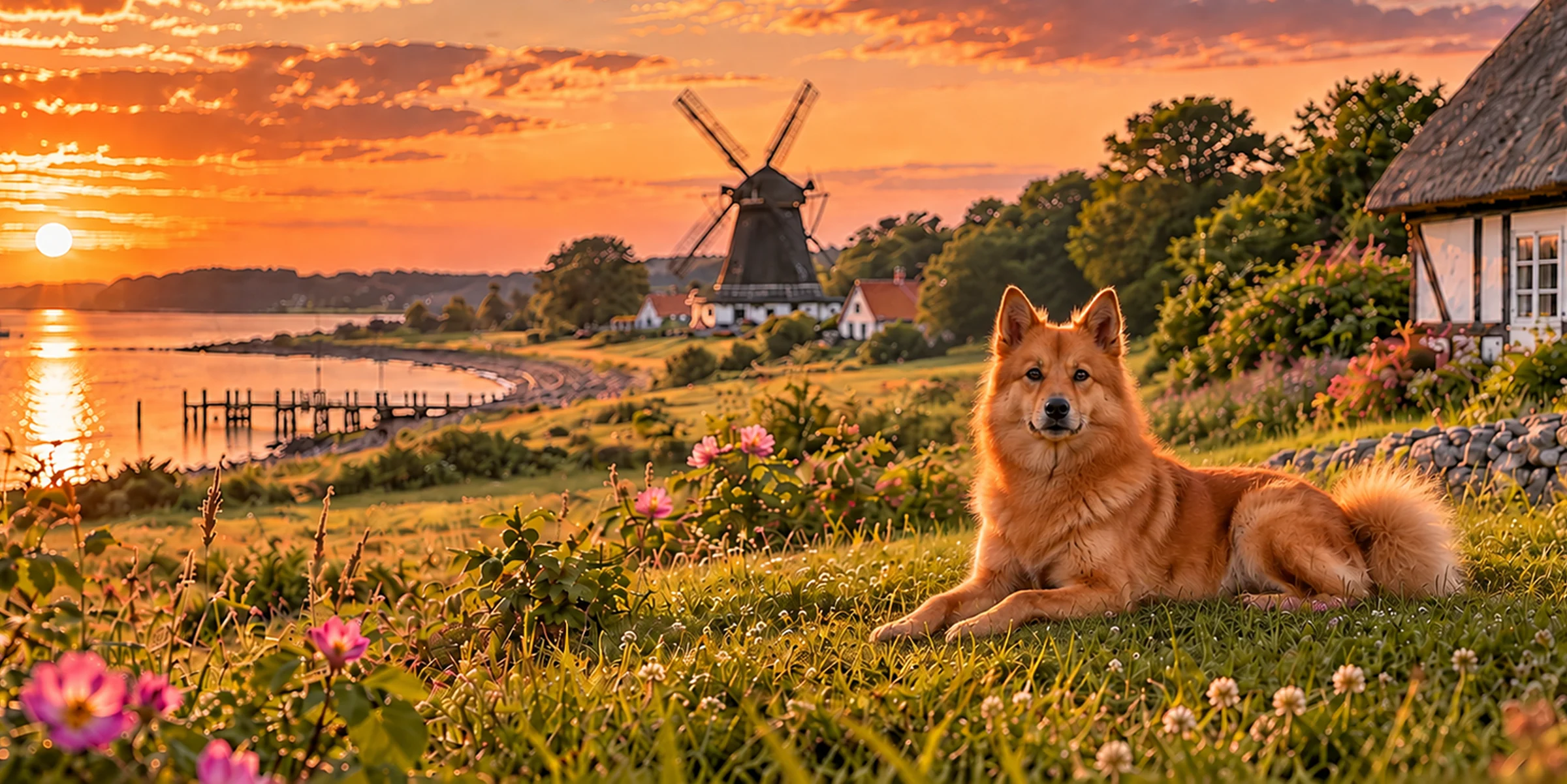
Finnish Spitz
Another vocal northern spitz of comparable size, and a useful contrast. The Finkie is a hunting dog, more independent and considerably louder; the German Spitz is more biddable and more of a companion.

Pomeranian
The same breed at the smallest end - in Europe the Pomeranian is the Zwergspitz. The Pomeranian is a true toy, more fragile and prone to knee and windpipe trouble; the German Spitz is sturdier, better with children and just as vocal.