

medium-to-large breed
Large Munsterlander
Always black and white - a solid black head, and a body that is white with black patches, ticking or roan. In the AKC's Foundation Stock Service. Source: AKC Foundation Stock Service breed standard.
A German versatile gundog that exists because of a color rule: when the German Longhaired Pointer registry closed to anything but brown in 1909, breeders kept the black-and-whites going as a breed of their own. Large Munsterlanders point, retrieve on land and water, and track wounded game, and at home they are gentle and easy once the day has been earned. Almost every one bred today comes out of a hunting line.

Pup Height
23-25.5 in

Pup Weight
50-70 lb

Pup Lifespan
11-13 years
Your pup, at a glance
What’s Life With This Pup Really Like?

High. They are affectionate and companionable at home, and notably settled indoors once the day's work has happened.

Excellent. Gentle, patient and sturdy, with the even temperament a century of performance testing selects for.

Very good with dogs, having been bred to work alongside them. Cats depend on socialization and the prey drive is real.

Low. They are quiet dogs at home who give tongue on a track rather than around the house.

Very high. Two hours of real work daily, and the mental half matters as much as the physical.

Moderate. The feathering sheds steadily with heavier seasonal turns and needs brushing rather than trimming.

Enthusiastic and tireless, especially retrieving and in water. They play the way they work.

Very low.

Excellent. Attentive, willing and cooperative, and soft enough that gentle methods get far more than pressure.

Moderate. They announce arrivals and have no real guarding instinct behind it.

Moderate. Twice-weekly brushing plus the post-outing seed, ear and injury check that is the routine that actually matters.

Low. They need land, work and preferably a hunting handler, and they do badly in any household that cannot supply them.
Lifestyle fit
Could This Be Your Best Breed?
A Large Munsterlander suits a hunter, or a household that will run field work, tracking and water retrieving as a hobby with the same seriousness - two hours of scent-led work daily, on real ground rather than a suburban yard. They are affordable at $1,400 to $2,400 a year over eleven to thirteen years, and superb with children. Unless that work is going to happen every day, in the rain as well, do not.

Living Space
Land, or a house with real ground to run on. Large Munsterlanders are full working versatile gundogs still bred almost entirely for hunting, and a suburban yard does not come close.

Pup Experience
Better for owners with working-gundog experience, and ideally hunters. Large Munsterlanders are biddable and easy to teach - the difficulty is that German and British breed clubs produce these dogs for live work, and the drive is real and constant.

Daily Pup Time
Two hours minimum of hard work daily with scent work in it. Grooming is a thorough brush twice a week plus weekly ear care.

Allergies & Coat
The Large Munsterlander scores 5/10 for shedding and 2/10 for drooling. No dog is truly hypoallergenic. The allergens come from dander and saliva, and a dog that sheds this much will leave plenty of hair behind - especially on your furniture, floors, and clothes.
Quirks & challenges
The Not-So-Easy Stuff

They Need to Hunt
Bred and still tested on live work. Without real scent work and retrieving they do not settle.
Very High Exercise Needs
Two hours of hard work daily. A long walk is not a substitute for a job.
Hard to Find
Few outside Germany and Britain, and clubs often place puppies only with hunting homes.
Scent Beats Recall
A pointing dog ranging on a line is only partly listening. Long lines and secure ground.
Ears Need Weekly Work
Feathered drop ears on a dog who works water. Neglect turns infection chronic.
Seeds in the Feathering
Grass seeds work into the leg and ear furnishings after every outing in cover.
The good, the bad & the hairy
Health, Care & Costs
Understanding the health risks and ongoing costs of a Large Munsterlander helps you plan for a happy, healthy life together.

11-13 years
$50-$80
per groom (bath, feathering tidy, ears, nails), every 8-12 weeks or done at home ($0-$400/year)
$1,400-$2,400/year
all-in (food, routine vet, grooming, insurance, incidentals)

Health Risks
Conditions this breed is prone to.

Worth stating first. German and British clubs have required health screening and working tests before breeding for over a century, and the breed has never been popular enough to be bred carelessly - the inherited-disease list is genuinely short.
The hip joint develops loosely so the ball wears in the socket instead of gliding, leading to arthritis and sometimes surgery. Rates are low by large-gundog standards because of the club requirements, and both parents should still have scored hips.
Feathered drop ears trap warmth and moisture against the canal, and a dog working water makes it worse. Weekly checking, cleaning and drying is the whole prevention; ignored it becomes chronic.
Cartilage in a joint - usually the shoulder - fails to develop properly and a flap separates, causing lameness in young growing dogs. Over-feeding and over-exercising a puppy make it considerably more likely.
The most likely reason they see a vet, and not inherited. A large dog running rough cover collects cuts, torn pads, grass seeds in the feathering and the occasional torn cruciate - a repair runs into the thousands.
The stomach fills with gas and twists, cutting off its own circulation, and it kills within hours without emergency surgery. Deep-chested and at real risk - split meals and keep hard exercise clear of them.

Insurance & Health Coverage
A healthy breed with a century of club-enforced testing behind it, so the illness side is light and premiums should be reasonable.

What you are insuring is trauma. A large gundog working heavy cover and water collects punctures, lacerations and torn ligaments, and those are the claims that arrive. Accident cover earns its keep here more than illness cover - and check whether the policy excludes injuries sustained while hunting or working, because several do and that exclusion removes exactly the cover this dog needs.

Bloat is the emergency to plan for rather than insure against alone. Ear infections are the steady drip underneath: never large, never finished.
 Get a Pet Insurance Quote
Care needs
The Daily Routine

Grooming
A medium-length coat with feathering on the ears, chest, legs and tail that needs a thorough brush twice a week - mats form fastest behind the ears and in the trousers. Very little trimming is wanted. The routine that matters is the post-outing check: grass seeds out of the feathering and between the toes, ears cleaned and dried, and a look over for cuts picked up in cover.

Exercise
Two hours minimum daily, and the scent half is not optional. Field work, tracking, water retrieving and long hikes all suit them; distance walking alone does not touch a dog bred to solve scent problems for hours.

Food & Weight
Two measured meals scaled to the work, with hard exercise kept clear of them given the bloat risk. A working Munsterlander burns a great deal and an idle one far less, so feed the dog in front of you.
Similar breeds
If This Isn’t Quite the One
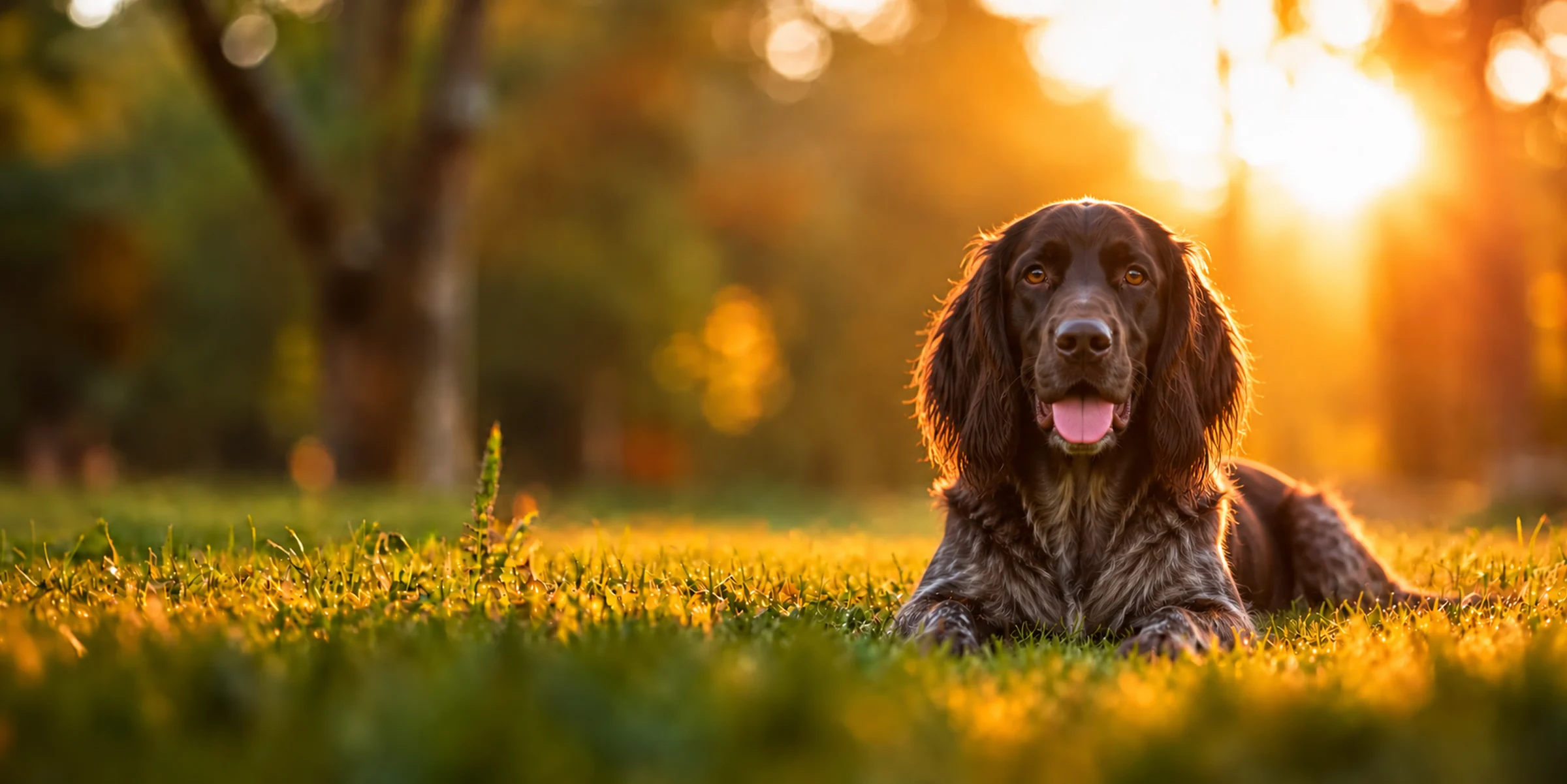
German Longhaired Pointer
The breed they were split from over a color rule in 1909 - same brief, same build, same testing system. The Longhair is brown or brown and white; the Munsterlander is black and white, and the two are otherwise closely comparable.
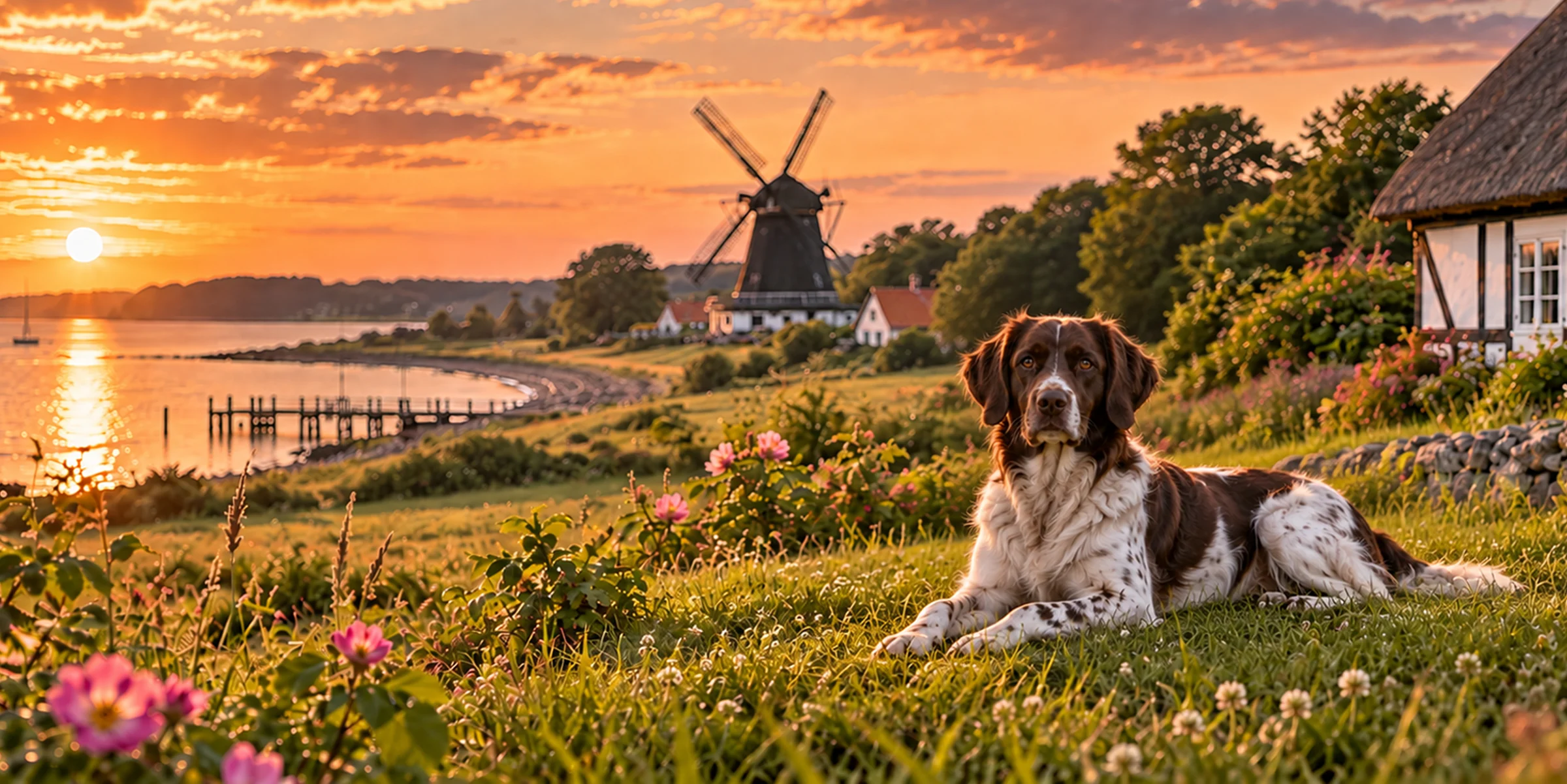
Drentsche Patrijshond
A close continental relative with the same versatile brief and a similar coat. The Drent is smaller, calmer and far better suited to living as a family companion; the Munsterlander needs considerably more work.
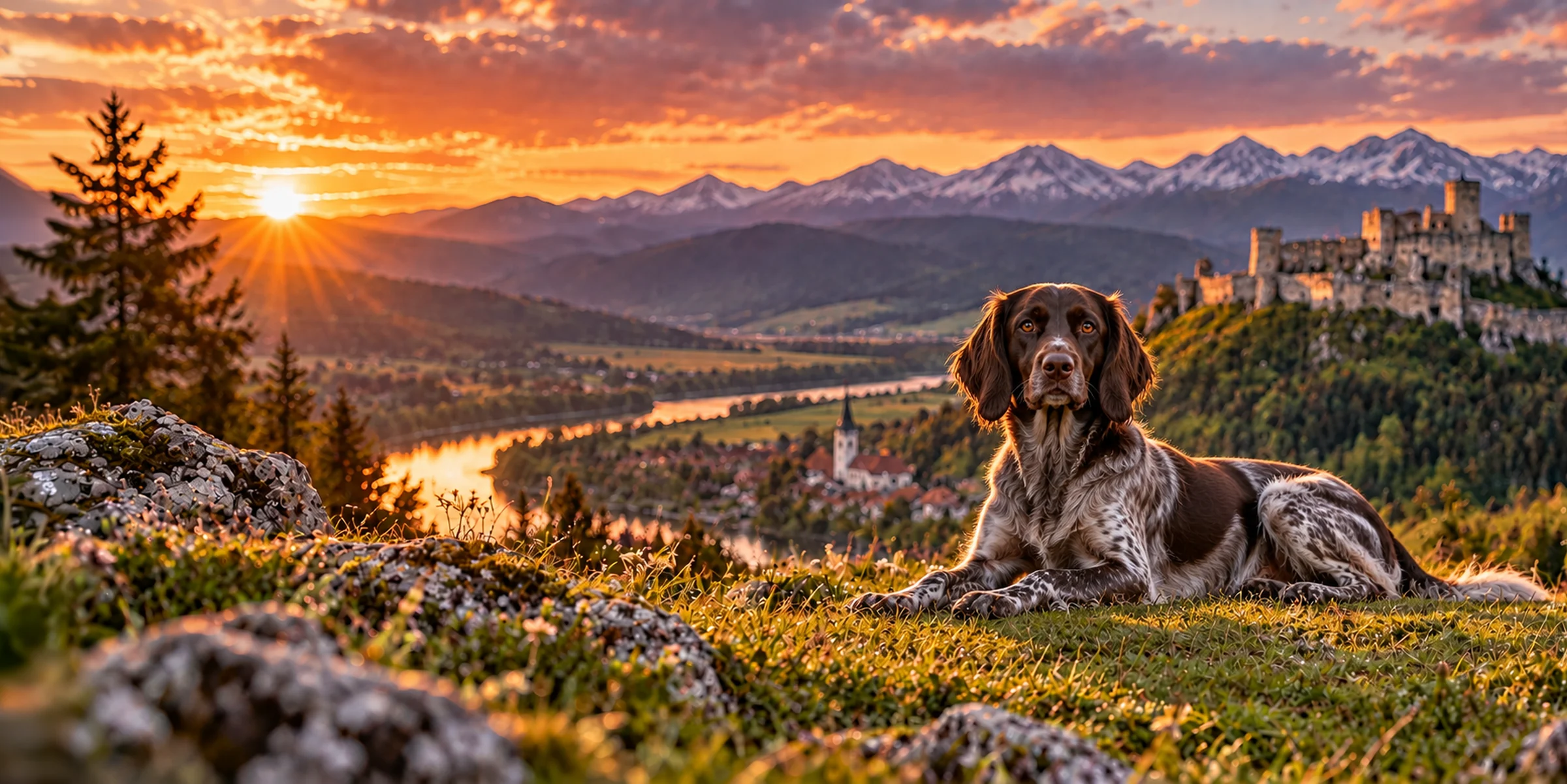
Small Munsterlander
Not a smaller version of this breed but a separate one, from the Munsterland's own longhaired pointing stock. Small Munsterlanders are brown and white or brown roan rather than black and white, run 40-60 lb, and are placed by most North American breeders into hunting homes only.