

medium-to-large breed
Small Munsterlander
A German versatile gundog rebuilt around 1900 from the longhaired pointing dogs of the Munsterland, and a separate breed from the Large Munsterlander rather than a scaled-down one. Small Munsterlanders point, retrieve on land and in water and track wounded game, and at home they are sensitive and glued to their people. The drive is the whole story: two hours of real work daily, a prey drive small pets do not survive, and misery in an empty house.

Pup Height
20-22 in
Males 20.5-22 in, females 20-21 in, with heights outside those limits penalized and the extremes disqualifying. Brown and white or brown roan, with brown patches, a brown mantle or brown ticking; a blaze is permitted, tan markings appear on the muzzle and around the eyes, and a solid-colored dog is disqualified. The coat is dense, medium length, close-lying and water-repellent, with feathered forelegs, breeching behind and a long flag on the tail. In the AKC's Miscellaneous Class. Source: AKC breed standard.

Pup Weight
40-60 lb

Pup Lifespan
12-14 years
Your pup, at a glance
What’s Life With This Pup Really Like?

Very high. Bred to live indoors with the family between hunting days, and they want contact - on the couch, against a leg, following from room to room.

Excellent. Gentle, playful and sturdy enough for family life, with the even temperament the German tests select for.

Good with dogs, having been bred to work alongside them. Cats and small pets are a different question - the prey drive is keen and the standard says so.

Low. Quiet at home, with an alert bark for arrivals and little else.

Very high. Two hours of real work daily, and the scent half counts as much as the mileage.

Moderate. A dense medium coat that sheds steadily with heavier seasonal turns, handled by brushing rather than trimming.

Tireless and enthusiastic, especially retrieving and in water. Small Munsterlanders play the way they hunt, all in.

Very low. A dry-mouthed breed with tight lips.

Excellent. Quick, attentive and eager to cooperate, and soft enough that rewards get far more than pressure.

Low to moderate. They announce a visitor and then greet them; there is no guarding instinct behind the bark.

Moderate but low-effort. Two brushes a week, minimal trimming, and the post-outing seed, ear and tick check that is the part that actually matters.

Low. Small Munsterlanders need daily hunting-style work and close human contact, and no amount of adjusting makes an apartment-and-office life fit.
Lifestyle fit
Could This Be Your Best Breed?
A Small Munsterlander fits a hunting home, or a household that will take up field trials, tracking and water work instead, with somebody around for most of the day. Costs are modest at $1,300 to $2,300 a year for twelve to fourteen years. A pet home that wants a handsome medium-sized dog who likes walks will be turned down by most North American breeders, and rightly.

Living Space
A house with ground to work on, and ideally access to fields, woods and water. Small Munsterlanders are compact enough to fit anywhere physically - the problem is never the square footage, it is finding two hours of real hunting-style work every day near an apartment.

Pup Experience
Best with owners who hunt, or who will commit to field trials, tracking and water work instead. Small Munsterlanders are easy to teach and want to cooperate, so the skill required is not handling a difficult dog - it is supplying a working dog with work, every day, for twelve to fourteen years.

Daily Pup Time
Two hours daily with real scent and retrieving work in it, not just walking. Grooming is light: a brush twice a week plus the after-outing check of ears, feathering and feet.

Allergies & Coat
The Small Munsterlander scores 4/10 for shedding and 2/10 for drooling. No dog is truly hypoallergenic. The allergens come from dander and saliva, and a dog that sheds this much will leave plenty of hair behind - especially on your furniture, floors, and clothes.
Quirks & challenges
The Not-So-Easy Stuff

Bred to Hunt, Needs to Hunt
Still selected on live work in Germany and North America. Field work, tracking and water retrieving are the baseline, not enrichment.
Strong Prey Drive
Keenness for fur and feather is written into the breed standard. Cats, chickens and rabbits are a genuine risk, and small pets need managing rather than trusting.
Hunting Homes First
North American breeders usually place puppies with hunters only, so a pet home often waits a long time or is turned down.
Scent Beats Recall
A dog on a hot track is only half listening. Long lines and secure ground matter more than another obedience class.
Close-Contact Dogs
Bred to work in tight cooperation with one handler and to live indoors with the family. Long days alone go badly.
Ears and Feathering
Drop ears on a dog who works water, and leg feathering that collects grass seeds and burrs on every outing in cover.
The good, the bad & the hairy
Health, Care & Costs
Understanding the health risks and ongoing costs of a Small Munsterlander helps you plan for a happy, healthy life together.

12-14 years
$45-$75
per groom (bath, feathering tidy, ears, nails), every 8-12 weeks or done at home ($0-$350/year)
$1,300-$2,300/year
all-in (food, routine vet, grooming, insurance, incidentals)

Health Risks
Conditions this breed is prone to.

Worth saying first: the inherited-disease list is short, because German and North American clubs have required health screening and working tests before breeding for over a century. The counterweight is numbers - the North American population descends from a small set of imports, so ask breeders what they do to keep relatedness down.
The hip joint develops loosely so the head of the femur grinds in the socket instead of gliding, leading to arthritis and sometimes surgery. Rates are low for a sporting breed because clubs require scoring, and both parents should still have OFA or PennHIP results.
Entropion, ectropion and distichiasis all appear often enough that the breed standard disqualifies them. Each one rubs the eye surface and needs surgery when severe, so look for a recent ophthalmologist exam on both parents.
Broad drop ears trap warmth and moisture against the canal, and a dog swimming and working wet cover makes it worse. Weekly checking, cleaning and drying is the whole prevention; ignored, it turns chronic and expensive.
The most likely reason a Small Munsterlander sees a vet, and nothing to do with genetics. Torn pads, thorn punctures, grass seeds driven into an ear or between toes, and the occasional cruciate rupture - that last one runs to a few thousand dollars.
The stomach fills with gas and twists, cutting off its own blood supply, and it kills within hours without emergency surgery. The risk is lower than in the giant breeds but real in any deep-chested dog - split meals and keep hard work clear of feeding.

Insurance & Health Coverage
A healthy, well-screened breed of moderate size, so premiums sit at the reasonable end and the illness side stays light.

Accidents are what you are actually insuring. A dog working heavy cover and cold water collects lacerations, punctures, embedded grass seeds and torn ligaments, and those are the claims that arrive. Check the wording for an exclusion on injuries sustained while hunting or working - several policies carry one, and it removes exactly the cover this breed needs.

Ear infections are the steady background cost rather than the dramatic one, and a policy that caps per condition per year handles them badly once they turn chronic. Read the caps, not the headline premium.
 Get a Pet Insurance Quote
Care needs
The Daily Routine

Grooming
A dense, medium-length, water-repellent coat with feathering on the ears, legs and tail. A thorough brush twice a week keeps it clear, with mats forming first behind the ears and in the trousers, and almost no trimming is wanted beyond tidying the feet. The routine that matters is the one after every outing: grass seeds out of the feathering and between the toes, ears cleaned and dried, and a check over for cuts and ticks picked up in cover.

Exercise
Two hours daily, and the nose has to be part of it. Field work, tracking, water retrieving, dummy work and long hikes on varied ground all suit the breed; a mile around the block twice a day does nothing for a dog built to solve scent problems for hours.

Food & Weight
Two measured meals scaled to the season - a Small Munsterlander working hunting weekends burns far more than the same dog in July - with hard exercise kept clear of feeding because of the bloat risk. Keep them lean and lightly muscled; extra weight shortens a working life fast.
Similar breeds
If This Isn’t Quite the One
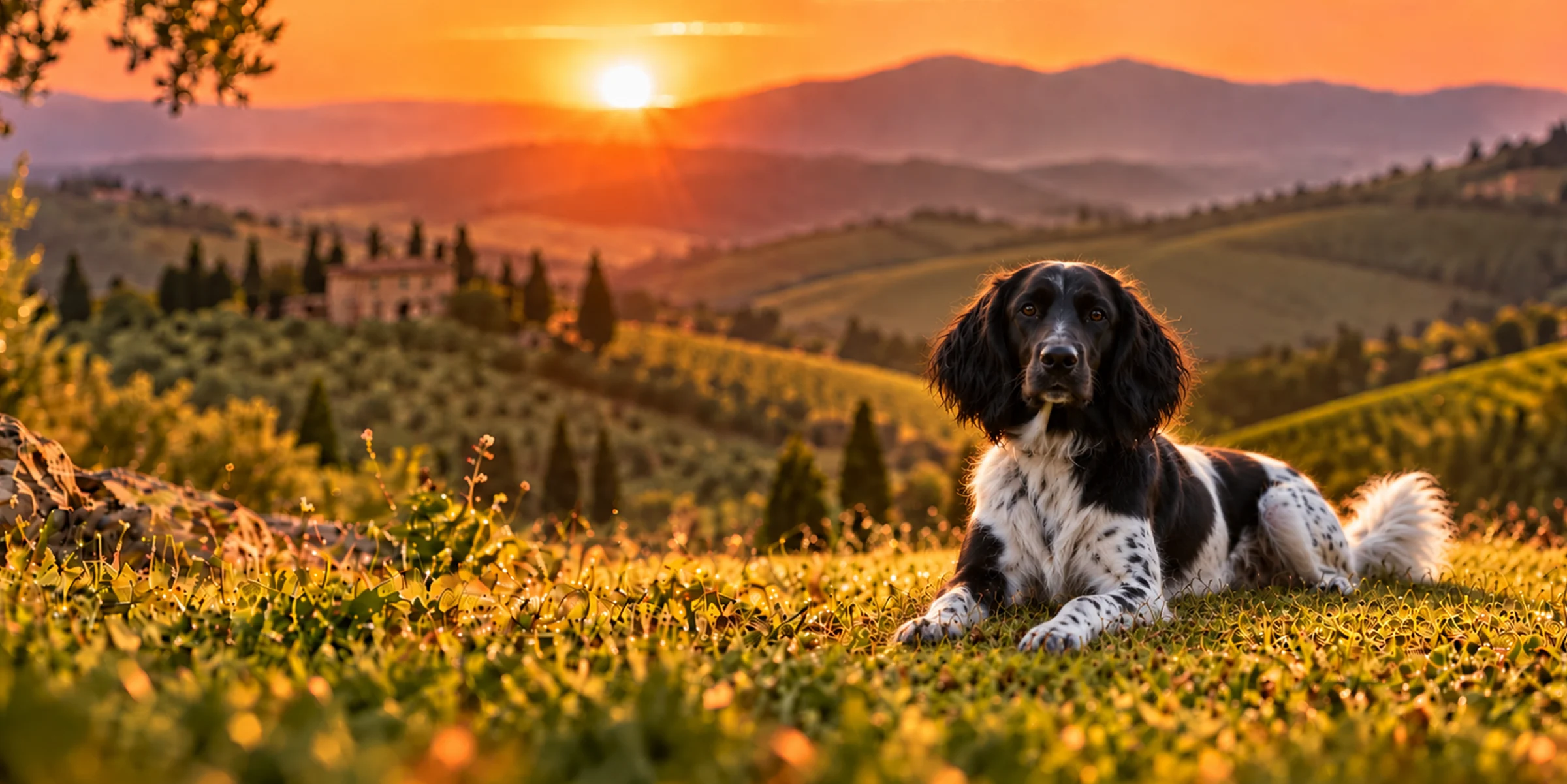
Large Munsterlander
Separate breeds despite the shared name, not two sizes of one. The Large came out of German Longhaired Pointer stock split off over a color rule in 1909 and is always black and white, at 23-25.5 in and 50-70 lb; the Small descends from the region's own longhaired pointing dogs, is brown and white or brown roan, and is a good deal smaller.
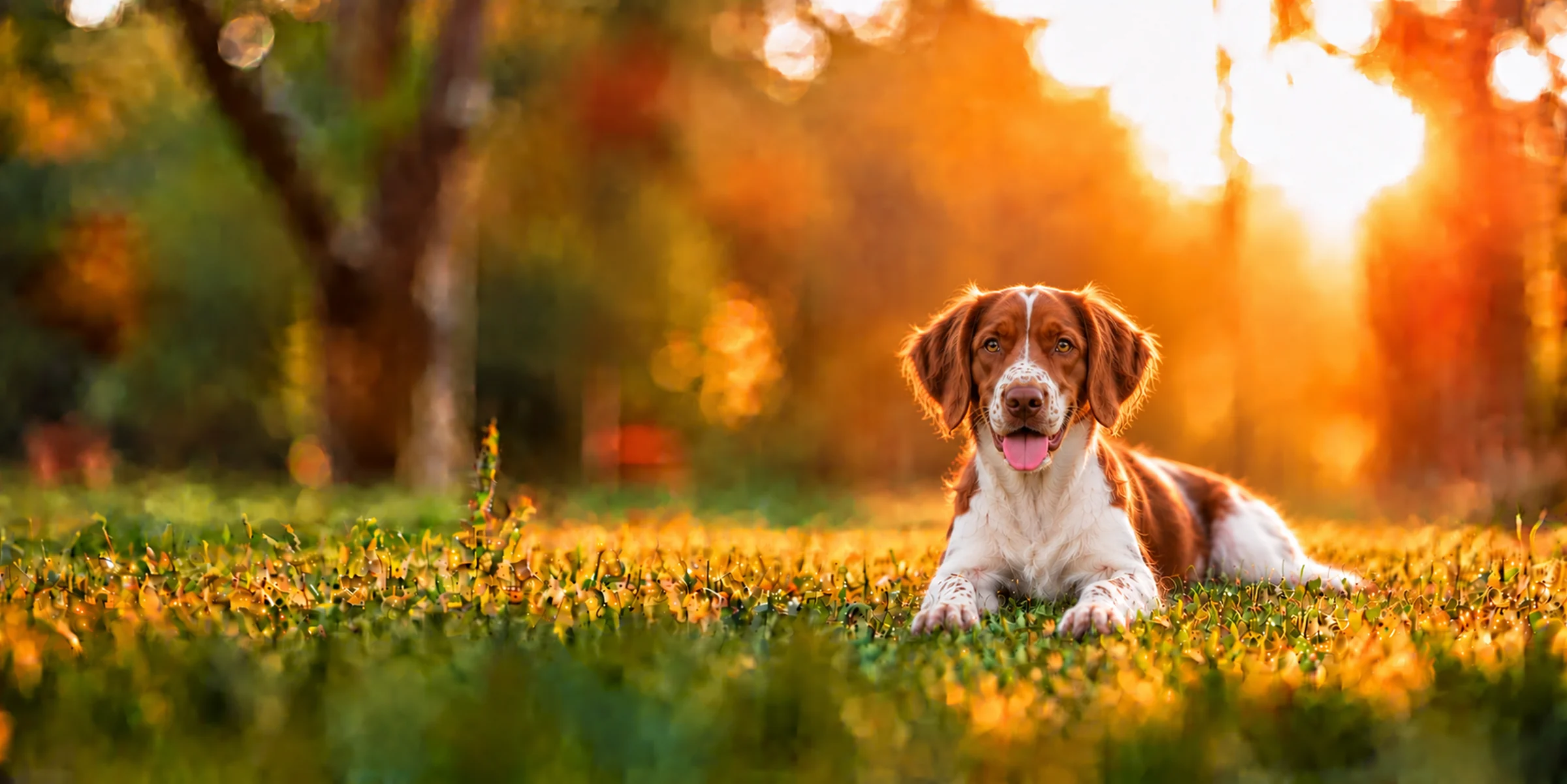
Brittany
The closest match on size, coat and versatile pointing work, and far easier to find in North America. The Brittany is a little lighter and widely placed in pet homes; the Small Munsterlander is bred almost entirely for hunting and comes with more prey drive.
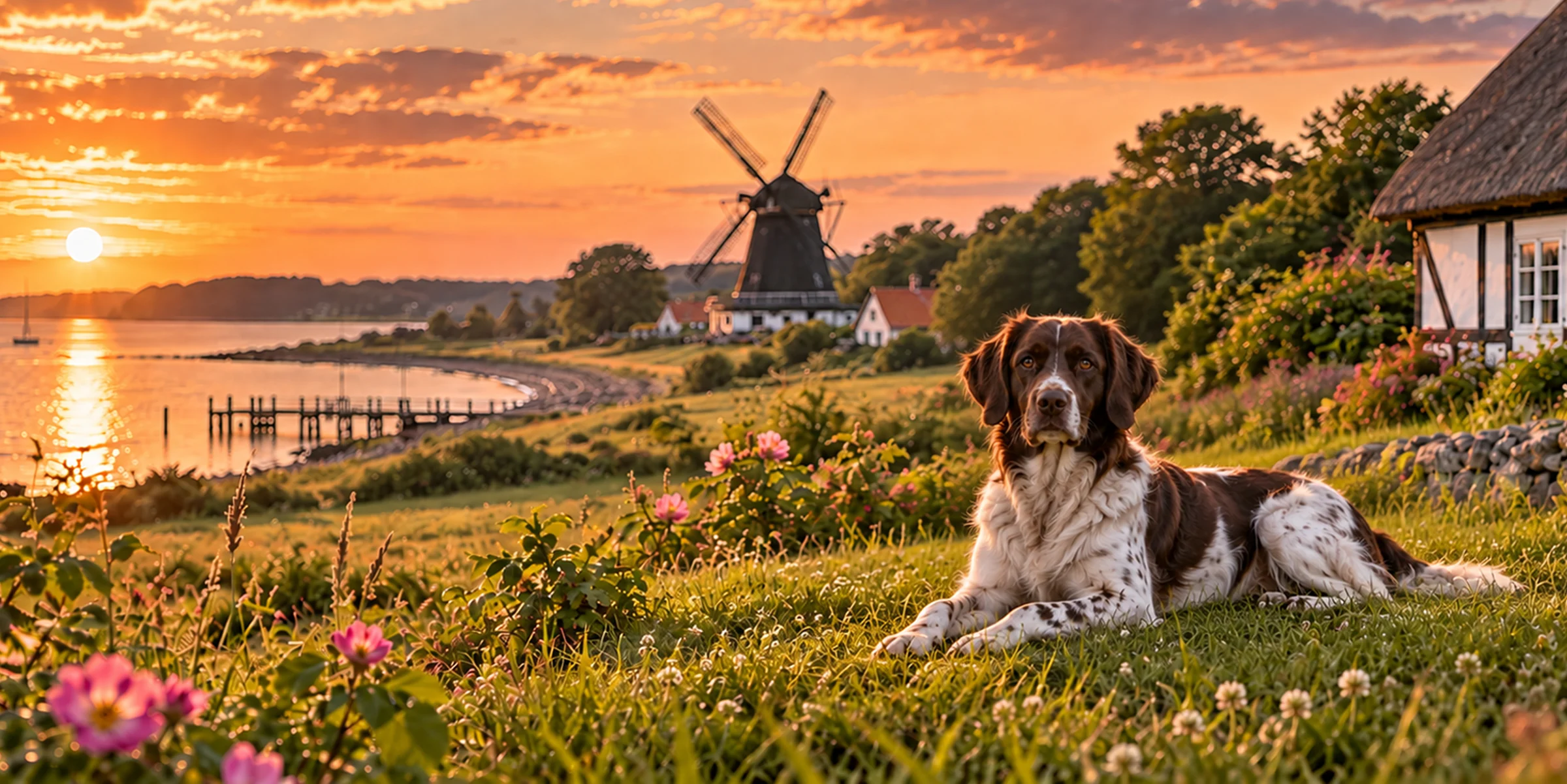
Drentsche Patrijshond
A continental relative with the same versatile brief and a similar feathered coat. The Drent is larger, calmer and genuinely content as a family companion; the Small Munsterlander carries more drive and needs the work.
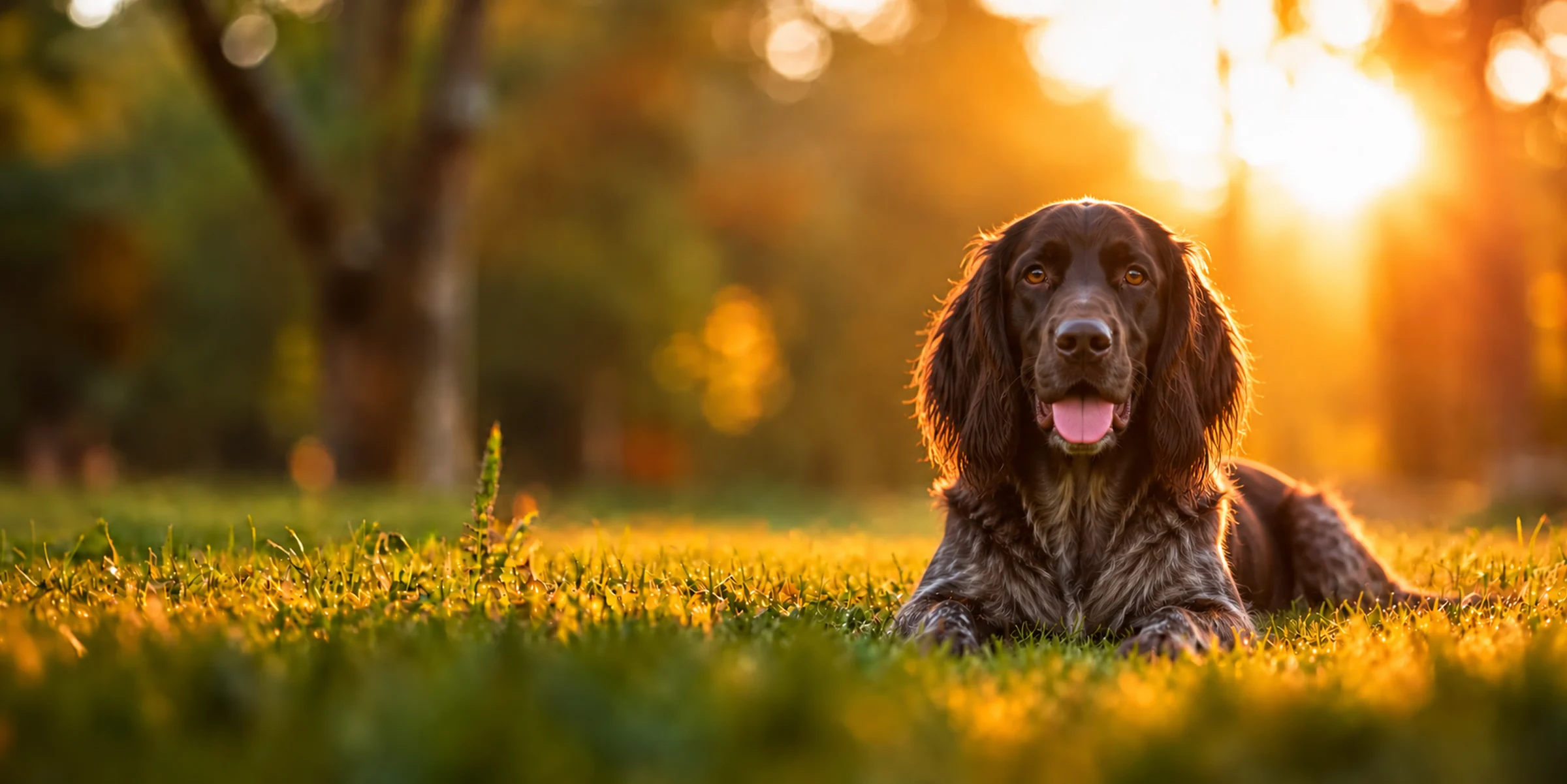
German Longhaired Pointer
Same country, same testing system, same longhaired pointing family, and brown or brown and white like the Small. The Longhair is a much bigger dog at 23-28 in, and steadier; the Small Munsterlander is quicker and more intense for the size.