

medium-to-large breed
Mountain Cur
The settlers' all-purpose dog of the Appalachians - treeing squirrel and raccoon, baying hogs, watching the homeplace at night - and nearly lost when families left the mountains after the Second World War. Mountain Curs are loyal and steady with their own people, cost a few minutes a week to groom, and are unusually cooperative for a treeing breed. The job was never optional, though: with nothing to do, that drive goes into the fence line.

Pup Height
16-26 in

Pup Weight
30-60 lb
Males 18-26 in, females 16-24 in. The UKC asks for weight in proportion to the frame rather than setting a range; 30-60 lb is the figure the AKC publishes. A short coat, smooth or slightly rough, in yellow, brindle, black, blue or red, with or without white trim. The tail may be long or a natural bobtail. Recognized by the UKC in the Scenthound Group, registered separately by the Original Mountain Cur Breeders' Association, and in the AKC's Foundation Stock Service. Source: UKC breed standard.

Pup Lifespan
12-16 years
Your pup, at a glance
What’s Life With This Pup Really Like?

Moderately high. Mountain Curs are affectionate and loyal with their own family, and settle beside them happily once the work is done.

Good. Protective and tolerant with children they grow up with, though a bold, energetic dog needs supervision around small children and their visiting friends.

Limited. Often fine with dogs they are raised with, but the prey drive makes cats and poultry risky, and some are tough with unfamiliar dogs.

Moderate. Many trail quietly and bark at the tree, and at home they sound off at anything arriving on the property.

Very high. A working hunting dog who needs hard daily exercise with the nose engaged.

Low to moderate. A short coat that sheds steadily but lightly, with a heavier seasonal turn.

Keen and busy. Tracking, chasing and problem-solving games suit Mountain Curs better than endless fetch.

Very low. Tight lips and a clean mouth.

Good. Quick and handler-focused for a treeing breed, but confident enough to push back against inconsistent handling.

High. Protective of family and property by breeding, and suspicious of strangers until introduced.

Very low. A weekly brush, nails and ears, plus a tick check after outings.

Low. Mountain Curs need land, work and a confident owner, and do poorly in apartments, busy suburbs or sedentary homes.
Lifestyle fit
Could This Be Your Best Breed?
Mountain Curs need country - land, a fence that holds, ideally woods to work - and an experienced owner, preferably one who hunts. They are inexpensive for their size at $1,400 to $2,400 a year and often reach twelve to sixteen, though published data on the breed is thin and most puppies come through working registries. Without hunting or an equivalent daily job, do not.

Living Space
Country, with land, a secure fence and ideally woods to work. The Mountain Cur is a hunting and homestead dog first, and an apartment or a small suburban yard leaves a driven, territorial dog with nothing to do and neighbors to bark at.

Pup Experience
Best with experienced owners, and ideally hunters. Mountain Curs are smart and genuinely want to work with a handler, but they are tough, bold, protective and quick to find their own job if nobody gives them one.

Daily Pup Time
Ninety minutes or more of hard, varied exercise daily, with scent or hunting work in it. The coat takes a few minutes a week.

Allergies & Coat
The Mountain Cur scores 4/10 for shedding and 2/10 for drooling. No dog is truly hypoallergenic. The allergens come from dander and saliva, and a dog that sheds this much will leave plenty of hair behind - especially on your furniture, floors, and clothes.
Quirks & challenges
The Not-So-Easy Stuff

Needs a Real Job
Bred to hunt all day. An underworked Mountain Cur digs, chews, escapes or patrols the fence line instead.
Strong Prey Drive
Squirrels, cats and livestock can all trigger the treeing and baying instinct. Small pets are a risk unless raised together, and sometimes even then.
Protective of Home
A genuine guarding streak. Early, broad socialization keeps suspicion of visitors from turning into a problem.
Tough With Other Dogs
Bold dogs bred to face down game. Some individuals do not back down with dogs outside their own household.
Roams on a Scent
A trailing dog in open country will cover miles quickly. Solid fencing and a GPS collar for hunting are standard kit.
Rare Outside Hunting Homes
Most puppies come from working lines through the breed registries, and breeders often prefer to place puppies in hunting homes.
The good, the bad & the hairy
Health, Care & Costs
Understanding the health risks and ongoing costs of a Mountain Cur helps you plan for a happy, healthy life together.

12-16 years
$40-$60
per groom (bath, nails and ears), every 8-12 weeks or done at home ($0-$250/year)
$1,400-$2,400/year
all-in (food, routine vet, grooming, insurance, incidentals)

Health Risks
Conditions this breed is prone to.

Working selection has kept the breed sturdy, and no breed-specific inherited disease is widely reported. That partly reflects how little health surveying has been done on a registry-based working breed, so ask breeders what they screen for rather than assuming.
The hip joint forms loosely and wears into arthritis, occasionally needing surgery. It appears in most active medium and large breeds, and hip scores on both parents are a reasonable thing to ask for.
Drop ears hold warmth and moisture, and a dog running wet woods makes it worse. Weekly checking and cleaning prevents most of it.
The knee ligament can tear in a hard-running dog turning on rough ground. Repair usually needs surgery costing several thousand dollars, and the other knee often follows.
The most likely vet bill. Cuts, torn pads, tusk wounds from hogs, and injuries from bears or raccoons all come with the work, and some need emergency care.
A dog working southern and Appalachian woods picks up ticks constantly. Ehrlichiosis, Lyme disease and Rocky Mountain spotted fever are real risks, so year-round tick prevention and an annual screening test are worth it.

Insurance & Health Coverage
A hardy, long-lived breed with no well-documented inherited disease burden, so illness cover should be affordable - though the honest caveat is that little breed-wide health data exists.

The real exposure is the work. Hog cuts, bear encounters, torn cruciates and emergency stitching are the claims a hunting Mountain Cur generates, and they arrive without warning. Accident cover matters most, and check the policy wording carefully: some insurers exclude injuries sustained while hunting or working, which removes exactly the cover this dog needs.

Tick-borne illness and recurring ear infections are the smaller, steadier costs. Both are largely preventable, so budget for prevention as well as the policy.
 Get a Pet Insurance Quote
Care needs
The Daily Routine

Grooming
A short, dense coat that needs a quick brush once a week and a bath only when the dog has found something to roll in. Nails need regular trimming if the dog is not wearing them down on rough ground. The real routine is after every outing: check the ears, the feet and the coat for ticks, cuts and burrs.

Exercise
Ninety minutes or more daily, and a walk around the block does not touch it. Hunting, tracking, long-line trail work, hiking and running on secure land all suit a Mountain Cur; the nose needs work as much as the legs.

Food & Weight
Feed to the workload. A dog hunting several nights a week burns far more than the same dog resting through the off-season, and Mountain Curs gain weight quickly when the work stops. Two measured meals, with hard exercise kept away from mealtimes, and keep the ribs easy to feel.
Similar breeds
If This Isn’t Quite the One
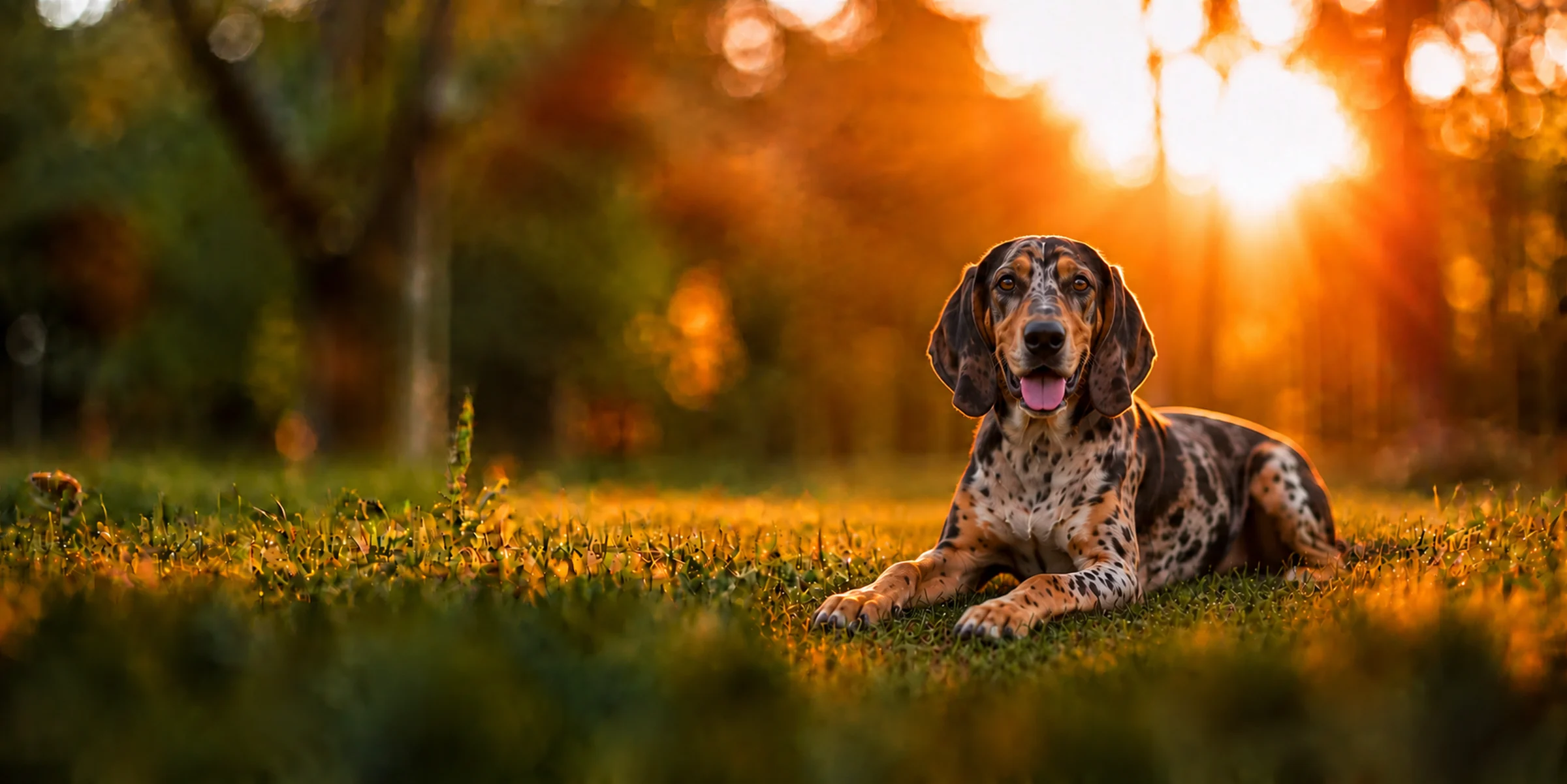
American Leopard Hound
The closest relative here - another Appalachian treeing cur with a guarding streak. The Leopard Hound is larger, often spotted and a little more vocal; the Mountain Cur is more compact and more of an all-round homestead dog.
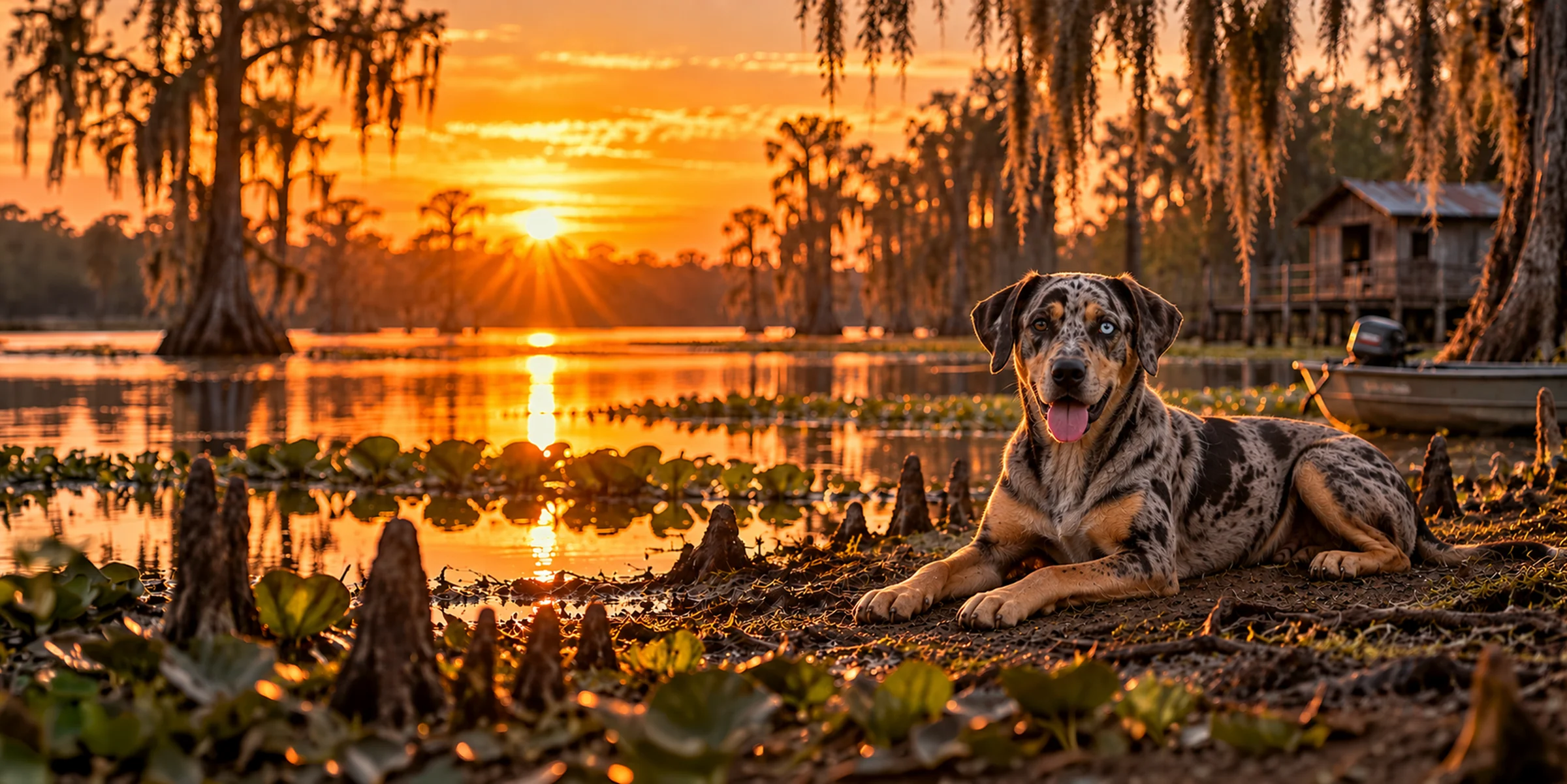
Catahoula Leopard Dog
A Southern working cur with the same bold, protective, job-hungry temperament. The Catahoula is bigger, merle-coated and more often used on cattle and hogs; the Mountain Cur leans more toward treeing.
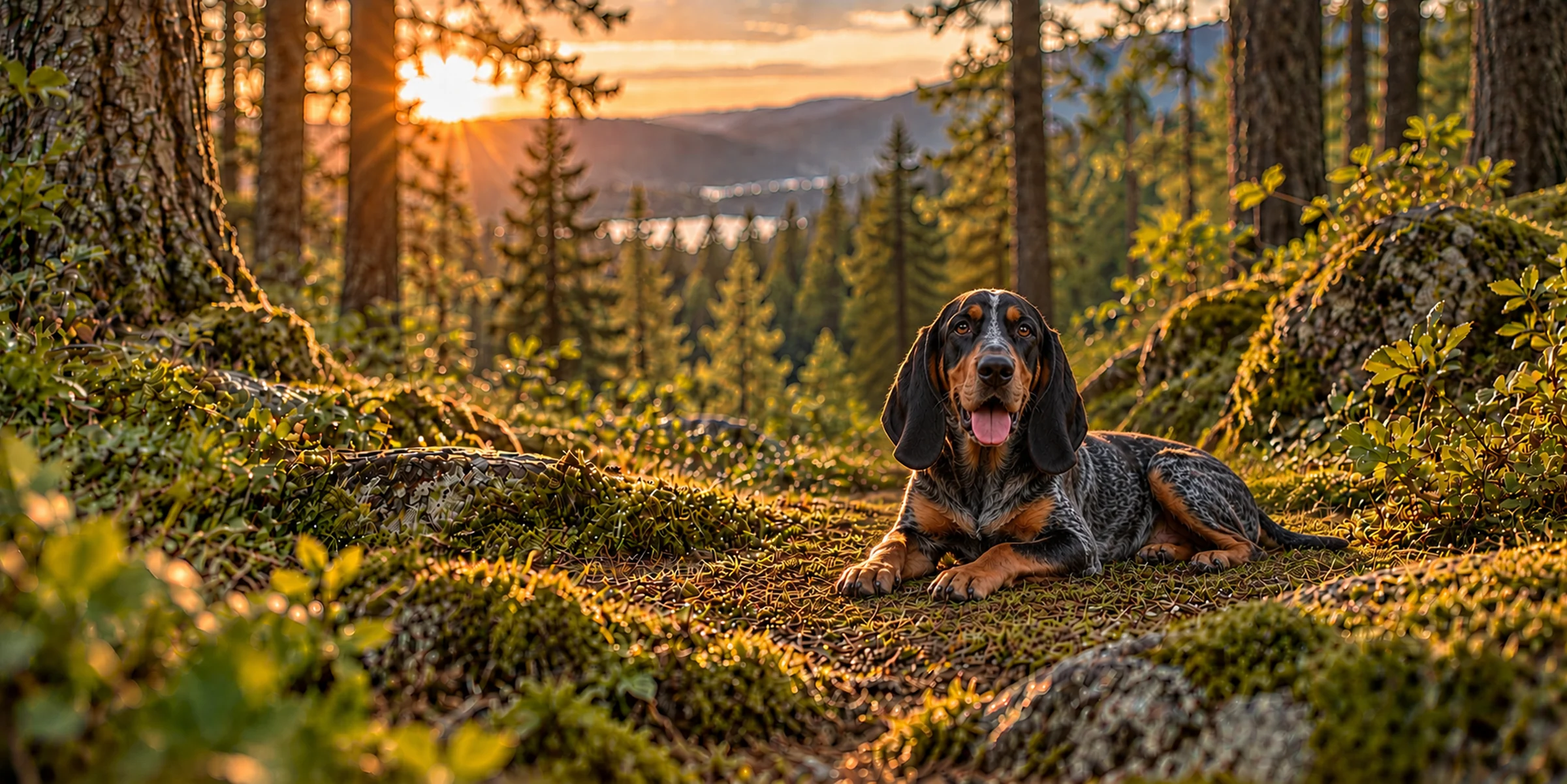
Bluetick Coonhound
Another American tree dog, but a true hound. The Bluetick trails with a loud, constant voice and is harder to train; the Mountain Cur hunts quieter, guards more and responds far better to a handler.