

large-to-giant breed
Old English Sheepdog
A west-of-England drover's dog from the early 1800s, moving cattle and sheep to market, and nicknamed Bobtail for the docked tail. Old English Sheepdogs are big, cheerful and genuinely good with a family, and they carry half the yard indoors on every trip - mud, leaves and water, all of it held in the coat. That coat decides ownership, and it mats down to the skin within a couple of weeks of neglect.

Pup Height
21-24 in

Pup Weight
60-100 lb
The standard sets minimums rather than a range: males 22 in and upward, females 21 in and upward. It sets no weight; AKC gives 70-100 lb for males and 60-85 lb for females. Any shade of gray, grizzle, blue or blue merle, with or without white markings. A profuse, hard-textured, shaggy double coat with a waterproof undercoat, never straight or curly. The tail is traditionally docked close to the body where docking is still done. Source: AKC breed standard.

Pup Lifespan
10-12 years
Your pup, at a glance
What’s Life With This Pup Really Like?

High. Old English Sheepdogs are affectionate and like to be in the middle of the family, often leaning a shaggy body against a leg.

Very good. Gentle and playful with children, with two caveats - they may herd running kids by bumping, and a bouncy adolescent can knock over a toddler.

Good. Usually sociable with other dogs and fine with cats raised alongside them, though the herding instinct may try to organize the cat.

Moderate. The bark is loud and deep - often described as a pot-casse ring - and used to announce arrivals rather than constantly.

Fairly high. Bred for long days droving stock, and young dogs need real daily exercise before they settle in the house.

Moderate. The double coat sheds, though much of the loose hair gets caught in the coat until it is brushed out - which is how mats form.

Very playful. Clownish, bouncy and puppyish for years, with a love of games and a sense of humor.

Low. Not a drooler, but the beard comes out of the water bowl soaked and drips across the floor.

Moderate. Intelligent and capable, but independent, and they lose interest in repetition quickly.

Moderate. The loud bark and size announce visitors well; the welcome that follows is usually friendly.

Very high in full coat - hours of brushing a week - and still substantial clipped, with regular trims and a groomer every couple of months.

Low to moderate. The size, the coat and poor tolerance of heat make small homes and hot climates hard going.
Lifestyle fit
Could This Be Your Best Breed?
Old English Sheepdogs want a house with a fenced yard, a climate that is not hot, and an hour of exercise a day from an owner who is not house-proud. Ten to twelve years at $2,000 to $4,000 a year. There is no low-effort version of this dog - three or four hours of brushing a week, or a groomer every six to eight weeks - and if neither appeals, choose a shorter coat.

Living Space
A house with a fenced yard suits them best. Old English Sheepdogs are big, bouncy and hairy, and the coat carries mud, leaves and water indoors on every trip; an apartment is possible for a clipped, well-exercised adult but hard work with a young one.

Pup Experience
Workable for a first-time owner who is ready for the coat and patient with training. The temperament is friendly and good-humored; the difficulty is a strong-bodied, clownish dog with an independent streak and a coat that punishes procrastination.

Daily Pup Time
About an hour of exercise and play daily, plus 3-4 hours a week of line brushing for a full coat - or a professional clip every 6-8 weeks if you keep them short.

Allergies & Coat
The Old English Sheepdog scores 6/10 for shedding and 3/10 for drooling. No dog is truly hypoallergenic. The allergens come from dander and saliva, and a dog that sheds this much will leave plenty of hair behind - especially on your furniture, floors, and clothes.
Quirks & challenges
The Not-So-Easy Stuff

Coat Commitment
A full coat mats down to the skin in a week or two of neglect. Brush through to the skin several times a week or keep them clipped.
Mess Indoors
A wet beard after every drink and a coat that collects mud, snow and burrs. The floors will show it.
Herding Family Members
Bumping, circling and nudging people, especially children who run. Redirect it early rather than letting it become a game.
Boisterous Adolescence
Large, strong and slow to grow up, often puppyish until around three. Jumping and pulling need work while they are small.
Independent Streak
Clever but not eager to repeat themselves. Short, varied, reward-based sessions work; drilling does not.
Heat Sensitivity
A heavy double coat on a big dog. Hot climates call for a shorter clip and exercise at the cool ends of the day.
The good, the bad & the hairy
Health, Care & Costs
Understanding the health risks and ongoing costs of a Old English Sheepdog helps you plan for a happy, healthy life together.

10-12 years
$90-$160
per professional groom (bath, clip or brush-out, nails, ears), every 6-8 weeks, or $0-$300/year if you brush and bathe a full coat at home
$2,000-$4,000/year
all-in (food, routine vet, grooming, insurance, incidentals)

Health Risks
Conditions this breed is prone to.

The hip joint develops loosely and wears into arthritis, sometimes needing surgery. It is one of the more common problems in the breed, so both parents should have OFA or PennHIP hip evaluations, and puppies need lean, controlled growth.
A mutation in the MDR1 (ABCB1) gene lets certain drugs, including ivermectin at high doses and loperamide, build up in the brain and cause serious neurological reactions. It appears in the breed far less often than in Collies, but a simple cheek-swab DNA test settles it, and your vet should know the result.
Hereditary cataracts and progressive retinal atrophy (PRA) both occur, the first clouding the lens and the second slowly causing blindness. No DNA test covers the forms seen in the breed, so parents should have annual eye examinations by a veterinary ophthalmologist.
An underactive thyroid, often autoimmune in origin, causes weight gain, coat changes and low energy and is managed with a daily tablet. The breed is also overrepresented for autoimmune hemolytic anemia, where the immune system destroys red blood cells - pale gums, weakness or collapse are an emergency.
An inherited defect in the tiny hairs that clear mucus from the airways, causing repeated pneumonia and nasal discharge from puppyhood. It is recessive and there is a DNA test for the breed's mutation, so testing both parents prevents affected puppies.
Deafness in one or both ears occurs, more often in dogs with a lot of white on the head. A BAER hearing test on puppies from around six weeks identifies it before they go home.

Insurance & Health Coverage
Insure early. Hip dysplasia and the eye diseases tend to show in young adults and middle age, and once a sign lands on the vet record it becomes a pre-existing condition that no new policy will cover.

The autoimmune conditions are the claims that surprise owners. Autoimmune hemolytic anemia can mean days in the hospital, transfusions and months of medication, and a policy with a low annual limit runs out quickly - check the caps, not just the premium.

The DNA-testable conditions are different: PCD and the MDR1 mutation are inherited, so tested parents protect you better than any policy does. Ask the breeder for the results before you commit.
 Get a Pet Insurance Quote
Care needs
The Daily Routine

Grooming
A full coat needs line brushing right down to the skin several times a week - 3-4 hours in total - with a pin brush, slicker and steel comb, plus a thorough dry after every bath or soaking, since damp coat mats. Most pet owners keep a shorter puppy clip instead, which cuts the brushing to once or twice a week but means a groomer every 6-8 weeks. Keep the hair around the eyes, rear and feet trimmed, and wipe the beard after meals.

Exercise
About an hour a day of walks, play and something to think about - fetch, herding games, agility or rally. Puppies need restraint on hard running and jumping until the joints finish growing at around 12-18 months, and summer exercise belongs in the cool of the morning or evening.

Food & Weight
Large-breed puppy food and steady, unhurried growth help protect the hips. Adults do best kept lean - the coat hides weight gain completely, so feel for the ribs rather than trusting your eyes - on two measured meals a day.
Similar breeds
If This Isn’t Quite the One
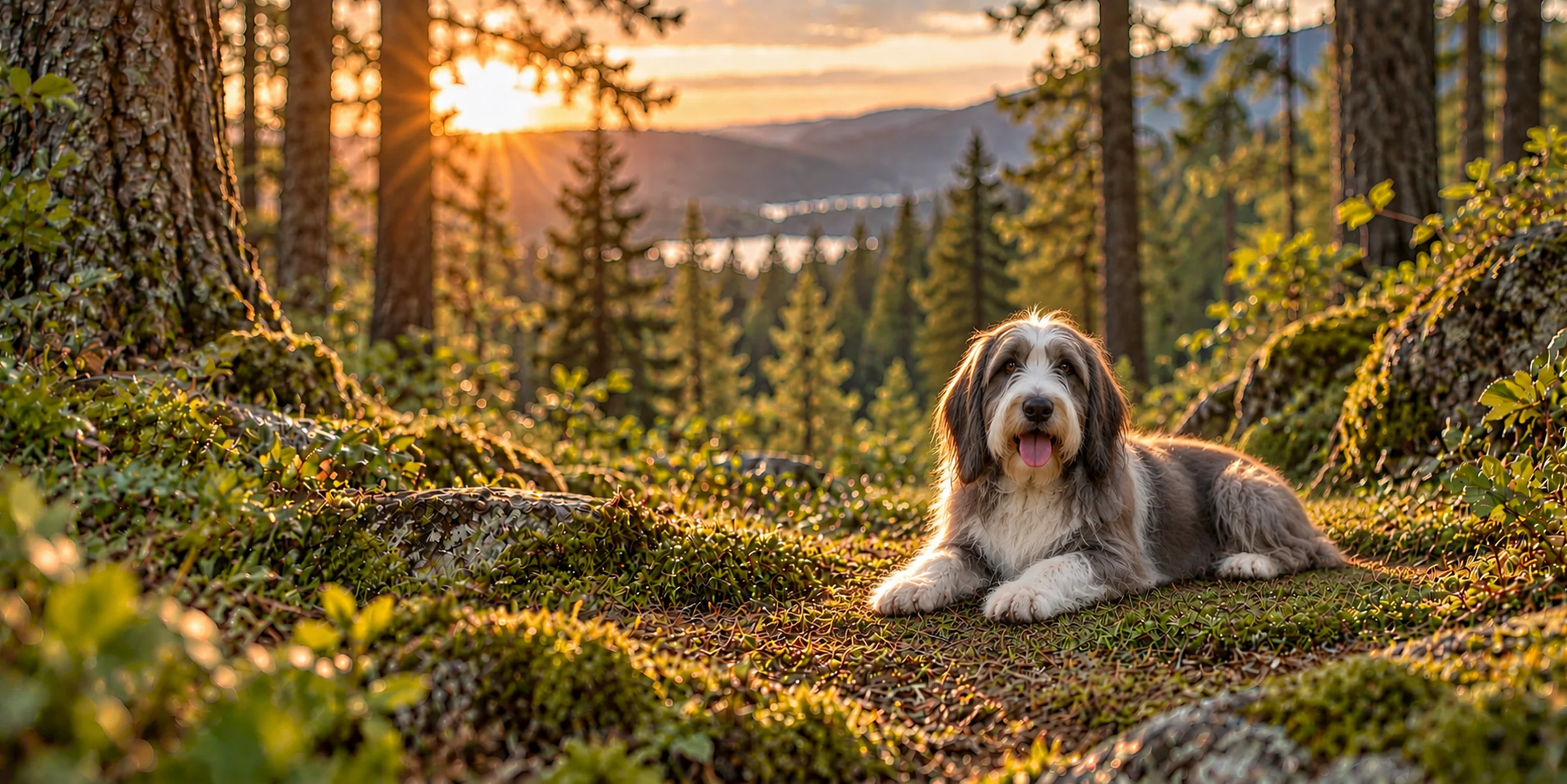
Bearded Collie
Another shaggy British herding dog with a big coat and a bouncy, cheerful temperament. The Beardie is lighter, leaner and more energetic; the Old English Sheepdog is heavier, more cobby and a little more laid-back indoors.
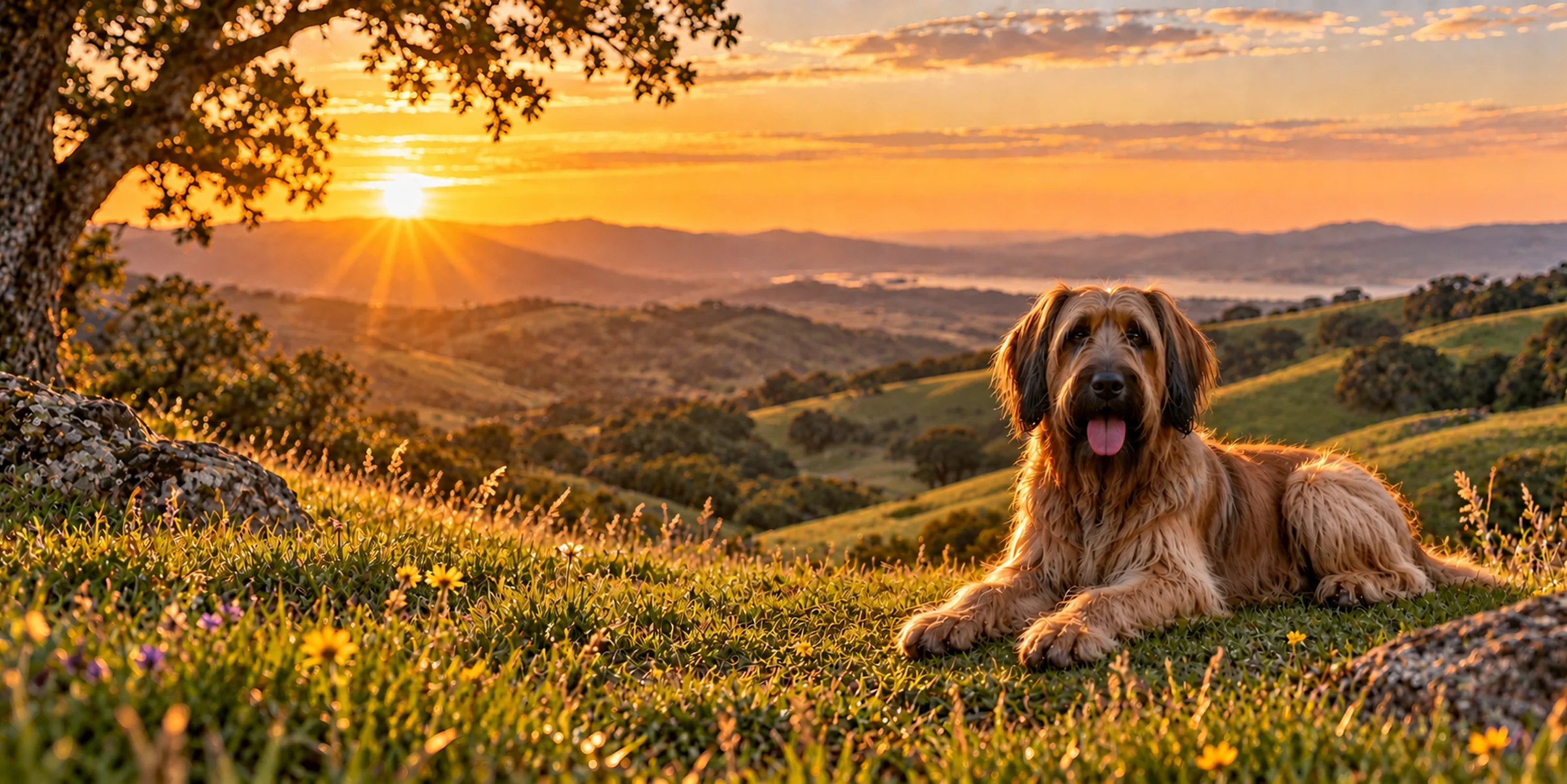
Briard
A large, long-coated herding dog with a similar grooming load. The Briard is a French flock guardian with a stronger protective streak and more wariness of strangers; the Old English Sheepdog is the more openly friendly clown.
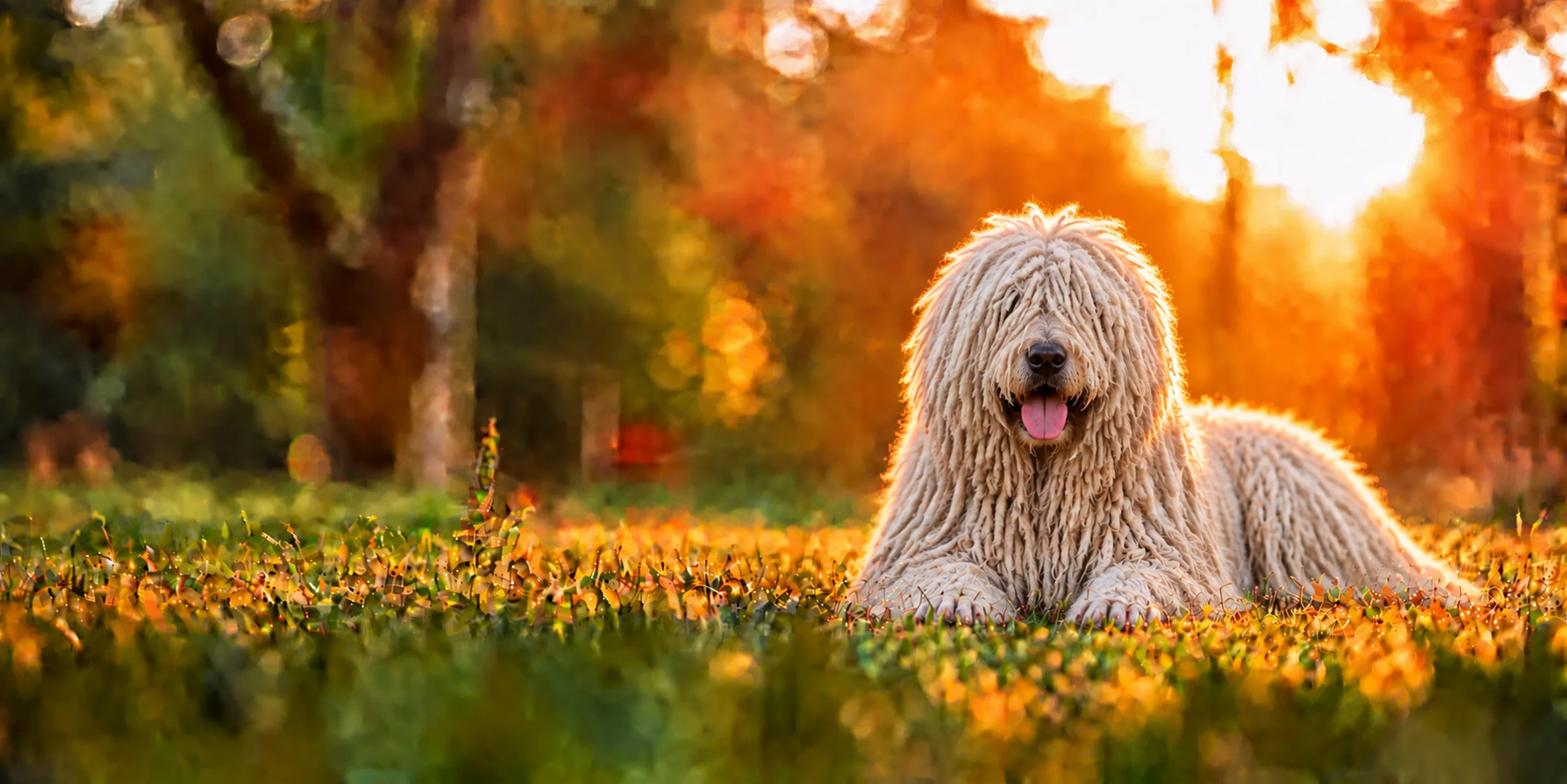
Komondor
Another large herding-country dog buried under a heavy coat. The Komondor is a corded livestock guardian, serious and territorial; the Old English Sheepdog is a brushed-out herding dog built for family life.
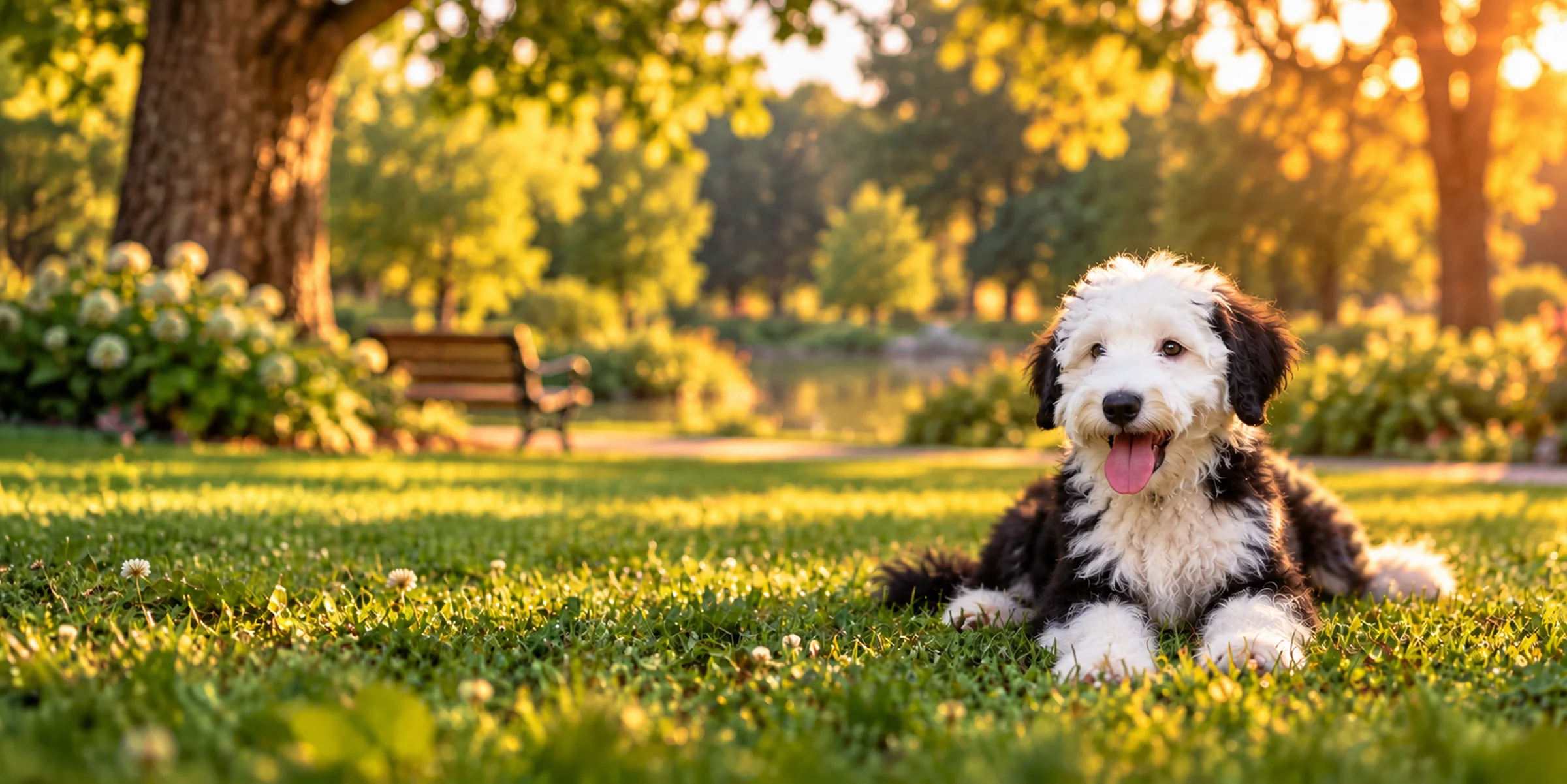
Sheepadoodle
The Poodle cross, and no escape from the coat. Two heavy-coated parents make a large dog whose grooming runs $700 to $1,400 a year, and a neglected coat gets shaved rather than saved, exactly as it does here.