

large-to-giant breed
Komondor
Hungary's corded flock guardian, and unmistakable for it. The cords are not a styling choice - they are working armor, and they have to be separated by hand every few weeks for the first two years, then dried for a day and a half after every bath thereafter. Underneath sits a hundred pounds of dog who decides without consulting anyone what counts as a threat and what does not.

Pup Height
25.5-27.5 in

Pup Weight
80-100 lb
Males a minimum of 27.5 in and 100 lb, females 25.5 in and 80 lb. Always white, in a corded coat that is the breed's entire identity - puppies are born with soft curls that must be separated by hand into cords from around eight months, a process that takes a couple of years to complete. A full adult coat can weigh fifteen pounds. Source: AKC breed standard.

Pup Lifespan
10-12 years
Your pup, at a glance
What’s Life With This Pup Really Like?

Moderate. They are devoted to their own family in an undemonstrative, watchful way, and the coat makes them less of a lap prospect than most.

Reasonable with their own family's children and protective of them. A Komondor's size and guardian instinct make supervision essential, especially with visiting children the dog has not been introduced to.

Good with livestock and animals they were raised to guard, and variable with unfamiliar dogs entering a Komondor's territory.

High, deep and concentrated at night. It is the flock guardian working, and it is the most common reason neighbors object.

Low. An hour suits them and they conserve themselves deliberately the rest of the time.

Very low. The coat cords rather than sheds - the hair stays in the cords instead of on your floor.

Limited. Puppies play; adults are serious, unhurried dogs who prefer a vantage point.

Moderate, and the coat around the mouth holds it.

Low by breeding. Intelligent and independent in equal measure - they cooperate with a handler they respect rather than obeying one.

The maximum. Territorial, deeply suspicious of strangers, physically imposing and entirely prepared to act.

Very high, and unlike any other coat here. No brushing at all once the cords have formed - brushing destroys them - but two years of hand-separating to get there, and a day and a half of drying after every bath for life. Fewer hours than an Afghan's daily brushing; far more skill, and few groomers will take a Komondor.

Very low. They need land, a boundary, cool conditions, an experienced owner and an insurer who will have them.
Lifestyle fit
Could This Be Your Best Breed?
A Komondor needs acreage, a real fence and neighbors far enough off to sleep through a night of barking, and an owner who has kept a guardian before and will not argue with one. Running costs are $2,400 to $4,000 a year over a ten to twelve year life. If drying one dog for thirty-six hours after a bath sounds like an anecdote rather than a chore you repeat for a decade, stop here.

Living Space
Land with a real fence and neighbors at a distance. The Komondor is a flock guardian who defines their own territory and patrols it vocally at night, and there is no version of them that suits a suburban street.

Pup Experience
Experienced guardian owners only. Komondors were bred for a thousand years to make decisions without a shepherd present, and they will make them about your visitors. The coat alone demands an owner who knew what they were signing up for.

Daily Pup Time
Forty-five minutes to an hour of walking - they conserve energy like any guardian. The coat is the real commitment: hours of cord separation while it forms, then hours of drying after every bath for life.

Allergies & Coat
The Komondor scores 2/10 for shedding and 4/10 for drooling. No dog is truly hypoallergenic. The allergens come from dander and saliva, and a coat like this one holds on to them rather than spreading them around your home - which is what a groomer is clearing out every six to eight weeks.
Quirks & challenges
The Not-So-Easy Stuff

The Coat Is Enormous Work
Cords must be separated by hand for two years, then take a day and a half to dry after a bath.
They Guard Without Asking
Territorial judgment is the breed. Relentless early socialization decides how it presents.
Nocturnal Barking
A deep carrying bark used through the night. It is the job, and it is why neighbors matter.
Independent to a Fault
Bred to work without a shepherd. Obedience is negotiated and never guaranteed under pressure.
Insurance and Housing
A hundred-pound guardian is frequently excluded by insurers and refused by landlords.
Poor in Heat
Fifteen pounds of cords. Summer is genuinely hard on them and the coat is never shaved for convenience.
The good, the bad & the hairy
Health, Care & Costs
Understanding the health risks and ongoing costs of a Komondor helps you plan for a happy, healthy life together.

10-12 years
$150-$250
per groom where a groomer will take them at all, every 8-12 weeks ($700-$1,400/year) - most owners learn to do it themselves
$2,400-$4,000/year
all-in (food, routine vet, grooming, insurance, incidentals)

Health Risks
Conditions this breed is prone to.

The joints develop loosely or unevenly and wear into arthritis, sometimes needing surgery - which at a hundred pounds sits at the top of the orthopedic cost range. Both parents should have scored hips and elbows.
The stomach fills with gas and twists, cutting off its own circulation, and it kills within hours without emergency surgery. Deep-chested giants are the highest-risk group - split meals, keep exercise clear of them, and discuss a preventive gastropexy.
A dense corded coat trapping moisture against the skin is exactly where bacteria and yeast thrive, and the cords hide the problem until it is established. Thorough drying after every bath and regular parting of the cords to check the skin is the whole prevention.
The eyelid rolls inward so the lashes rub the cornea, causing pain and ulceration. It appears in the breed and is corrected surgically.
The thyroid under-produces, causing weight gain, lethargy and coat and skin problems that compound the existing skin risk. Diagnosed by blood test and controlled with a daily tablet.
A practical problem and a serious one. Fifteen pounds of corded coat on a giant frame means they overheat easily, and shaving it is a last resort rather than a summer convenience - the cords take years to reform.

Insurance & Health Coverage
Two conversations, and liability comes first. A hundred-pound guardian with genuine suspicion of strangers is excluded by many home insurers and refused by most landlords - get a written position before there is a puppy, because this breed rehomes very badly.

On health, everything is priced by body mass. Joint surgery at this weight is at the top of the orthopedic range, and bloat is a several-thousand-dollar emergency at whatever hour it arrives.

The cost most owners underestimate is not insurable at all: grooming. Many groomers will not take a corded dog, the ones who will charge accordingly, and drying after a bath takes a day and a half with a high-velocity dryer. Most Komondor owners end up doing it themselves out of necessity.
 Get a Pet Insurance Quote
Care needs
The Daily Routine

Grooming
Unlike any other coat on this site. The puppy coat starts curling around eight months and must be separated by hand into cords, a process repeated every few weeks for two years until the cords are established. After that there is no brushing - brushing destroys cords - but they need parting to check the skin, trimming at the ends, and thorough drying after every bath, which takes twenty-four to thirty-six hours even with a high-velocity dryer. Keep the coat clean around the mouth and rear.

Exercise
Forty-five minutes to an hour of steady walking, timed around the temperature. A Komondor is not an athlete and does not want to be - a guardian conserves energy deliberately.

Food & Weight
Two or three measured meals rather than one, with activity kept clear of feeding given the bloat risk. Grow puppies slowly on giant-breed food, and go by feel rather than by eye because the coat hides condition entirely.
Similar breeds
If This Isn’t Quite the One

Kuvasz
The other Hungarian flock guardian, and the direct comparison - same job, same country, same temperament. The Kuvasz has an ordinary white coat needing brushing rather than cords, which makes them dramatically easier to keep.
Great Pyrenees
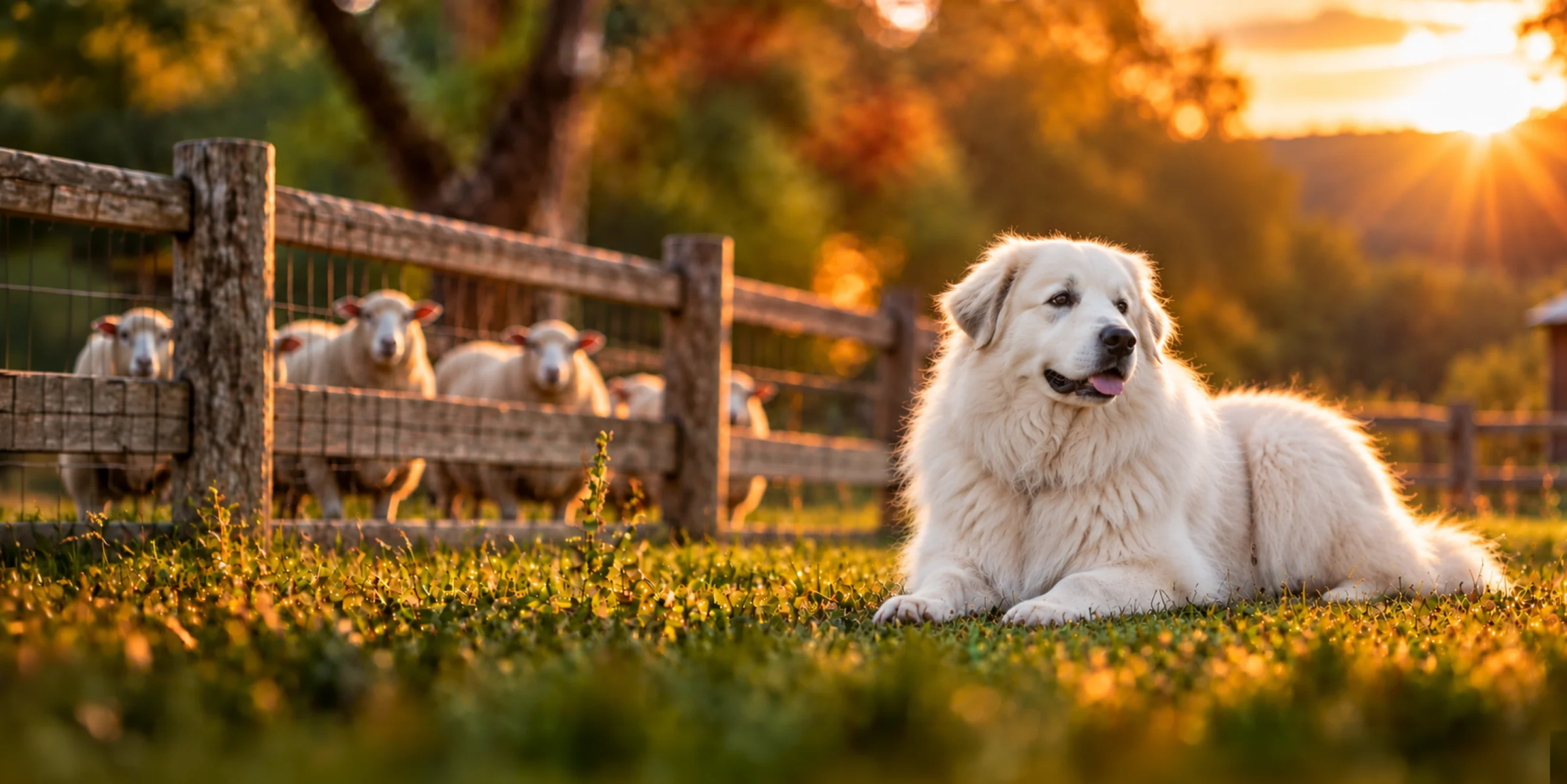
A comparable white mountain guardian with the same independence, nocturnal barking and territorial judgment. The Pyr is gentler with strangers and far easier to groom; the Komondor is more suspicious and more striking.
Puli
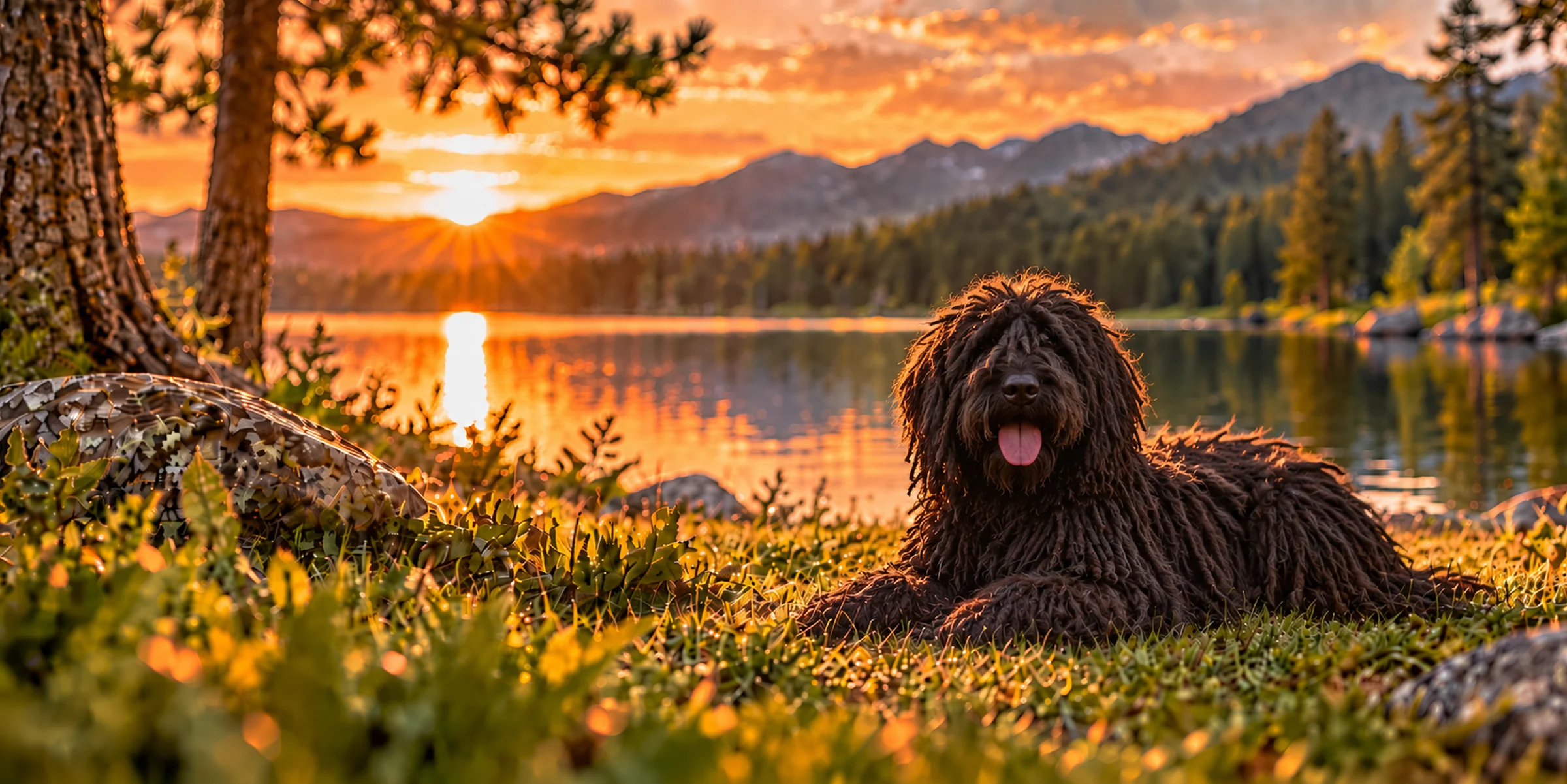
The other corded Hungarian breed, and the one most often mistaken for a Komondor. The Puli is a herder rather than a guardian - a third of the size, far more energetic and easier to house - but the cords take the same patient hand-separating and the same long drying after a bath.