

small breed
Pekingese
A palace companion from imperial China, and still built like one: fourteen pounds at most, a long low back under a huge coat, and a face flattened far enough that breathing is the headline fact of the breed. Heat and anesthesia are both real risks, the eyes sit exposed enough to injure against a bush, and the long back brings disc disease with it. The coat mats to the skin without real work several times a week.

Pup Height
6-9 in

Pup Weight
14 lb or under
One size: the standard sets a maximum of 14 lb and no height, and a compact, heavy-fronted, pear-shaped body that looks heavier than the scale says. "Sleeve" Pekingese - very small Pekes, traditionally under about 6 lb - are an old informal term, not a separate AKC variety. All colors and patterns are allowed and of equal merit, with or without a black mask. A long, straight, coarse outer coat over a thick undercoat, forming a mane around the neck and shoulders, with feathering on the ears, legs, tail and toes. Source: AKC breed standard.

Pup Lifespan
12-14 years
Your pup, at a glance
What’s Life With This Pup Really Like?

Fairly high. Devoted lapdogs with their chosen people, but on their own terms - affection is given, not demanded.

Limited. Pekingese do not tolerate grabbing, and their eyes and backs are easily injured by rough play, so they suit homes with older, gentle children.

Fair. Usually fine with a calm dog or cat raised alongside them; a large, boisterous dog is a risk to their eyes and back.

Moderate. Quick to announce visitors and noises, and quiet once the household settles.

Low. Short bursts of play, a slow walk, then long stretches of supervising from a cushion.

Heavy. A thick double coat that sheds steadily and more heavily at seasonal changes.

Low-key. Pekes play in brief, dignified spells and are not interested in fetch or roughhousing.

Low. Not droolers, though the face gets messy after meals and needs a wipe.

Low. Intelligent but independent, with little interest in repetition - patience and rewards get results, pressure does not.

Good. Alert, wary of strangers and quick to sound off, with real courage for the size.

High. Several thorough brushings a week plus daily eye and nose-fold care.

Moderate. Happy in small homes and with a quiet routine, but badly limited by heat and humidity.
Lifestyle fit
Could This Be Your Best Breed?
Pekingese belong in a calm, air-conditioned adult home where nobody minds a dog with opinions, and where $1,800 to $3,500 a year and a standing grooming appointment are both planned for across twelve to fourteen years. Stairs and sofa jumps need managing from day one. If a summer without air conditioning is a real possibility, or the grooming would get skipped, this is not the dog.

Living Space
An apartment or a house, as long as it is air-conditioned in summer. Pekingese need very little room, but the flat face makes heat genuinely dangerous, and stairs and jumping off furniture are hard on a long, low back.

Pup Experience
Workable for a first-time owner who wants a calm adult household and accepts the vet and grooming load going in. The temperament is independent rather than eager to please, and the health demands take more planning than the dog's size suggests.

Daily Pup Time
Two short, gentle walks in the cool part of the day, a daily check and wipe of the eyes and nose fold, and a thorough brush several times a week.

Allergies & Coat
The Pekingese scores 7/10 for shedding and 2/10 for drooling. No dog is truly hypoallergenic. The allergens come from dander and saliva, and a dog that sheds this much will leave plenty of hair behind - especially on your furniture, floors, and clothes.
Quirks & challenges
The Not-So-Easy Stuff

Breathing Trouble
The flat face crowds the airway, so snoring, snorting and poor exercise tolerance are normal. Labored breathing at rest is not - that needs a vet.
Heat Can Kill
A flat face under a heavy coat cannot shed heat. No hot cars, no midday walks, and air conditioning in summer.
Exposed Eyes
Large, prominent eyes scratch easily and can even pop from the socket after a knock or rough scruffing. A squint or cloudy eye is a same-day visit.
Back Injuries
A long, low body built on short legs is prone to disc disease. Discourage jumping off furniture and use a harness, not a collar.
A Coat That Mats
The mane and feathering tangle quickly, and the rear end needs keeping clean. Skipped brushing turns into a shave-down.
Stubborn Streak
Pekingese decide for themselves whether a request is worth doing. Housetraining in particular can take months.
The good, the bad & the hairy
Health, Care & Costs
Understanding the health risks and ongoing costs of a Pekingese helps you plan for a happy, healthy life together.

12-14 years
$60-$100
per groom (bath, brush-out, sanitary and foot trim, nails), every 4-8 weeks or done at home ($0-$900/year)
$1,800-$3,500/year
all-in (food, routine vet, grooming, insurance, incidentals)

Health Risks
Conditions this breed is prone to.

Narrow nostrils, an elongated soft palate and a crowded throat restrict breathing, which shows as loud snoring, exercise intolerance and, in severe cases, collapse or overheating. Surgery to widen the nostrils and shorten the palate helps many dogs, and general anesthesia carries more risk than in a long-nosed breed. Choose a puppy from parents with open nostrils and quiet breathing.
Shallow sockets and prominent eyes mean a knock, a dog-fight bite or pressure on the neck can push an eye out of the socket - an emergency where minutes matter. Scratches and corneal ulcers are also common and can deepen fast, so any squinting, tearing or cloudiness needs a vet the same day.
Reduced tear production (keratoconjunctivitis sicca) and brown pigment spreading across the cornea are both common in the breed, often worsened by eyelids that do not fully close and nose-fold hair rubbing the eye. Daily drops manage dry eye; regular eye exams catch both early.
Pekingese are a chondrodystrophic breed, so discs harden early and can rupture, causing pain or sudden hind-leg weakness and sometimes needing spinal surgery. A CDDY DNA test exists, but the variant is so widespread in the breed that it does little to separate one dog from another - keeping the dog lean and limiting jumps matters more.
The wrinkle over the nose traps moisture, tears and food, and becomes red, smelly and infected if left alone. Clean and dry the fold daily; the same care applies to the area under the tail.
Broad heads and shoulders on a small, heavy-fronted body make natural whelping risky, and a large share of Pekingese litters are delivered by cesarean section. This matters mainly to breeders, and it is a real reason to avoid breeding a pet female casually.

Insurance & Health Coverage
Read the brachycephalic wording first. Some insurers exclude conditions linked to the flat face or charge more for them, and in a Pekingese that covers the airway surgery, heatstroke treatment and much of the eye work - most of what you would actually claim for. Ask directly rather than assuming a general policy covers it.

Eyes and backs are the expensive emergencies. An eye proptosis or a deep ulcer can mean specialist surgery, and a disc rupture that needs spinal surgery commonly runs into the thousands. Both tend to happen suddenly, so cover in place before the first incident is worth far more than cover taken out after something is on the record.

Dental disease, heart murmurs from valve disease and loose kneecaps also turn up in older Pekes. Most policies treat dental cleaning as routine and exclude it, and every anesthetic carries extra risk in this breed, so budget for dental care as a planned cost.
 Get a Pet Insurance Quote
Care needs
The Daily Routine

Grooming
A thorough brush and comb down to the skin several times a week, paying attention to the mane, behind the ears, the armpits and the feathered rear, where mats start first. Wipe the eyes and clean and dry the nose fold every day. Keep the hair around the rear and between the paw pads trimmed. Many pet owners choose a shorter trim, which makes the coat far easier to manage and keeps the dog cooler.

Exercise
Modest: two short, slow walks a day plus some indoor play is plenty. Walk in the early morning or evening in warm weather, stop at the first sign of heavy panting, and skip hard exercise in heat and humidity entirely. Avoid stairs and jumps where you can.

Food & Weight
Small, measured meals of a good-quality small-breed food - Pekingese gain weight easily, and extra weight makes both the breathing and the back worse. A shallow bowl makes eating easier for a flat face, and keeping the facial hair clean after meals protects the nose fold.
Similar breeds
If This Isn’t Quite the One

Japanese Chin
Another flat-faced court companion from East Asia with the same heat sensitivity and eye exposure. The Chin is lighter, more agile and more openly affectionate; the Pekingese is heavier, more stubborn and far more coat.
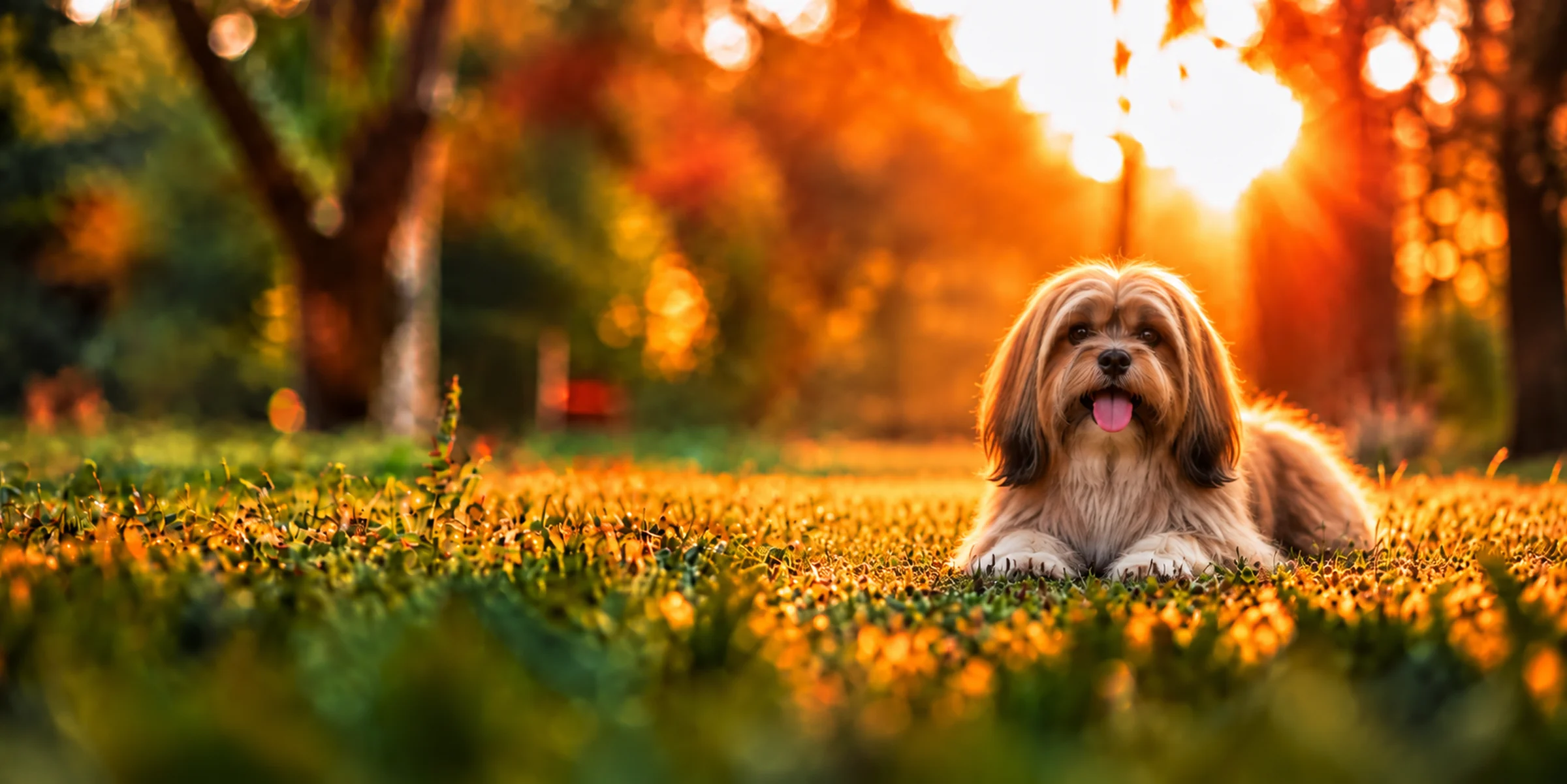
Lhasa Apso
A small, long-coated Asian breed with the same aloof, independent streak and watchful bark. The Lhasa has a longer muzzle, breathes more easily and handles exercise better; the Pekingese is lower, heavier-fronted and more heat-limited.

English Toy Spaniel
A quiet, flat-faced toy with similar airway, eye and anesthetic considerations. The English Toy is softer, gentler and easier to handle; the Pekingese is more independent and more likely to stand their ground.