

medium-to-large breed
Pont-Audemer Spaniel
A curly-coated French pointing spaniel out of the Normandy marshes, built for wildfowl and rough country, with a topknot that makes them look half Irish Water Spaniel - which they partly are, after the breed club allowed crosses in 1949 to widen a gene pool down to almost nothing. Forty-four to sixty pounds of cheerful working gundog who needs an hour or more of real exercise, ideally in water, every day of the year.

Pup Height
20.5-23 in

Pup Weight
44-60 lb
One height range for both sexes, 52-58 cm (about 20.5-23 in). The standard sets no weight, and most adults fall between about 44 and 60 lb. Brown, preferably brown and gray mottled, with dead-leaf glints; black, black and white, or tan markings are faults. A curly, slightly ruffled coat, with a very curly topknot that leaves the forehead bare and long curly hair on the ears forming a wig around the face. In the FCI's continental pointing dogs, spaniel type, and in the AKC Foundation Stock Service since 2023. Source: FCI breed standard.

Pup Lifespan
12-14 years
Your pup, at a glance
What’s Life With This Pup Really Like?

Affectionate. Pont-Audemer Spaniels like to be close to their people once the day's work is done.

Very good. Gentle and playful with children, though an adolescent gundog's energy needs supervision around toddlers.

Good with dogs. Birds and small pets trigger the hunting instinct, so introductions need care.

Low to moderate. They bark to alert or when bored, but are not habitual barkers.

High. A working pointing spaniel that needs daily running, swimming or field work.

Low. The curly coat sheds lightly, though it holds dirt and debris.

Clownish. Owners describe a playful, comic streak, especially around water and retrieving games.

Minimal. Wet after a swim or a drink, but not a drooler.

Good. Willing and responsive to rewards, with recall around birds the part that takes the most work.

Moderate to low. They will announce a visitor, then usually greet them.

Moderate. A weekly brush, regular ear care and a check for burrs after outings.

Limited. Too energetic for apartment life and happiest with space, water and a job.
Lifestyle fit
Could This Be Your Best Breed?
Pont-Audemer Spaniels belong with hunters and outdoors families - a house with a secure yard, fields or water within reach, and $1,600 to $2,800 a year for twelve to fourteen. They are affectionate, clownish and easy with children. Getting one is the real obstacle: a few hundred dogs exist worldwide, the wait usually runs through a European breeder, and published health data is thin enough that nobody should choose this breed in a hurry.

Living Space
A house with a secure yard and easy access to fields or water suits the breed best. Pont-Audemer Spaniels are calm enough indoors once exercised, but a working gundog kept in an apartment with only street walks is a restless one.

Pup Experience
Workable for a first-time owner who is active and patient, and ideal for someone who hunts or wants to train for field work. The harder part is finding a puppy at all - expect a long wait, and probably a European breeder.

Daily Pup Time
An hour or more of real exercise daily, ideally off leash somewhere safe or in water, plus a weekly brush and regular ear checks.

Allergies & Coat
The Pont-Audemer Spaniel scores 3/10 for shedding and 2/10 for drooling. No dog is truly hypoallergenic. The allergens come from dander and saliva, and a coat that sheds this little leaves far less of them on your furniture, floors, and clothes.
Quirks & challenges
The Not-So-Easy Stuff

Very Hard to Find
Only a few hundred dogs exist and few litters are born each year, mostly in France. Expect a waitlist and possibly an import.
Needs Real Exercise
A working gundog's stamina. Without daily running, swimming or field work the energy turns into restlessness.
Drawn to Water and Mud
Bred for marshes and happy in any puddle. The curly coat comes home wet, muddy and full of whatever grew nearby.
Bird Instinct
A pointing breed with a strong interest in birds. Recall needs early work, and chickens need a good fence.
Ear Care
Long, heavily furnished ears that trap moisture and debris. Check and clean them weekly, and after every swim.
Little Published Data
Health, lifespan and temperament information is mostly anecdotal. Talk to the breed club and breeders directly.
The good, the bad & the hairy
Health, Care & Costs
Understanding the health risks and ongoing costs of a Pont-Audemer Spaniel helps you plan for a happy, healthy life together.

12-14 years
$55-$90
per groom (bath, tidy, feet and ears), every 8-12 weeks or done at home ($0-$450/year)
$1,600-$2,800/year
all-in (food, routine vet, grooming, insurance, incidentals)

Health Risks
Conditions this breed is prone to.

Patchy hair loss, mainly on the ears and around the nose, has been reported in the breed, usually first showing between about seven and eighteen months. It is mostly cosmetic but worth a vet visit to rule out skin disease, and worth asking breeders about in their lines.
Long, hairy, low-set ears on a dog that loves water are a recipe for otitis. Weekly checks, drying after swims and a vet visit at the first head-shaking or smell keep it from becoming chronic.
The hip joint develops loosely and wears into arthritis, as in most gundogs of this size. There are no published breed figures, so ask whether both parents have been hip-scored.
The breed was rebuilt from a handful of dogs and remains rare, so inbreeding is a real concern. Ask breeders about coefficient of inbreeding and how they choose pairings.
Curly feet, ears and coat collect seeds and burrs that can work into skin, ears and between the toes. Check the dog over after every outing in long grass.
No large health survey or breed-specific DNA test panel exists. The Irish Water Spaniel outcross means that breed's issues, such as drug sensitivities and hair loss, are worth mentioning to your vet.

Insurance & Health Coverage
Insure early. Pont-Audemer Spaniels are too rare to have a large health dataset, which means neither you nor the breeder can say with confidence what will come up - and anything that appears before the policy starts becomes a permanent exclusion.

The realistic claims for an active gundog are ear infections, soft-tissue injuries, grass seeds that need removing under sedation and, later, joint problems. None is exotic, but repeat ear and skin claims add up, so check how a policy handles chronic conditions.

If the puppy comes from overseas, confirm when cover can start after import and whether any waiting periods apply.
 Get a Pet Insurance Quote
Care needs
The Daily Routine

Grooming
A curly, slightly ruffled coat that sheds lightly and is fairly easy to keep. Brush and comb once a week, and after field work to pull out burrs and seeds. Trim the hair between the pads, keep the ears clean and dry, and bathe only when needed - the coat should stay natural rather than clipped.

Exercise
At least an hour of vigorous exercise a day - swimming, retrieving, off-leash running in a safe space or real field work. A long line is useful until recall is reliable around birds. Puppies should not be pushed into long runs before their joints mature.

Food & Weight
A quality diet sized to activity, with more in hunting season and less in the off months. Keep Pont-Audemer Spaniels lean enough to feel the ribs easily, which protects the joints on an active dog.
Similar breeds
If This Isn’t Quite the One
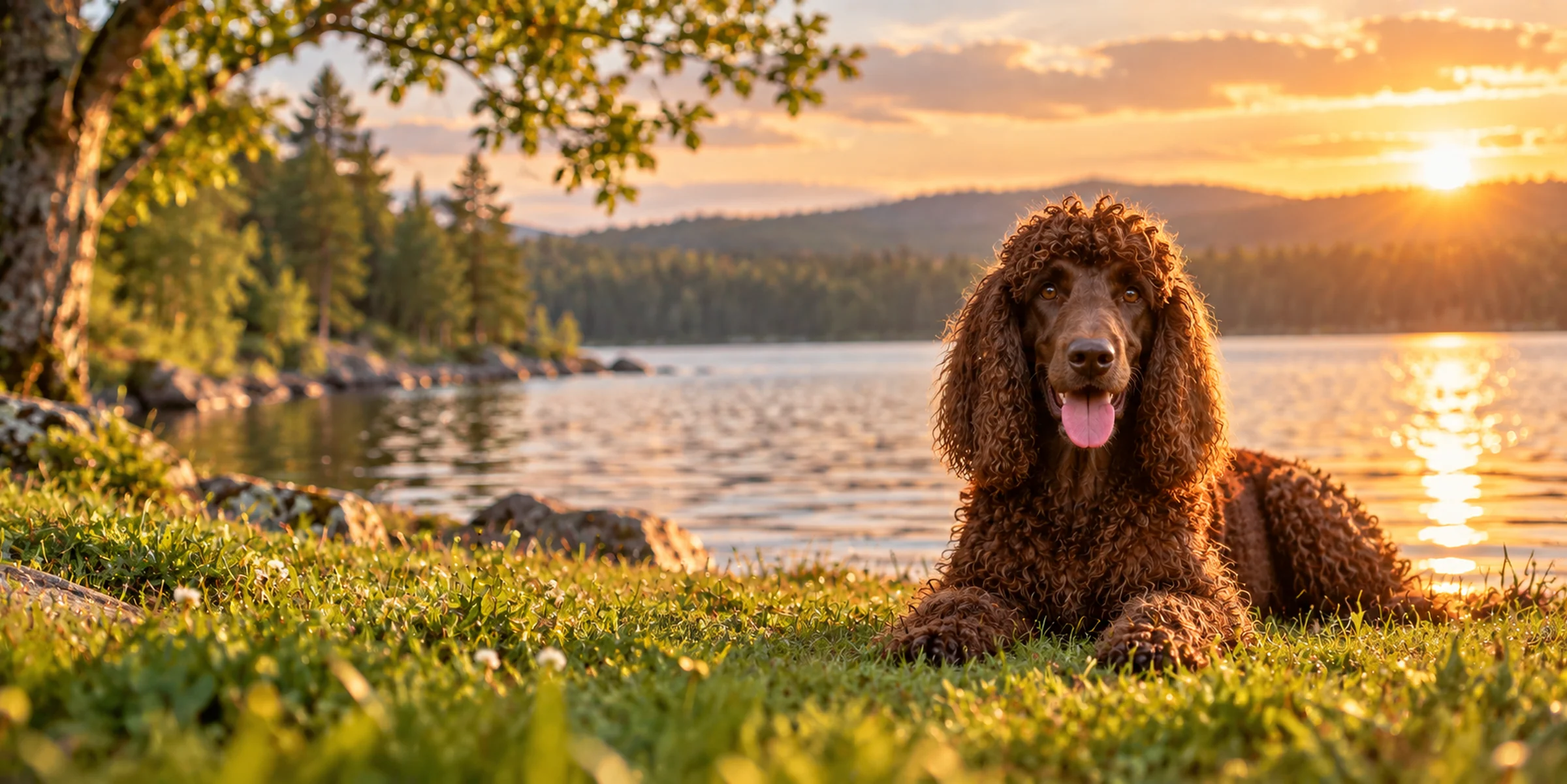
Irish Water Spaniel
The breed that helped save the Pont-Audemer after the war, and the resemblance shows in the curls and topknot. The Irish Water Spaniel is a little taller and heavier and more reserved; the Pont-Audemer is a pointing breed, more openly friendly, and far harder to find.

Blue Picardy Spaniel
Another rare French spaniel, looked after by the same French breed club. The Blue Picardy is calmer, softer and flat-coated with feathering; the Pont-Audemer is curlier, more of a water dog and more of a clown.

American Water Spaniel
A curly-coated water spaniel with a similar all-round hunting job. The American Water Spaniel is smaller and easier to find in the United States; the Pont-Audemer is larger, a pointer and much rarer.