

small-to-medium cross
Schnoodle
A Schnauzer to Poodle cross, unrecognized by any kennel club, and the one doodle where the low-shedding promise mostly holds up - both parents are wiry or curly and neither has a shedding coat to pass on. What surprises people is the dog underneath. The Schnauzer side is terrier-flavored: alert, vocal, suspicious of strangers and genuinely watchful, sharpened by a Poodle brain that learns fast in whichever direction you point it.

Pup Height
10-20 in

Pup Weight
12-50 lb
No kennel club recognizes the Schnoodle, so there is no breed standard and no reliable average. Size depends entirely on which two dogs were used, and the Schnauzer side is three separate breeds rather than one. A Miniature Schnauzer crossed to a Toy or Miniature Poodle is the common version and usually lands around 12-25 lb. A Standard Schnauzer to a Miniature or Standard Poodle runs nearer 30-50 lb, and a Giant Schnauzer to a Standard Poodle produces a 60-90 lb working dog that has almost nothing in common with the small version beyond the beard. At the shoulder, the Miniature Schnauzer version stands about 10-15 in, the Standard Schnauzer version about 15-20 in, and a Giant Schnauzer cross can reach 24-27 in. Coats are wavy to curly, most often black, salt and pepper, silver, apricot or parti. The parents' actual weights are the only useful guide, and the question to ask first is which Schnauzer.

Pup Lifespan
12-15 years
Your pup, at a glance
What’s Life With This Pup Really Like?

High, on their own terms. Affectionate and attached to the household, though a Schnoodle would usually rather sit somewhere with a view of the door than be held.

Good with children old enough to be gentle and calm. The Schnauzer side is sturdy and playful, but a dog who alerts at noise and movement is a poor match for a house of toddlers.

Fair. Usually fine with dogs and cats raised alongside them, and a genuine hazard to hamsters, rats and rabbits - the ratting instinct came through both the Schnauzer line and the years of selection behind it.

High, and the trait most often underestimated. This is the Schnauzer side: alert, opinionated and quick to announce anything that moves past the window, with enough Poodle brain to learn that barking gets results. Littermates vary, but plan for a vocal dog and be pleased if one is not.

Moderate to high, 45 to 60 minutes. Two working parents rather than two companion breeds, so a walk alone does not settle them - the thinking half of the day matters as much as the mileage.

Very low, and unusually dependable for a Poodle cross. Both parents are furnished, wiry or curly breeds with no shedding coat to pass on, so a Schnoodle does not carry the flat-coat risk that a Goldendoodle or a Labradoodle does. Two honest caveats: low shedding is not hypoallergenic, since the allergen is dander and saliva rather than hair, and low shedding means the loose hair stays in the coat, which is why it mats.

Spirited and clownish, with a problem-solving streak. Fetch, tug, nosework and trick training all land, and the games stay fun into old age.

Minimal, though a wet beard after a drink gets wiped across the nearest leg.

Excellent, and near the Poodle end. Quick, food-motivated and keen to work out what you want, with a terrier streak that argues when a session gets repetitive. Sensitive too, so rewards rather than correction.

High for the size, and genuinely meant. Alert, reserved with strangers and loud about arrivals - a real doorbell rather than a greeting committee, though too small in the usual version to be any sort of guard.

The commitment people underestimate. Daily combing to the skin and a groomer every five to eight weeks for life - the reliable low-shedding coat costs more work, not less, and neglect gets the coat clipped to the skin.

High on places, lower on noise and empty days. The small rating assumes the common version, a Miniature Schnauzer crossed to a Toy or Miniature Poodle; a Standard Schnauzer cross is a medium dog and a Giant Schnauzer cross is a large working one.
Lifestyle fit
Could This Be Your Best Breed?
Schnoodles suit an owner who wants a clever, involved small dog and will put in daily brushing plus $450 to $1,000 a year at the groomer, inside $1,800 to $3,200 all-in across twelve to fifteen years. The Miniature Schnauzer's fat metabolism comes with the deal, which means a low-fat diet and no table scraps for life. Anyone who wants a dog that greets visitors without comment should read the Cockapoo page instead.

Living Space
An apartment works on size and energy, and the thing that decides whether it works in practice is the barking. Schnoodles appoint themselves to the front window, and a hallway with footsteps in it all day gives them a job nobody asked for. A quiet floor, or early work on a quiet cue, is the difference.

Pup Experience
Fine for a first-time owner who wants to train a dog rather than carry one. Two things ask more than people expect: a coat that needs work every day and a groomer for life, and an opinionated small dog who will rehearse barking into a habit within months if nobody interrupts it.

Daily Pup Time
Forty-five minutes to an hour of walking and play, plus something to think about and ten minutes of coat work most days. Add a professional groom every five to eight weeks, permanently.

Allergies & Coat
The Schnoodle scores 2/10 for shedding and 1/10 for drooling. No dog is truly hypoallergenic. The allergens come from dander and saliva, and a coat like this one holds on to them rather than spreading them around your home - which is what a groomer is clearing out every six to eight weeks.
Quirks & challenges
The Not-So-Easy Stuff

Window Patrol Barking
The loudest trait in the cross, and it comes from the Schnauzer side. Every passing dog, delivery and neighbor gets announced unless a quiet cue is taught early.
Reserved With Strangers
Not a retriever doodle. Many Schnoodles hold back or bark at a new person, so steady socialization through the first year matters more here than in most Poodle crosses.
Diet Is Not Negotiable
The Miniature Schnauzer line carries high blood fat, and fatty scraps can trigger pancreatitis. Low-fat food, measured portions, nothing off the table.
Coat Mats To The Skin
Low shedding means the loose hair stays in the coat instead of the sofa. Without daily combing a Schnoodle gets shaved rather than brushed out.
Chase Instinct
Rats were the original job and the instinct did not leave. Small pets are a poor match, and recall breaks down the moment a squirrel moves.
Too Clever By Half
Bright enough to test a rule, and quick to notice which household member folds. Short varied sessions and consistent answers work better than repetition.
The good, the bad & the hairy
Health, Care & Costs
Understanding the health risks and ongoing costs of a Schnoodle helps you plan for a happy, healthy life together.

12-15 years
no breed-specific study exists; this is the range both parent breeds fall in, and assumes the Miniature cross - larger Schnoodles live shorter
$60-$100
per professional groom, every 5-8 weeks ($450-$1,000/year)
$1,800-$3,200/year
all-in (food, routine vet, grooming, insurance, incidentals)

Health Risks
Conditions this breed is prone to.

The single most useful thing on this page, because it changes how the dog is fed. Many Miniature Schnauzers carry abnormally high fat levels in the blood, and that raises the risk of pancreatitis - severe vomiting, abdominal pain and days on IV fluids, and a genuine emergency when it flares. The management is unglamorous and lifelong: a consistent low-fat food, treats counted into the ration, no table scraps and no fatty leftovers, plus bloodwork at routine visits to see where the numbers sit. A Schnoodle out of a Miniature Schnauzer should be fed as though the trait came through, because there is no way to know that it did not.
Miniature Schnauzers are among the breeds most prone to calcium oxalate and struvite stones, which show as straining, frequent squatting, accidents in the house or blood in the urine, and can block the urethra outright. Easy access to water, a vet-guided diet and urine checks at annual visits are the practical defense. Surgery is the fix once stones are large, and the tendency recurs, so this is a condition to have cover in place for early.
An inherited disease that destroys the retina slowly, taking night vision first and usually ending in blindness. There is no treatment, but the loss is painless and gradual and most dogs manage well in a home they already know. Both sides carry a form, and both sides have a DNA test - PRA-prcd on the Poodle side, and a test for one inherited form of PRA in the Miniature Schnauzer. Ask for both parents' results rather than an annual eye exam alone, since a carrier looks normal.
A muscle disorder specific to the Miniature Schnauzer, in which the muscles are slow to relax - puppies are stiff, struggle to get up and may have trouble swallowing. Affected dogs are affected from very young. A DNA test exists, so the Schnauzer parent's status is a certificate a breeder can hand over rather than a matter of opinion, and two carriers are what produce an affected puppy.
Two small-dog orthopedic problems from the Poodle side. The kneecap slips out of its groove in the first, giving a skipping step that ranges from occasional to surgical. In the second, the head of the femur loses its blood supply and collapses, usually before a year old, producing a limp that needs surgery. Both are worth asking about: knees can be examined and graded on the parents.
One from each parent, and both live on the back. Schnauzer comedo syndrome produces blackhead-like plugs along the spine, usually a cosmetic nuisance managed with medicated shampoo, though infected ones need treatment. Sebaceous adenitis is a Poodle condition in which the immune system destroys the skin's oil glands, leaving dry scaly skin and patchy coat loss - incurable but manageable with oil baths and supplements. Both are easy to miss under a thick coat, so check the skin when combing.
Recurrent seizures with no other underlying cause, usually first appearing between one and five years old. Managed with lifelong daily medication rather than cured, and one of the conditions insurers exclude once it is on the record.

Insurance & Health Coverage
The argument here comes almost entirely from the Miniature Schnauzer side, and the two claims to plan for both recur.

Pancreatitis is the first. A flare means several nights of hospitalization and the underlying high blood fat does not go away, so a second episode is common - which is exactly the pattern insurers treat as pre-existing once the first one is on the record. Bladder stones are the second: surgery runs into the thousands and the tendency to form them recurs for life. A policy that covers chronic conditions year after year, without a per-condition cap that runs out on the second claim, is worth more here than a low premium.

The conditions with DNA tests behind them - myotonia congenita, PRA - are congenital, and congenital conditions are commonly excluded outright. Tested parents are the only real protection on those, which is why the certificates matter more than the policy wording does.
A prescription low-fat diet may not be covered either, and for this cross that is a standing cost rather than a temporary one. Check that clause specifically.
 Get a Pet Insurance Quote
Care needs
The Daily Routine

Grooming
High, and daily. The coat holds loose hair instead of dropping it, which is the whole appeal and also why it mats - comb to the skin with a slicker and a steel comb, working the beard, the armpits, behind the ears and the leg furnishings, where mats start. A matted coat gets clipped off rather than brushed out. Professional groom every 5-8 weeks for life; most pet Schnoodles live in a short trim because a long coat at this texture is a losing fight. Wipe the beard after meals, check and dry the ears weekly, and brush teeth daily.

Exercise
45-60 minutes daily across a walk and play, plus real mental work - nosework, puzzles and trick training tire this cross faster than distance does. Keep them on a leash or inside a fence near squirrels and traffic, because the chase instinct is intact and recall is the first thing to break.

Food & Weight
Feed as though the Schnauzer fat metabolism came through, because nothing tells you otherwise until a flare does: a measured low-fat food, treats weighed into the daily ration rather than added on top, and no scraps from the table. Keep fresh water easy to reach to dilute the urine and lower the stone risk. There is no standard behind this cross, so the chart on the bag is a poor guide - portion to the dog in front of you, ribs easy to feel and a waist visible from above.
Similar breeds
If This Isn’t Quite the One
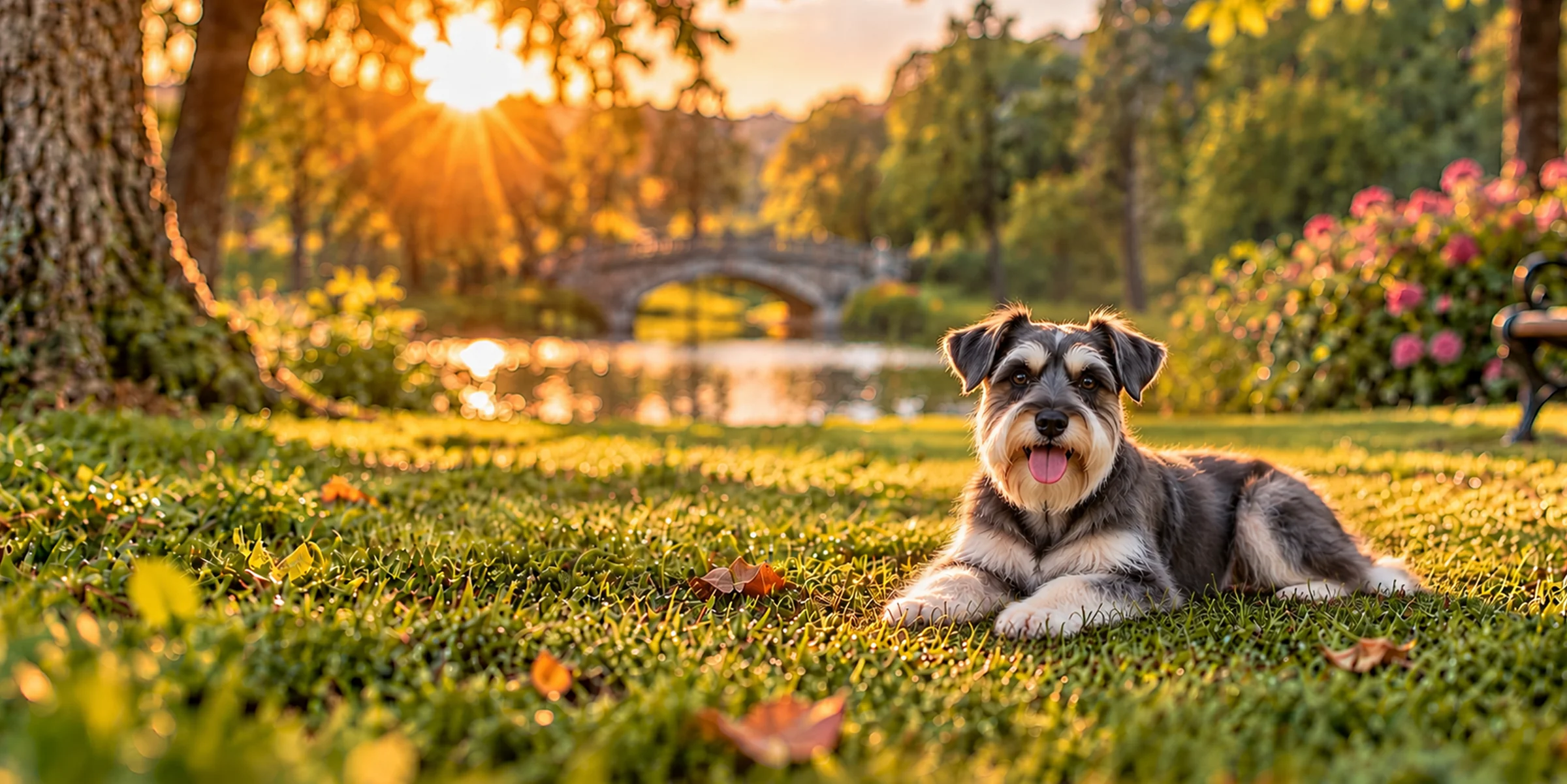
Miniature Schnauzer
The parent that supplies the bark, the watchfulness and the diet problem, with a written standard, a measured lifespan and a known adult weight behind all three. Read this one before assuming a Schnoodle will be a soft dog.

Miniature Poodle
The other parent, and the more predictable route to the same coat and the same size - the lowest-shedding coat going and a known adult weight, in a quieter, more sensitive dog with less to say about the window.
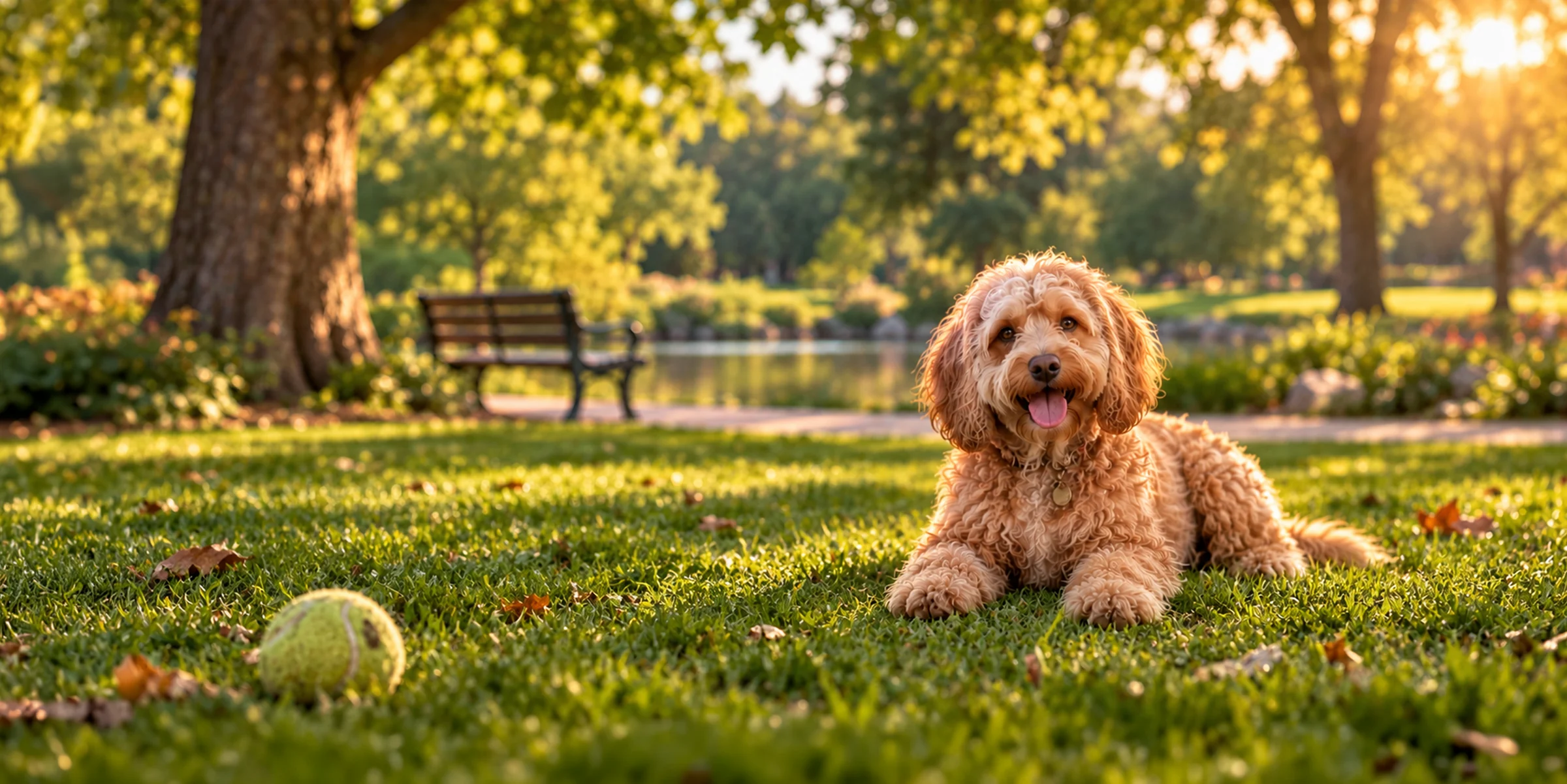
Cockapoo
The cheerful, uncomplicated doodle, for anyone who wants the coat without the opinions. Friendlier with strangers and far less vocal, at the cost of the Cocker's recurring ear infections and a coat lottery a Schnoodle mostly avoids.

Cavapoo
The soft, people-focused small doodle at a similar size. Lower drive, quieter and easier with visitors, but the Cavalier heart and syringomyelia risk make the health homework harder rather than easier.