

small breed
Miniature Schnauzer
A German farm ratter made in the late 1800s by crossing the Standard Schnauzer with smaller breeds, and still a working dog inside a twelve-inch frame. Miniature Schnauzers are funny, sturdy and involved in whatever the household is doing, and the wiry coat holds loose hair instead of dropping it on the sofa. Two costs run for life: a groomer every five to eight weeks, and a diet you police, because pancreatitis and bladder stones are breed problems here.

Pup Height
12-14 in
12-14 in at the shoulder for both males and females. Salt and pepper, black and silver, or solid black - white is not accepted under the AKC standard. A double coat with a hard, wiry outer layer and a close undercoat, with the eyebrows, beard and leg furnishings the schnauzer family shares. Recognized as a separate breed from the Standard and Giant Schnauzer. Source: AKC breed standard.

Pup Weight
11-20 lb

Pup Lifespan
12-15 years
Your pup, at a glance
What’s Life With This Pup Really Like?

High. Affectionate and happy on a lap, though usually just as keen to be up and supervising.

Very good. Sturdy for a small dog and playful with children, with the usual need to teach kids gentle handling.

Fair. Usually fine with other dogs and cats raised alongside them, but hamsters, rats and other small pets are prey.

High. Alert and vocal, quick to announce anything unusual and prone to nuisance barking without training.

Moderate. Lively and playful, and content with a good daily walk and some games.

Very low. The wiry coat holds loose hair rather than dropping it around the house.

Spirited and clownish. Fetch, tug and games of chase stay fun well into old age.

Minimal. Little drool, though a wet beard after drinking drips across the floor.

Good. Quick learners who respond to rewards, with a stubborn side when bored.

High. Very alert and loud about visitors, though too small to be a real guard.

High. Regular brushing plus professional clipping or hand-stripping every few weeks.

High. Small and sturdy, happy in apartments or houses, provided the barking is managed.
Lifestyle fit
Could This Be Your Best Breed?
Miniature Schnauzers fit almost any home - apartment, house, farm - and suit families, singles and older owners who want a small dog with opinions and a sense of humor. Twelve to fifteen years at $1,800 to $3,200 a year, of which $400 to $1,000 is grooming alone. Households that hand out table scraps, and households that cannot live with an alert bark, are the two that regret this choice.

Living Space
Anywhere from an apartment to a farm. Miniature Schnauzers are small and adaptable indoors, but they are alert barkers, so thin walls and close neighbors need some training work. A fenced yard helps, since the terrier in them will chase a squirrel into the road.

Pup Experience
A good choice for first-time owners who are ready to be consistent. Miniature Schnauzers are clever and eager to take part, but they test rules and will train their owners to open the door on demand if nobody sets limits.

Daily Pup Time
About 45 minutes to an hour of walks and play daily, a few brushing sessions a week, and a professional groom every 5-8 weeks.

Allergies & Coat
The Miniature Schnauzer scores 2/10 for shedding and 1/10 for drooling. No dog is truly hypoallergenic. The allergens come from dander and saliva, and a coat like this one holds on to them rather than spreading them around your home - which is what a groomer is clearing out every six to eight weeks.
Quirks & challenges
The Not-So-Easy Stuff

Barking
Keen watchdogs who announce the mail carrier, the neighbor and the leaf that blew past. Teaching a quiet cue early saves a lot of grief.
Prey Drive
Bred to kill rats, and small rodents are not safe around them. Keep them leashed or fenced near squirrels and traffic.
Grooming Commitment
The low-shedding coat keeps growing and mats in the beard and leg furnishings. Plan on a groomer every 5-8 weeks.
Diet Sensitivity
Prone to pancreatitis and high blood fats. Table scraps and fatty treats can put one in the hospital.
Stubborn Streak
Smart enough to get bored with drills and decide what they will do. Short, varied sessions work far better than repetition.
Dislikes Being Left Out
Very attached to their people and inclined to follow them from room to room. Long days alone lead to barking and frustration.
The good, the bad & the hairy
Health, Care & Costs
Understanding the health risks and ongoing costs of a Miniature Schnauzer helps you plan for a happy, healthy life together.

12-15 years
$60-$100
per groom (clipping or hand-stripping, bath, beard and furnishings, nails, ears), every 5-8 weeks ($400-$1,000/year)
$1,800-$3,200/year
all-in (food, routine vet, grooming, insurance, incidentals)

Health Risks
Conditions this breed is prone to.

Many Miniature Schnauzers carry abnormally high blood fats, which raises the risk of pancreatitis - painful vomiting and abdominal pain that can need days in the hospital. A consistent low-fat diet and routine bloodwork help, and fatty scraps are a common trigger.
The breed is at high risk of calcium oxalate and struvite bladder stones, which cause straining, frequent urination or blood in the urine and sometimes need surgery. Plenty of water, a vet-guided diet and regular urine checks reduce the risk.
More common than in most breeds and linked to obesity and pancreatitis. Watch for heavy drinking, frequent urination and weight loss; diabetic dogs need insulin injections for life.
Hereditary cataracts, sometimes appearing in young dogs, and progressive retinal atrophy both occur in the breed. Breeding dogs should have annual eye examinations, and a DNA test is available for one inherited form of PRA.
Myotonia congenita causes stiff, delayed muscle relaxation in puppies, and a CARD9 mutation leaves some dogs unable to fight off Mycobacterium avium (MAC) infections. DNA tests exist for both, and for persistent Mullerian duct syndrome, so ask the breeder for parent results.
Schnauzer comedone syndrome produces blackhead-like bumps along the back, usually a cosmetic nuisance managed with medicated shampoo. Allergic itching and ear infections are also common.

Insurance & Health Coverage
Insure early. Miniature Schnauzers are long-lived, and the conditions that matter most - pancreatitis, bladder stones and diabetes - tend to recur, so a first episode before coverage starts can become a permanent pre-existing exclusion.

Pancreatitis and stones are the claims to plan for. A pancreatitis flare can mean several nights on IV fluids, stone surgery runs into the thousands, and diabetes adds insulin, testing and vet visits every month for years. Look for a policy that covers chronic conditions year after year without a per-condition cap.

Inherited conditions with DNA tests, like myotonia congenita, are congenital and often excluded, so tested parents are the real protection there. A prescription diet may not be covered either - check before you rely on it.
 Get a Pet Insurance Quote
Care needs
The Daily Routine

Grooming
A wiry double coat that sheds very little but grows continuously. Brush and comb two or three times a week, paying attention to the beard and leg furnishings where mats start, and wipe the beard after meals. Pet dogs are usually clipped every 5-8 weeks; show coats are hand-stripped, which keeps the harsh texture and color. Check and clean the ears regularly and keep up with teeth brushing.

Exercise
About 45 minutes to an hour a day of brisk walks and play. Miniature Schnauzers enjoy fetch, agility and nosework, and mental work tires them as well as mileage does. Walk them on a leash or in a securely fenced area - the chase instinct is strong.

Food & Weight
Diet matters more here than in most small breeds. Feed a measured, moderate- to low-fat diet, keep treats lean and skip the table scraps, since fatty food can trigger pancreatitis. Keep them trim to lower the diabetes risk, and make fresh water easy to reach to help prevent bladder stones.
Similar breeds
If This Isn’t Quite the One
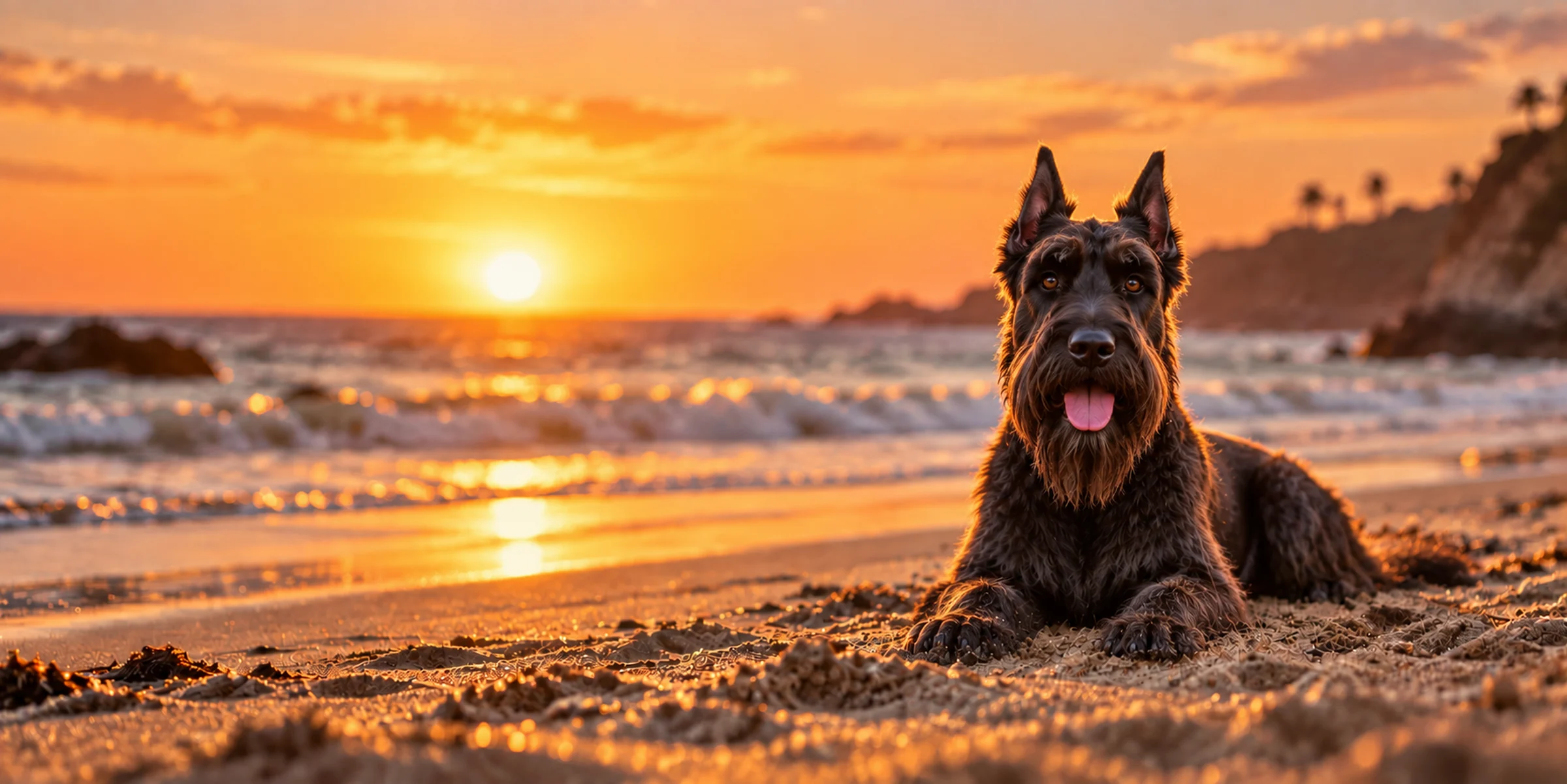
Giant Schnauzer
The same beard, eyebrows and wiry coat on a much larger, more intense working dog. The Giant needs serious exercise, training and experience; the Miniature is a small, easygoing companion that fits almost any home.

Miniature Poodle
A similar-sized, low-shedding, clever family dog with a regular grooming bill. The Poodle is generally quieter and more eager to please; the Schnauzer is more of a terrier, with more bark and more chase.

Lakeland Terrier
Another small, wire-coated dog with a beard and a bold outlook. The Lakeland is a true earth terrier - feistier, more independent and more intense with other dogs - where the Miniature Schnauzer is softer and more people-focused.

Miniature Pinscher
Another small German farm-and-stable ratter with a big-dog attitude. The Min Pin has a short coat that needs almost no grooming but far more energy, a stronger escape streak and less patience with children; the Miniature Schnauzer is steadier, more family-friendly and more trainable, with a coat that needs regular stripping or clipping.
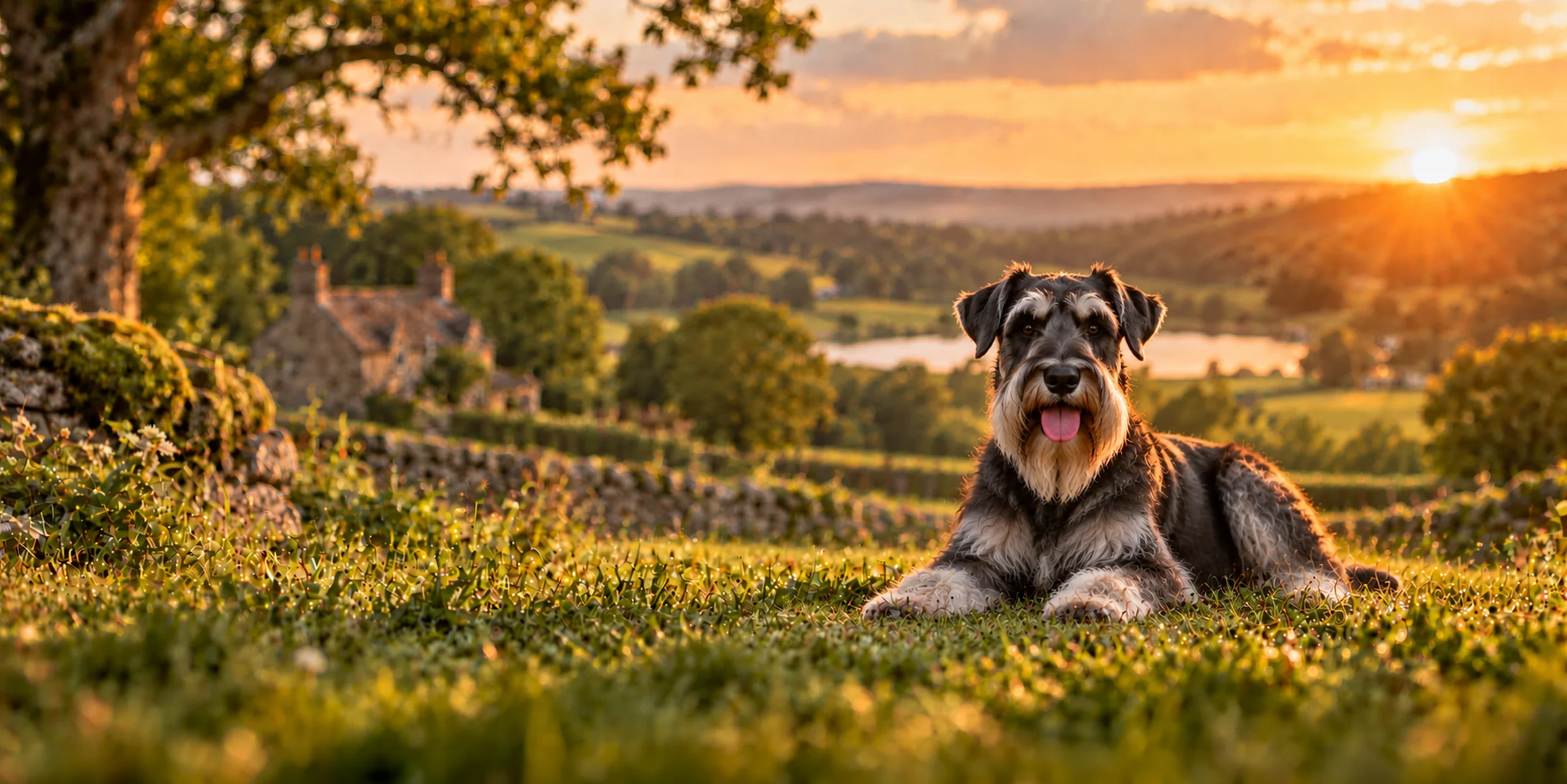
Standard Schnauzer
The original of the three, and a different breed rather than a bigger Miniature - Working Group, German farm ratter, 30-50 lb. Standard Schnauzers carry more drive and more watchfulness, and want a job rather than a routine.

Schnoodle
The Poodle cross, and the one crossbreed whose low-shedding claim genuinely holds - both parents are furnished rather than shedding coats, so there is no flat coat waiting to come through. The Schnauzer bark and the Schnauzer appetite for fat both carry over.