

medium-to-large breed
Pudelpointer
A German versatile gundog made from Poodle and Pointer crosses, started in 1881 by Baron Sigismund von Zedlitz, who wrote under the name Hegewald. Pudelpointers point, retrieve on land and in water, and track wounded game, and the clubs on both sides of the Atlantic still breed only from dogs that pass hunt tests. The result is a steady, biddable, wire-coated dog with a fourteen-year average life and an appetite for two hours of work a day.

Pup Height
22-26 in
Males 23.5-27 in, females 21.5-25 in at the withers. Solid brown, dead-leaf or black, with small white markings allowed. A hard, close, weather-resistant wire coat about 1.5-2.4 in long over a dense undercoat, with a beard and eyebrows; a short coat or a missing beard disqualifies. In the AKC's Foundation Stock Service, and fully recognized by the FCI as a continental pointing dog subject to a working trial. Source: AKC and FCI breed standards.

Pup Weight
45-70 lb

Pup Lifespan
14 years
Your pup, at a glance
What’s Life With This Pup Really Like?

High. Affectionate with their family and happy to settle close by once the day's work has happened.

Very good. Even-tempered and tolerant, with the usual caveat that a bouncy young gundog can knock over a small child.

Good with dogs. Cats depend on early socialization, and the prey drive toward birds and small animals is real.

Low to moderate. They announce arrivals and are otherwise fairly quiet at home.

Very high. Two hours of real work daily, with the mental half mattering as much as the miles.

Low. The hard wire coat sheds lightly, with some seasonal loss of undercoat.

Keen and tireless, especially retrieving and in water. They play the way they work.

Low. Not a drooler, though the beard drips after every drink.

Very good. Attentive and eager to work with their handler, and responsive to rewards rather than pressure.

Moderate. They will bark at arrivals, with no real guarding instinct behind it.

Low. A weekly brush, a beard wipe and the post-outing seed and ear check.

Low. They need work, space and preferably a hunting handler, and do badly in homes that cannot supply them.
Lifestyle fit
Could This Be Your Best Breed?
Pudelpointers are hunters' dogs, placed on purpose with homes that will hunt them: two hours of real work a day, $1,400 to $2,400 a year, and around fourteen years of it. They are affectionate and sensible with children, though almost nothing is published about the breed as a family pet. Most breeders will turn down a non-hunting household outright, and on the evidence they are right to.

Living Space
A house with land nearby and, ideally, a hunting season to fill. Pudelpointers are calm indoors once worked, but a fenced suburban yard and neighborhood walks do not come close to what the breed was built for.

Pup Experience
Best with hunters or experienced sporting-dog owners. Pudelpointers are cooperative and quick to learn, but they are bred to hunt test standards, and most breeders place puppies only with homes that will put that drive to work.

Daily Pup Time
Two hours of real exercise daily, with scent work, retrieving or swimming in it. The coat is light work - a weekly brush, a beard wipe and a post-outing ear and seed check.

Allergies & Coat
The Pudelpointer scores 3/10 for shedding and 2/10 for drooling. No dog is truly hypoallergenic. The allergens come from dander and saliva, and a coat that sheds this little leaves far less of them on your furniture, floors, and clothes.
Quirks & challenges
The Not-So-Easy Stuff

Built to Hunt
Bred and tested for field work. Walks alone leave this much drive with nowhere to go.
Very High Exercise Needs
Two hours of hard activity a day, with the nose engaged. Less than that shows up indoors.
Hard to Find
A small population, and clubs often place puppies only with hunting homes. Expect a waiting list.
Nose Over Recall
A wide-ranging pointing dog on a scent is only partly listening. Use long lines and secure ground.
Wet Beard
The beard carries water, food and mud across the floor after every drink and outing.
Seeds and Burrs
Grass seeds and burrs lodge in the coat, ears and toes after time in cover. Check after every outing.
The good, the bad & the hairy
Health, Care & Costs
Understanding the health risks and ongoing costs of a Pudelpointer helps you plan for a happy, healthy life together.

14 years
$50-$80
per groom (bath, tidy, ears, nails), a few times a year or done at home ($0-$300/year)
$1,400-$2,400/year
all-in (food, routine vet, grooming, insurance, incidentals)

Health Risks
Conditions this breed is prone to.

Worth saying first. The breed is small and bred almost entirely by performance clubs that screen hips and test working ability, and there are few published health surveys. Pudelpointers are generally described as sound, but the evidence is thinner than for common breeds.
The joints develop loosely and wear into arthritis, sometimes needing surgery. The German club places special emphasis on preventing hip dysplasia, and both parents should have scored hips and elbows.
Named in the FCI standard alongside hip dysplasia as a condition the breed works to prevent. Seizures usually begin in young adults and are managed with daily medication. There is no DNA test, so ask the breeder about seizures in the lines.
Entropion and ectropion - eyelids rolling in or out - disqualify under the FCI standard, but can still appear. An annual eye examination catches problems early.
Hair-covered drop ears on a dog who swims hold warmth and moisture against the canal. Weekly checking, cleaning and drying is the prevention; ignored it becomes chronic.
The most likely reason a hunting Pudelpointer sees a vet, and not inherited. Cuts, torn pads, grass seeds in the ears and feet, and the occasional torn cruciate, which runs into the thousands to repair.

Insurance & Health Coverage
A breed bred for soundness under club health screening, so the inherited-illness side looks light - but the data is thin, and insuring young keeps anything that does appear from becoming a pre-existing exclusion.

What you are mostly insuring is trauma. A large gundog working heavy cover and water collects punctures, lacerations and torn ligaments, and accident cover earns its keep. Check whether the policy excludes injuries sustained while hunting or working, because several do and that removes exactly the cover this dog needs.

Epilepsy and hip dysplasia are the illness claims to plan for. Ear infections are the steady drip underneath: never large, never finished.
 Get a Pet Insurance Quote
Care needs
The Daily Routine

Grooming
A hard, close wire coat that sheds little and needs only a weekly brush to lift dead hair and debris. Wipe the beard after meals and outings, and trim the feet if hair builds up. The routine that matters is the post-outing check: seeds and burrs out of the coat and toes, ears cleaned and dried, and a look over for cuts.

Exercise
Two hours of hard activity daily, and the scent and retrieving part matters. Hunting, hunt tests, tracking, water retrieves and long runs on safe ground all suit them; road walking alone does not satisfy a dog bred to search fields for hours.

Food & Weight
Two measured meals scaled to the season - a Pudelpointer in hunting condition burns far more than one in the off-season, so adjust the portion to the dog in front of you. Keep them lean for the joints, and keep hard exercise away from meals as with any deep-chested gundog.
Similar breeds
If This Isn’t Quite the One

German Wirehaired Pointer
A close relative - Pudelpointers were one of the breeds behind the Drahthaar. Same wire coat and versatile brief; the German Wirehaired Pointer is far easier to find and tends to be more protective and independent, while the Pudelpointer is usually softer and more biddable.

Large Munsterlander
Another German versatile gundog in the Foundation Stock Service, bred by clubs for hunting homes. The Munsterlander has a feathered black-and-white coat that needs more brushing; the Pudelpointer's wire coat is lower maintenance.
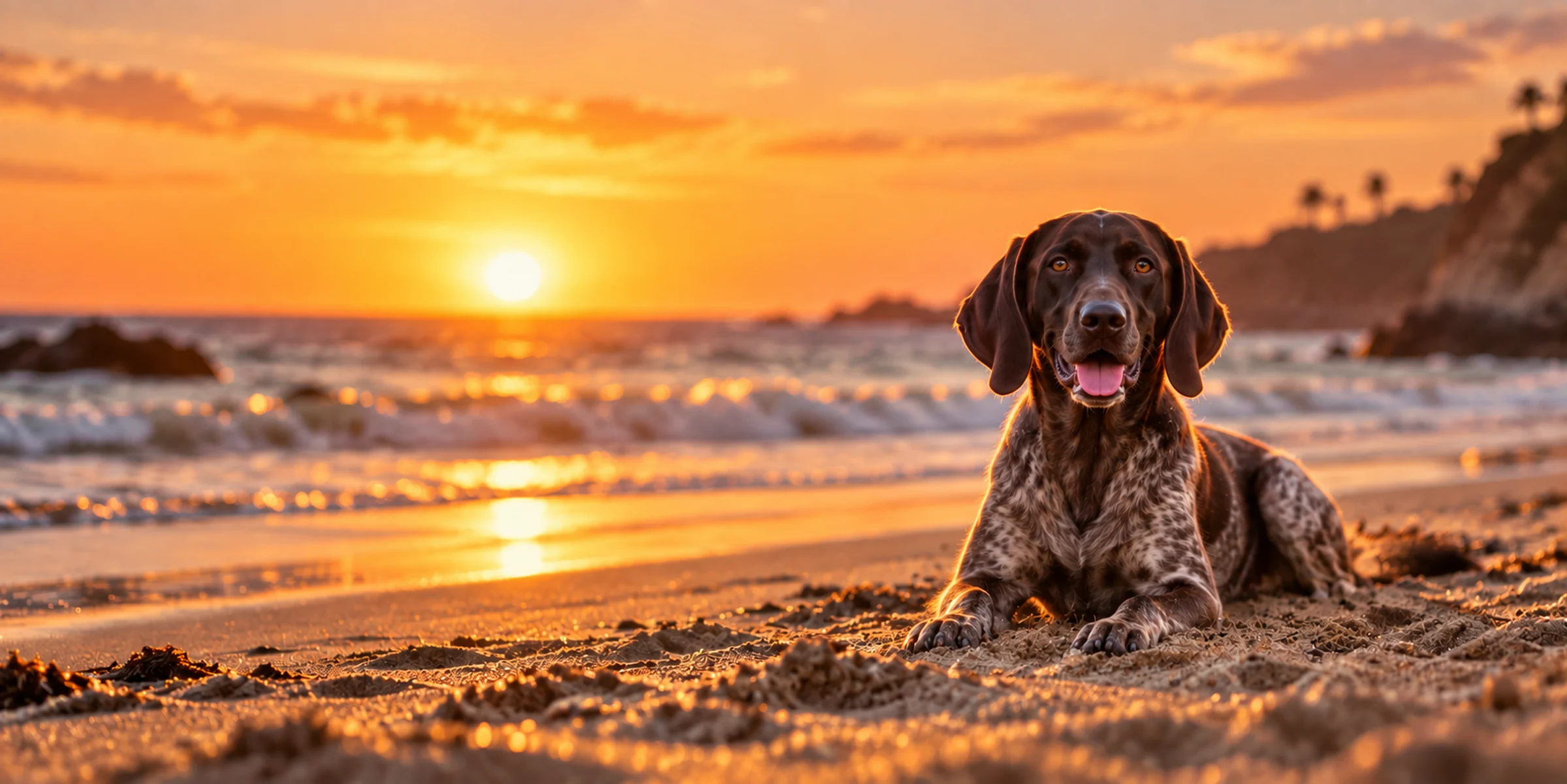
German Shorthaired Pointer
The same all-round hunting job in a short coat, and a much easier breed to find. The Shorthair is often even higher-octane; the Pudelpointer is calmer indoors and better protected in cold water and heavy cover.

Slovakian Wirehaired Pointer
The other rare wirehaired versatile gundog on this site, Slovak rather than German and gray roan rather than brown. Both expect real hunting work, and both usually mean an import and a wait.