

medium-to-large breed
Wirehaired Vizsla
A separate breed from the Vizsla, not a coat variety of one: Hungarian hunters and falconers in the 1930s crossed Vizslas with German Wirehaired Pointers to get the same drive on a heavier frame, under a coat that could take cold water and thorn cover. Wirehaired Vizslas are bearded, golden rust, a shade more self-possessed with strangers, and just as glued to their household. The coat has to be stripped, never clipped.

Pup Height
21.5-25 in

Pup Weight
45-65 lb
Males stand 23-25 in and 55-65 lb, females 21.5-23 in and 45-55 lb. The coat is the defining feature: a close-lying wire outer coat about an inch long over a dense undercoat, with pronounced eyebrows, a harsh beard of roughly the same length, and V-shaped brushes of coat on both sides of the neck. Golden rust is the only standard color, white markings are permitted, and a clipped coat is faulty - the breed is shown with nothing more than a tidy-up, working scars and all. Rear dewclaws are a disqualification. Recognized by the AKC in the Sporting Group in 2014 as the 180th breed on the register. Source: AKC breed standard.

Pup Lifespan
12-14 years
Your pup, at a glance
What’s Life With This Pup Really Like?

Very high. The Vizsla's velcro habit came through the cross intact - contact rather than company, against a leg or under a blanket.

Very good. Affectionate, playful and sturdier than a smooth Vizsla, though an adolescent at full speed flattens a toddler without meaning anything by it.

Good. Usually easy with other dogs and often happier with one for company. Birds and small pets are a different question in a breed built to find them.

Moderate. Not nuisance barkers, but a vocal breed that whines, groans and announces an arrival before asking to be introduced.

Very high. One to two hours of hard work daily, and the scent half matters as much as the mileage.

Low to moderate. The wire coat sheds lightly and stripping takes out most of what would otherwise drop, though the undercoat turns over seasonally.

Exuberant and faintly ridiculous into adulthood - retrieving, water, wrestling and full-speed laps of the yard.

Low. A dry-mouthed breed, but a soaked beard carries water from the bowl to wherever they go next.

High. Quick, eager and food-motivated, and sensitive enough that pressure sets the work back rather than speeding it up.

Moderate. More inclined to notice and announce than a smooth Vizsla, with none of a Drahthaar's territorial edge behind it.

Moderate. A weekly brush, hand-stripping a couple of times a year, and the daily beard wipe that is the job people forget about.

Moderate. The coat handles cold and wet far better than the Vizsla's does, while the exercise and company needs still rule out long working days and quiet households.
Lifestyle fit
Could This Be Your Best Breed?
A Wirehaired Vizsla suits a hunter, a hiker or a runner with a fenced yard, country within reach and somebody home most of the day, at $1,500 to $2,600 a year for twelve to fourteen years. Rare in North America, so expect a wait list and a long drive. Choose the smooth Vizsla if the coat work is unwelcome, and something else entirely if the house stands empty all day.

Living Space
A house with a securely fenced yard and country to work within reach. An apartment is possible for someone out doing one to two hours of hard exercise daily and home for most of the rest, but the wire coat holds wet and mud in a way the smooth Vizsla's never does, and the beard redistributes every drink across the floor.

Pup Experience
Workable for a committed first-time owner who has thought the schedule through, and better with some gundog experience. Wirehaired Vizslas are willing and quick to learn; the demands are the daily hours, the coat routine, and a dog who takes being left alone badly.

Daily Pup Time
One to two hours of real exercise daily with scent work in it, plus training. Grooming is a weekly brush, a daily wipe of the beard, and hand-stripping a couple of times a year. The part people underestimate is company: this breed needs someone around for most of the day.

Allergies & Coat
The Wirehaired Vizsla scores 4/10 for shedding and 3/10 for drooling. No dog is truly hypoallergenic. The allergens come from dander and saliva, and a dog that sheds this much will leave plenty of hair behind - especially on your furniture, floors, and clothes.
Quirks & challenges
The Not-So-Easy Stuff

Genuine Separation Anxiety
The Vizsla trait carried over intact - panic and destruction at doorways, not protest barking. Build up alone time from the first week and get help early if it appears.
Two Hours a Day, Minimum
A versatile hunting dog with stamina to match. Walks around the block do not touch it, and scent work does as much as mileage.
The Coat Needs Stripping
Hand-stripping a couple of times a year keeps the wire texture and its weatherproofing. Clipping is easier and softens the coat permanently.
Beard Maintenance
It collects water, food and burrs and drips across the floor. Wipe it daily and check it after any outing in cover.
Rare in North America
A few hundred registered here. Expect a wait list, a deposit and travel, and a small gene pool behind the litter.
A Long Adolescence
Full height at a year, sense at two or three. Counter-surfing, mouthing and selective hearing fill the gap.
The good, the bad & the hairy
Health, Care & Costs
Understanding the health risks and ongoing costs of a Wirehaired Vizsla helps you plan for a happy, healthy life together.

12-14 years
$60-$95
per groom (hand-strip or tidy, bath, beard, ears, nails), every 10-12 weeks or done at home ($0-$500/year)
$1,500-$2,600/year
all-in (food, routine vet, grooming, insurance, incidentals)

Health Risks
Conditions this breed is prone to.

The joints develop loosely or unevenly and wear into arthritis, sometimes needing surgery that runs into the thousands. Both parents should have OFA or PennHIP hip scores and elbow grades - ask for the numbers rather than a verbal assurance.
An inherited fault in uric acid handling that leads to urate stones in the bladder and kidneys, and a blocked male dog is an emergency. There is a straightforward DNA test, so both parents' status can be known, and affected dogs are managed on a low-purine diet with plenty of water.
A congenital narrowing below the aortic valve that makes the heart work harder, picked up as a murmur in a puppy and confirmed by echocardiogram. Mild cases live normally; severe ones shorten a life, and breeding stock should have a cardiologist's evaluation.
Progressive retinal atrophy, cataracts and glaucoma all appear in the breed, and glaucoma is painful and moves fast enough to cost an eye. An annual ophthalmologist examination on breeding dogs is the screening the parent club asks for.
Drop ears on a dog who works water, and a beard and wire coat that hold moisture and debris against the skin. Weekly ear checking, cleaning and drying plus a daily beard wipe is most of the prevention; ignored, ear infections turn chronic.
The likeliest reason they see a vet, and nothing to do with inheritance. Thorn cover and rough ground produce torn pads, punctures, eye injuries and the occasional torn cruciate - the wire coat helps, and a repair still runs into the thousands.

Insurance & Health Coverage
Insure young. The breed is generally healthy, so premiums start reasonable, and the conditions worth covering are the ones that arrive years in - by which point a policy taken out late has already logged the early signs as pre-existing.

Accident cover earns its keep here. A dog driving through thorn cover and cold water collects punctures, lacerations, eye injuries and torn ligaments, and a cruciate repair alone runs into the thousands. If you intend to hunt them, check whether the policy excludes injuries sustained while working - several do, and that exclusion removes exactly the cover this dog needs.

Hyperuricosuria and subaortic stenosis are both congenital, so no policy covers either. The DNA test for the first and a cardiologist's evaluation on both parents for the second are the real protection, and the paperwork is worth more than the premium on those two specifically. The gene pool is small and shares Vizsla ancestry, which makes an open conversation with the breeder about what has shown up in the line more useful than any screening list.
 Get a Pet Insurance Quote
Care needs
The Daily Routine

Grooming
A harsh wire jacket about an inch long over a dense undercoat, needing a weekly brush and hand-stripping a couple of times a year to keep its texture - clipping is quicker and permanently softens the coat, which costs the weatherproofing the breed was created for. The daily job is the beard: wipe it after meals and water, and check it for burrs after any outing. Ears want checking and drying weekly, particularly after swimming, and nails every few weeks.

Exercise
One to two hours daily, and walking alone does not cover it. Field work, tracking, water retrieving, hiking, running and agility all suit the build, and scent work does as much for a Wirehaired Vizsla's head as running does for their legs. Hold back on hard, repetitive running until the growth plates close at around 14-18 months.

Food & Weight
Two measured meals a day, kept lean enough to show a waist and the outline of the last rib or two. A working week burns a great deal more than a quiet one, so feed the dog in front of you rather than the label, and keep hard exercise clear of mealtimes.
Similar breeds
If This Isn’t Quite the One
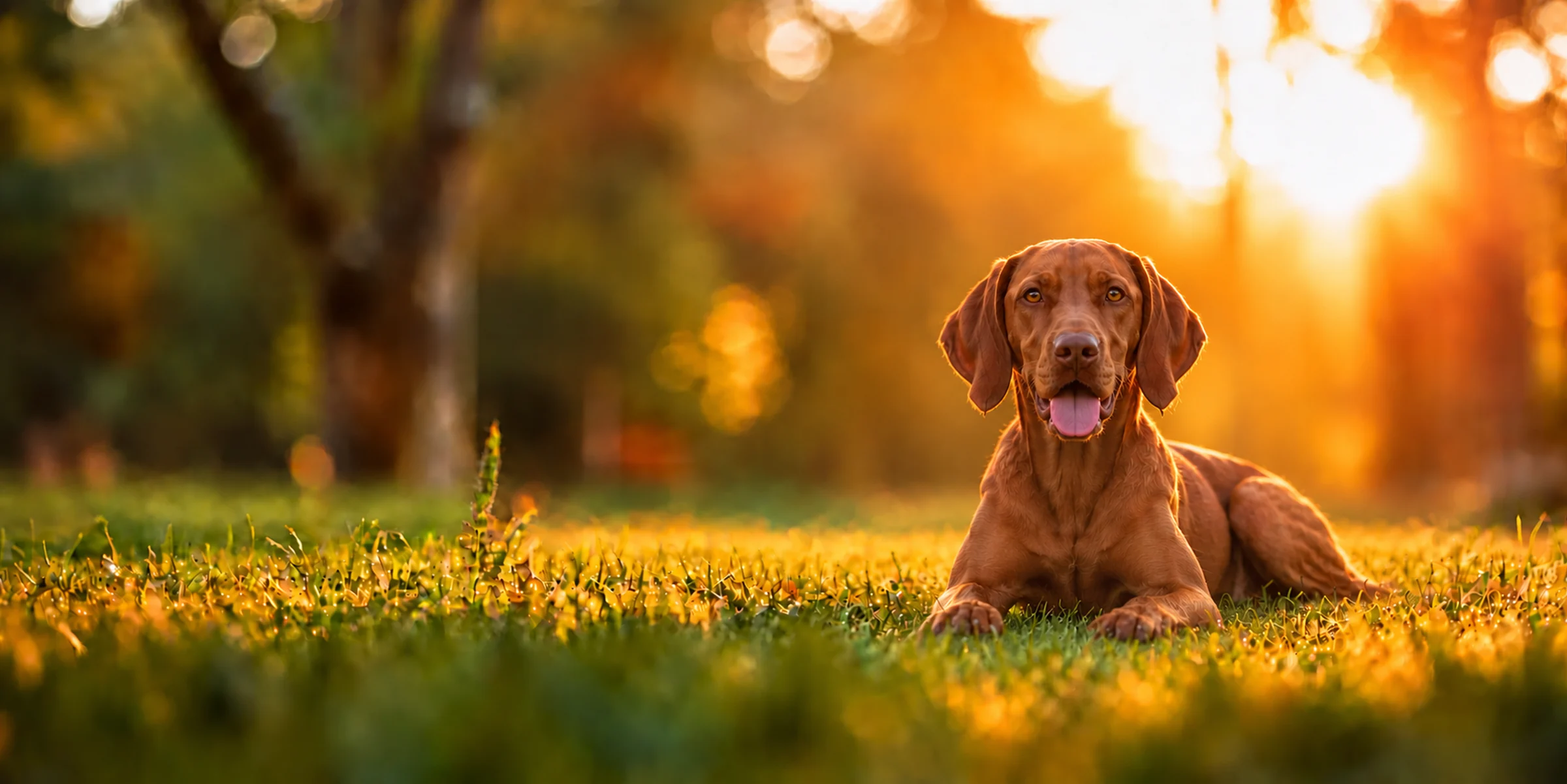
Vizsla
The parent breed and the comparison that matters, and the two are separate breeds rather than two coats of one - the Wirehaired was created decades later from Vizsla and German Wirehaired Pointer crosses and is bred, registered and shown as a breed apart. The Wirehaired is heavier-boned and a shade taller, with a harsh wire coat, beard and eyebrows over a dense undercoat that let them work cold water and thorn cover a smooth Vizsla will sit out. Temperament and exercise needs are close to identical; the Vizsla's coat takes ten minutes a week, while this one needs stripping.
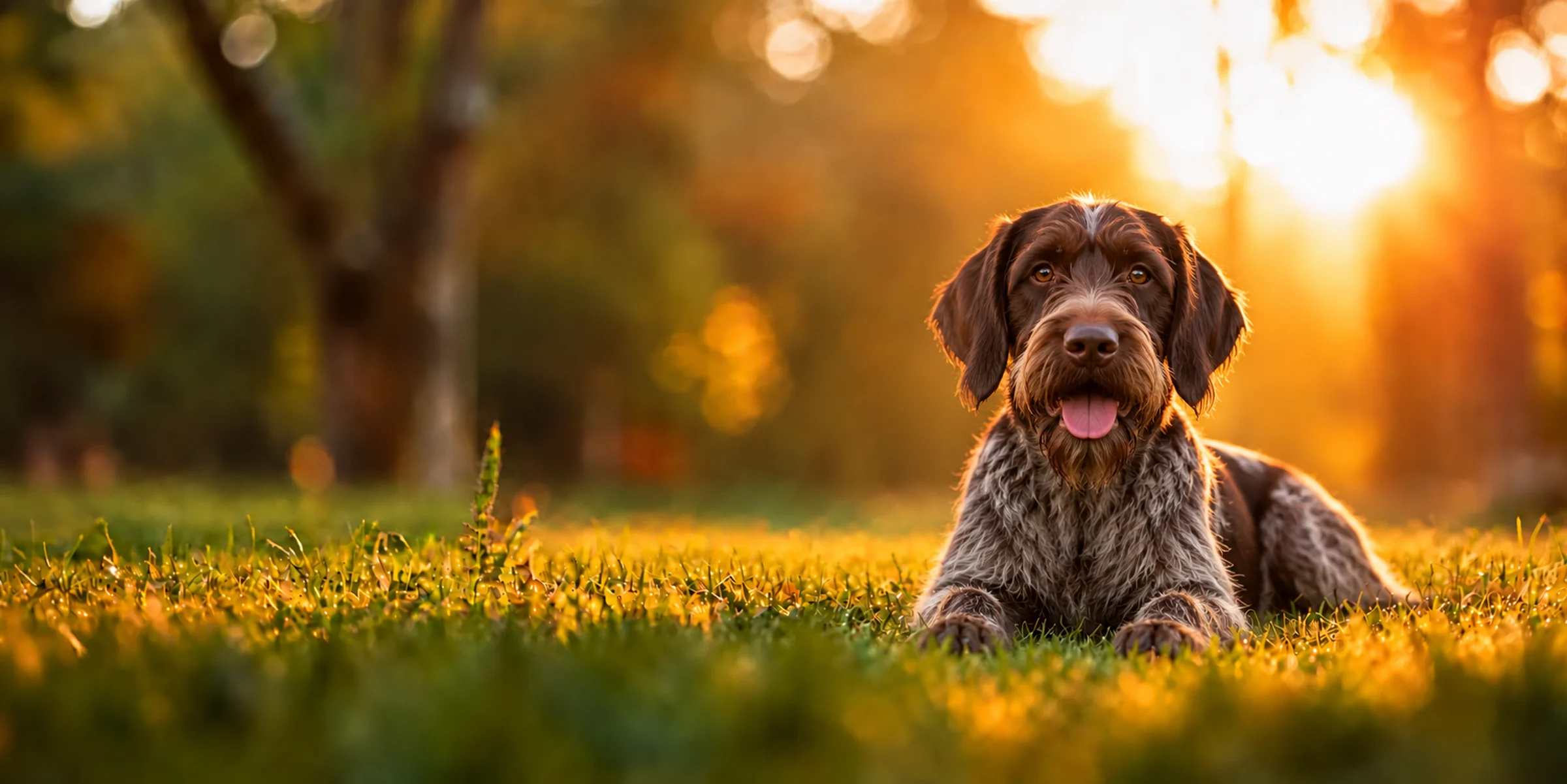
German Wirehaired Pointer
The other half of the original cross, and where the coat came from. GWPs are bigger at 50-70 lb, openly territorial, more independent and sharper with unfamiliar dogs; the Wirehaired Vizsla kept the Vizsla's softness and demonstrative streak and is the easier of the two to live with.
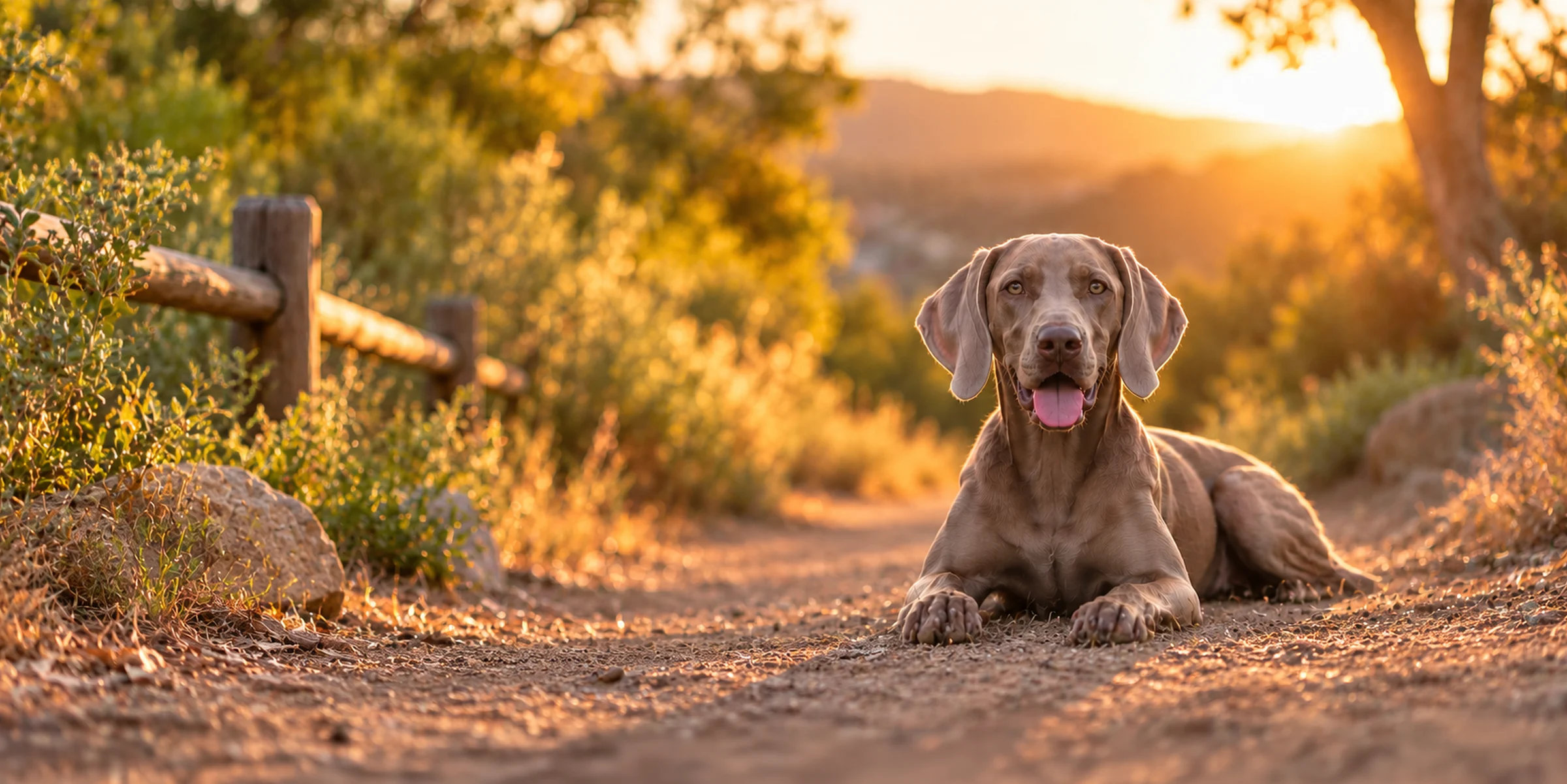
Weimaraner
The gray one, and another continental pointer carrying the same separation anxiety. Weimaraners are heavier at 55-90 lb, smooth-coated and more assertive to handle; the Wirehaired Vizsla is smaller, built and coated for cold wet work, and softer.
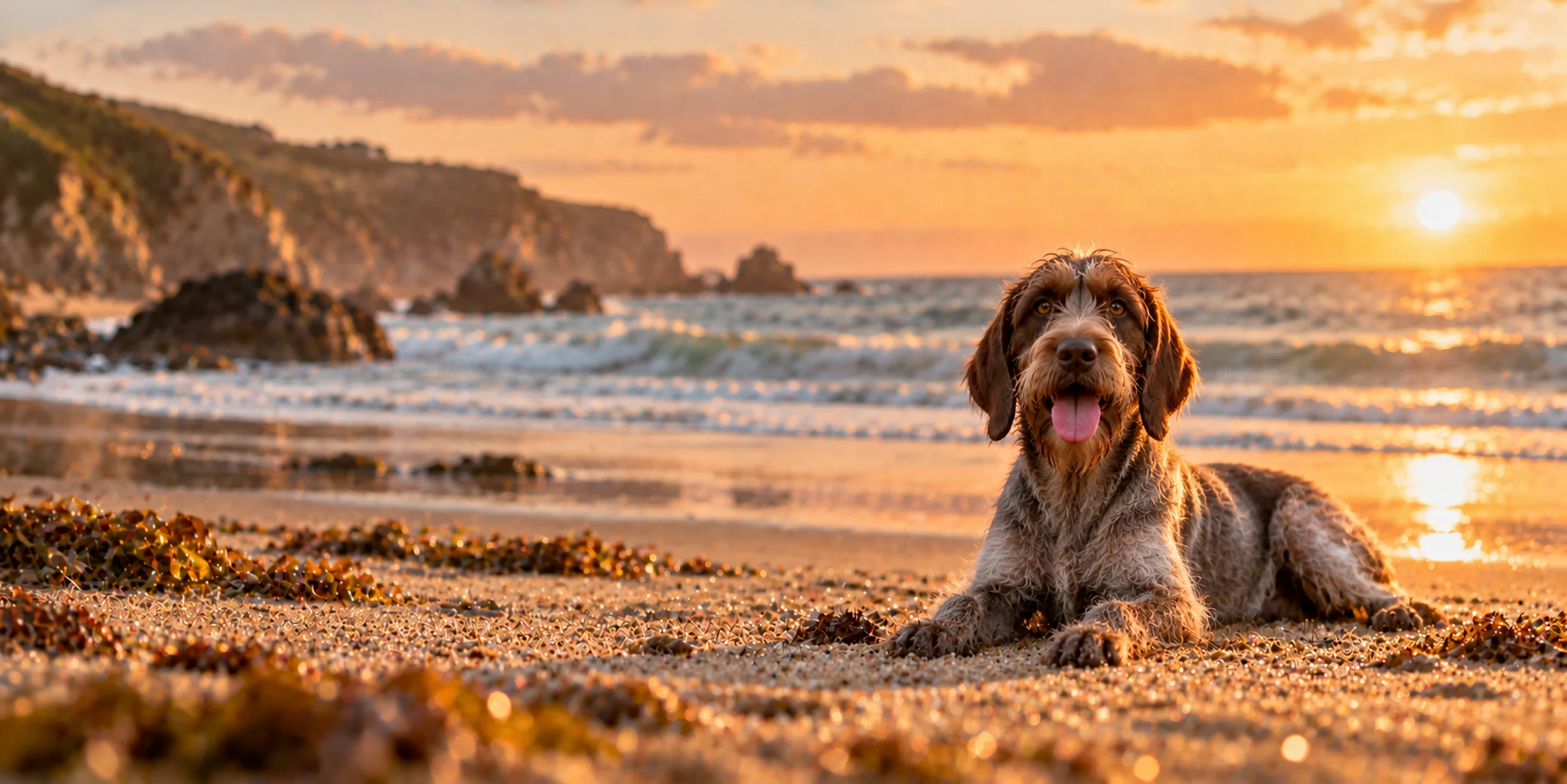
Wirehaired Pointing Griffon
The other wire-coated versatile gundog at this size, and the one that is actually findable in North America. Griffons hunt deliberately and close, settle more readily and ask for a little less of the day; the Wirehaired Vizsla is faster, more intense and far harder to leave alone. The coat is much the same job on either.