

small-to-large cross
Aussiedoodle
Not a breed but a cross - Australian Shepherd to Poodle, with no kennel club standard behind it and no reliable average size. Both parents are working dogs near the top of any trainability ranking, one a herding breed and one a water retriever, and the result is a dog with serious drive wearing a teddy bear coat. Temperament usually lands clever, busy and closely attached. Coat and adult size do not: littermates differ.

Pup Height
10-25 in

Pup Weight
10-70 lb
No kennel club recognizes the Aussiedoodle, so there is no breed standard and no reliable average. Size depends on which Poodle was used - toy, miniature and standard crosses run roughly 10-20, 20-40 and 40-70 lb, and first-generation litters spread widest because each puppy lands somewhere between two differently sized parents. At the shoulder, toy crosses stand about 10-14 in, miniatures 15-19 in and standards 19-25 in. F1b and multigen litters are a little more predictable, but only a little. The parents' actual weights are the only useful guide.

Pup Lifespan
12-14 years
Your pup, at a glance
What’s Life With This Pup Really Like?

High, and closely bonded - both parent breeds attach hard to their people. Expect a dog who follows you from room to room and counts that as the day's company.

Good with children they are raised alongside, with one real caveat: the herding instinct from the Australian Shepherd side turns running kids into a job, and nipped heels go with it. Redirect it early and supervise the fast games.

Generally sociable with dogs and fine with cats they grow up with. The herding drive is to gather rather than to chase down, which makes it easier to live with than a true prey drive.

Moderate, and mostly a symptom. Aussiedoodles announce visitors and movement outside from the Australian Shepherd side, and an under-worked one barks considerably more than a busy one.

High, and the honest center of this cross. Ninety minutes to two hours daily with the head engaged - a herding breed crossed with a working water retriever does not produce a low-drive family pet, whatever the coat suggests.

Low to moderate, and the least predictable thing about them. A puppy who inherits the furnishings variant gets the wavy low-shedding coat; one who inherits the flat coat sheds like an Australian Shepherd. F1 litters vary most and no generation guarantees it. Low shedding is not hypoallergenic.

Inventive and slightly theatrical, and they stay that way well into middle age. Puzzles, shaped tricks and scent games land as well as fetch, which is useful on days when two hours outdoors is not happening.

Very low. Both parents are dry-mouthed dogs and there is nothing to mop up.

Outstanding, from two of the most trainable breeds going, and it cuts both ways - they learn the household's bad habits at the same speed. The ceiling is well above what most homes will ever ask for.

Moderate. Watchful and quick to announce a visitor from the Australian Shepherd side, softened by the Poodle's sociability - an alarm rather than a deterrent, and individuals vary from reserved to indiscriminately friendly.

The recurring cost people underestimate. Brushing to the skin every other day and a professional groom every six to eight weeks for life, because the low-shedding coat mats. A flat-coated one is far less work and sheds instead - which coat a puppy gets is not decided until they grow it.

Moderate. Aussiedoodles adjust to new homes and routines readily, and what they do not adjust to is being under-occupied or left alone for long days. Score assumes a standard-sized adult, the most common generation.
Lifestyle fit
Could This Be Your Best Breed?
An Aussiedoodle suits an active household that wants a thinking dog and has a job in mind for them - agility, scent work, herding, trick training, anything that occupies the head - at $2,300 to $3,700 a year, grooming alone $520 to $1,100. Ask what both parents weighed, what color both parents are, and what they were screened for. The people who return these wanted a teddy bear and got a working dog.

Living Space
A house with a yard and someone who is out in it most days. Miniature crosses fit an apartment on square footage alone, which is not the constraint - the constraint is that both parent breeds were built to work all day and neither one settles because the room is small.

Pup Experience
Trainable by a first-timer, demanding for one. Aussiedoodles learn faster than most owners can think of things to teach, and an under-occupied clever dog does not idle - they pick a job themselves and it is usually one you would not have chosen.

Daily Pup Time
Ninety minutes to two hours most days with real mental work in it, not just distance, plus daily coat work and a professional groom every six to eight weeks.

Allergies & Coat
The Aussiedoodle scores 4/10 for shedding and 2/10 for drooling. No dog is truly hypoallergenic. The allergens come from dander and saliva, and a dog that sheds this much will leave plenty of hair behind - especially on your furniture, floors, and clothes.
Quirks & challenges
The Not-So-Easy Stuff

Needs a Job, Not a Walk
Two hours of walking leaves the head untouched. Training, agility, herding and scent work are what actually settle them.
Herds the Children
Circling, gathering and nipping at heels, bikes and running kids. Normal instinct, not aggression - redirect it early.
Merle to Merle Is Dangerous
Two merle parents can produce deaf and blind puppies. Ask a breeder directly what color both parents are.
Bored Turns Destructive
Unspent drive comes out as chewing, barking, pacing and escape attempts. The behavior is a symptom, not the problem.
Coat Roulette
Coat type varies within a single litter. A puppy who inherits the flat coat sheds like an Australian Shepherd.
Grooming Wriggles
If handling is not taught early, a groom every six to eight weeks becomes a lifelong fight.
The good, the bad & the hairy
Health, Care & Costs
Understanding the health risks and ongoing costs of a Aussiedoodle helps you plan for a happy, healthy life together.

12-14 years
no breed-specific study exists; this is the usual range for crossbreeds of this size
$80-$130
per professional groom, every 6-8 weeks ($520-$1,100/year)
$2,300-$3,700/year
all-in (food, routine vet, grooming, insurance, incidentals)

Health Risks
Conditions this breed is prone to.

A gene fault common in Australian Shepherds that stops the brain clearing certain drugs, so an ordinary dose of some worming, sedative and chemotherapy medicines - ivermectin the best known - can cause severe neurological harm. A cheap DNA test exists, both parents should have one, and the result belongs on file at your veterinary practice before the dog ever needs treating.
From the Australian Shepherd side. The merle gene that produces those marbled coats also affects the inner ear and the developing eye. One merle parent is fine; two can produce double merle puppies that are deaf, blind or both. Merle is fashionable and priced accordingly, which is exactly why this pairing still happens. A responsible breeder never puts two merles together, and asking what color both parents are is the single most checkable question you can ask.
Two separate problems from two separate parents. Collie eye anomaly comes from the Australian Shepherd side, is present at birth, and ranges from harmless to retinal detachment. PRA-prcd comes from the Poodle side and slowly destroys the retina in adulthood, usually ending in blindness. DNA tests exist for both, so both parents should be tested rather than one.
Carried on both sides of this cross. The hip joint develops loosely, so the ball and socket grind instead of gliding, which leads to arthritis and in severe cases replacement surgery at several thousand dollars per hip. Ask to see hip scores for both parents.
A risk for the standard-sized crosses rather than the small ones. The stomach fills with gas and twists, cutting off its own blood supply, and without surgery within hours it is fatal. Feed two measured meals rather than one large one and keep hard exercise clear of mealtimes.
Both from the Poodle side. Addison's disease means the adrenal glands stop producing enough cortisol, and the symptoms are vague enough - lethargy, vomiting, poor appetite - that it is often missed until a crisis; once diagnosed it is managed for life. Sebaceous adenitis destroys the skin's oil glands, leaving dry, scaly skin and patchy coat loss, and is managed with oil baths rather than cured.

Insurance & Health Coverage
Two things drive the case here, and the first one is not insurance at all.

MDR1 drug sensitivity is common on the Australian Shepherd side and the DNA test is inexpensive. Knowing the result prevents a veterinary emergency rather than paying for one, so test early and make sure the answer is on file at your practice. The merle-related deafness and eye defects are congenital and would be excluded from any policy outright, which is why the protection against those is a conversation with the breeder about both parents' coats, not a policy.

What insurance is genuinely for here is the rest: orthopedic surgery from either side, bloat in a standard-sized dog, and Addison's disease, which is lifelong medication and monitoring once confirmed. Because this is a cross rather than a registered breed, health-testing standards vary widely between breeders and you often cannot tell which risks you have until they present - which is the argument for arranging cover while the dog is young and nothing is yet classed as pre-existing.
The predictable cost sits alongside all of that: grooming is a four-figure annual line item that most first-time doodle owners do not budget for.
 Get a Pet Insurance Quote
Care needs
The Daily Routine

Grooming
Brush to the skin at least every other day - wool and fleece coats mat at the ears, armpits and trousers first, and a matted coat gets shaved off rather than brushed out. Professional groom every 6-8 weeks for life. Ears checked and cleaned weekly.

Exercise
90 minutes to two hours daily with something in it for the head. Herding, agility, disc, obedience and scent work all suit them, and they generally swim readily - both parent breeds do. Distance alone does not settle this cross.

Food & Weight
Adult weight ranges from roughly fifteen to seventy pounds with no standard behind it, so the chart on the bag is a poor guide - portion to the dog in front of you, ribs easy to feel and a waist visible from above. Feed the standard-sized ones two measured meals rather than one large one, and keep hard exercise clear of mealtimes.
Similar breeds
If This Isn’t Quite the One
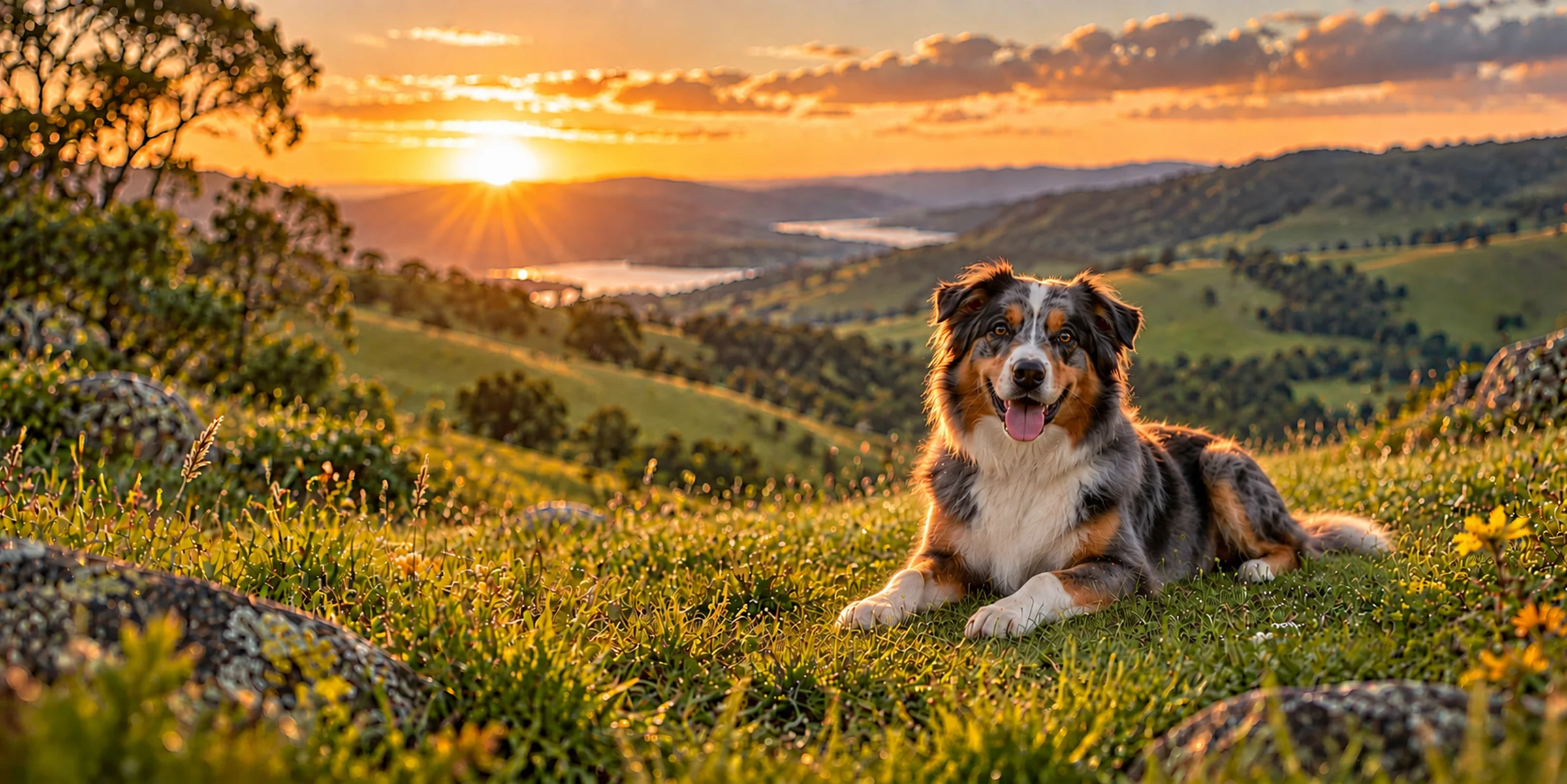
Australian Shepherd
The parent with the actual data behind it - a written standard, a real lifespan figure and a century of consistent breeding. Same drive and brains, heavier shedding, and none of the coat uncertainty.
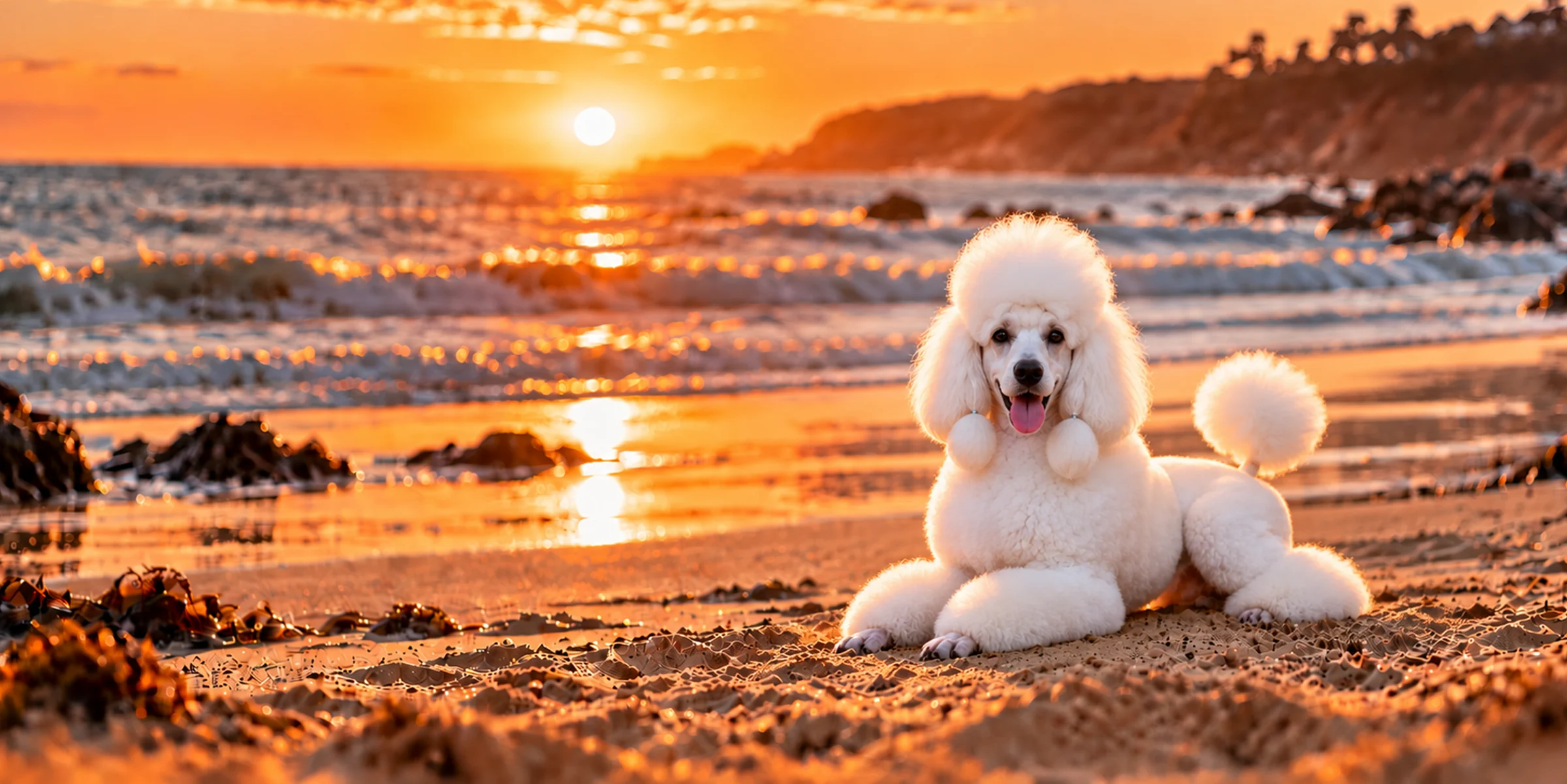
Standard Poodle
The other parent, and the predictable version of the coat. A Standard Poodle gives you a genuinely reliable low-shedding coat and a similar working brain without the herding instinct.
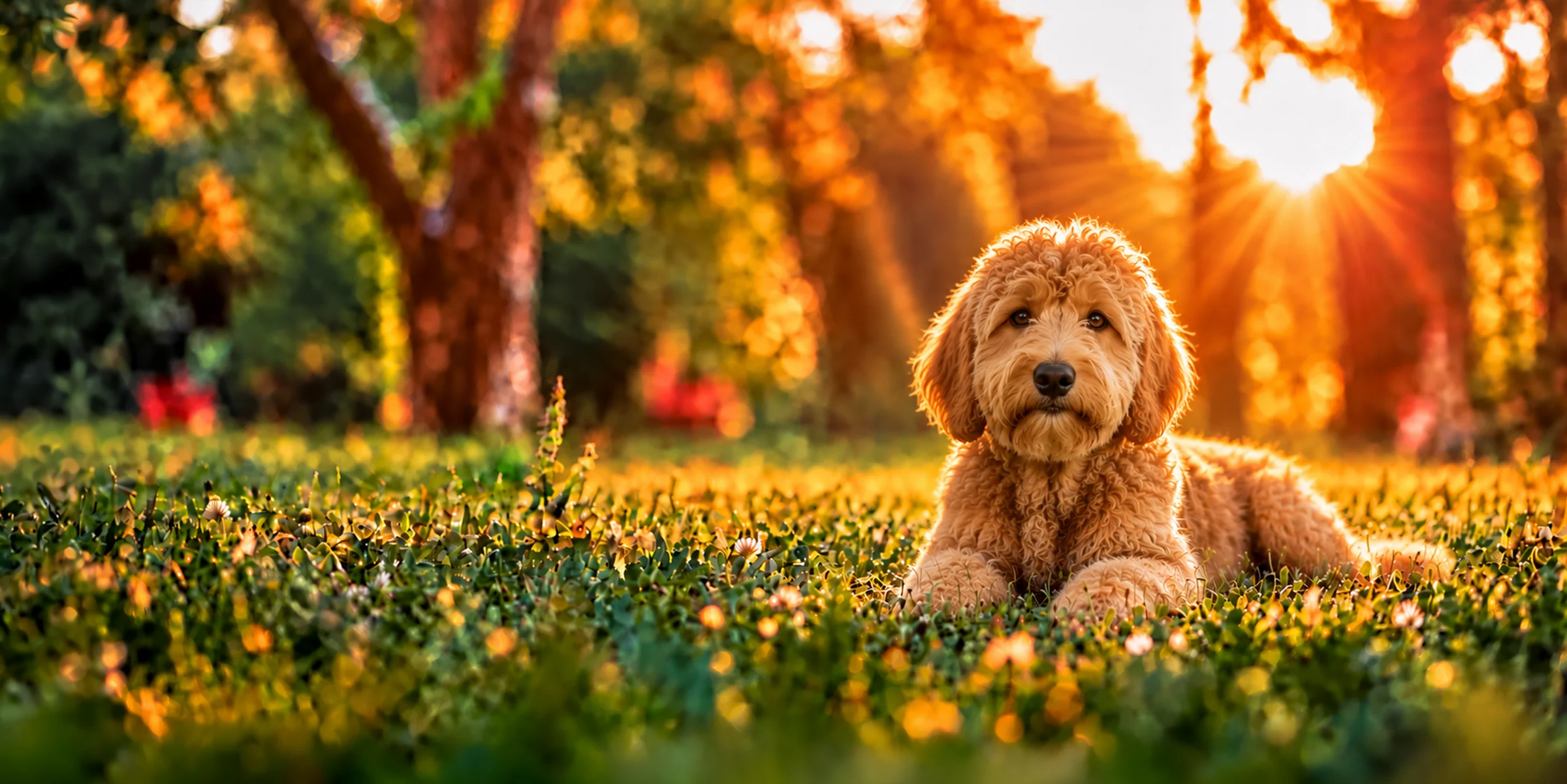
Goldendoodle
The same grooming bill and coat lottery attached to a softer, less driven dog. The better choice if the doodle look is the draw and a working temperament is not.
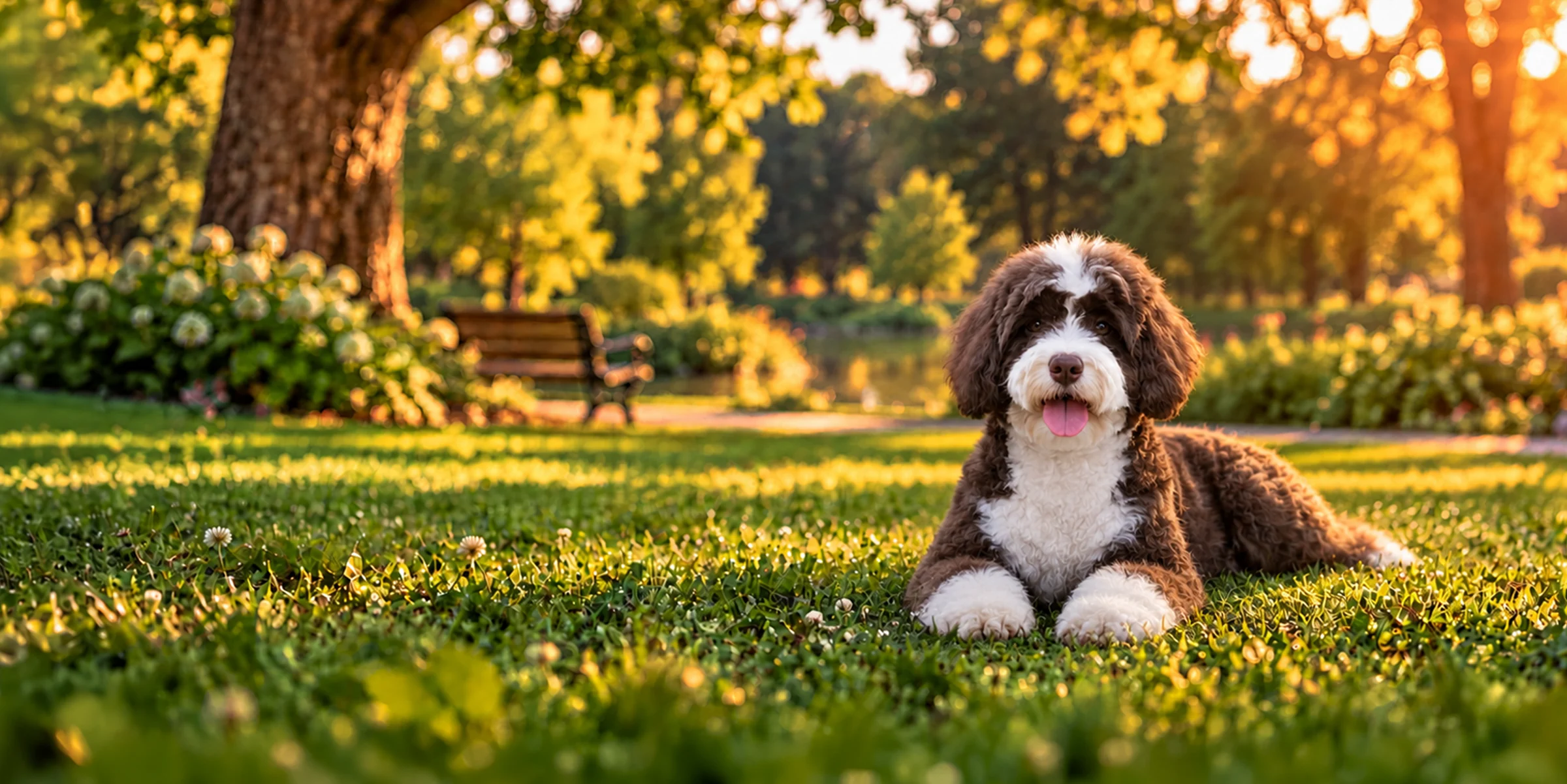
Labradoodle
Comparable energy from a sporting rather than a herding cross - busy and boisterous, but without the circling and heel-nipping.