

small breed
Pomeranian
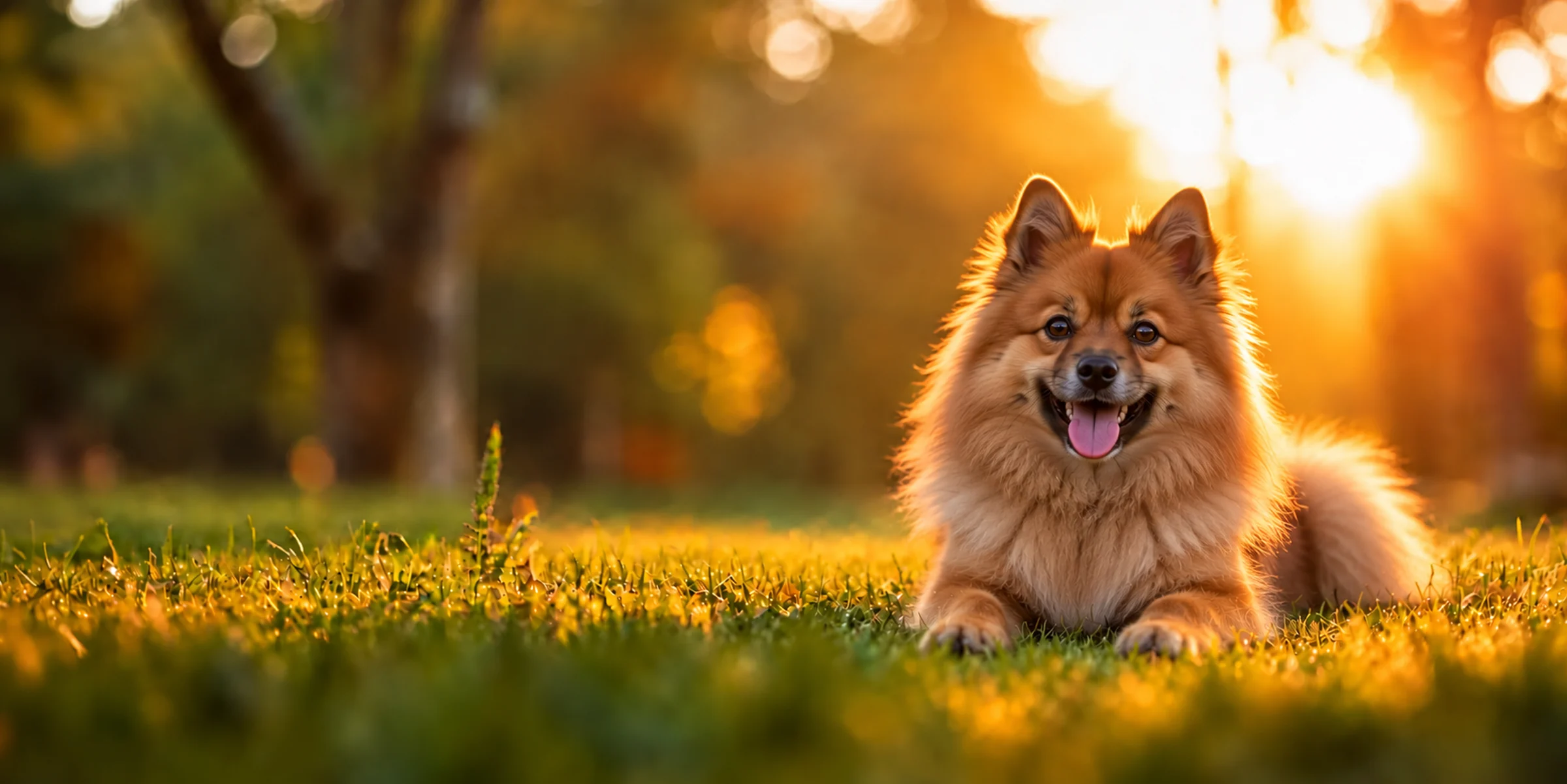
The toy end of the German Spitz family, bred down to three to seven pounds after Queen Victoria took a liking to the smaller ones. The size came down; the coat and the voice did not. Pomeranians are bright, bold and genuinely trainable, and the honest costs are dental disease, knees that slip, a windpipe that can collapse, and a double coat needing a line-brush two or three times a week.

Pup Height
6-7 in

Pup Weight
3-7 lb
The standard allows 3-7 lb, with 4-6 lb the ideal for the show ring, and sets no height - 6-7 in is the AKC's typical figure. In Europe the Pomeranian is the Zwergspitz, the smallest of the five German Spitz sizes; the AKC registers them as a separate breed. A short, dense undercoat under a long, harsh standoff coat, with a heavy ruff and a plumed tail carried flat over the back. All colors and patterns are allowed, orange and sable the most familiar, and the AKC accepts merle, though some registries do not. 'Teacup' is not a variety - no registry recognizes it, and it describes undersized dogs. Source: AKC breed standard.

Pup Lifespan
12-16 years
Your pup, at a glance
What’s Life With This Pup Really Like?

High. Pomeranians are affectionate and love a lap, though they are too busy and curious to stay in one for long.

Limited. Fine with calm older children, but a small, fragile dog is easily dropped or stepped on, and a hurt Pom may snap.

Fair. Friendly with dogs and cats raised alongside them, but bold enough to challenge big dogs who could injure them.

Very high. A spitz watchdog's instinct to announce everything - trainable down to manageable, never silent.

Moderate. Lively bursts of play and short walks, then happy to settle indoors.

Heavy for the size. A dense double coat sheds steadily and more heavily once or twice a year.

Playful and inventive. They love games and tricks and keep a puppyish streak well into adulthood.

Minimal.

Good. Bright and food-motivated, with a stubborn streak and the usual toy-breed slowness to house train.

Keen alarm. Alert and quick to sound off at anything new, with nothing behind it at five pounds.

Moderate to high. Thorough brushing several times a week, daily tooth brushing, and no shaving.

Good. Pomeranians suit apartments and travel easily, provided the neighbors can live with the barking and summers are kept cool.
Lifestyle fit
Could This Be Your Best Breed?
A Pomeranian fits city life about as well as any dog does - five pounds, thirty to forty-five minutes of walking and play, $1,000 to $1,800 a year, and often twelve to sixteen years of it. Train them like a real dog and the charm holds. Skip this one if you share a wall with someone who needs quiet, or if a toddler will be picking the dog up.

Living Space
Apartment or house both work, and the size makes city life easy. The barking is the real constraint - Pomeranians announce every footstep in the hallway, and thin walls turn that into the neighbors' problem too.

Pup Experience
Fine for a first-time owner who is willing to train a small dog as seriously as a big one. Pomeranians are bright and quick to learn; what catches people out is the noise, the coat and how easily a toy dog is allowed to run the house.

Daily Pup Time
Thirty to forty-five minutes of walking and play, split across the day, plus a few short training sessions. Grooming is a thorough line-brush two or three times a week and more during the seasonal shed.

Allergies & Coat
The Pomeranian scores 7/10 for shedding and 1/10 for drooling. No dog is truly hypoallergenic. The allergens come from dander and saliva, and a dog that sheds this much will leave plenty of hair behind - especially on your furniture, floors, and clothes.
Quirks & challenges
The Not-So-Easy Stuff

They Bark a Lot
Spitz watchdog ancestry in a tiny body. A trained quiet cue makes it manageable; nothing makes a Pomeranian a quiet dog.
Fragile in Small Hands
Falls from arms and jumps off sofas break legs. Toddlers and a three-pound puppy are a risky mix.
'Teacup' Is a Warning
No such variety exists. Dogs bred deliberately under three pounds carry more hypoglycemia, fractures and dental trouble, not less.
Small-Dog Syndrome
Growling and nipping get excused because the dog is small. Hold Pomeranians to the same rules as any other dog.
Collars Hurt the Windpipe
A weak trachea is common in the breed, and leash pressure on the neck makes it worse. Walk them on a harness.
Never Shave the Coat
Clipped spitz coats often grow back patchy or not at all, and the coat protects against heat as well as cold.
The good, the bad & the hairy
Health, Care & Costs
Understanding the health risks and ongoing costs of a Pomeranian helps you plan for a happy, healthy life together.

12-16 years
$50-$80
per groom (bath, full blow-out, de-shed, sanitary and feet tidy, nails), every 6-8 weeks or done at home ($0-$650/year)
$1,000-$1,800/year
all-in (food, routine vet, grooming, insurance, incidentals)

Health Risks
Conditions this breed is prone to.

The cartilage rings of the windpipe weaken and flatten, causing a honking cough that worsens with excitement, heat or pressure on the neck. There is no DNA test; a harness instead of a collar and a lean weight are the practical prevention, and severe cases can need a stent.
The kneecap slips out of its groove, producing a skipping gait and sometimes needing surgery. It is the most common orthopedic problem in the breed and is screened by a vet examining both parents, with results registered with the OFA.
The coat thins and falls out symmetrically over the body and the exposed skin darkens, while the head and legs stay normal. It is cosmetic rather than painful, the cause is not fully understood, there is no reliable DNA test, and no treatment works for every dog.
Blood sugar drops fast in a puppy with almost no body reserves, causing weakness, trembling and collapse. It is most common in very small puppies and undersized 'teacup' dogs, and frequent small meals prevent most episodes.
A full set of teeth in a very small jaw means crowding, tartar and early tooth loss, and retained puppy teeth are common. Daily brushing and professional cleanings under anesthesia are a regular cost over a long life.
Breeding two merles together produces double merles, which carry a high risk of deafness and malformed eyes. A DNA test for the merle gene exists and detects hidden merles that do not look it, so tested parents avoid the risk entirely.

Insurance & Health Coverage
Cheap to feed and inexpensive to insure, but not a dog without vet bills. Patellar luxation surgery and a collapsing trachea are the claims most worth planning for - the knee is a one-off operation in the thousands, and the trachea is managed with medication for life.

Insure young. Luxating kneecaps and a tracheal cough are often noted in the first two or three years, and once either is on the record it becomes a permanent exclusion for everything connected to it.

Two costs sit outside most policies. Dental cleanings under anesthesia every year or two are usually excluded as routine, and alopecia X is often treated as cosmetic. If you are looking at a puppy advertised as 'teacup', expect more of every condition on this list, not fewer.
 Get a Pet Insurance Quote
Care needs
The Daily Routine

Grooming
A dense double coat that needs line-brushing right down to the skin two or three times a week, working in sections so the undercoat does not mat behind the ears, in the ruff and in the trousers. Expect a heavier shed once or twice a year, when daily brushing helps. A light tidy of the feet, ears and rear is fine; never shave the body, because the coat often grows back patchy. Brush teeth daily and keep nails short.

Exercise
Thirty to forty-five minutes a day across a couple of short walks and indoor play. Tricks and puzzle toys tire them as well as distance does. Keep walks cool in summer, use a harness rather than a collar, and discourage jumping off furniture.

Food & Weight
Several small meals a day for young puppies to keep blood sugar steady, then two measured meals for adults. The coat hides extra weight completely, so feel for the ribs - even a pound over is a lot on a five-pound dog, and it puts real strain on the knees and the windpipe.
Similar breeds
If This Isn’t Quite the One
German Spitz
The same family - in Europe the Pomeranian is the smallest German Spitz. The German Spitz is several times the size, sturdier with children and just as vocal; the Pomeranian is the true toy, with the fragility and the knee and windpipe risks that come with it.

Keeshond
The other end of the same spitz family, with the same ruff, the same shedding and the same voice. The Keeshond is a medium-size, easygoing family dog who is good with children; the Pomeranian packs the temperament into a dog under seven pounds.

Japanese Spitz
Often mistaken for a white Pomeranian. The Japanese Spitz is two to three times heavier, sturdier with children and noticeably quieter; the Pomeranian is smaller, louder and comes in every color.

Papillon
Another bright, lively toy breed of similar size, with a long single coat that is easier to keep than a Pomeranian's double coat. The Papillon is keener on training and sport; the Pomeranian is more of a spitz watchdog and sheds more.

Volpino Italiano
The Italian spitz the two share distant ancestry with, and a separate, older breed rather than a relative. Volpinos are roughly twice the weight, white or red, and far more vocal - an alarm dog by design.

Pomsky
The Husky cross, and nothing like a bigger Pomeranian. Size is genuinely unpredictable, the shedding is heavier than either parent suggests, and the Husky half brings prey drive, noise and a recall that cannot be relied on.