

giant breed
Irish Wolfhound
The tallest breed there is - thirty-two inches at the shoulder and a hundred and twenty pounds, bred to course wolves and now among the most placid giants you can keep. Wolfhounds are quiet, affectionate, tolerant of children and close to inert indoors. The hard fact is the lifespan: six to eight years is typical, and much of what shortens it further - heart disease, bone cancer, bloat - arrives with no warning at all.

Pup Height
30-32 in

Pup Weight
105-120 lb
The tallest breed recognized by the AKC - males a minimum of 32 in and 120 lb, females 30 in and 105 lb, with many dogs considerably larger. A harsh, wiry coat with bristly eyebrows and beard, in gray, brindle, red, black, white or fawn. Extinct as a working type by the 1800s once Ireland's wolves were gone, and reconstructed from Scottish Deerhound and Great Dane crosses. Source: AKC breed standard.

Pup Lifespan
6-8 years
Your pup, at a glance
What’s Life With This Pup Really Like?

Very high. They are affectionate and physically demonstrative, lean their whole weight against people, and consider the sofa theirs.

Very good - gentle, calm and tolerant. The caveat is purely physical: they clear a coffee table with their tail and knock toddlers over without noticing.

Mixed. Generally sociable with dogs, and the coursing instinct makes cats and small animals a real question rather than a settled one.

Very low. One of the quietest breeds here - they rarely speak, and the size does the announcing.

Moderate to low. A walk and a gallop, and they sleep for most of the rest of the day.

Moderate. A wiry coat that sheds steadily year-round, and there is a great deal of surface area.

Gentle bursts. They gallop for the pleasure of it and then lie down, often across a doorway.

Moderate. Some drool, and a wet beard redistributes water across the floor.

Moderate. Willing and soft, and the training that matters is manners at scale rather than obedience work.

Moderate by presence alone. They are too gentle to be a guard and too large to be ignored.

Low to moderate. Twice-weekly brushing plus beard care, nails and calluses - less work than the size implies.

Low. They need floor space, cool conditions, a real budget and an owner prepared for a short life together.
Lifestyle fit
Could This Be Your Best Breed?
An Irish Wolfhound suits a house with room for a dog the size of a small pony, a securely fenced space to gallop in, and an owner who has fully accepted how short this will be. Budget $2,600 to $4,400 a year, insure young, and grow a puppy slowly. In a small home, on a tight budget, with small pets underfoot, or without the stomach for an early goodbye, do not.

Living Space
A house with room for a dog the size of a small pony to stretch out, and a securely fenced yard they can gallop in. They need floor rather than acreage, and everything on a counter is within reach.

Pup Experience
Manageable for a first-time owner who has fully understood the lifespan. They are gentle and easy-tempered; the difficulty is emotional and financial rather than behavioral, and six to eight years is a short time to have a dog.

Daily Pup Time
Forty-five minutes to an hour of walking as an adult, carefully restricted while growing, plus a chance to gallop safely. Grooming is a brush twice a week.

Allergies & Coat
The Irish Wolfhound scores 5/10 for shedding and 4/10 for drooling. No dog is truly hypoallergenic. The allergens come from dander and saliva, and a dog that sheds this much will leave plenty of hair behind - especially on your furniture, floors, and clothes.
Quirks & challenges
The Not-So-Easy Stuff

A Very Short Life
Six to eight years is typical - the shortest on this site. Go in knowing it.
Bloat Is a Major Risk
Deep-chested and enormous. Split meals, no exercise around feeding, and discuss a gastropexy.
Grow Them Very Slowly
Over-feeding or over-exercising a puppy causes joint damage that a hundred-and-twenty-pound adult cannot escape.
Everything Costs More
Food, medication, anesthesia, boarding - all priced by body mass, and they are the largest there is.
Sighthound Recall
They course by sight. Secure fencing, and a long line anywhere else.
Anesthesia Considerations
Sighthound physiology changes drug handling. Tell every vet before any procedure.
The good, the bad & the hairy
Health, Care & Costs
Understanding the health risks and ongoing costs of a Irish Wolfhound helps you plan for a happy, healthy life together.

6-8 years
$80-$130
per groom (bath, tidy, beard, nails, ears), every 8-12 weeks ($350-$650/year)
$2,600-$4,400/year
all-in (food, routine vet, grooming, insurance, incidentals)

Health Risks
Conditions this breed is prone to.

Listed first because it defines ownership of this breed. Six to eight years is typical and the shortest of any breed on this site. It is not one condition but the accumulation of cardiac disease, bone cancer and bloat arriving early in an enormous frame. Anyone getting one should understand they are likely to have the dog for half as long as a Labrador.
The heart muscle weakens and stretches so it pumps poorly, leading to heart failure and sometimes sudden death. It is common in the breed and often silent until advanced, which is why annual cardiac examination from about two years old is standard practice. Ask any breeder about cardiac clearances in the parents.
Osteosarcoma appears in giant sighthounds at rates far above average, usually in a limb and often before six years old. Any persistent lameness or swelling in a leg warrants prompt investigation rather than watchful waiting.
The stomach fills with gas and twists, cutting off its own circulation, and it kills within hours without emergency surgery. Deep-chested giants are the highest-risk group there is - split meals, keep exercise clear of them, and discuss a preventive gastropexy before you need one.
A blood vessel bypasses the liver, so toxins are not filtered out, causing stunted growth, vomiting and neurological signs in young dogs. It is more common in this breed than most, is detected by a bile acid test, and is often correctable surgically.
Sighthound physiology means very little body fat and different drug metabolism, so standard anesthetic dosing can be dangerous. Tell any vet performing a procedure that the dog is a sighthound as well as a giant breed.

Insurance & Health Coverage
Insure young, and understand that the window is unusually short. With a six-to-eight-year life expectancy, middle age arrives at three or four, which is exactly when cardiac disease and bone cancer tend to appear - a policy started at four misses most of what it would have paid for.

Buy a high annual limit rather than the cheapest premium. Every bill is priced by body mass, and this is the largest breed there is: anesthesia, medication, surgery and boarding all cost more than for any other dog.

Bloat is the emergency to plan for rather than insure against alone - a preventive gastropexy costs a fraction of the emergency and is worth raising while a Wolfhound is young.
 Get a Pet Insurance Quote
Care needs
The Daily Routine

Grooming
A harsh wiry coat that needs a thorough brush twice a week and occasional hand-stripping or tidying - it is far less work than the size suggests. Wipe the beard after meals and water. Nails need regular trimming on a dog this heavy, and elbow and hock calluses are worth watching on hard floors: a genuinely thick bed prevents them.

Exercise
Forty-five minutes to an hour of walking daily as an adult, plus a chance to gallop in a securely fenced space. Far less while they are growing, and never forced running or repeated stairs before the growth plates close.

Food & Weight
Two or three measured meals rather than one large one, with activity kept well clear of feeding given the bloat risk. Grow puppies slowly on a giant-breed formula - over-feeding an Irish Wolfhound puppy is among the most damaging things an owner can do.
Similar breeds
If This Isn’t Quite the One
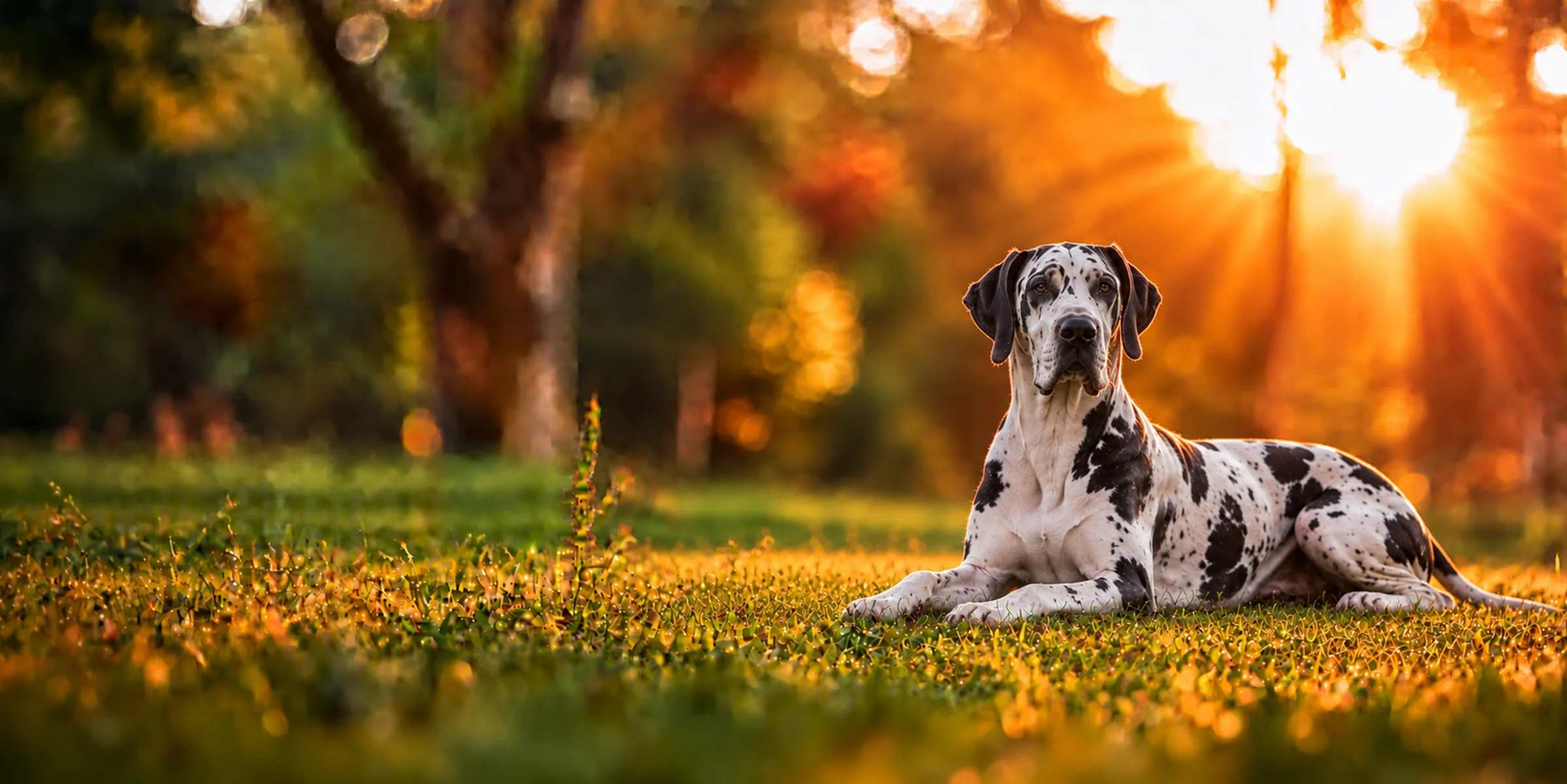
Great Dane
The closest comparison on size, temperament and the short life - both are gentle giants with low exercise needs and serious bloat risk. The Dane is smooth-coated and slightly shorter-lived still; the Wolfhound is taller and a sighthound rather than a mastiff.
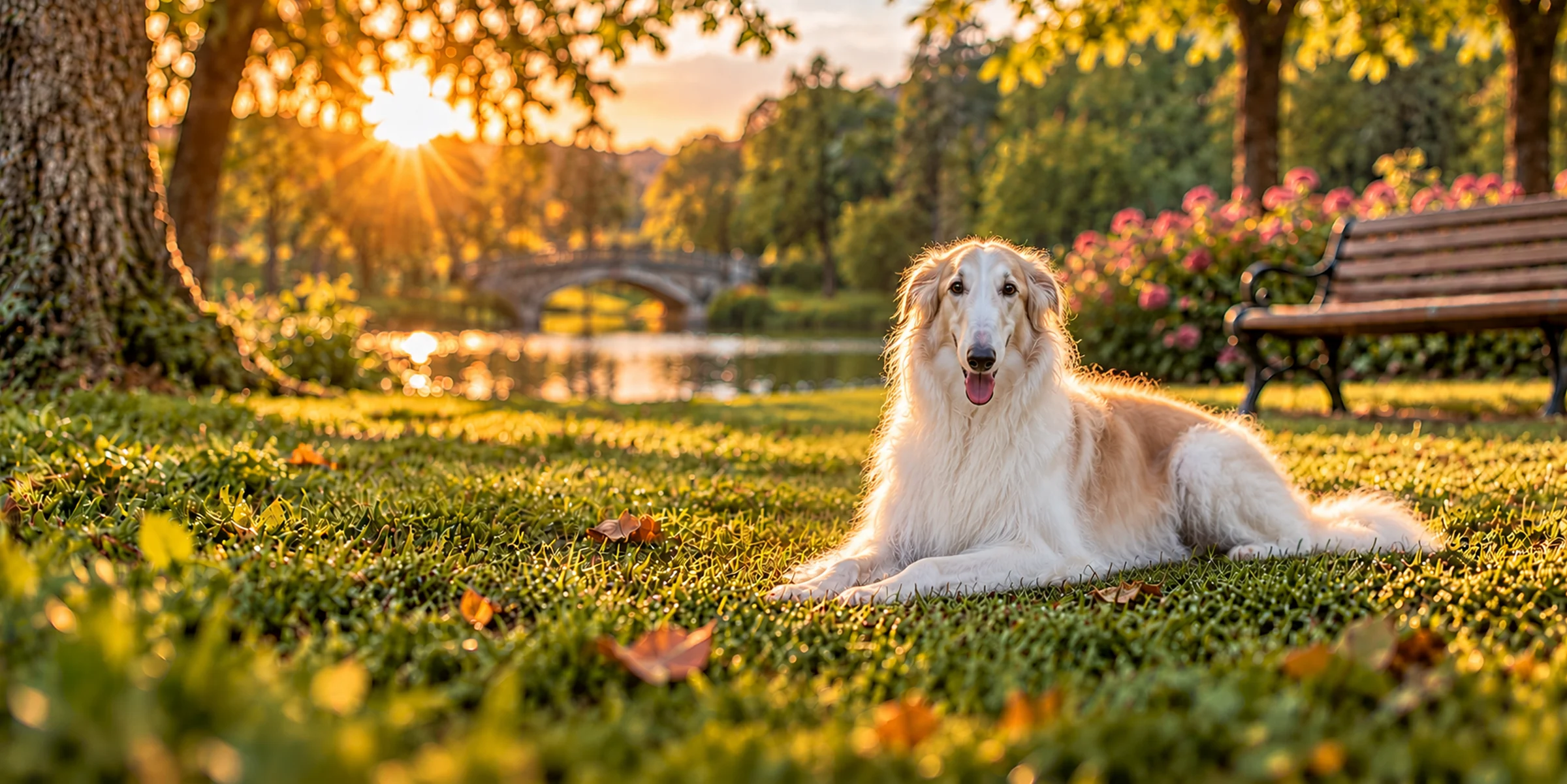
Borzoi
The other large coursing sighthound here - same explosive sprint, same indoor calm, same recall limits and anesthesia considerations. The Borzoi is far lighter and lives considerably longer.

Scottish Deerhound
The breed that rebuilt the Wolfhound - the same rough coat, gentle temperament, recall limits and anesthesia considerations. The Deerhound is lighter, faster and lives a few years longer; the Wolfhound is taller and considerably heavier.