

large-to-giant breed
Scottish Deerhound
A very tall, very gentle coursing hound from the Scottish Highlands, where clan chiefs kept them to run down red deer. Indoors a Deerhound is a gray shape asleep on the sofa for most of the day, quiet, undemanding and fond of children. Standing up, they are 28 to 32 inches at the shoulder, the tail clears a coffee table, and anything left on a counter is at nose height.

Pup Height
28-32 in

Pup Weight
75-110 lb
Males 30-32 in and 85-110 lb, females from 28 in and 75-95 lb, with extra height accepted in a dog who stays in proportion. A harsh, crisp coat of three to four inches on the body, softer on the head, breast and belly, with a slight beard and mustache. Dark blue-gray is preferred; darker and lighter grays, brindles, yellow, sandy red and red fawn with black points are also allowed. White on the chest and toes is permitted, a white blaze or collar is not. Source: AKC breed standard.

Pup Lifespan
8-11 years
Your pup, at a glance
What’s Life With This Pup Really Like?

High. Affectionate and quietly physical - they lean against people and will fold themselves onto a sofa far too small for them.

Very good. Gentle and tolerant, with the caveat that a tall, bony dog and a sweeping tail knock small children over without meaning to.

The weak point. Usually sociable with other dogs, especially other sighthounds, but cats and small animals trigger a chase instinct that is strong in this breed.

Very low. Deerhounds rarely bark at all.

Moderate to low. A good walk and a gallop, then long hours asleep.

Low to moderate. A wiry coat that sheds lightly but steadily, and there is a lot of dog.

Sudden bursts of joyful speed, then collapse. Adolescents are playful and gangly before they settle.

Low. Little drool, though the beard carries water away from the bowl.

Moderate. Willing and soft with reward-based work, and unreachable once something runs.

Low. Friendly toward strangers and rarely vocal - the height is the only deterrent.

Low to moderate. A weekly brush and comb, nails, ears and a thick bed.

Low to moderate. Calm enough indoors for smaller homes, but the height, the chase instinct and the need for fenced running space limit where they fit.
Lifestyle fit
Could This Be Your Best Breed?
Scottish Deerhounds suit a calm household with a long sofa, a securely fenced space big enough for a flat-out run, and $2,200 to $3,800 a year. Recall is never reliable, so the leash stays on outside the fence for life. A short life is the other hard fact - eight to eleven years - and making peace with that comes before everything else.

Living Space
A house with a sofa long enough to share and a securely fenced area big enough for a real gallop. Deerhounds are quiet and still indoors, but they are very tall, the tail sweeps coffee tables, and anything left on a counter is at nose height.

Pup Experience
Manageable for a first-time owner who accepts two facts up front: recall is not reliable and never will be, and the life is shorter than most. Deerhounds are gentle, soft and easy to live with; the difficulty is management and heartbreak rather than behavior.

Daily Pup Time
About an hour of walking as an adult plus a few chances a week to run flat out somewhere enclosed, with puppies kept to far less. Grooming is a brush and comb once or twice a week.

Allergies & Coat
The Scottish Deerhound scores 4/10 for shedding and 2/10 for drooling. No dog is truly hypoallergenic. The allergens come from dander and saliva, and a dog that sheds this much will leave plenty of hair behind - especially on your furniture, floors, and clothes.
Quirks & challenges
The Not-So-Easy Stuff

Extreme Chase Instinct
A running deer, cat or rabbit overrides everything. Secure fencing at home, a long line everywhere else.
Recall Is Not Reliable
They hunt by sight at close to 35 mph. No amount of training makes an open field safe.
A Short Life
Eight to eleven years, with heart disease and bone cancer taking many earlier. Go in knowing it.
Bloat Is a Real Risk
Tall and deep-chested. Split meals, keep exercise clear of feeding, and discuss a gastropexy.
Small Pets at Home
Some Deerhounds live peacefully with a cat raised alongside them; many do not. Test carefully and never assume.
Anesthesia Considerations
Lean sighthound physiology changes how drugs are handled. Tell every vet before any procedure.
The good, the bad & the hairy
Health, Care & Costs
Understanding the health risks and ongoing costs of a Scottish Deerhound helps you plan for a happy, healthy life together.

8-11 years
$70-$120
per groom (bath, tidy, nails, ears), every 8-12 weeks or done at home ($0-$600/year)
$2,200-$3,800/year
all-in (food, routine vet, grooming, insurance, incidentals)

Health Risks
Conditions this breed is prone to.

The heart muscle weakens and stretches so the heart pumps poorly, leading to arrhythmia, heart failure and sometimes sudden death. It is one of the major causes of death in the breed and often silent until advanced. There is no DNA test, so annual screening with an echocardiogram and Holter monitor from about two years old is the practical protection - ask breeders for cardiac results on both parents.
Osteosarcoma is a leading cause of death in Deerhounds, usually appearing in a limb in middle age and sometimes younger. It cannot be screened for in advance. Any persistent lameness or swelling in a leg warrants X-rays promptly rather than watchful waiting.
The stomach fills with gas and twists, cutting off its own circulation, and it kills within hours without emergency surgery. Tall, deep-chested sighthounds are a high-risk group - split meals, keep hard exercise well clear of them, and discuss a preventive gastropexy before you need one.
An inherited clotting disorder caused by a known mutation in the F7 gene, and a DNA test identifies clear, carrier and affected dogs. Affected Deerhounds usually show only mild signs, but they can bleed more than expected after surgery or injury, so a vet should know the result before any procedure. Carriers are unaffected; breeders use the test to avoid producing affected puppies.
Cystinuria lets the amino acid cystine leak into the urine and form bladder stones; in Deerhounds it is mainly seen in intact males, often improves after neutering, and is screened with a urine test because no DNA test covers the breed's form. Hypothyroidism causes weight gain, coat loss and low energy and is managed with a daily tablet - but sighthounds normally run lower thyroid values than other dogs, so diagnosis needs a full panel read by a vet who knows the breed.
Very little body fat and differences in how the liver clears certain drugs mean some anesthetics last longer and recoveries run slower in sighthounds, and older barbiturate agents are best avoided. Modern protocols are safe when dosed for the breed. Tell every vet performing a procedure, including a dental, that the dog is a sighthound - and mention the Factor VII result if the dog has one.

Insurance & Health Coverage
Insure young. The conditions that matter most in this breed - cardiomyopathy and bone cancer - tend to arrive in middle age, which on an eight-to-eleven-year life comes early, and a policy started after the first cardiac finding will exclude the heart for good.

Choose a high annual limit and read the per-condition caps rather than chasing the cheapest premium. Cancer treatment and cardiac medication run into the thousands, and every drug and anesthetic is dosed for a dog of a hundred pounds.

Plan for the things insurance does not handle well: annual cardiac screening is usually routine care rather than a claim, and a preventive gastropexy costs a fraction of emergency bloat surgery and is worth raising while a Deerhound is young.
 Get a Pet Insurance Quote
Care needs
The Daily Routine

Grooming
A harsh, crisp coat that needs a brush and a thorough comb-through once or twice a week, with a little tidying by hand around the ears and neck for a neater outline. Deerhounds are not bathed often and never clipped. Keep nails short on a dog this tall, check the ears weekly, and give them a genuinely thick bed - lean sighthounds develop pressure sores and calluses on hard floors.

Exercise
About an hour of walking a day as an adult, plus regular chances to gallop in a securely fenced space - they need speed more than distance. Puppies need restraint: no forced running or long hikes until the growth plates close.

Food & Weight
Two measured meals rather than one large one, with activity kept well clear of feeding given the bloat risk. Grow puppies slowly on a large-breed formula. A fit Deerhound looks lean, with the hip bones and a hint of ribs showing - that is correct condition for a sighthound, not underweight.
Similar breeds
If This Isn’t Quite the One
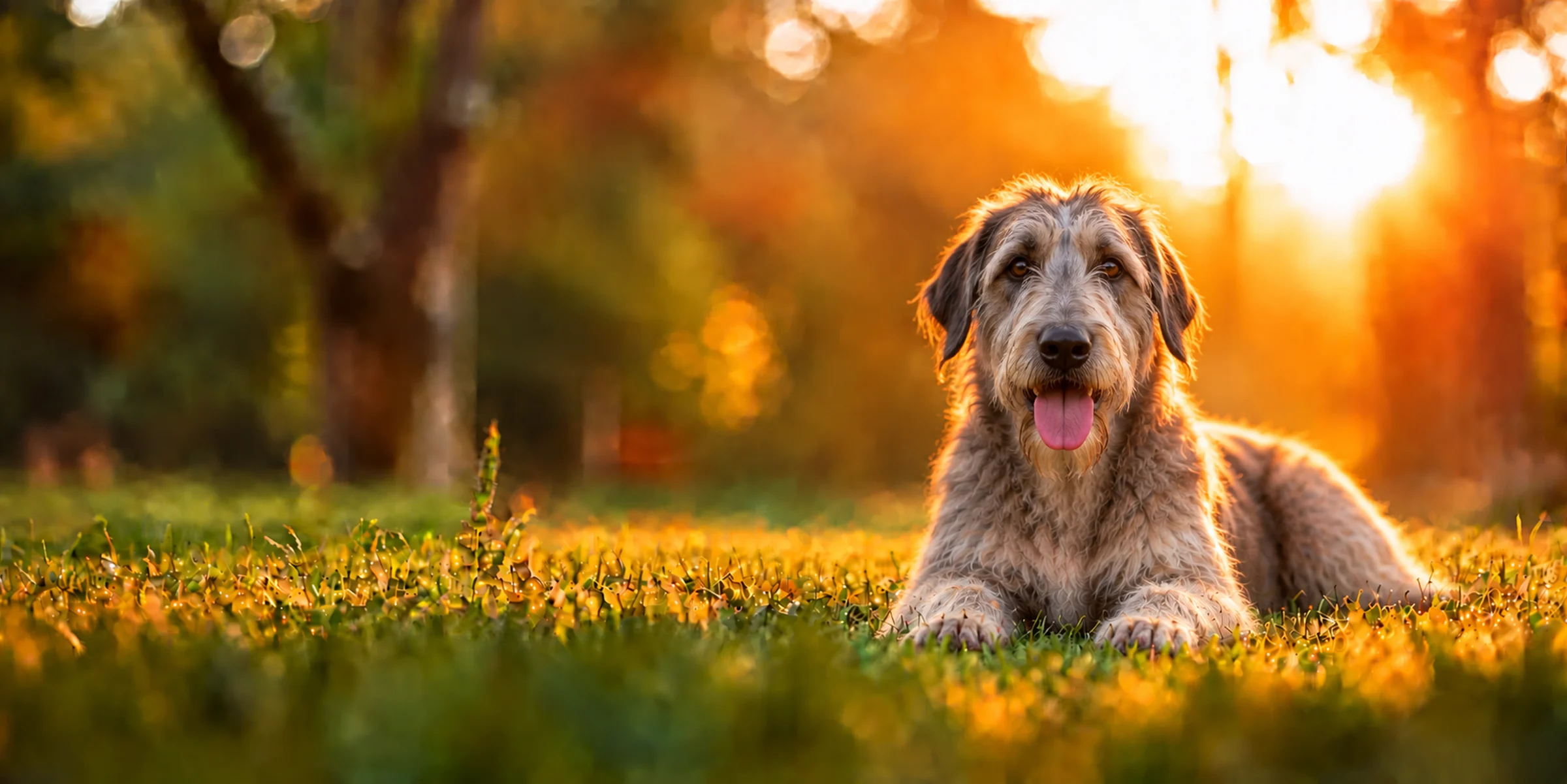
Irish Wolfhound
The closest relative - Deerhound blood was used to rebuild the Wolfhound in the nineteenth century, and the two share the rough coat, the gentle temperament and the sighthound habits. The Wolfhound is heavier and lives a shorter life still; the Deerhound is lighter, faster and more finely built.
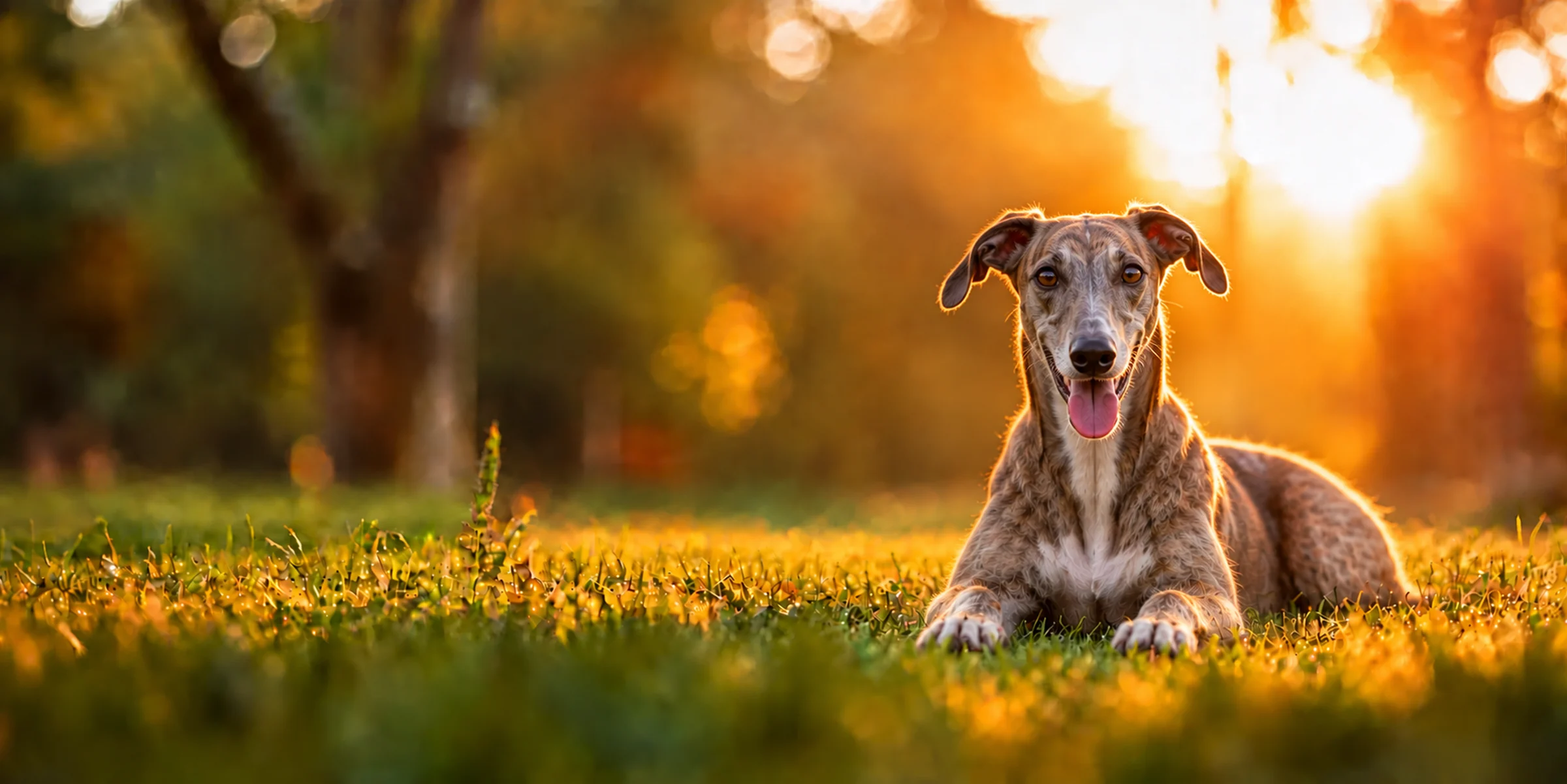
Greyhound
The same sighthound temperament, recall limits and anesthesia considerations in a smooth-coated dog. The Greyhound is smaller, easy to adopt as a retired racer and lives longer; the Deerhound is taller, shaggier and far rarer.
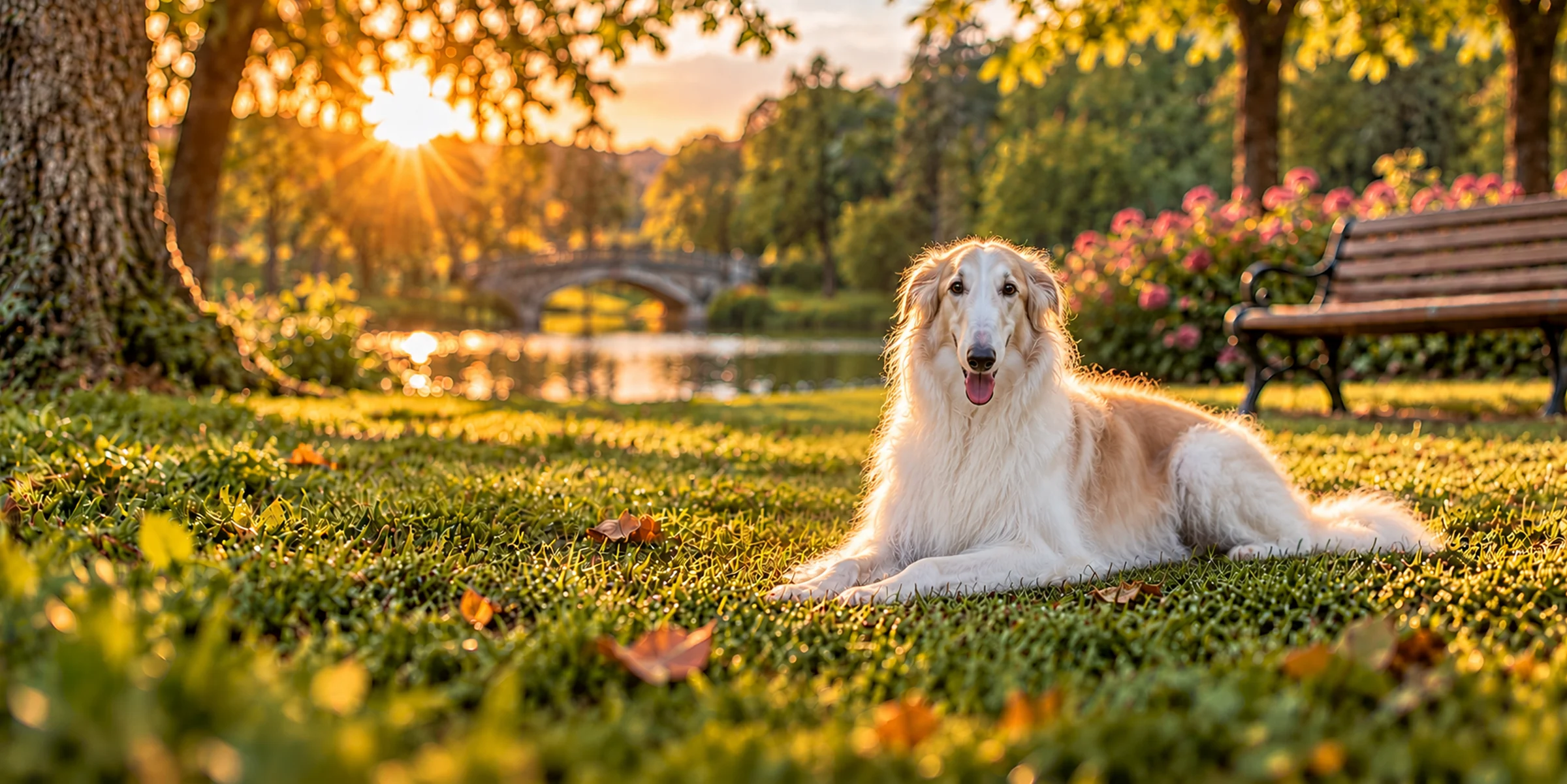
Borzoi
Another tall coursing hound bred for big game, with the same indoor calm and the same chase instinct. The Borzoi is more aloof and carries a silky coat that takes more grooming; the Deerhound is friendlier with strangers and wirier to live with.

Saluki
An ancient sighthound with the same independence, prey drive and need for secure fencing. The Saluki is far lighter, more reserved and built for desert heat; the Deerhound is a gentle giant made for cold, wet hills.