

small-to-medium breed
Puli
A Hungarian sheepdog who turned the flock while the much larger Komondor guarded it, and the cords are the first thing anyone notices. They are not a hairstyle: a corded coat is hand-separated as the cords form, takes most of a day to dry after a bath, and never stops being work. Brushed out instead, the same coat is a lot of brushing. Underneath is a fast, springy, 25-to-35-pound dog with a loud opinion about arrivals.

Pup Height
15-18 in

Pup Weight
25-35 lb
Males ideally 17 in and females 16 in, with an inch over or under allowed. The standard sets no weight figure; most Pulik weigh 25-35 lb. Solid black, rusty black, any shade of gray, or white, with a white chest spot of up to 2 in permitted. A weatherproof double coat that may be shown either corded or brushed - the US is one of the few countries that allows the brushed coat in the ring. Source: AKC breed standard.

Pup Lifespan
10-15 years
Your pup, at a glance
What’s Life With This Pup Really Like?

Moderate. Pulik are affectionate and like to be near their people, but they are busy dogs more than lap dogs.

Fair. Playful with children they know, but the herding instinct means nipping at running kids, and a Puli is often wary of visiting children. Supervision and early training matter.

Variable. Usually fine with pets raised alongside them, though a Puli may try to herd them, and some are bossy with unfamiliar dogs.

High. A sharp alarm bark for anything new, and it needs managing from puppyhood.

High. Quick, springy and tireless for the size, and still playful in old age.

Low. Loose hair is caught in the cords or the coat rather than dropped around the house.

Lively and clownish. Pulik love games with their family, especially anything involving chasing and gathering.

Very low. A tidy mouth, though a corded beard holds water after drinking.

Good but independent. Pulik learn quickly and respond to rewards, then test whether a repeated cue is really necessary.

Very high. Alert, suspicious of strangers and quick to sound off, with a protective streak behind the bark.

Very high. Corded means years of hand-separating cords and very slow drying after every bath; brushed means heavy brushing several times a week.

Low to moderate. The size travels well, but the barking, energy and coat care make apartments and hot, humid climates harder.
Lifestyle fit
Could This Be Your Best Breed?
A Puli suits an experienced owner in a house with a yard who wants a quick, involved dog and has read about the coat before choosing one. Costs run $1,700 to $3,000 a year across ten to fifteen years, and the coat is the part of that people underestimate. If the honest answer is that nobody in the house has a spare afternoon for drying a dog, look at a smooth-coated herder instead.

Living Space
A house with a fenced yard suits a Puli best. The size would fit an apartment, but the barking, the alertness to every noise in the hallway and the space a wet corded coat needs to dry make shared walls hard going.

Pup Experience
Better with an owner who has had a herding breed before. Pulik are quick and clever, but they are also independent, suspicious of strangers and happy to run the household if nobody else does. The coat asks for an owner who has researched it properly.

Daily Pup Time
An hour or more of exercise with some mental work in it every day. On top of that, weekly coat work - hand-separating cords while they form, or several thorough brushings a week for a brushed coat - and a day set aside whenever a corded Puli needs a bath.

Allergies & Coat
The Puli scores 2/10 for shedding and 2/10 for drooling. No dog is truly hypoallergenic. The allergens come from dander and saliva, and a coat like this one holds on to them rather than spreading them around your home - which is what a groomer is clearing out every six to eight weeks.
Quirks & challenges
The Not-So-Easy Stuff

The Corded Coat
Cords have to be split by hand as they form, and a bath means many hours of drying. Brushed instead, the coat still needs heavy brushing.
Herding Family Members
Circling, bumping and nipping at the heels of running children. It needs redirecting early, not punishing.
Barking
A Puli announces visitors, delivery drivers and passing dogs. Teaching a quiet cue matters from the start.
Wary of Strangers
Reserved and protective by nature. Poorly socialized Pulik can become defensive about their home.
Independent Thinking
Quick to learn and just as quick to decide a repeated command is not worth doing. Keep sessions short and varied.
High Energy for the Size
A compact dog with a working dog's stamina. A bored Puli invents jobs, and most of them are noisy.
The good, the bad & the hairy
Health, Care & Costs
Understanding the health risks and ongoing costs of a Puli helps you plan for a happy, healthy life together.

10-15 years
$80-$150
per professional groom where a groomer will handle cords, every 6-10 weeks ($500-$1,300/year) - most corded Puli owners do the work at home, and a pet kept in a short clip costs less
$1,700-$3,000/year
all-in (food, routine vet, grooming, insurance, incidentals)

Health Risks
Conditions this breed is prone to.

The hip joint develops loosely and wears into arthritis over time. It is part of the breed club's recommended testing, so both parents should have OFA or PennHIP hip results.
The retina slowly degenerates, starting with night blindness and ending in blindness. A form of PRA in the Puli has been linked to a variant in the BBS4 gene and a DNA test for it is offered, but breeding dogs should still have regular eye examinations by a veterinary ophthalmologist.
A progressive spinal cord disease of older dogs that causes hind-leg weakness and, eventually, paralysis. The SOD1 DNA test is on the breed club's recommended list; it shows whether a dog is clear, a carrier or at risk, though not every at-risk dog develops the disease.
Clouding of the lens that can blur vision and sometimes needs surgery. There is no DNA test for cataracts in the breed, so eye examinations are the screening tool - another reason to ask for the parents' current eye results.
Congenital deafness occurs in the breed, in one or both ears. There is no DNA test for it; a BAER hearing test, which can be done on young puppies, is how it is checked, and responsible breeders often run one even though the breed club lists it as optional.
A dense corded coat that stays damp holds moisture against the skin, where yeast, bacteria and hot spots thrive unseen. Drying the coat completely after every bath or swim, and parting the cords to check the skin, is the prevention.

Insurance & Health Coverage
Insure young. Hip dysplasia and eye disease are the likeliest claims in the breed, and a condition noted on the record before cover starts is usually excluded for good.

Read how a policy treats hereditary conditions. Degenerative myelopathy and PRA are inherited, some policies limit or exclude hereditary disease, and the parents' DNA and eye results matter as much as the policy.

The expense most owners underestimate is the coat rather than illness. Skin infections under damp cords are a recurring vet visit if drying slips, and few groomers take on corded dogs, so budget either time or money for it.
 Get a Pet Insurance Quote
Care needs
The Daily Routine

Grooming
The Puli coat can be kept corded or brushed. Puppies have a soft, fluffy coat; somewhere around nine months to a year the undercoat and outer coat start to clump together, and those clumps must be separated by hand into cords every week or two or they fuse into a single mat against the skin. Cords keep lengthening for years. A corded Puli is never brushed, but a bath means soaking the cords thoroughly and then many hours with a high-velocity dryer - a day or more to air-dry - because damp cords sour and irritate the skin. Owners who do not want cords can keep the coat brushed out, which means a long, thorough brushing several times a week, or in a short pet clip. Trim hair between the pads and around the rear, and check the ears weekly.

Exercise
An hour or more a day of real activity - brisk walks, off-leash running in a secure area, and games that use the brain. Pulik excel at herding, agility and obedience, and a dog with a job settles far better at home. Keep them fenced or on a line; the herding instinct will send a Puli after anything that moves.

Food & Weight
A quality diet in measured meals, adjusted for a dog that is more active than the size suggests. The coat hides condition completely, so check weight by feeling the ribs rather than by looking, and weigh the dog regularly.
Similar breeds
If This Isn’t Quite the One

Komondor
The other corded Hungarian breed, and the one people confuse with the Puli. The Komondor is a white flock guardian nearly three times the size, calmer and far more territorial; the Puli is a quick, bouncy herder small enough to live indoors.

Mudi
Another quick, vocal Hungarian herder with a similar alert, work-hungry temperament. The Mudi has a short wavy coat that needs almost no grooming, which makes them the easy-care choice.
Bergamasco Sheepdog
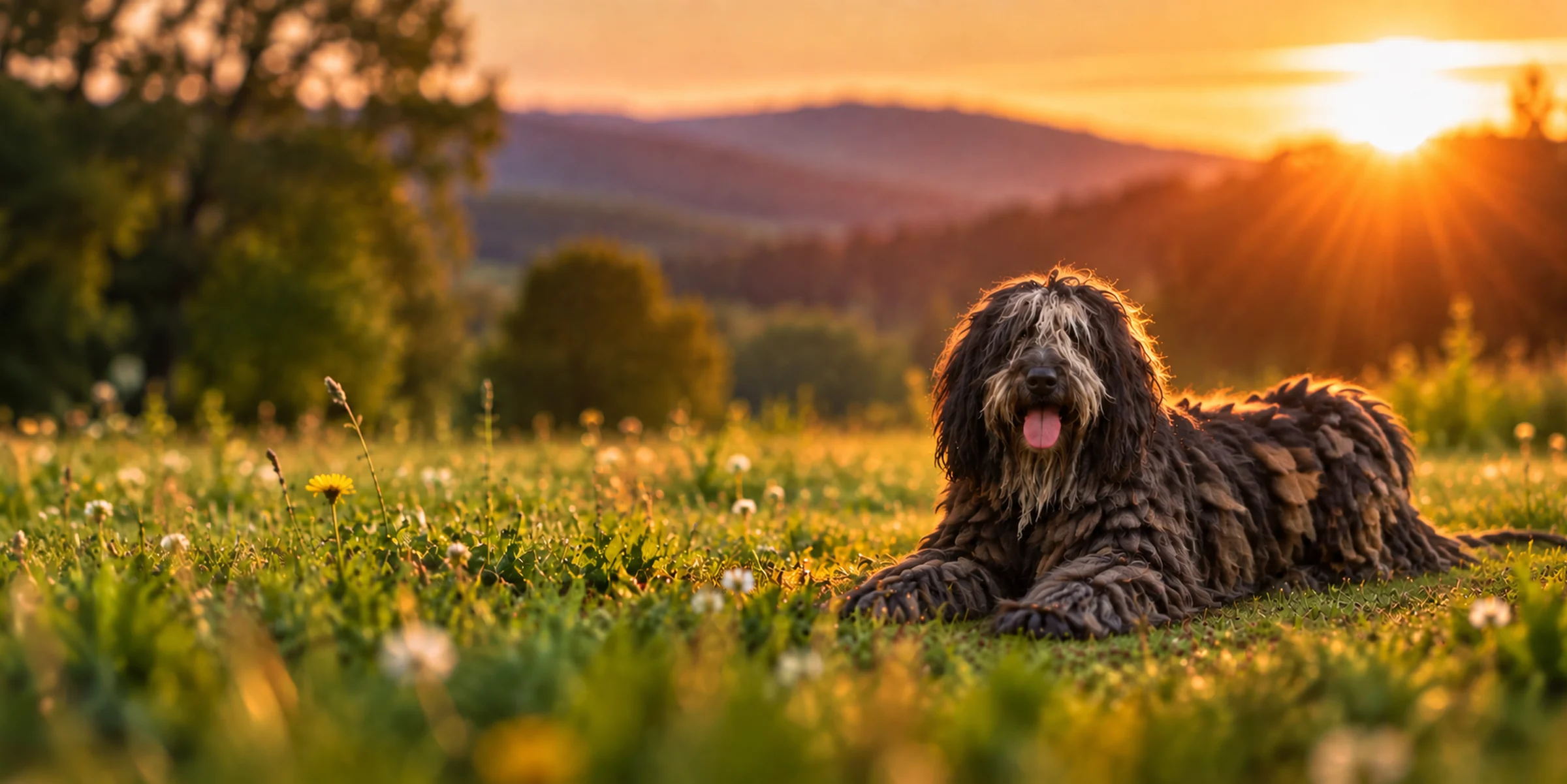
A matted-coat herder from the Italian Alps. The Bergamasco grows flat felted flocks rather than round cords, is much larger and more laid-back, and needs far less upkeep once the coat has formed.

Polish Lowland Sheepdog
A shaggy, similarly sized herding dog with the same watchfulness and independent streak. The PON's long coat is brushed rather than corded, so the work is regular brushing instead of cord separation and long drying.