

large-to-giant breed
Kuvasz
Hungary's white flock guardian, and a faster, lighter-footed one than the corded Komondor they share a country with. A Kuvasz is devoted at home and openly wary of everyone else, and that wariness is the breed working correctly rather than a gap in the training. Expect three years of adolescence before the adult turns up, a bark that runs most of the night, and seventy to a hundred and fifteen pounds of opinion.

Pup Height
26-30 in

Pup Weight
70-115 lb
Males 28-30 in and 100-115 lb, females 26-28 in and 70-90 lb. Always white, in a medium-length wavy double coat - the skin underneath is darkly pigmented, which is correct and helps against sun. Hungarian royalty kept them as guardians and hunting dogs before they became flock guards, and the breed came within a few dozen individuals of extinction after the Second World War. Source: AKC breed standard.

Pup Lifespan
10-12 years
Your pup, at a glance
What’s Life With This Pup Really Like?

Moderate. They are devoted to their own family in an undemonstrative, watchful way and have no interest at all in anyone outside it.

Reasonable with their own family's children and protective of them, which is the complication - a Kuvasz's size and suspicion of visitors mean supervision is essential rather than advisable.

Good with livestock and animals raised alongside them, variable with unfamiliar dogs entering a Kuvasz's territory.

High, deep and concentrated at night. It is the working function, and it is the most common reason neighbors object.

Moderate, and higher than most flock guardians. Ninety minutes suits a Kuvasz and they settle well afterward.

Heavy. A thick white double coat that sheds year-round and blows out completely twice a year.

Moderate. A Kuvasz is more playful than the heavier guardians and still a serious dog at heart.

Low.

Low by breeding. Intelligent and independent - they cooperate with a handler they respect rather than obeying one.

The maximum. Territorial, genuinely suspicious, fast on their feet and entirely prepared to act on their own assessment.

Moderate to high. Twice-weekly deep brushing, daily in season, and no clipping.

Low. They need land, a boundary, an experienced owner and an insurer who will have them.
Lifestyle fit
Could This Be Your Best Breed?
A Kuvasz suits acreage, a serious fence and a household that does not run a revolving door of visitors - ideally an owner who has raised a guardian and knows to manage the temperament rather than correct it. Budget $2,200 to $3,600 a year against a ten to twelve year life. People who chose a Kuvasz as a big friendly white family dog are the ones rehoming at eighteen months.

Living Space
Land with a serious fence and neighbors at a distance. Kuvasz patrol a territory they define themselves and announce everything crossing it, particularly at night.

Pup Experience
Experienced guardian owners. A Kuvasz is more athletic and more reactive than most flock guardians, slow to mature, and genuinely suspicious of strangers - a combination that needs an owner who understands the temperament rather than fights it.

Daily Pup Time
An hour to ninety minutes of steady activity - more than most guardians, because the Kuvasz retains a hunting background. The coat needs a thorough brush twice a week and daily during the blowouts.

Allergies & Coat
The Kuvasz scores 8/10 for shedding and 3/10 for drooling. No dog is truly hypoallergenic. The allergens come from dander and saliva, and a dog that sheds this much will leave plenty of hair behind - especially on your furniture, floors, and clothes.
Quirks & challenges
The Not-So-Easy Stuff

Serious Suspicion of Strangers
Wariness is the breed, not a fault. Relentless early socialization decides whether it stays manageable.
Nocturnal Barking
A deep carrying bark used through the night. It is the job and the most common reason for complaints.
Independent by Design
Bred to work without a shepherd. Obedience is negotiated and never guaranteed under pressure.
Slow to Mature
Boisterous and boundary-testing until around three, in a hundred-pound frame.
Insurance and Housing
A large white guardian is frequently excluded by insurers and refused by landlords.
Heavy Shedding
A thick white double coat that blows out twice a year and shows on everything.
The good, the bad & the hairy
Health, Care & Costs
Understanding the health risks and ongoing costs of a Kuvasz helps you plan for a happy, healthy life together.

10-12 years
$85-$130
per groom (bath, full blow-out, de-shed, nails, ears), every 8-10 weeks ($450-$800/year)
$2,200-$3,600/year
all-in (food, routine vet, grooming, insurance, incidentals)

Health Risks
Conditions this breed is prone to.

The joints develop loosely or unevenly and wear into arthritis, sometimes needing surgery - which at a hundred pounds sits at the top of the orthopedic cost range. Present at significant rates; both parents should have scored hips and elbows.
The stomach fills with gas and twists, cutting off its own circulation, and it kills within hours without emergency surgery. Deep-chested giants are the highest-risk group - split meals, keep exercise clear of them, and discuss a preventive gastropexy.
Cartilage in a joint fails to develop properly and a flap separates, causing lameness in young growing dogs. Over-feeding and over-exercising a puppy make it considerably more likely, and it is often corrected surgically.
The thyroid under-produces, causing weight gain, lethargy and coat and skin problems. Diagnosed by blood test and controlled with an inexpensive daily tablet for life.
The retina degenerates gradually until the dog is blind, usually starting with night vision. There is no treatment and a DNA test exists, so tested parents remove the risk.
The white coat over dark skin handles sun better than it looks, but allergic skin disease appears in the breed and the dense coat hides it until it is established. Part the coat when you brush rather than working the surface.

Insurance & Health Coverage
Start with liability. A hundred-pound guardian with genuine suspicion of strangers is excluded by many home insurers and refused by most landlords - get a written position before there is a puppy, because this breed rehomes badly and rescues are full of the consequences.

On health, everything is priced by body mass. Joint surgery at this weight is at the top of the orthopedic range, and it shows up early here because of the growth rate - OCD is a young dog's problem. Bloat is a several-thousand-dollar emergency at whatever hour it arrives.

Insure young: a joint note on a record becomes a permanent exclusion, and with a ten-to-twelve-year life expectancy the useful window is not long.
 Get a Pet Insurance Quote
Care needs
The Daily Routine

Grooming
A medium-length wavy double coat that needs a thorough brush twice a week and daily attention for several weeks in spring and fall when the undercoat lets go completely. Work down to the skin rather than over the surface - the coat hides skin problems. No trimming, and never shave it; the coat protects against sun as well as cold.

Exercise
An hour to ninety minutes daily, more than most flock guardians need. A Kuvasz retains a hunting background and genuinely enjoys movement, though long high-impact work is bad for growing giant joints.

Food & Weight
Two or three measured meals rather than one, with activity kept clear of feeding given the bloat risk. Grow puppies slowly on giant-breed food - forcing weight onto developing joints is what produces the OCD cases.
Similar breeds
If This Isn’t Quite the One
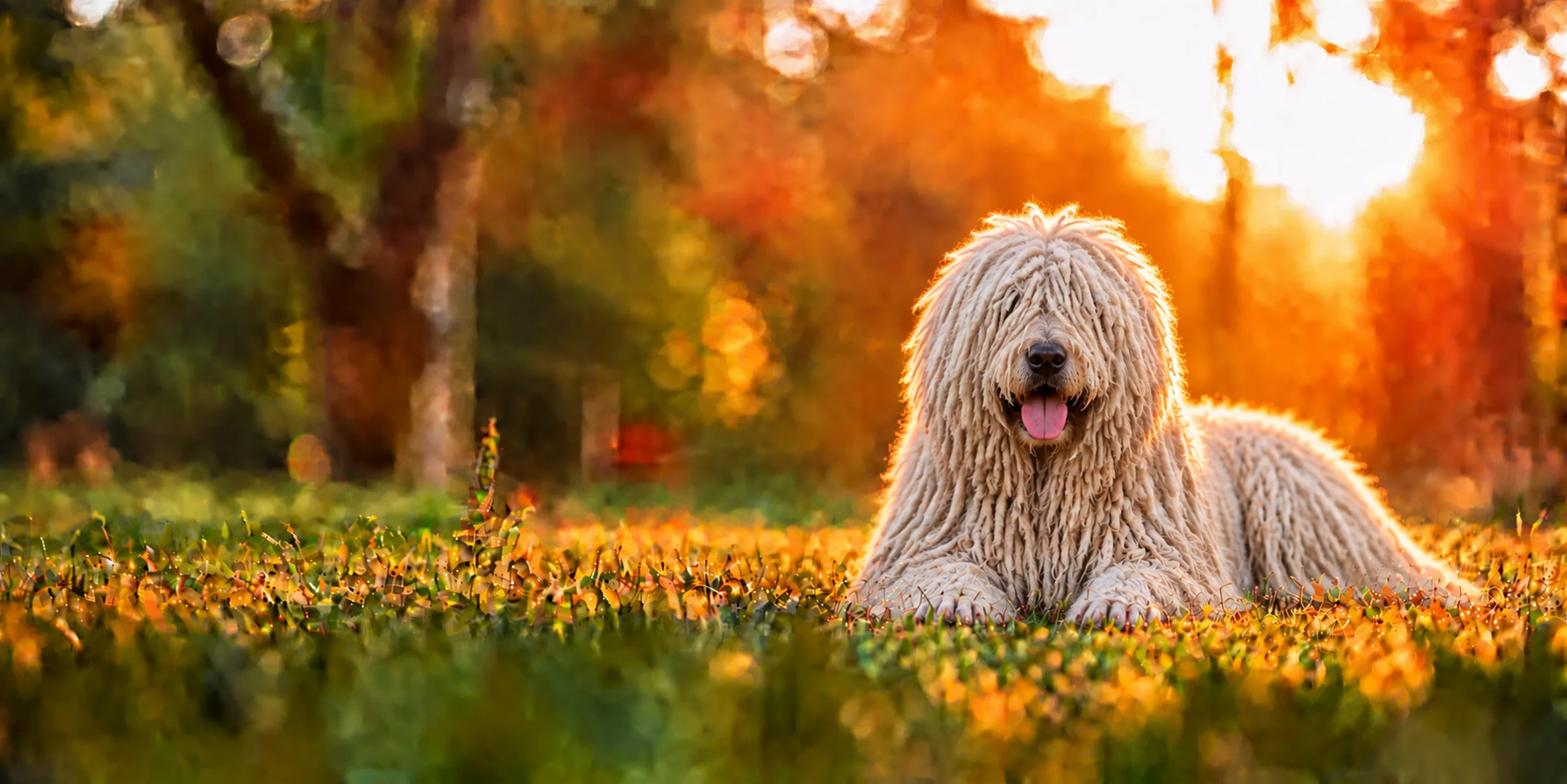
Komondor
The other Hungarian flock guardian, and the direct comparison - same country, same job, same temperament. The Komondor's corded coat is an enormous undertaking; the Kuvasz gives you the same dog with ordinary grooming.
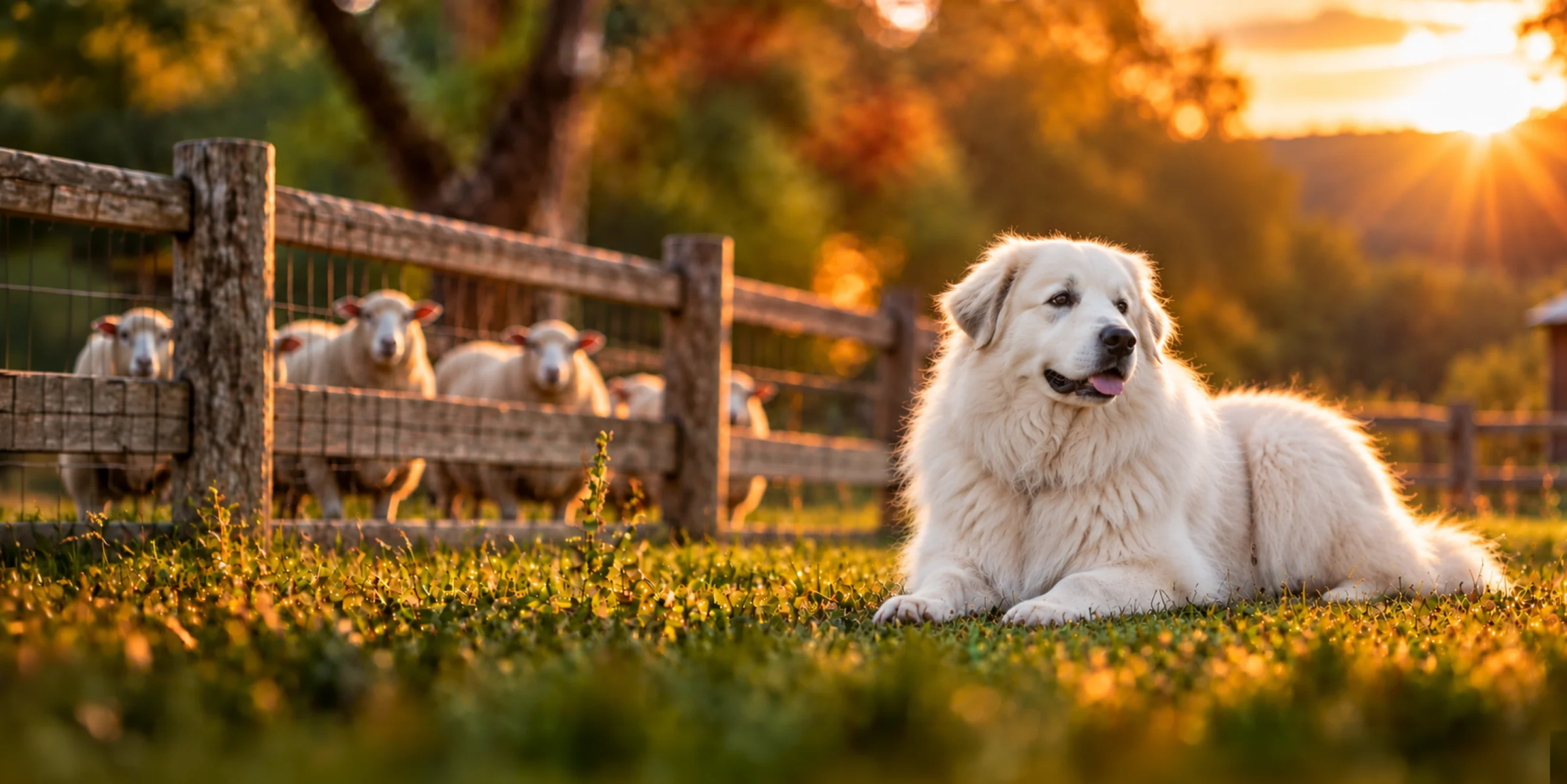
Great Pyrenees
A comparable white mountain guardian with the same independence and nocturnal barking. The Pyr is calmer and gentler with strangers; the Kuvasz is more athletic, more reactive and harder to place.
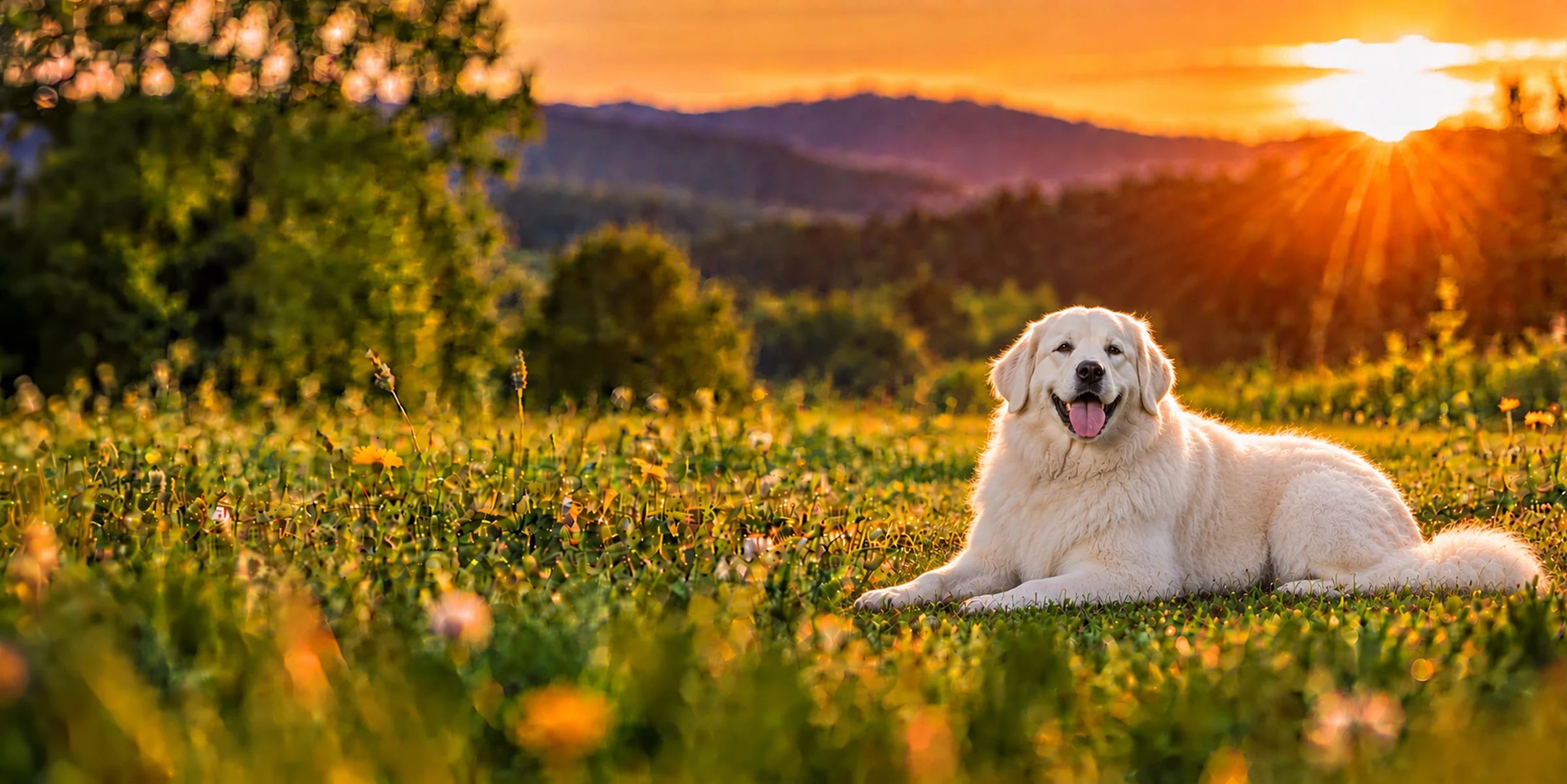
Slovensky Cuvac
The Slovak white guardian from the Tatras next door, and close enough to be mistaken for a Kuvasz. Cuvacs are a little smaller with a straighter coat, white by rule with no cream permitted, and were rebuilt from a handful of dogs after the Second World War.