

medium breed
Korean Jindo Dog
A medium spitz with prick ears and a curled or sickle tail, in white, red fawn, wolf gray, black, black and tan, or brindle. Native to Jindo Island off the southwest coast of Korea, where the population stayed isolated for centuries - the Jindo was designated a South Korean National Treasure in 1962, and exporting one legally is genuinely difficult as a result. In the AKC's Foundation Stock Service. Source: AKC Foundation Stock Service breed standard.
Korea's national dog, from an island that kept the breed to itself for centuries. A Jindo asks very little of a household - quiet, fastidiously clean, often close to housetrained on arrival - and returns loyalty on terms they set themselves. The catch is containment. Jindos climb and jump, and they have been documented crossing hundreds of kilometers back to a previous home, which is a lovely story and a fencing problem.

Pup Height
17.5-22 in

Pup Weight
30-50 lb

Pup Lifespan
12-15 years
Your pup, at a glance
What’s Life With This Pup Really Like?

Moderate, and narrow. They are intensely attached to one person and show it by proximity rather than by demonstrativeness.

Reasonable with children in their own household when raised with them. Jindos are reserved with visiting children and have limited patience for rough handling.

Difficult. Strong prey drive toward cats and small animals, and same-sex dog aggression is common.

Low. A quiet dog who alerts deliberately rather than constantly - notably less vocal than most spitz breeds.

High. Two hours with mental work daily, and they are calm and clean indoors once it has happened.

Heavy. A dense northern double coat that sheds year-round and blows out completely twice a year.

Moderate and self-contained. They play with their own person and treat most of life seriously.

Minimal - they are among the cleanest dogs on this site in every respect.

Moderate. Intelligent and independent, and unusually easy to housetrain while being hard to make reliable under distraction.

Very strong. Alert, territorial, quietly serious and genuinely protective of their own person.

Moderate. A weekly brush most of the year and daily work through the blowouts, with very little bathing needed.

Low. They need secure containment, an experienced handler and usually no other pets, and they do badly in heat.
Lifestyle fit
Could This Be Your Best Breed?
A Korean Jindo suits an experienced owner in a cool climate, in a house with high, dug-in fencing and no small pets on the premises. Reckon on ninety minutes to two hours of work a day, $1,200 to $2,100 a year, and a twelve to fifteen year commitment to a dog who may never transfer that attachment to anyone else. Without a yard you would trust against a climbing, jumping escape artist, do not.

Living Space
A house with genuinely secure fencing - Jindos climb, jump and have a documented habit of returning to a previous home over long distances. Cool conditions suit them; the coat is a northern one.

Pup Experience
Experienced owners with primitive breeds. The Jindo is famously loyal to one person, meticulously clean, and completely independent - they are not difficult so much as un-doglike in what they offer, and owners expecting biddability are consistently disappointed.

Daily Pup Time
Ninety minutes to two hours daily with mental work. Grooming is a weekly brush and daily work during the dramatic twice-yearly blowouts.

Allergies & Coat
The Korean Jindo Dog scores 8/10 for shedding and 1/10 for drooling. No dog is truly hypoallergenic. The allergens come from dander and saliva, and a dog that sheds this much will leave plenty of hair behind - especially on your furniture, floors, and clothes.
Quirks & challenges
The Not-So-Easy Stuff

One-Person Loyalty
They bond to a single person and often will not transfer it. Rehoming an adult Jindo rarely works.
They Roam and Return
Documented travelling hundreds of kilometers home. Containment has to be genuinely secure.
Serious Prey Drive
Bred to hunt deer and boar. Cats, small pets and livestock are a real problem.
Dog Aggression
Same-sex conflict is common and they do not back down. Often best as the only dog.
Export Restrictions
A South Korean National Treasure, so legal export is difficult and American litters are scarce.
Heavy Seasonal Shedding
A dense northern double coat that blows out twice a year in sheets.
The good, the bad & the hairy
Health, Care & Costs
Understanding the health risks and ongoing costs of a Korean Jindo Dog helps you plan for a happy, healthy life together.

12-15 years
$50-$80
per groom (bath, full blow-out, de-shed, nails, ears), every 8-12 weeks ($250-$450/year)
$1,200-$2,100/year
all-in (food, routine vet, grooming, insurance, incidentals)

Health Risks
Conditions this breed is prone to.

Worth stating first. Centuries of island isolation and functional selection rather than fashion left this one of the soundest breeds on this site, with very few documented inherited problems and a long life.
The thyroid under-produces, causing weight gain, lethargy and coat and skin problems. It is the most commonly reported health issue in the breed, diagnosed by blood test and controlled with an inexpensive daily tablet for life.
The hip joint develops loosely so the ball wears in the socket instead of gliding, leading to arthritis. Present at low rates and screened by scoring both parents.
Progressive retinal atrophy and cataracts both appear at low rates. PRA is DNA testable in the parents; annual eye examination catches cataracts early.
Not inherited, but the likeliest reason they see a vet. A dog who climbs out and travels meets roads and other animals, and the homing instinct means a Jindo goes a long way before anyone finds them.
Worth listing on its own. Export restrictions mean the American population descends from a small number of dogs, so the individual breeder's pedigree knowledge matters more than breed-level statistics.

Insurance & Health Coverage
A healthy, inexpensive breed, so the case for cover is mostly the ordinary one and premiums should be reasonable.

What you are actually insuring is trauma, and the profile is specific: this is a dog who escapes and travels, so road accidents and encounters with other animals well away from home are the realistic claims. A microchip and a GPS collar do more for them than most of the policy will.

Hypothyroidism is the one condition likely to need lifelong management, and the medication is cheap. Insure young for the standard reason - a thyroid or joint note on a record becomes a permanent exclusion for everything downstream.
 Get a Pet Insurance Quote
Care needs
The Daily Routine

Grooming
A dense double coat that needs a thorough brush weekly most of the year and daily attention for several weeks in spring and fall when the undercoat lets go completely. The coat is largely self-cleaning and needs no trimming, and Jindos are fastidious dogs who keep themselves clean - bathing is rarely necessary. Never shave the coat.

Exercise
Ninety minutes to two hours daily with mental work and varied ground. Hiking, scent work and long walks suit them; they are independent explorers rather than fetch dogs.

Food & Weight
Two measured meals. They are lean and efficient by build and need less than their energy suggests; the coat hides weight gain, so go by feel through the ribs.
Similar breeds
If This Isn’t Quite the One
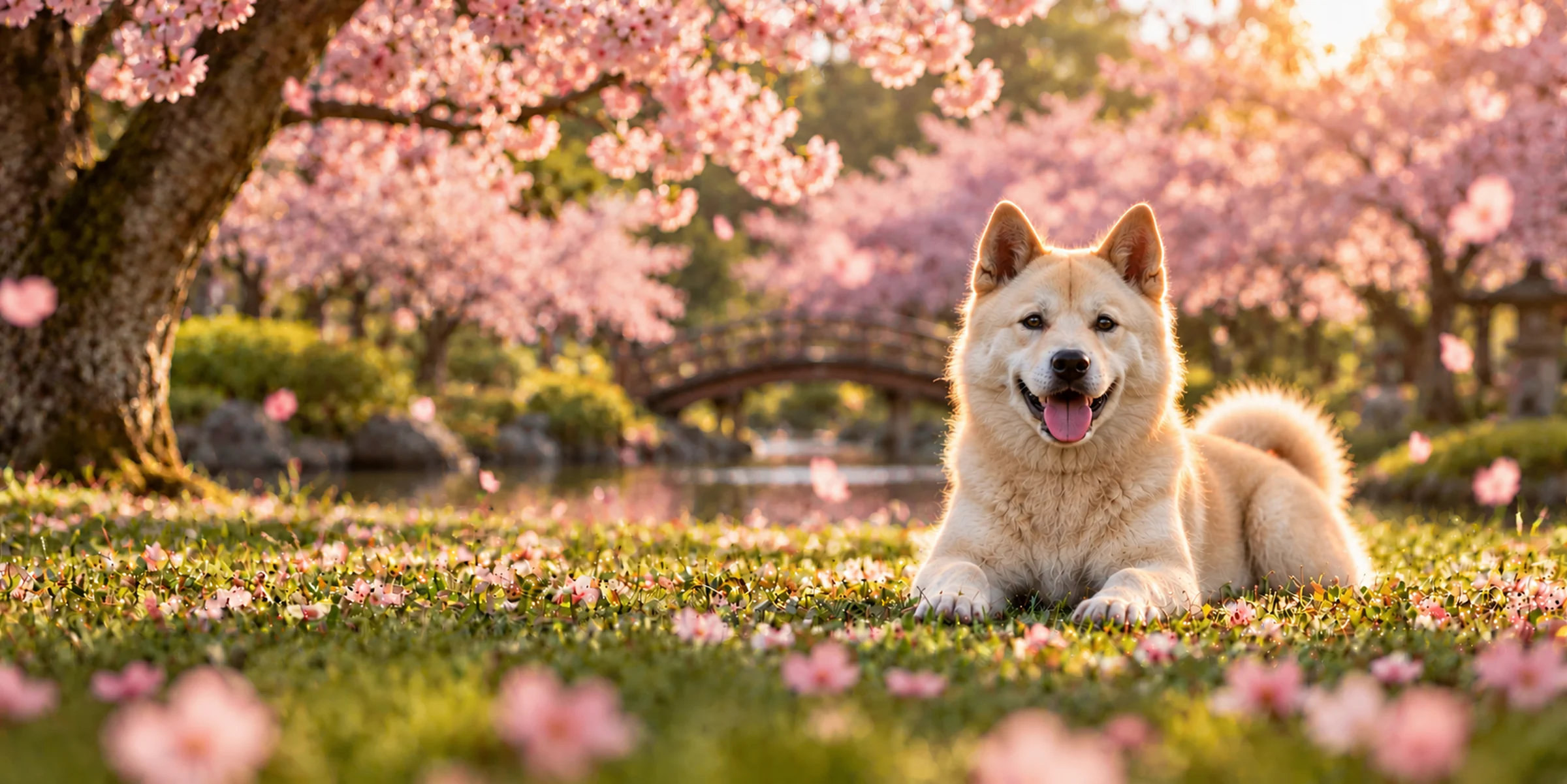
Kishu Ken
The closest match - a medium East Asian hunting spitz of the same size with the same independence, quietness and prey drive. The Kishu is Japanese and usually white; the Jindo is Korean and more famous for the one-person bond.

Hokkaido
Another medium primitive hunting spitz with comparable loyalty and reserve. The Hokkaido is more territorial and more vocal; the Jindo is quieter, cleaner and harder to obtain.

Thai Bangkaew
The Thai temple spitz, similar in the one-family devotion and the guarding streak. Thai Bangkaews carry a heavier ruff, are usually white with colored patches, and come from a hot climate rather than a cold one.