

large breed
Slovensky Cuvac
The white flock guardian of the Tatra mountains, left out with the flocks to see off wolves, and nearly lost after the Second World War before Antonin Hruza rebuilt the breed from a handful of dogs. Slovensky Cuvacs are brave, steady and affectionate at home. Everything hard about them is the job working correctly: a deep voice used freely after dark, a recall that gets weighed before it is obeyed, and a white double coat that comes out in sheets.

Pup Height
23-27.5 in

Pup Weight
68-97 lb
Males 24.5-27.5 in and 79-97 lb, females 23-25.5 in and 68-82 lb. White, and only white - the standard allows no other color, though a yellowish tinge at the base of the ears is tolerated rather than wanted. A thick double coat with a heavy mane over the neck and chest, fuller on males, and black pigment on the nose, lips and eye rims. In the AKC's Foundation Stock Service. Source: AKC Foundation Stock Service breed standard.

Pup Lifespan
11-13 years
Your pup, at a glance
What’s Life With This Pup Really Like?

Moderate. Affectionate and close with their own family, but a guardian would rather lie by the door than on the couch.

Very good with the children in their own household - patient, tolerant and protective. Visiting children are a different matter and need supervising.

Usually good with stock and with dogs raised alongside them. Same-sex friction between adults is common, and strange dogs at the fence are treated as intruders.

Very high. A deep carrying bark used freely, and mostly at night, because that is when predators came.

Moderate. Long stretches of lying and watching, punctuated by patrols and a fast response to anything out of place.

Very heavy. A dense white double coat that sheds year-round and blows out in handfuls twice a year.

Playful for a guardian, particularly when young, though the fun is short and the watching is constant.

Low. A dry-mouthed breed with none of the flews that make a mastiff drip.

Limited by design. Intelligent and quick to understand, but bred to act on their own judgment, so compliance is negotiated rather than automatic.

As serious as guarding gets. Alert, territorial and willing to back the bark up, with centuries of predator work behind the instinct.

High. Two or three thorough brushings a week down to the skin, daily during the blowouts, and no shaving.

Low. They need space, cold-tolerant living and a boundary to mind, and they translate badly to town life or close neighbors.
Lifestyle fit
Could This Be Your Best Breed?
A Slovensky Cuvac needs a farm, a smallholding or real acreage with fencing that means something, and an owner who wants a guardian rather than a companion. Expect $1,800 to $3,200 a year, eleven to thirteen years, and adult judgment arriving somewhere around the third birthday. A suburban lot with a bedroom window forty feet away is where this breed becomes everybody's problem.

Living Space
A farm, a smallholding or at least real acreage with fencing that means something. The Slovensky Cuvac works a boundary and announces everything that crosses it, which is fine at the top of a valley and a genuine problem on a suburban lot where the nearest bedroom window is forty feet away. An apartment is out of the question.

Pup Experience
Not a first dog, and not a breed to grow into. Livestock guardian temperament is a specialty, and an owner needs to be comfortable with a large dog who weighs up an instruction before deciding whether to take it, and who guards by default rather than on request.

Daily Pup Time
An hour or more of walking, patrolling or working, and ideally stock to watch on top of that. Brushing two or three times a week, and daily for a few weeks in spring and fall when the undercoat comes out.

Allergies & Coat
The Slovensky Cuvac scores 9/10 for shedding and 3/10 for drooling. No dog is truly hypoallergenic. The allergens come from dander and saliva, and a dog that sheds this much will leave plenty of hair behind - especially on your furniture, floors, and clothes.
Quirks & challenges
The Not-So-Easy Stuff

Barking Is the Job
A guardian who answers every noise after dark in a deep carrying voice. Neighbors notice, and no amount of training takes the instinct out.
Independent by Design
Bred to make calls alone on a mountainside, so a recall gets weighed before it gets obeyed. This is not an obedience breed.
Serious About Strangers
A Cuvac guards by default and treats an unannounced visitor as a problem to solve. Deliveries, contractors and visiting friends all need managing.
The Coat Blows Out
A thick white double coat that sheds all year and comes out in sheets twice a year. White hair on the furniture, the car and the clothes.
Needs Space and a Job
Land, a boundary and preferably animals to watch. Without work they invent some, usually along the fence line.
Slow to Mature
Adult guardian judgment arrives somewhere around two or three. Adolescents test the fence and the handler at the same time.
The good, the bad & the hairy
Health, Care & Costs
Understanding the health risks and ongoing costs of a Slovensky Cuvac helps you plan for a happy, healthy life together.

11-13 years
$80-$130
per groom (bath, blow-out, de-shed, nails, ears), every 8-10 weeks or done at home ($0-$700/year)
$1,800-$3,200/year
all-in (food, routine vet, grooming, insurance, incidentals)

Health Risks
Conditions this breed is prone to.

The hip joint develops loosely so the ball grinds in the socket and wears into arthritis. Both parents should have scored or graded hips, and a growing puppy needs controlled exercise and a lean frame rather than mileage.
Developmental faults in the elbow and shoulder that show up as front-end lameness in a young dog, sometimes needing surgery. Over-feeding and pushing a heavy puppy to grow fast make both considerably more likely.
The stomach fills with gas and twists on itself, cutting off circulation, and a dog dies within hours without emergency surgery. A deep-chested breed at real risk - split the meals and keep hard exercise clear of them.
The breed came through the years after the Second World War on a small number of dogs, and everything alive today traces back to them. Ask a breeder about the inbreeding coefficient of the litter and what health testing the parents have had, because that paperwork is doing most of the work here.
An underactive thyroid brings weight gain, coat loss, flaky skin and a dull, listless mood, and the change is easy to mistake for a dog simply slowing down. A blood test confirms it and a daily tablet manages it for life.
A mountain coat on a dog built for cold. Summer work belongs at dawn and dusk, and damp trapped under a dense undercoat turns into an angry patch of inflamed skin fast - dry them properly after a swim or a wet day.

Insurance & Health Coverage
Take a policy out young. The orthopedic problems that matter in a guardian breed show up as a limp long before they show up as a diagnosis, and one note about a stiff hind end on the record is enough for an insurer to exclude hips for life.

The claims to plan for are joints and emergencies. A hip or elbow repair on a 90-pound dog runs into the thousands, and bloat surgery is a five-figure night in some regions - check the annual limit and the per-condition cap rather than the monthly premium, because that is where a cheap policy runs out.

One working-dog caveat: a dog who lives out with stock is doing a job, and some policies restrict or exclude injuries picked up while working. Read that clause before you buy a policy, because for this breed it may remove exactly the cover you wanted.
 Get a Pet Insurance Quote
Care needs
The Daily Routine

Grooming
A dense white double coat that needs a thorough brush two or three times a week, right down to the skin - surface brushing leaves mats building behind the ears, in the mane and in the trousers. Twice a year the undercoat blows and it becomes a daily job with a rake for a few weeks. Never shave the coat: the same layers that hold heat in also keep it out. Nails, ears and the feathering between the toes need a weekly look.

Exercise
An hour or so of steady work a day - walking, patrolling, hiking, or watching stock, which is what the breed would choose. They are not distance runners or fetch fanatics, and a young dog's joints need the miles kept moderate until growth finishes. Mental work counts: a boundary to mind does more for a Cuvac than another lap around the block.

Food & Weight
Two measured meals rather than one, with exercise kept well clear of feeding given the bloat risk. Grow puppies slowly on large-breed food - weight pushed onto developing joints causes damage that never fully goes away. A working dog out in winter burns a great deal more than one living quietly, so feed the dog in front of you and keep the ribs findable.
Similar breeds
If This Isn’t Quite the One
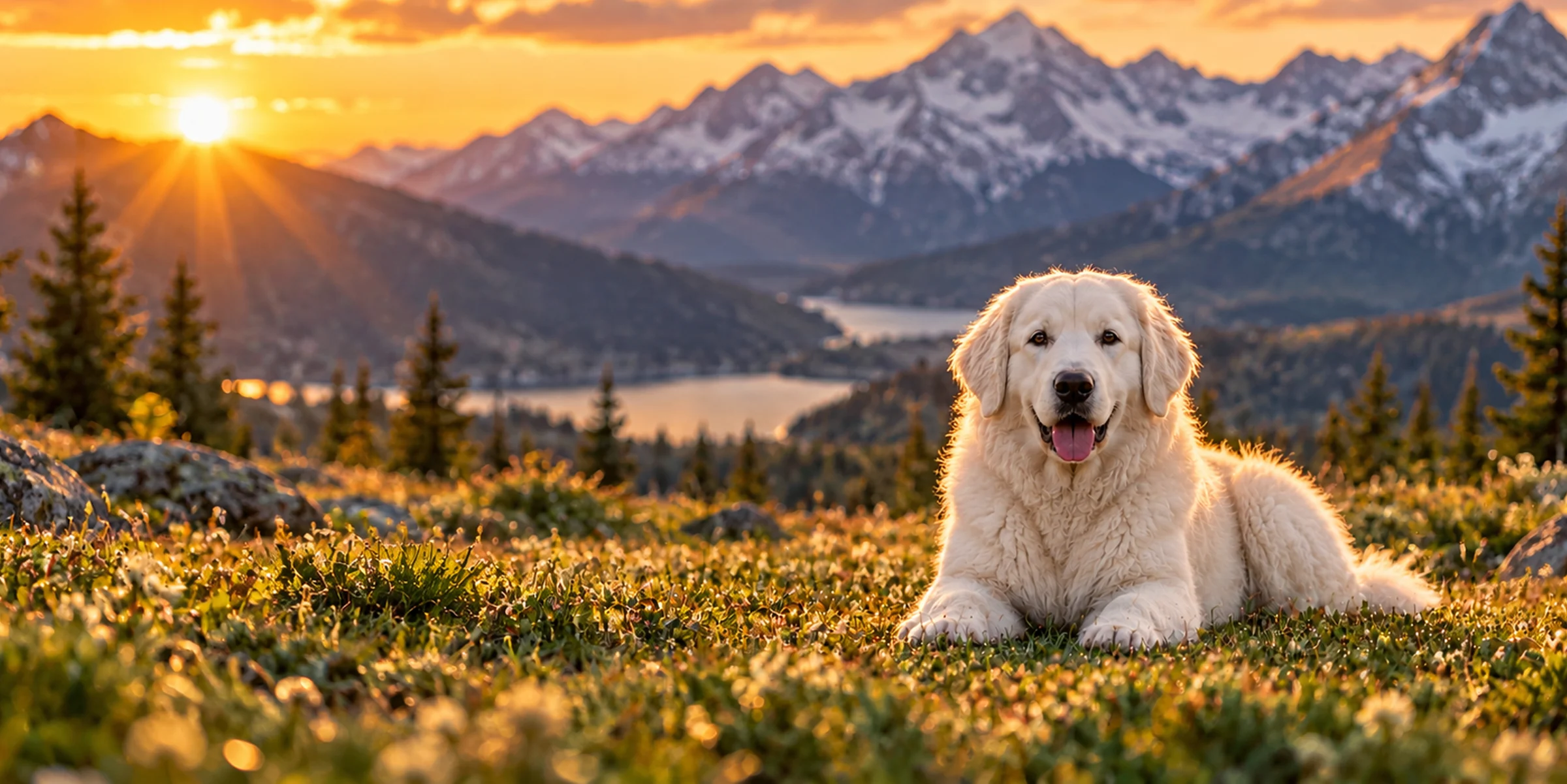
Kuvasz
The nearest comparison on the map and on the page - a Hungarian white flock guardian with the same brief and much the same look. The Kuvasz is taller, more athletic and quicker to react, in a wavy coat; the Slovensky Cuvac is stockier, heavier-coated, a little steadier and considerably harder to find.
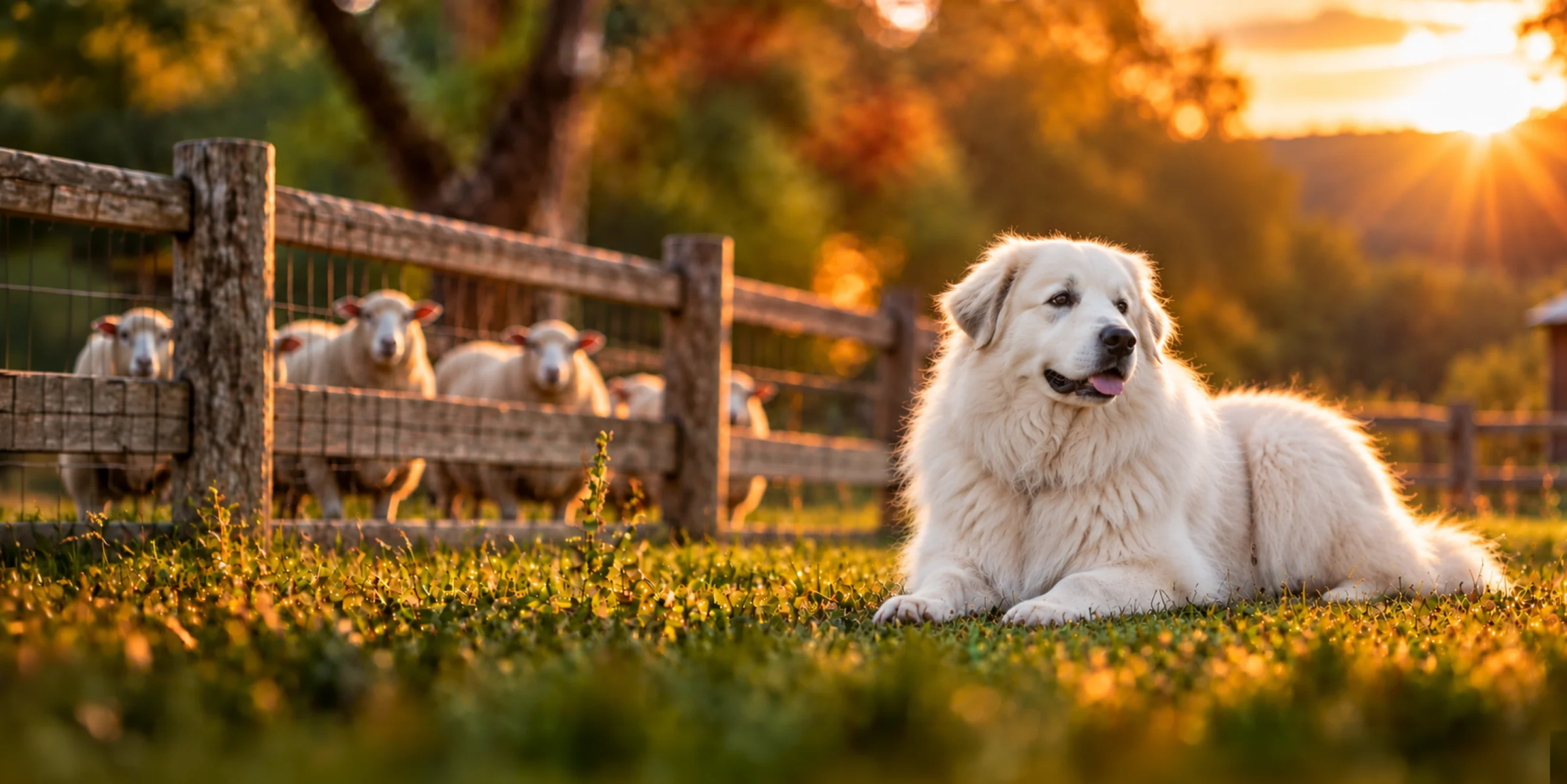
Great Pyrenees
The same white mountain guardian idea from the French Pyrenees, and by far the better known of the two. The Pyr is bigger, gentler with strangers and may carry badger or tan markings; the Cuvac is white by rule, smaller, and livelier and more reactive about the boundary.
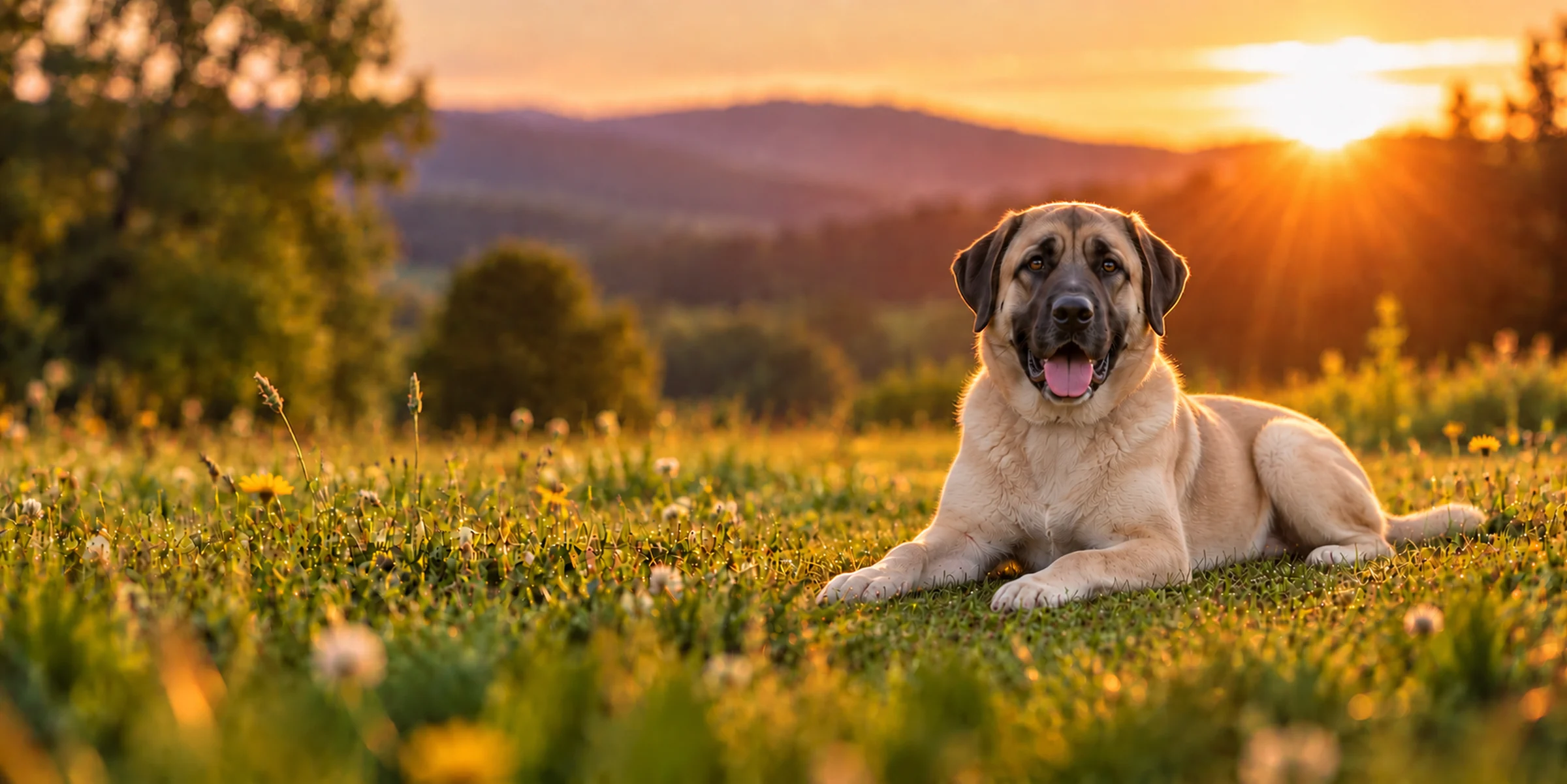
Anatolian Shepherd Dog
Another working guardian bred to live out with a flock and answer to nobody. The Anatolian is far larger, short-coated and aloof even with the family; the Cuvac is a hairier, more demonstrative dog who wants to be near their own household when the shift ends.