

large-to-giant breed
Newfoundland
The fishermen's dog of Newfoundland - hauling nets, pulling carts, pulling people out of cold water - and still the breed most associated with water rescue. The gentleness is genuine, and so is the mess: a dense double coat that sheds all year, drool slung across the room after every drink, and a black-coated giant who cannot cope with a hot afternoon. Brushing is several sessions a week, not a Sunday chore.

Pup Height
26-28 in

Pup Weight
100-150 lb
Males average 28 in and 130-150 lb, females 26 in and 100-120 lb. Solid black, brown or gray, or white with black markings - the color called Landseer. An apartment, water-resistant double coat. The Landseer (European Continental Type) is a separate breed recognized by the FCI, not the AKC's white-and-black Newfoundland. Source: AKC breed standard.

Pup Lifespan
9-10 years
Your pup, at a glance
What’s Life With This Pup Really Like?

Very high. Newfoundlands want to be touching their people and will happily lean 130 pounds against a leg.

Excellent. Patient, gentle and watchful with children, though a giant dog can still knock over a toddler by accident.

Very good. Sociable with other dogs and usually easy with cats raised alongside them.

Low. A deep bark when something warrants it, and quiet otherwise.

Low to moderate. A good walk or swim, some play, then long hours flat on the coolest floor in the house.

Very heavy. A dense double coat that sheds constantly and blows out twice a year.

Gentle and good-natured, and happiest in water. Adolescents are clumsy and bouncy before they settle.

Very high. Loose lips and a steady supply of drool, flung wide after a drink or a head shake.

Good. Willing and sensitive, and responsive to rewards and a calm voice rather than pressure.

Moderate. The size and deep bark deter people; the temperament behind them is welcoming rather than protective.

High. Brushing several times a week, daily raking during the blowouts, and baths and drying that take real effort.

Low. The size, coat, drool and poor heat tolerance rule out small homes and hot climates without air conditioning.
Lifestyle fit
Could This Be Your Best Breed?
Newfoundlands need a house with a fenced yard, air conditioning and an owner who trains leash manners before the puppy passes a hundred pounds, which takes about a year. Nine or ten years is the usual life, and each of them costs $3,000 to $5,000. A house-proud owner will be miserable here, and so will the dog in a hot climate with nowhere cool to lie.

Living Space
A house with a fenced yard, air conditioning and floors that can take water and drool. Newfoundlands are calm indoors, but a dog this size, this wet and this hairy makes an apartment a daily struggle - and a hot one a risky place.

Pup Experience
Fine for a committed first-time owner who trains early. The temperament is famously sweet and cooperative; the hard part is that leash manners and greetings have to be solid before the puppy passes 100 pounds.

Daily Pup Time
Thirty to sixty minutes of moderate exercise a day, ideally with a swim, plus brushing several times a week and daily towel duty for the drool.

Allergies & Coat
The Newfoundland scores 9/10 for shedding and 9/10 for drooling. No dog is truly hypoallergenic. The allergens come from dander and saliva, and a dog that sheds and drools this much will leave plenty of both behind - especially on your furniture, floors, and clothes.
Quirks & challenges
The Not-So-Easy Stuff

Serious Drool
Loose flews that sling strings of drool after drinking, eating and in the heat. Towels live in every room.
Heavy Shedding
A dense double coat that sheds all year and blows out in spring and fall. Hair on everything, all the time.
Heat Intolerance
A black coat on a giant body overheats quickly. Summer walks belong at dawn and dusk, with air conditioning at home.
Giant Size, Fast
A puppy that reaches over 100 pounds in about a year. Leash manners and no-jumping have to come early.
Water Everywhere
Newfoundlands head for any water they can find and carry half of it home in the coat.
Needs Their People
Bred to work beside people and a poor fit for long hours alone or a life in the yard.
The good, the bad & the hairy
Health, Care & Costs
Understanding the health risks and ongoing costs of a Newfoundland helps you plan for a happy, healthy life together.

9-10 years
$100-$175
per groom (bath, blow-out, de-shed, nails, ears), every 6-8 weeks or done at home ($0-$1,100/year)
$3,000-$5,000/year
all-in (food, routine vet, grooming, insurance, incidentals)

Health Risks
Conditions this breed is prone to.

Loose or malformed joints that wear into arthritis, sometimes needing surgery. Common in the breed; both parents should have OFA or PennHIP hip scores and OFA elbow ratings, and puppies need slow growth and restrained exercise.
An inherited narrowing below the aortic valve that forces the heart to work harder and can cause fainting or sudden death. There is no reliable DNA test, so parents should be cleared by a board-certified cardiologist, ideally with an echocardiogram.
An inherited kidney defect that lets cystine form bladder stones, which can block the urethra, most dangerously in males. A DNA test (SLC3A1) identifies clear, carrier and affected dogs, and both parents should have results.
The heart muscle thins and weakens, often with no signs until heart failure or an arrhythmia. No DNA test exists for the breed; periodic echocardiograms and Holter monitoring in adults catch it earlier.
The stomach fills with gas and can twist, cutting off blood supply - a surgical emergency that can kill within hours. Deep-chested giants are at real risk; feed two or three smaller meals, keep hard exercise away from meals, and ask the vet about a preventive gastropexy.
The knee's cranial cruciate ligament ruptures more often in heavy dogs, causing sudden hind-leg lameness. Surgery is expensive, and a second knee often follows. Keeping the dog lean is the best protection.

Insurance & Health Coverage
Insure young. On a giant breed everything is dosed and priced by weight - anesthesia, medication, surgery - and the conditions that matter most, from torn cruciate ligaments to heart disease, tend to arrive in the first half of life, when a note on the record becomes a permanent exclusion.

Orthopedic and emergency claims are the ones to plan for. Cruciate surgery, dysplasia management and bloat surgery each run into the thousands, and a Newfoundland can need more than one. Check how a policy treats bilateral conditions (a second knee) and read the annual limits rather than the premium.

SAS and cystinuria are inherited and often present from birth, so they may be excluded as pre-existing. Cardiology clearances and cystinuria DNA results on both parents are the real protection - ask the breeder for the paperwork before you commit.
 Get a Pet Insurance Quote
Care needs
The Daily Routine

Grooming
A heavy, water-resistant double coat that needs a thorough brush several times a week, and daily work with an undercoat rake through the spring and fall blowouts. Mats form behind the ears, in the pants and under the legs. Baths are a big job and a proper dry matters, since a damp undercoat leads to hot spots. Trim nails and check ears weekly, wipe the mouth daily, and never shave the coat.

Exercise
Thirty to sixty minutes of moderate exercise a day - walks and, best of all, swimming, which is easy on the joints. Keep it to cool hours and stop at the first heavy panting. Puppies need restraint: no forced running, stairs or long hikes until the growth plates close at around 18-24 months.

Food & Weight
Large-breed puppy food and slow, steady growth protect the joints - a Newfoundland puppy pushed to grow fast is headed for orthopedic trouble. Adults do best lean, with a visible waist under the coat, fed two or three measured meals a day with hard exercise kept away from mealtimes because of bloat risk.
Similar breeds
If This Isn’t Quite the One
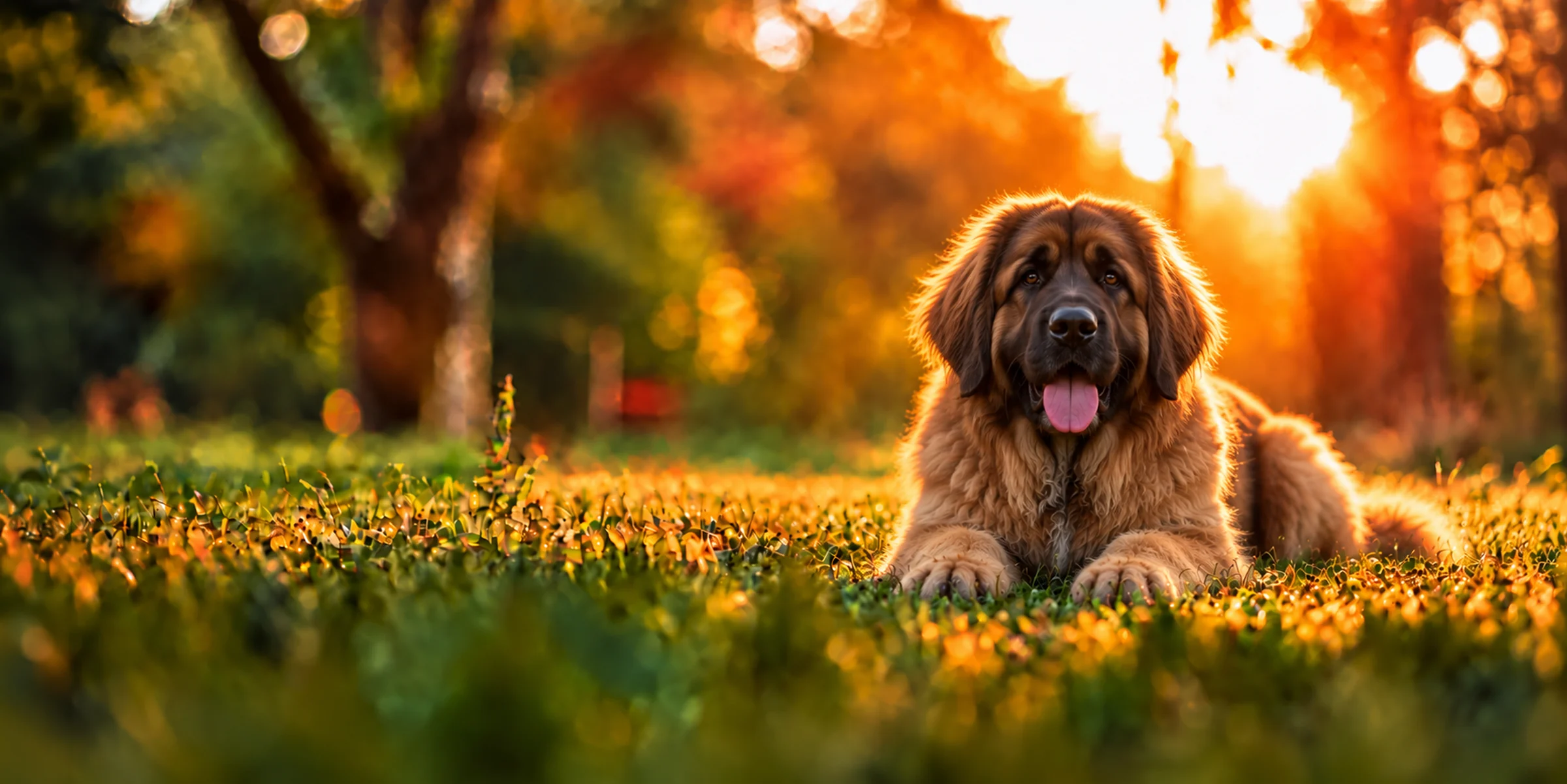
Leonberger
A related gentle giant built partly from Newfoundland stock, with the same love of water and heavy coat. The Leonberger drools less and is a little more active; the Newfoundland is heavier, wetter around the mouth and even more placid.

Bernese Mountain Dog
Another calm, family-devoted working breed with a thick coat. The Berner is smaller, more energetic and less of a drooler; the Newfoundland is bigger, slower and much more drawn to water.
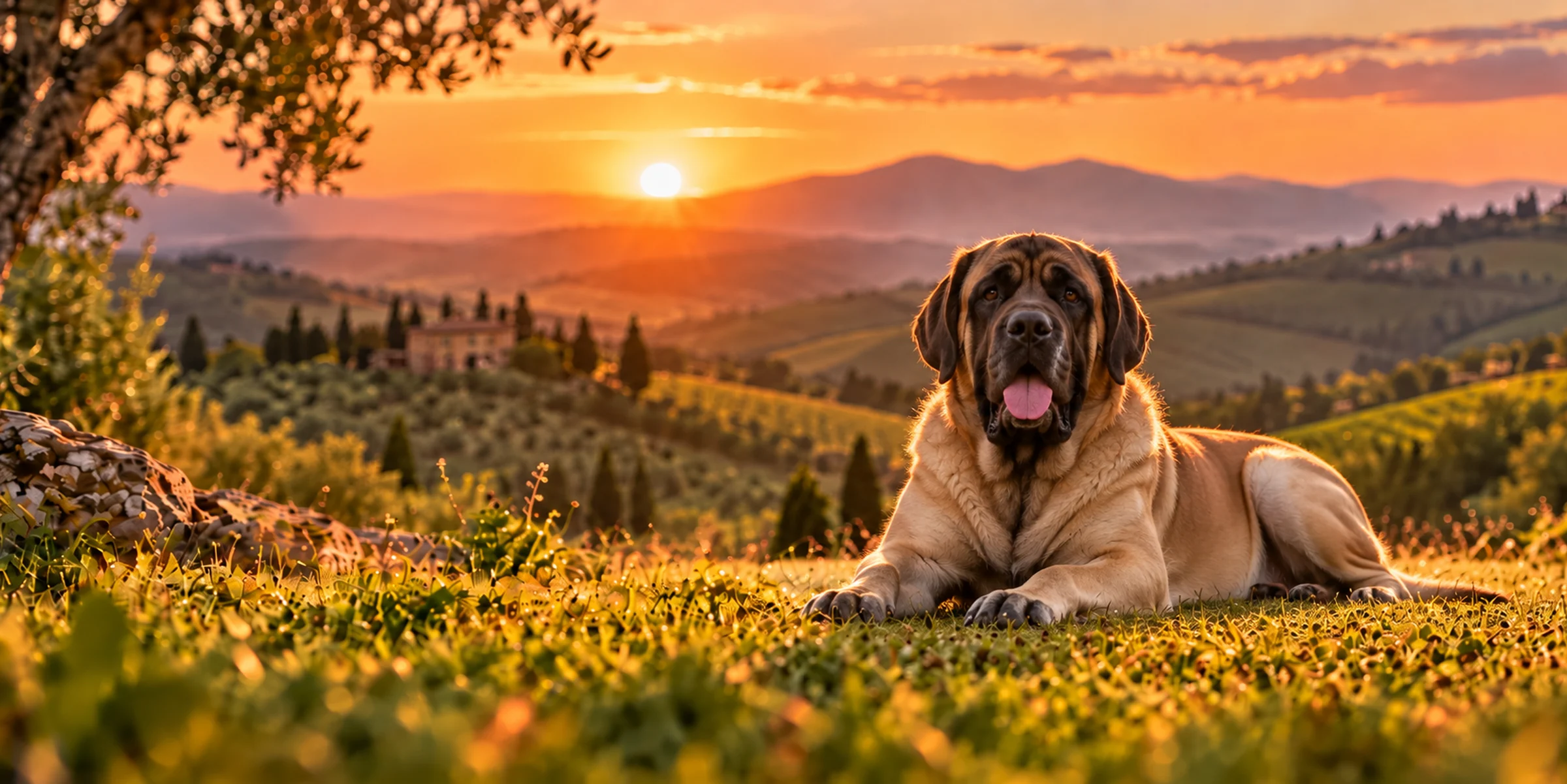
Mastiff
A comparable giant with serious drool and a gentle home manner. The Mastiff is short-coated and far easier to groom but more guarded with strangers; the Newfoundland is friendlier and much hairier.

Saint Bernard
Another gentle, heavily drooling family giant, and one the Newfoundland helped build in the 19th century. The Saint Bernard comes in a smooth coat as well as a rough one and has little interest in water; the Newfoundland is the swimmer, with a heavier coat to dry.